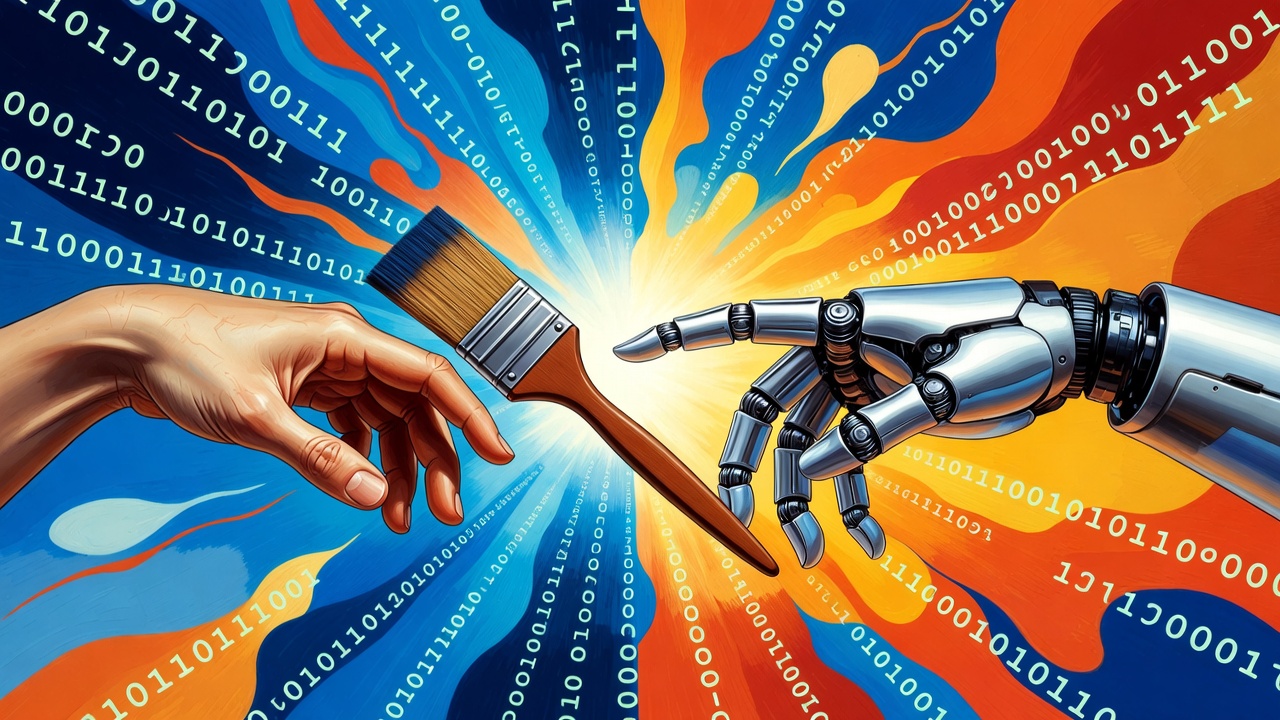
I’ve been wrestling with this question for months now, and honestly, the more I dig into it, the less certain I become about where the boundaries lie. It’s one of those deceptively simple questions that unravels into something much more complicated the moment you start pulling at the threads.
The Remix Argument Sounds Convincing at First
When people say AI is “just remixing,” I get it. I really do. Every AI system learns from existing data—millions of images, texts, musical compositions created by humans. There’s no magical spark that appears from nowhere. The models identify patterns, learn relationships between concepts, and generate outputs based on statistical probabilities derived from their training data. Put that way, it sounds like sophisticated plagiarism with extra steps.
But here’s where I started questioning my own assumptions: isn’t that also how human creativity works, at least partially?
Think about your favorite musician. They didn’t invent music from scratch. They grew up listening to other artists, absorbing influences, learning scales and chord progressions that have existed for centuries. When Bob Dylan plugged in an electric guitar at Newport in 1965, he was combining folk traditions with rock and roll—both existing forms. When Picasso co-founded Cubism, he was drawing on African art, Cézanne’s experiments with perspective, and countless other influences.
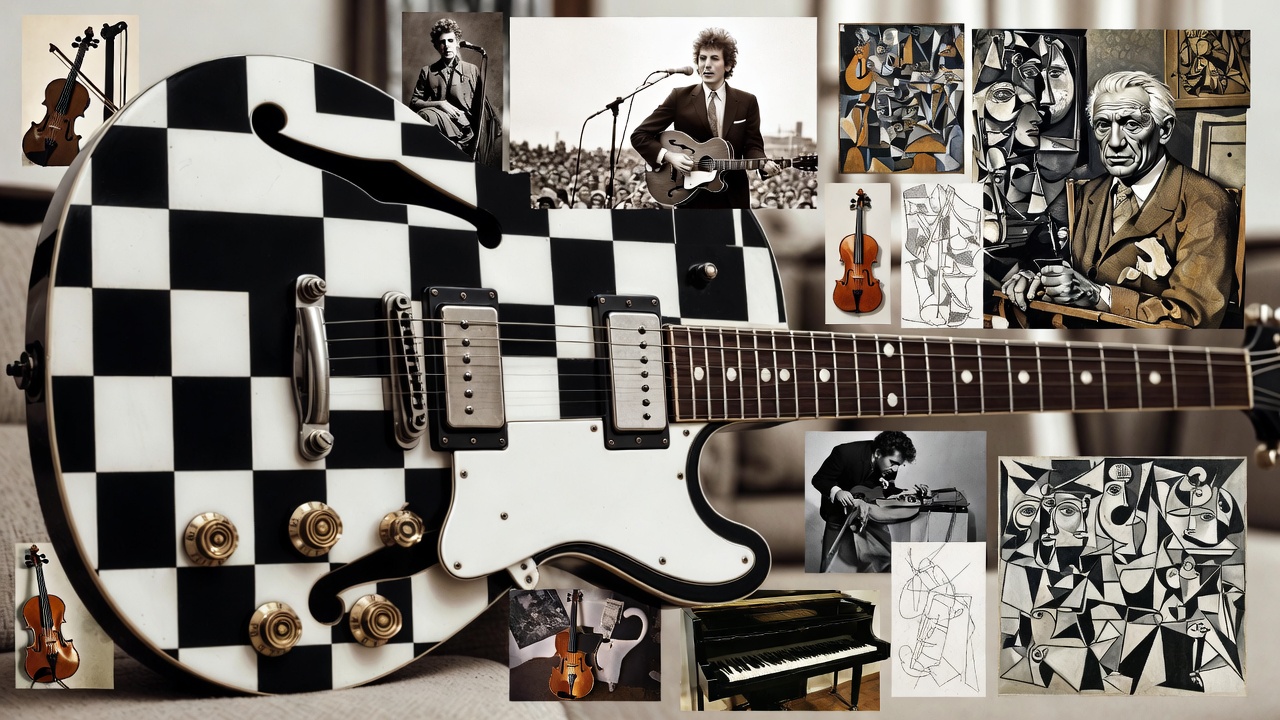
The “everything is a remix” argument applies to humans too. We’re pattern-matching machines who combine and recombine existing ideas in novel ways. So if we’re going to disqualify AI for remixing, we need to be honest about how much human creativity also involves recombination.
But There’s Something Different About Human Experience
Still, something feels fundamentally different when I create something versus when an AI does. When I write, I’m drawing on decades of lived experience—heartbreak, joy, confusion, the particular way afternoon light slants through my kitchen window. I’m motivated by something internal, some need to express or communicate or understand.
AI doesn’t have that. It has no subjective experience, no qualia, no “what it’s like to be” anything. When it generates a poem about loneliness, it hasn’t felt lonely. When it creates a painting of a sunset, it’s never watched the sky turn impossible shades of orange and pink and felt that strange mixture of peace and melancholy that comes with day’s end.
This experiential gap might be the real dividing line. Human creativity emerges from consciousness encountering the world. We create because we need to process our experiences, communicate with others, leave some mark of our existence. Our art carries the weight of genuine feeling and intention, even when we’re working within established forms and conventions.
The Intentionality Problem Gets Complicated
Except… does intention actually matter for creativity?
I keep coming back to cases that challenge my intuitions. If someone creates a painting by dragging a brush across a canvas while blindfolded, following no conscious plan, and it turns out beautiful—is that not creative because it lacked intention? What about Jackson Pollock’s drip paintings, where he deliberately surrendered some control to chance and physics?
Or consider Brian Eno’s generative music systems from the 1970s, long before modern AI. He created algorithmic compositions that would generate different variations each time they played, with outcomes he couldn’t fully predict. Was the music creative only because Eno set up the system, or did creativity emerge from the system itself?
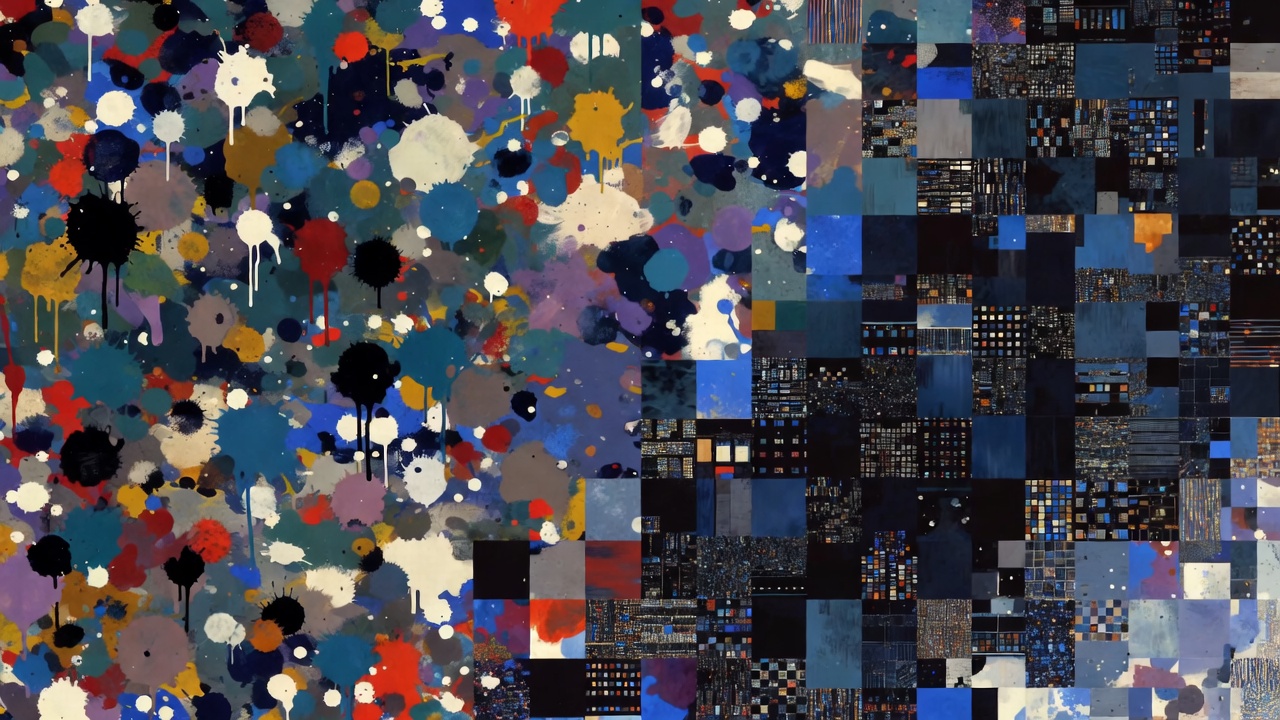
These edge cases make me wonder if we’re being too restrictive in defining creativity solely through human-like intention and experience. Maybe creativity is better understood as a quality of the output rather than a requirement of the creator’s internal state.
The “Surprise Me” Test
Here’s an experiment I’ve been running in my own mind: what makes something feel genuinely creative versus derivative?
When AI generates something that surprises me—a metaphor I’ve never encountered, an image that challenges my expectations, a solution to a problem I hadn’t considered—it feels creative in the moment. The novelty is real. The value it provides is real. The fact that it came from statistical pattern matching rather than conscious inspiration doesn’t change my experience of encountering something new.
But there’s a catch. The more I interact with AI systems, the more I notice their patterns and limitations. They have tells. Certain phrasings that appear too frequently. A tendency toward specific types of metaphors. An inability to genuinely break their own conventions or question their own outputs without being prompted.
Human artists, at their best, can do something AI seems to struggle with: they can surprise themselves. They can start with one intention and discover something unexpected in the process of creation. They can look at their own work and think, “That’s strange, I wonder where that came from,” and then follow that thread somewhere entirely new.
The Collaboration Question Changes Everything
Maybe I’m asking the wrong question entirely. Instead of whether AI is “truly creative” versus “just remixing,” what if creativity exists on a spectrum, and both humans and AI occupy different positions on that spectrum?
Some of the most interesting creative work happening right now comes from human-AI collaboration. Artists who use AI as a tool to explore ideas they couldn’t access otherwise. Musicians who jam with AI systems, playing off the unexpected directions the algorithm suggests. Writers who use AI to break through blocks or explore narrative possibilities.
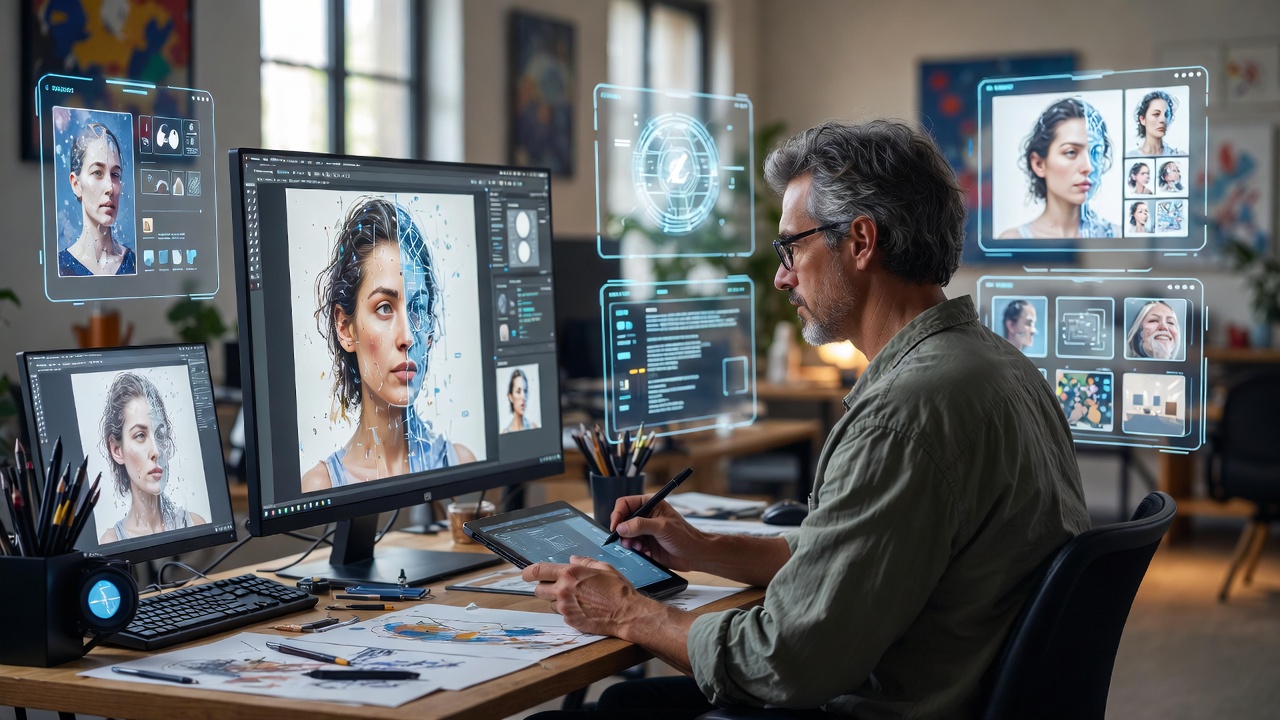
In these collaborations, who’s being creative? The human who set the direction? The AI that generated unexpected variations? The iterative process itself? Maybe creativity emerges from the interaction rather than residing purely in either party.
The Cultural Memory Argument
Here’s another angle that’s been nagging at me: AI systems trained on human culture represent, in a weird way, a collective crystallization of human creative output. They’ve absorbed patterns from millions of creative works spanning centuries and cultures.
When an AI generates something, it’s not creating from nothing, true. But it’s also not simply copying any single source. It’s synthesizing patterns across vast swaths of human creativity in ways that no individual human could. The combinations it produces might be statistically probable based on its training, but the specific synthesis in any given instance is often genuinely novel.
Is that creativity? Or is it something else entirely—some new category we don’t quite have language for yet?
What We’re Really Afraid Of
I suspect the resistance to calling AI “creative” isn’t purely philosophical. There’s something threatening about the idea that machines could replicate what we consider our most distinctly human capacity.
If AI can be creative, what does that say about us? If our art and music and writing can be approximated by algorithms, does that diminish what makes us special? Does it reduce human creativity to mere computation?
But maybe we’re thinking about this backward. The fact that AI can generate novel combinations doesn’t make human creativity less special—it just reveals that pattern recognition and recombination are more powerful than we realized. Human creativity involves these things, but it also involves so much more: the drive to create, the contextual awareness of culture and history, the ability to create for something and about something rooted in genuine experience.
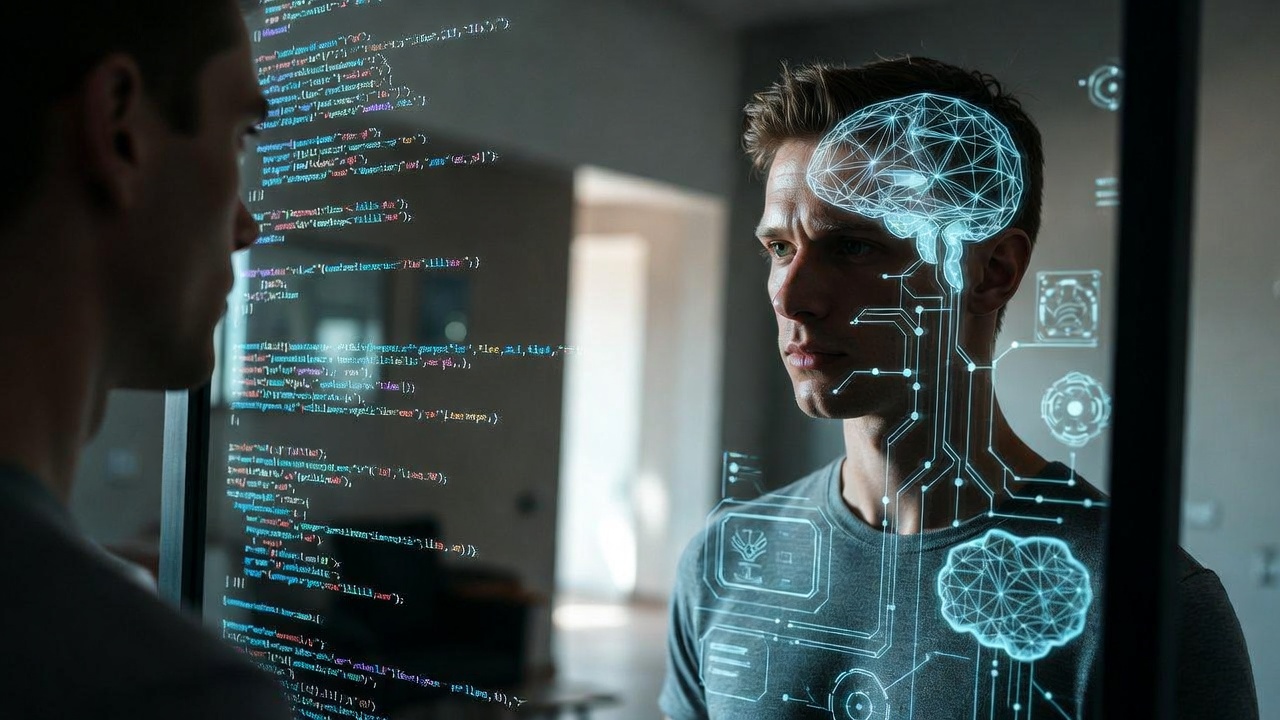
Where I’ve Landed (For Now)
After all this thinking, here’s my current position, though I reserve the right to change my mind: AI is creative in a limited, specialized sense, but it’s not creative in the full-blooded way humans can be.
AI can generate novel combinations. It can produce outputs that surprise and delight and provoke. It can solve creative problems and explore possibility spaces more thoroughly than humans can. All of that has real value and represents a genuine form of creativity—what we might call “combinatorial creativity” or “exploratory creativity.”
But AI lacks what we might call “transformative creativity”—the ability to fundamentally reimagine the rules of the game, to create from genuine emotional necessity, to imbue work with layers of meaning rooted in lived experience. It can’t create from confusion or pain or hope because it doesn’t experience these things. It can simulate their expression, but the wellspring is different.
The question isn’t really whether AI is creative enough to replace human creativity. It’s whether AI’s form of creativity can complement and enhance human creativity in meaningful ways. And there, I think the answer is clearly yes.
What This Means Going Forward
We need better language to talk about different types and levels of creativity. The binary of “truly creative” versus “just remixing” doesn’t capture the nuances of what’s actually happening. Human creativity involves remixing too. AI creativity involves genuine novelty too.
Maybe instead of asking whether AI can be creative, we should ask: What kinds of creative acts can AI perform? What can humans uniquely contribute? How can these different forms of creativity work together?
Because ultimately, creativity—whether human or artificial—is valuable insofar as it produces things that matter to humans. Art that moves us, solutions that improve our lives, ideas that expand our understanding. If AI can contribute to that, does it really matter whether we call it “truly creative” or something else?
I’m still figuring this out. The more I think about consciousness, creativity, and what makes us human, the more I realize how little we actually understand about any of it. But maybe that’s okay. Maybe the question itself is more valuable than any definitive answer.
What I do know is this: the creative landscape is changing, and our old categories and assumptions need updating. We’re in uncharted territory, and that’s both unsettling and exciting. The future of creativity probably isn’t human or AI—it’s both, in ways we’re only beginning to explore.
Frequently Asked Questions
Q: Is AI creativity the same as human creativity?
A: Not exactly. AI excels at what I call “combinatorial creativity”—generating novel combinations from existing patterns. Human creativity includes this but also involves transformative creativity rooted in lived experience, emotional depth, and the ability to fundamentally reimagine entire frameworks. They’re different but both valuable.
Q: If AI learns from human work, isn’t it just copying?
A: It’s more nuanced than that. AI synthesizes patterns across millions of works in ways no single human could, creating genuinely novel combinations. But here’s the thing—humans also learn from existing work. The difference is humans bring conscious experience and intention to the process, while AI operates through statistical pattern matching.
Q: Can AI replace human artists and creators?
A: I don’t think so, at least not entirely. AI struggles with the kind of creativity that comes from genuine emotional necessity, cultural context, and the ability to surprise itself. The most exciting developments are happening in human-AI collaboration, where each brings different strengths to the creative process.
Q: Does AI-generated art have less value than human-created art?
A: That depends on what you value. If you care purely about the end result—whether something is beautiful, useful, or thought-provoking—then the source matters less. But if you value art as a form of human expression and communication rooted in genuine experience, then human-created art carries something AI can’t replicate. Both can coexist.
Q: How can I tell if something was created by AI or a human?
A: It’s getting harder, honestly. AI has tells—certain patterns, phrasings, or stylistic choices that appear frequently. The more you interact with AI-generated content, the better you become at spotting these patterns. But the line is blurring, and sometimes even experts can’t tell the difference without investigation.
Q: What makes human creativity special if AI can do similar things?
A: Humans create from necessity, experience, and consciousness. We make art to process emotions, communicate complex ideas, and leave marks of our existence. AI can simulate these outputs but doesn’t experience the drives behind them. Human creativity is special because it emerges from the messy, complicated reality of being alive and aware.
Q: Should artists be worried about AI?
A: It’s natural to be concerned, but I think the reality is more complex than “AI will replace artists.” The creative landscape is changing, and some types of work will shift. But AI also opens new possibilities for creative exploration. Artists who learn to collaborate with AI tools while bringing their unique human perspective will likely find themselves with expanded capabilities rather than obsolescence.
Q: Is using AI for creative work “cheating”?
A: That’s like asking if using a camera is cheating for visual artists or if using a word processor is cheating for writers. AI is a tool. What matters is the intention behind its use, the skill in directing it, and the value of the final output. Someone using AI thoughtfully to explore ideas can create more meaningful work than someone producing derivative human-made art.
Q: Will AI ever develop genuine consciousness and creativity like humans?
A: Nobody knows for sure. Current AI systems don’t have consciousness or subjective experience as far as we can tell. Whether future AI could develop genuine consciousness is one of the biggest open questions in philosophy and neuroscience. My guess? We’ll need to fundamentally understand consciousness itself before we can answer that question.
Q: What’s the future of creativity in an AI world?
A: I think we’re heading toward a hybrid creative landscape where human-AI collaboration becomes the norm rather than the exception. The key will be developing better language and frameworks for understanding different types of creativity, and ensuring we preserve space for the distinctly human elements that AI can’t replicate—at least not yet.
My Older Posts:
Ultimate 2026 Mobile Gaming Guide Tecno, infinix Redmi
Balatro Vs Luck be a Landlord 2026 Offline Showdown


Comments 0
Leave a comment