Table of Contents
Open Table of Contents
- Introduction
- Finding Needles in Data Haystacks
- The Speed Advantage in Repetitive Tasks
- Making Sense of Unstructured Information
- The Creative Collaboration Partner
- Prediction and Forecasting at Scale
- Personalization Without Requiring Personal Attention
- The Honest Assessment
- Frequently Asked Questions
Introduction
The conversation around artificial intelligence often swings between two extremes: either AI will replace every job and solve every problem, or it’s just overhyped technology that can’t match human capability. The reality, as usual, sits somewhere far more interesting in between. After years of development and real-world application, we’re finally getting a clear picture of what AI genuinely excels at—and where it falls short.
Understanding these strengths matters because it shapes how we integrate AI into our lives and work. It’s not about whether AI is “good” or “bad,” but about recognizing the specific tasks where these systems shine and learning to use them effectively. Read my post on Astro vs WordPress and itel Phones first time users
Finding Needles in Data Haystacks
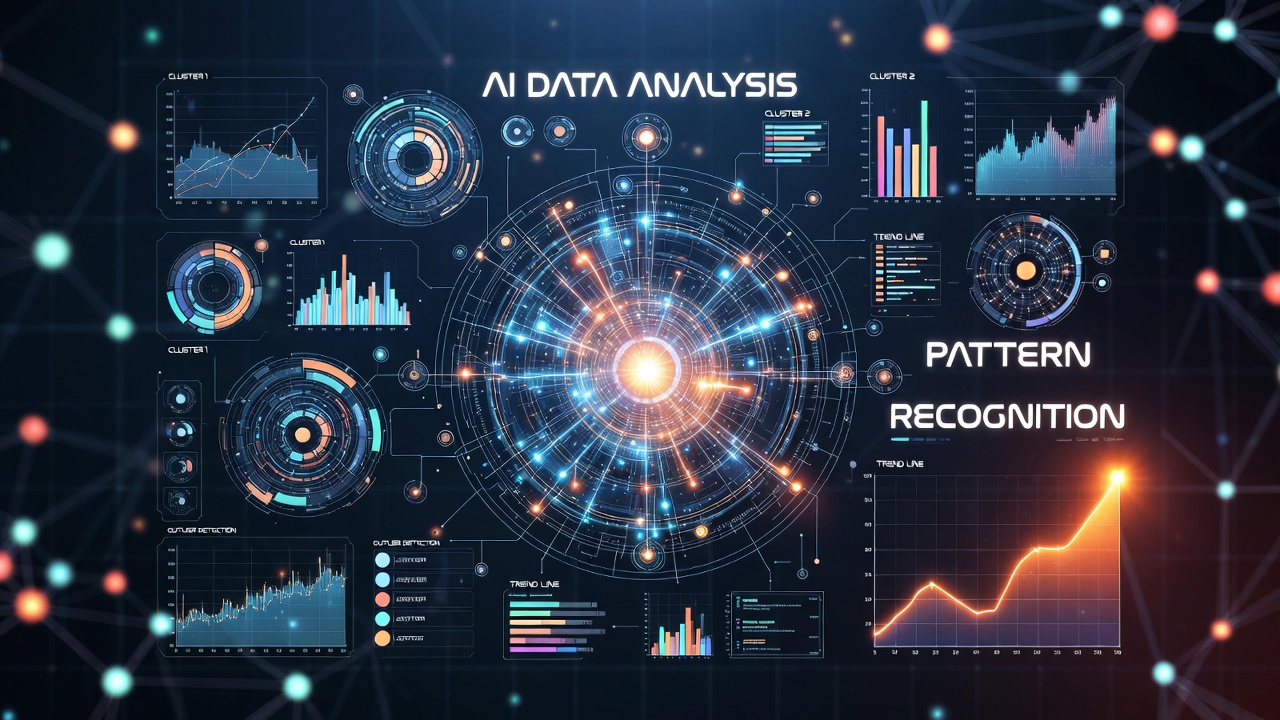
One area where AI has proven truly exceptional is pattern recognition across massive datasets. Humans are remarkable at spotting patterns in small amounts of information, but we hit cognitive limits quickly. AI systems can analyze millions of data points simultaneously, identifying correlations and anomalies that would take human analysts years to uncover.
In medical imaging, this capability has transformed diagnostics. Radiologists reviewing chest X-rays might examine dozens of images per day, each requiring intense focus. AI systems can process thousands of images in the same timeframe, flagging potential abnormalities with impressive accuracy. What makes this particularly valuable isn’t that AI replaces the radiologist—it’s that it acts as a tireless second set of eyes, catching things that might be missed during a long shift or appearing in subtle patterns across multiple scans.
Financial institutions use similar pattern-recognition capabilities to detect fraud. Traditional rule-based systems flag transactions based on predetermined criteria, but sophisticated fraud constantly evolves. AI models learn from millions of legitimate and fraudulent transactions, identifying suspicious patterns that emerge across accounts, times, and behaviors. When your credit card company stops a fraudulent charge before you even notice it missing, there’s probably an AI pattern detector behind that save.
Climate scientists leverage AI to process satellite imagery and sensor data from around the globe. Tracking deforestation, monitoring ocean temperatures, predicting weather patterns—these tasks involve such enormous volumes of data that human analysis would always lag too far behind to be actionable. AI processes this information in near real-time, helping researchers understand planetary changes as they unfold rather than months after the fact.
The Speed Advantage in Repetitive Tasks
Where AI truly dominates is in performing repetitive tasks at scales and speeds humans simply cannot match. This isn’t about doing things we can’t do—it’s about doing them faster, more consistently, and without the fatigue or errors that creep into human work.
Customer service chatbots handle thousands of simultaneous conversations, answering common questions instantly. Yes, they sometimes frustrate people with their limitations, but they also mean you don’t wait on hold for twenty minutes just to reset your password or check an order status. The best implementations combine AI’s speed for routine inquiries with seamless handoff to humans for complex issues.
Content moderation presents an even more critical use case. Social media platforms receive millions of uploads daily—images, videos, text posts. Human moderators do essential work reviewing flagged content, but they’d be completely overwhelmed without AI systems that perform initial screening. These systems catch obvious violations automatically and prioritize concerning content for human review, making platforms safer without requiring an army of moderators so large it would be financially and logistically impossible.
Translation services have reached a point where AI can convert text between languages almost instantaneously. Professional human translators still produce superior work for nuanced content, but for everyday use—reading a foreign news article, understanding product reviews from another country, communicating basic information across language barriers—AI translation has demolished barriers that existed for all of human history.
Making Sense of Unstructured Information
Humans excel at understanding context, but we struggle when information comes at us from too many directions simultaneously. AI systems have developed impressive abilities to organize and make sense of unstructured data—the kind that doesn’t fit neatly into spreadsheets or databases.
Search engines demonstrate this daily. You type a vague query with spelling errors and colloquial language, and AI systems parse your intent, scan billions of web pages, and return relevant results in milliseconds. The sophistication required to understand that someone searching for “that movie with the boat and the iceberg” wants information about Titanic represents genuine achievement in natural language understanding.

Legal discovery—the process of reviewing documents during litigation—used to require teams of lawyers spending months reading through thousands of pages. AI systems now perform initial reviews, identifying relevant documents, flagging potential issues, and organizing information by topic. Lawyers still make the final judgments, but they work with pre-organized material rather than starting from scratch with file boxes full of random documents.
Research synthesis has become another valuable application. Scientists in any field face an impossible task keeping up with published research. An AI system can scan thousands of recent papers, identify relevant findings, and highlight connections across studies. It’s like having a research assistant who’s read everything published in your field this year and can summarize it on demand.
The Creative Collaboration Partner
Perhaps the most unexpected area where AI has proven valuable is creative work. Not replacing human creativity, but augmenting it in ways that spark new possibilities.
Graphic designers use AI tools to rapidly generate variations on a concept, exploring dozens of different approaches in the time it would take to manually create a few. The AI isn’t making the creative decisions—the human designer still curates, refines, and applies taste—but it dramatically expands the exploration space. Instead of being limited by how many versions you have time to create, you’re limited only by your imagination for what to try.
Musicians experiment with AI-generated melodies and chord progressions as creative prompts. A producer might feed an AI system some parameters and get back dozens of musical phrases, then select interesting ones to develop further. It’s a new kind of creative tool, like a synthesizer or drum machine was in earlier decades—something that expands what’s possible rather than replacing the artist.

Writers use AI to overcome blank page syndrome, generate alternative phrasings, or explore different narrative directions. The relationship works best when writers view AI as a brainstorming partner rather than a ghostwriter. It’s particularly useful for getting unstuck—when you know roughly what you want to say but can’t quite find the right words, seeing several AI-generated options often triggers the perfect phrasing that was lurking just out of reach in your own mind.
Prediction and Forecasting at Scale
AI systems excel at making predictions based on historical patterns, though with important caveats. They’re not fortune tellers—they extrapolate from data, identifying likely outcomes based on what’s happened before.
Supply chain management has been transformed by AI forecasting. Retailers use these systems to predict demand for thousands of products across hundreds of locations, accounting for seasonal patterns, local events, weather, and countless other variables. The result is less waste from overordering and fewer stockouts from underordering. It’s optimization at a scale that human buyers simply couldn’t manage.
Traffic prediction in mapping applications shows AI forecasting at its most visible. These systems analyze current traffic data, historical patterns for the time and day, known events, weather conditions, and more to predict what traffic will look like on your route. The predictions aren’t always perfect, but they’re remarkably accurate given the complexity of the task.
Predictive maintenance in manufacturing prevents expensive breakdowns. Sensors on machinery generate constant streams of data, and AI systems learn the patterns that precede failures. A bearing wearing out produces subtle changes in vibration patterns; a motor overheating shows specific signatures in power consumption. AI catches these early warnings, scheduling maintenance before breakdowns occur rather than after.
Personalization Without Requiring Personal Attention
Recommendation systems represent another area of AI strength—providing personalized experiences at a scale impossible for humans. A streaming service can’t assign each user a personal curator, but it can use AI to learn your preferences and suggest content you’re likely to enjoy.
These systems work by finding patterns in your behavior and comparing them to millions of other users. Someone who watched the same shows you did and gave them similar ratings probably shares your taste, so things they enjoyed might appeal to you too. Multiply this logic across an enormous user base, and you get surprisingly good recommendations.
E-commerce platforms use similar approaches to suggest products. Online education platforms recommend courses based on your goals and learning patterns. Music services create personalized playlists that introduce you to new artists with similar vibes to your favorites. None of this is perfect—everyone has experienced baffling recommendations—but the hit rate is high enough that these systems genuinely help people discover things they end up loving.
What makes this particularly valuable is the accessibility it provides. In the past, you needed expertise or personal connections to get good recommendations. You found great restaurants because you knew a local foodie, discovered books through a well-read friend, or learned about music from a knowledgeable record store clerk. AI democratizes access to that kind of curated experience, making it available to anyone regardless of their social network or location.
Befor the end of this topic you can read Building lightning fast blog with Astro complete setup, Why I can’t stop playing Call of Duty-2026 and Is Ai creative or remixing human work
The Honest Assessment
AI’s genuine strengths cluster around tasks that involve processing large amounts of data, performing repetitive operations consistently, finding patterns across complex information, and providing personalized experiences at scale. These are significant capabilities that create real value.
What AI still struggles with—and may always struggle with—includes tasks requiring true understanding of context and nuance, genuine creativity rather than recombination of patterns, ethical judgment in novel situations, and anything requiring empathy or emotional intelligence.
The most effective uses of AI in today’s world don’t try to make it do everything. They identify specific tasks where its strengths align with real needs, then build systems that combine AI capability with human judgment. A radiologist with AI assistance is more effective than either alone. A designer with AI tools can explore more creative territory. A customer service system that routes simple questions to AI and complex ones to humans serves everyone better.
Understanding what AI is genuinely best at helps us move past both the hype and the fear. It’s a powerful set of tools that excel at specific tasks. Like any tool, the value comes not from the tool itself but from using it appropriately for jobs where it actually helps.
The future likely holds improvements in AI capabilities, but the fundamental pattern probably remains the same: AI handles the tasks that require processing power, pattern recognition, and tireless consistency, while humans provide judgment, creativity, and genuine understanding. That’s not a limitation—it’s a productive division of labor that leverages the strengths of both.
Frequently Asked Questions
Q: Will AI eventually replace human workers in most jobs?
A: Not in the way most people fear. AI excels at specific, well-defined tasks but struggles with jobs requiring adaptability, emotional intelligence, and complex decision-making. The more likely scenario is job transformation rather than replacement—where AI handles routine aspects while humans focus on judgment, creativity, and interpersonal elements. Jobs that combine multiple skills, require ethical reasoning, or involve unpredictable situations remain firmly in human territory.
Q: How accurate is AI compared to humans in tasks like medical diagnosis?
A: It depends entirely on the specific task. For certain narrow applications like detecting specific patterns in medical images, AI can match or exceed human accuracy. However, AI lacks the holistic understanding that doctors bring—considering patient history, lifestyle factors, and subtle contextual clues. The best results come from combining AI’s pattern recognition with human expertise, where AI flags potential issues and humans make final diagnostic decisions.
Q: Can AI be creative, or does it just copy existing work?
A: AI generates outputs based on patterns learned from existing data, so it’s more accurately described as “recombinant” rather than truly creative. It can produce novel combinations and variations, which can be useful for inspiration, but it doesn’t have original ideas or intentionality. Human creativity involves understanding meaning, breaking rules purposefully, and creating from genuine insight—things AI fundamentally cannot do.
Q: Is AI biased, and how does that affect its performance?
A: Yes, AI systems can reflect and even amplify biases present in their training data. If an AI learns from historical hiring data that shows bias, it may perpetuate those patterns. This is a significant concern in applications like lending, hiring, and criminal justice. The best AI implementations include ongoing monitoring for bias, diverse training data, and human oversight to catch and correct biased outputs.
Q: What’s the difference between AI that’s “good at” something versus truly understanding it?
A: AI can perform tasks with high accuracy without any comprehension of what it’s doing. A language model can write grammatically correct text without understanding meaning. An image classifier can identify cats with 99% accuracy without knowing what a cat actually is. This distinction matters because AI can fail in unexpected ways when it encounters situations that differ from its training—it has no common sense or deeper understanding to fall back on.
Q: How much data does AI need to be effective?
A: It varies dramatically by task. Simple pattern recognition might work with thousands of examples, while complex tasks like natural language understanding require millions or billions of data points. The quality of data matters as much as quantity—clean, well-labeled, representative data produces better results than massive amounts of messy information. Some newer techniques like “few-shot learning” are making AI more data-efficient, but most powerful systems still require substantial training data.
Q: Can AI learn on its own, or does it always need human training?
A: Most AI requires initial training with human-labeled data or clear reward signals. However, some systems use techniques like reinforcement learning where they improve through trial and error, or unsupervised learning where they find patterns without explicit labels. Even these approaches still need humans to define objectives, evaluate performance, and provide oversight. Fully autonomous learning without any human guidance remains largely theoretical.
Q: Why does AI sometimes give confident but completely wrong answers?
A: AI systems don’t actually “know” when they’re uncertain—they’re probability engines that always generate outputs based on patterns, even when those patterns are weak or misleading. This creates the phenomenon of “hallucination” where AI produces fluent, confident-sounding responses that are factually incorrect. It’s a fundamental limitation of how current AI works, and why human verification remains essential for important decisions.
Q: How is AI different from traditional computer programming?
A: Traditional programming uses explicit rules written by humans: “if X, then Y.” AI instead learns patterns from examples, creating its own internal rules that humans can’t easily inspect or understand. This makes AI powerful for complex tasks where writing explicit rules is impossible, but also makes it less predictable and harder to debug when things go wrong.
Q: What’s the most overhyped application of AI?
A: Fully autonomous vehicles have faced much more difficulty than early predictions suggested. The challenge isn’t the 99% of normal driving—it’s handling the unpredictable 1% of unusual situations that require human judgment. Similarly, AI-powered personal assistants that truly understand context and anticipate needs remain more promise than reality. The most successful AI applications tend to be narrow, well-defined tasks rather than broad, general capabilities.
Q: Is my data being used to train AI without my knowledge?
A: This is a legitimate concern. Many companies use customer data to improve their AI systems, though policies vary. Reputable organizations should disclose data usage in their terms of service, though these are often dense and hard to parse. If privacy is a concern, look for services that explicitly promise not to use your data for training, or use open-source AI tools that you can run locally.
Q: How can I tell if I’m interacting with AI or a human?
A: It’s becoming increasingly difficult, but some tells remain: AI often lacks true personality consistency across long conversations, may miss subtle context or humor, sometimes provides information that’s overly general or safe, and can struggle with tasks requiring real-world common sense. That said, in limited interactions like customer service chats, the distinction may not matter if your question gets answered effectively.