Table of Contents
Open Table of Contents
- Overview
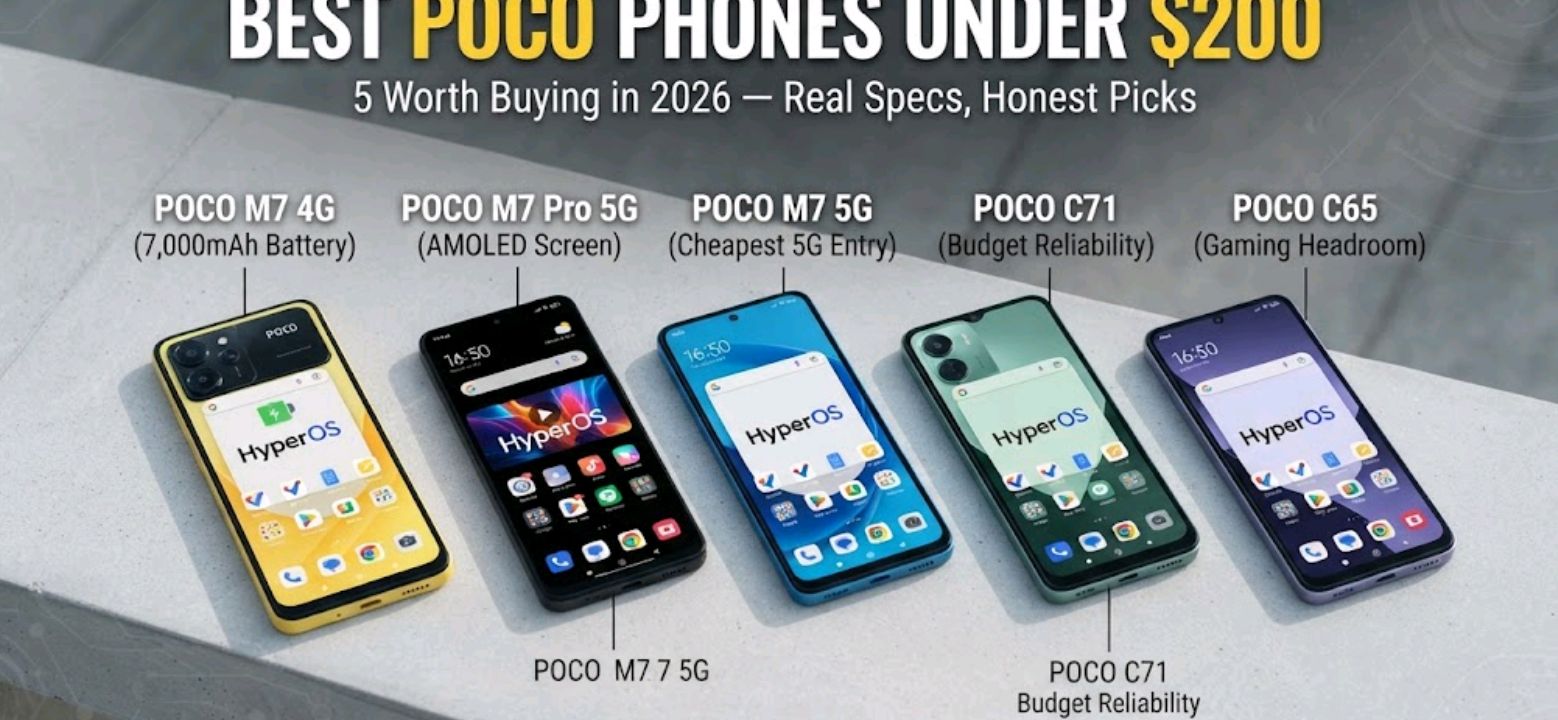
- Quick Picks
- 1. POCO M7 4G — Best Battery Life
- 2. POCO M7 Pro 5G — Best Screen & Overall Value
- 3. POCO M7 5G — Cheapest Way Into 5G
- 4. POCO C71 — Best Budget Reliability
- 5. POCO C65 — Slightly Better Gaming Headroom
- Comparison Table
- Typical Price Range
- Nigeria Buying Cautions
- Methodology
- FAQ
Overview
POCO’s budget lineup has a repetition problem: several of these phones share a chipset, a screen size, or a camera sensor with a Redmi sold two aisles over. That’s not necessarily bad news for the buyer — it usually means proven hardware at a POCO discount — but it makes “which one should I actually buy” a genuinely confusing question once you’re staring at five model names that all start with a letter and end in “Pro.”
We picked five current POCO phones that are available around or below the $200 mark, with pricing varying by region, configuration, and promotions, and ranked them by what each one is actually good at, not by spec-sheet size.
Quick Picks
| If you want… | Get this |
|---|---|
| The biggest battery in this list | POCO M7 4G (7,000mAh) |
| The best screen for the money | POCO M7 Pro 5G (AMOLED) |
| The cheapest 5G entry point | POCO M7 5G |
| A reliable everyday phone on a tight budget | POCO C71 |
| Slightly better gaming headroom than the C71 | POCO C65 |
1. POCO M7 4G — Best Battery Life
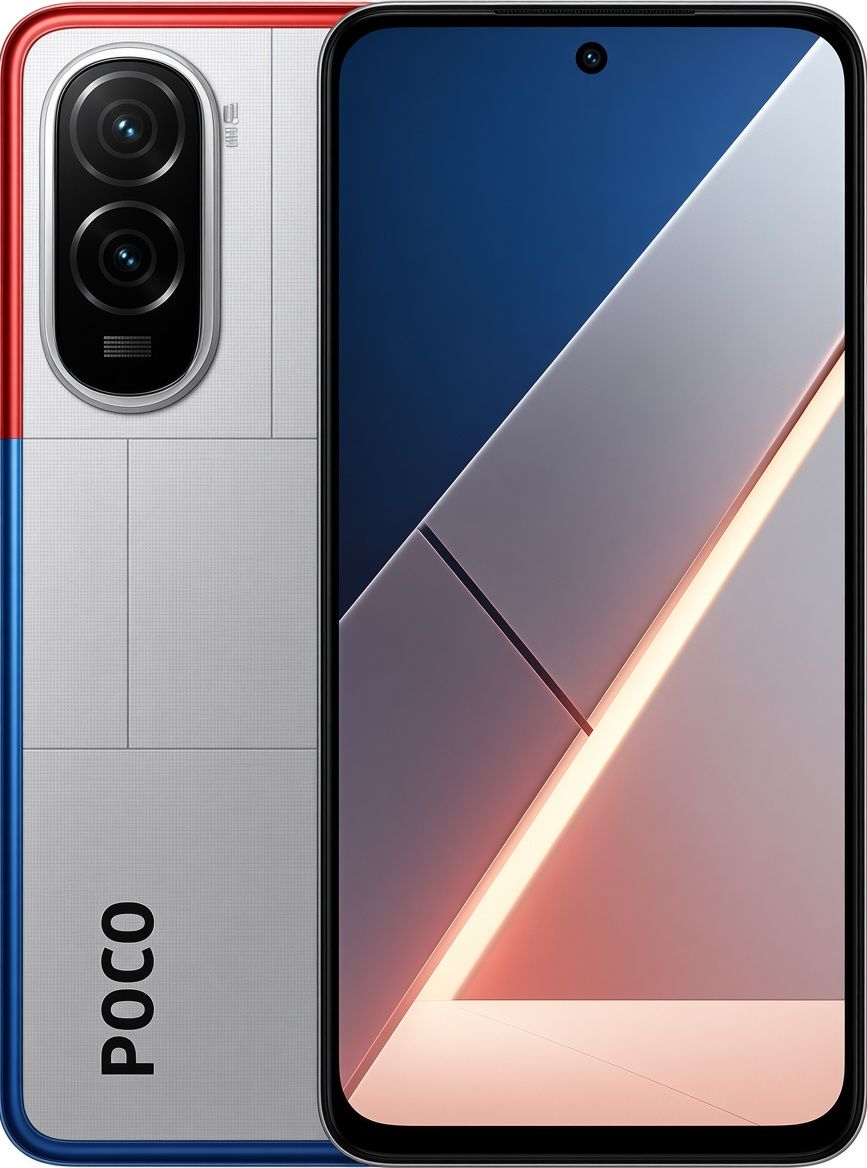
The M7 4G’s whole pitch is its enormous 7,000mAh battery, and it’s a legitimate one. Xiaomi built this as an affordable phone anchored around the Snapdragon 685 chipset and that oversized cell. That much capacity in a phone that doesn’t feel like a brick is a genuine engineering win at this price, regardless of the exact battery chemistry POCO used to get there — the official Xiaomi/POCO listings confirm the 7,000mAh figure but don’t specify the cell composition, so we’re not going to guess at it.
You get a 6.9-inch FHD+ LCD with a 144Hz refresh rate, a 50MP main camera, and HyperOS 2 on top of Android 15. Charging is capped at 33W, which is on the slower side for a battery this size, but the phone also does 18W reverse charging — handy if you need to top up a friend’s phone or a pair of earbuds. Build quality includes IP64 dust and splash resistance, which nothing else at this price point in the lineup matches.
Best for: shift workers, students, or anyone who regularly goes 36+ hours without reliable access to a charger.
2. POCO M7 Pro 5G — Best Screen & Overall Value
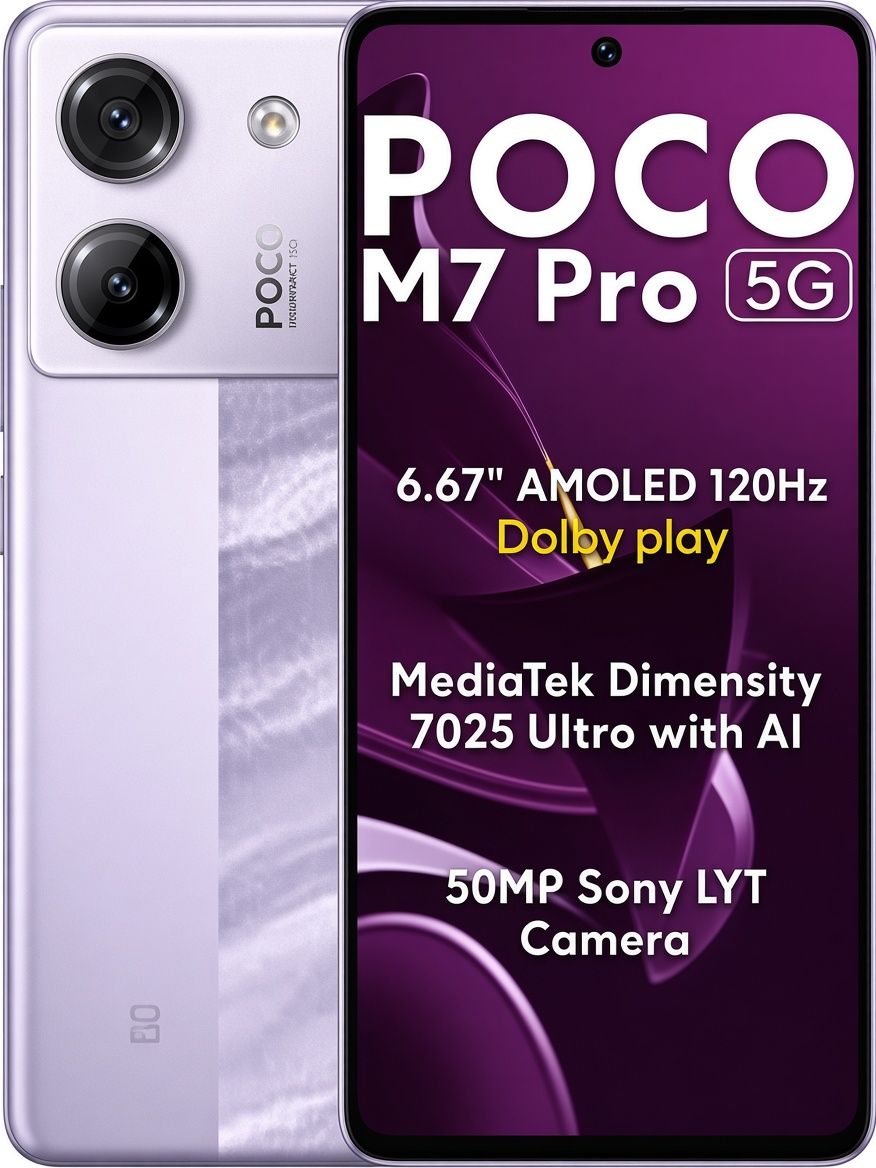
This is essentially a rebadged Redmi Note 14 5G with a different back panel, and that’s a compliment. It’s the only phone on this list with an AMOLED panel — 6.67 inches, 120Hz, 1080p, Gorilla Glass 5 — paired with a MediaTek Dimensity 7025-Ultra chipset that handles day-to-day multitasking and light gaming comfortably. The 50MP main camera also gets Optical Image Stabilization, which nothing else in this lineup offers.
Charging jumps to 45W, IP64 rating carries over, and the design comes in a two-tone finish across a few color options. The trade-off for the better screen and faster charging is a smaller battery — 5,110mAh (typ) versus the M7 4G’s 7,000mAh — so if all-day-and-then-some runtime is your priority, that one still wins.
Best for: anyone who watches a lot of video or reads on their phone and wants the screen quality to actually show it.
Looking at other Xiaomi-family options in this price band? Our Xiaomi phones under $150 roundup covers where the Redmi and standard Xiaomi lines land at an even tighter budget.
3. POCO M7 5G — Cheapest Way Into 5G
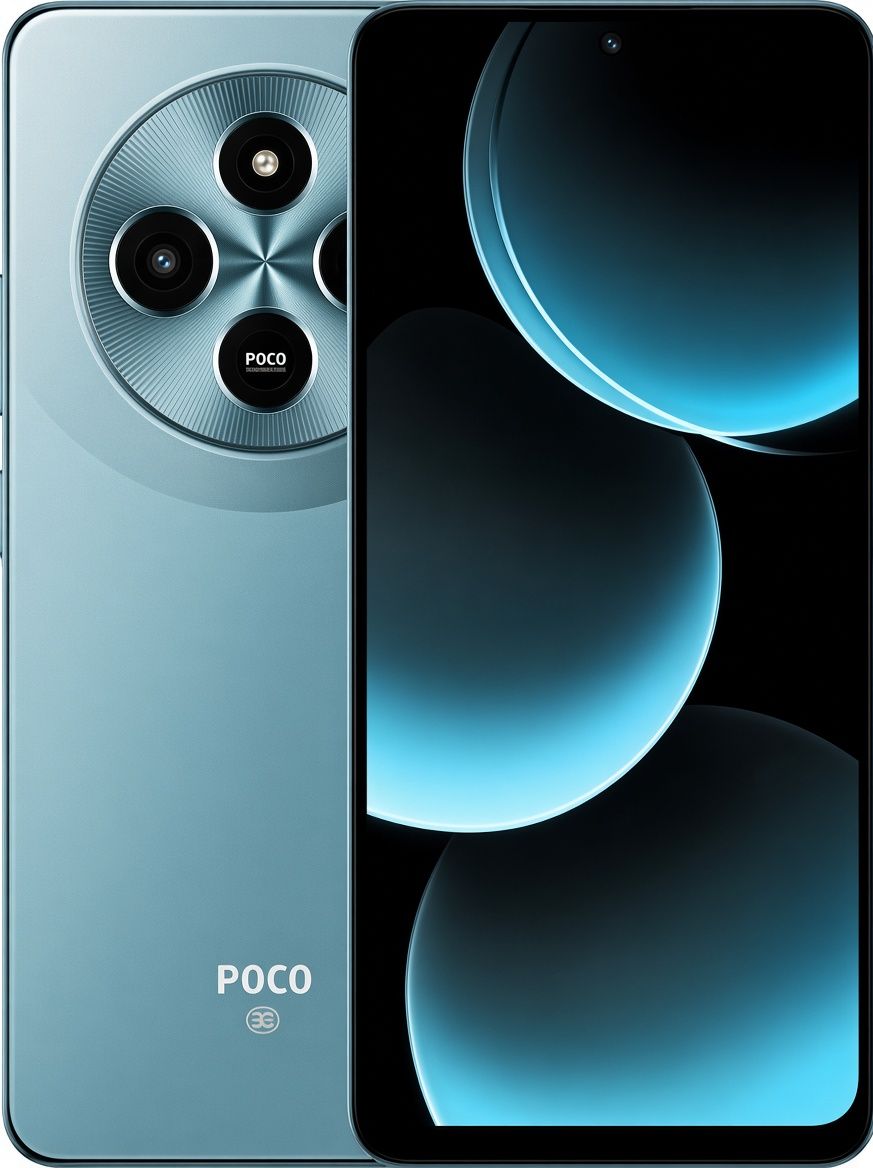
The standard M7 5G trims the AMOLED panel and the Dimensity chip in favor of the more modest Snapdragon 4 Gen 2, but it holds onto a 6.88-inch 120Hz display and a 50MP rear camera. Battery capacity sits around 5,160mAh — solid, if not in M7 4G territory — and it’s the most affordable 5G-capable POCO on this list.
This is the one to pick if 5G matters to you now (or you expect it to matter over the two-to-three years you’ll keep the phone) but you don’t want to stretch toward the Pro model’s price.
Best for: first-time 5G buyers who don’t want to pay a premium for it.
4. POCO C71 — Best Budget Reliability
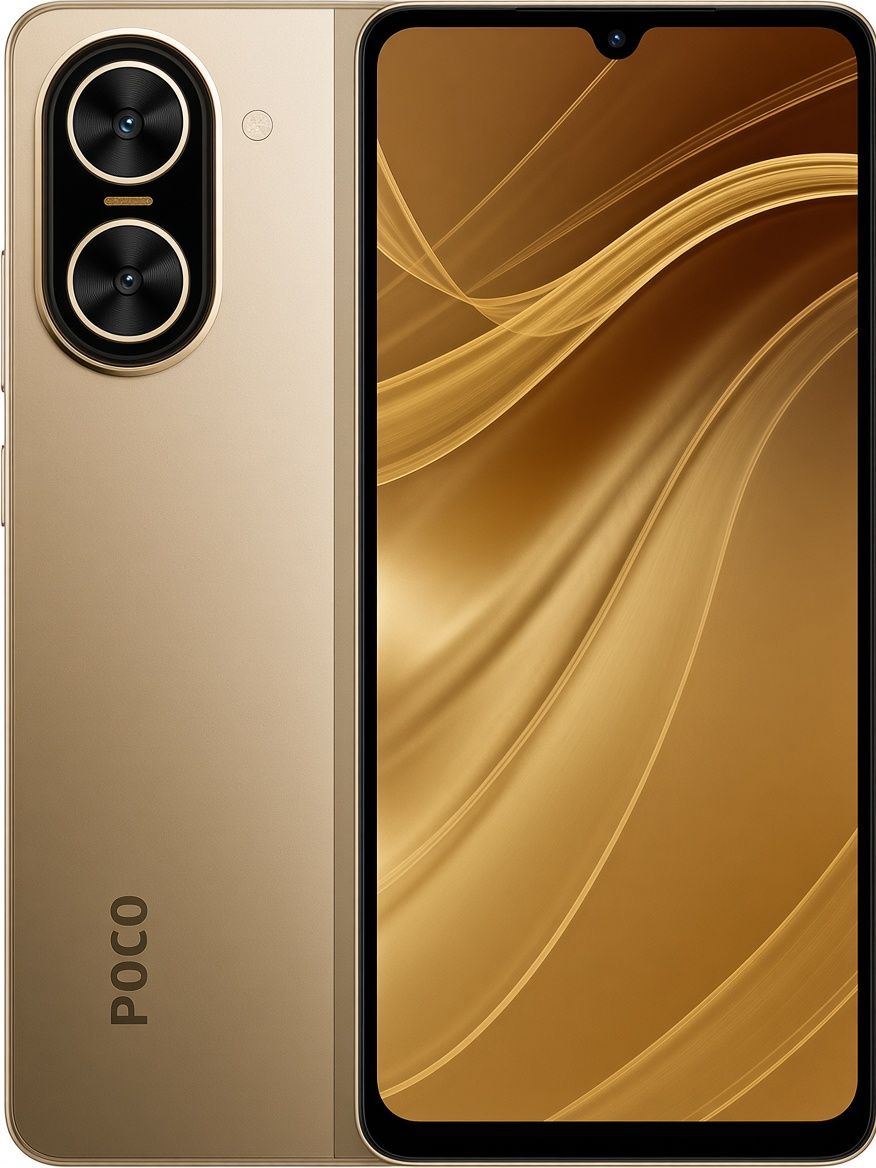
The C71 sits at the entry-level end of the lineup, built around a Unisoc T7250 chipset rather than a Qualcomm or MediaTek part. That’s a meaningful step down in raw performance, but the phone compensates with a 5,200mAh battery, a 6.88-inch 120Hz HD+ display, and a 32MP main camera — reasonable for the price. At launch, GSMArena reported that POCO had committed to two years of Android version upgrades and four years of security updates for the C71; worth confirming on your specific unit’s box or listing, since update commitments can vary by region and aren’t always restated on every retail page. It also carries an IP52 rating for light splash resistance.
Don’t expect smooth performance in heavier games — this chipset is built for calls, messaging, browsing, and social media, not benchmarks.
Best for: first smartphones, backup devices, or anyone who just needs something dependable for basic use.
5. POCO C65 — Slightly Better Gaming Headroom
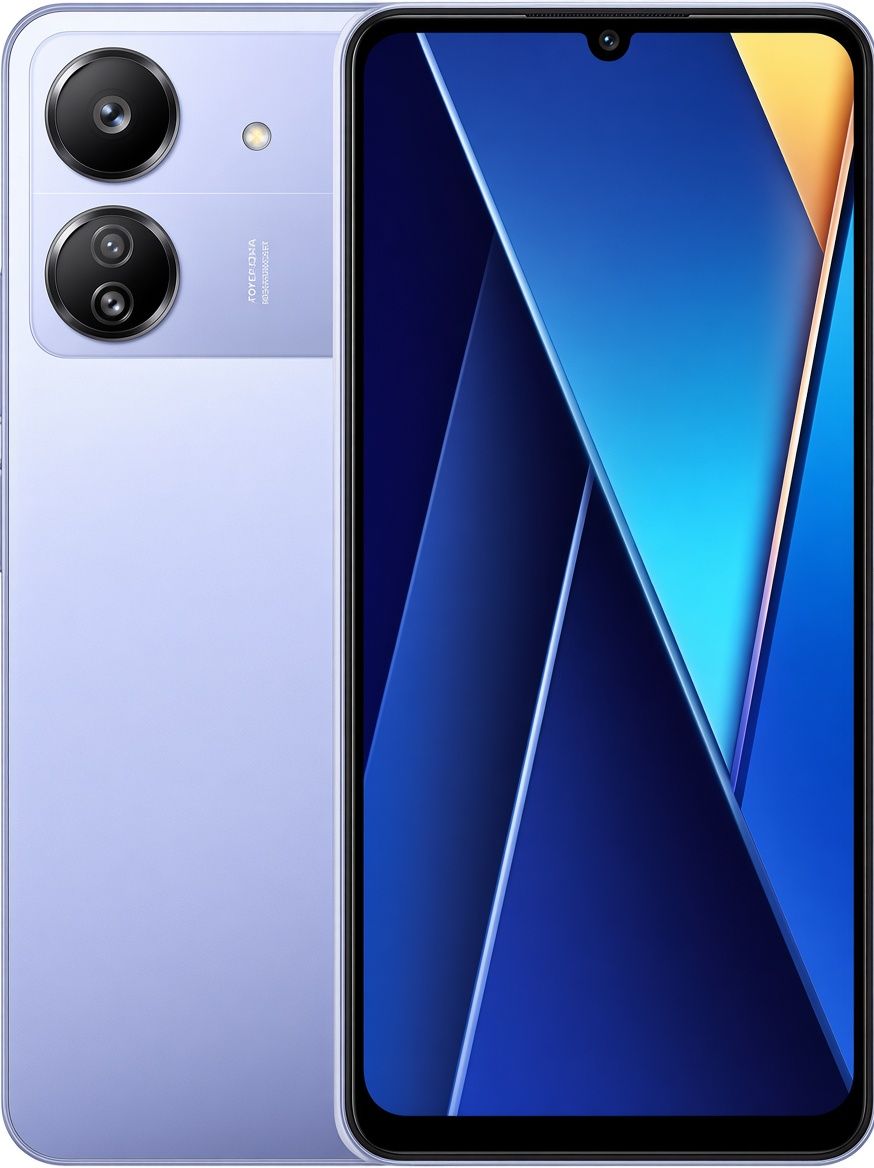
The C65 runs an older MediaTek Helio G85 chipset, but that chip has a track record — it’s been in enough budget phones for long enough that its real-world gaming performance is well understood, and it comfortably outruns the C71’s Unisoc silicon in anything demanding. You get a 6.74-inch 90Hz LCD, a 5,000mAh battery, 18W charging, and a 50MP main camera.
The C65 is genuinely faster than the C71 and would rank above it on hardware alone — but it’s also two years older, meaning thinner remaining software support and less consistent stock than the newer C71. It only earns the #5 spot when it’s discounted enough to actually beat the C71 and other newer options at the same street price; don’t pay a premium for it just because the benchmark numbers look better on paper.
Best for: light mobile gaming on a tight budget where the C71 feels too underpowered.
For phones outside the POCO family covering similar ground, see our picks for the best Honor phones in 2026 and the best TECNO phones under $200 — useful if you’re comparing brands rather than committing to POCO specifically.
Comparison Table
| Model | Chipset | Display | Battery | Charging | Main Camera |
|---|---|---|---|---|---|
| POCO M7 4G | Snapdragon 685 | 6.9” FHD+ LCD, 144Hz | 7,000mAh | 33W wired, 18W reverse | 50MP |
| POCO M7 Pro 5G | Dimensity 7025-Ultra | 6.67” AMOLED, 120Hz | 5,110mAh (typ) | 45W wired | 50MP, f/1.5, OIS |
| POCO M7 5G | Snapdragon 4 Gen 2 | 6.88” LCD, 120Hz | ~5,160mAh | 18W wired | 50MP |
| POCO C71 | Unisoc T7250 | 6.88” HD+ LCD, 120Hz | 5,200mAh | 15W wired | 32MP |
| POCO C65 | MediaTek Helio G85 | 6.74” HD+ LCD, 90Hz | 5,000mAh | 18W wired | 50MP |
Typical Price Range
Pricing on POCO phones shifts constantly with promotions, regional stock, and RAM/storage configuration, so treat these as a starting-price guide rather than a quote. Figures below are approximate global launch/list pricing for the base configuration of each model, before any Nigeria-specific markup.
| Model | Approx. price (base config) |
|---|---|
| POCO C71 | ~$75–95 |
| POCO C65 | ~$110–150 |
| POCO M7 5G | ~$115–150 |
| POCO M7 4G | ~$145–180 |
| POCO M7 Pro 5G | ~$190–230 |
The M7 Pro 5G is the one to watch here — depending on RAM/storage tier, region, and retailer, it can land right at $200 or drift slightly past it. If you’re working with a hard $200 ceiling, confirm the exact variant’s price before committing to it over the standard M7 5G.
If battery life is genuinely non-negotiable for your daily routine, see our best Huawei phones for battery life in 2026 guide for how these POCO numbers stack up against a different brand chasing the same thing.
Nigeria Buying Cautions
- Pricing is a moving target. Naira/dollar rates fluctuate, so dollar-equivalent prices can move quickly. Treat the figures above as a reference rather than a fixed Nigerian retail price, and check a live exchange-rate source before converting.
- Confirm the exact variant before paying. RAM/storage configurations (and sometimes chipsets, in regions where the same model name covers slightly different hardware) vary by listing even under an identical model name.
- Buy from retailers with a clear return window. Jumia, Slot, and Pointek listings typically state warranty terms upfront — get that in writing before handing over cash for street-market stock.
- Check the box for HyperOS version and update history. A unit that’s been sitting in inventory for months may ship on an older HyperOS build than a fresh shipment of the same model.
Methodology
Specifications in this guide were cross-checked against GSMArena, Xiaomi’s official POCO Global product pages, and Notebookcheck coverage of each launch. Where a spec claim came from a single secondary source rather than an official POCO page (like the C71’s update-support window), we said so explicitly rather than presenting it as verified fact. Pricing is based on global launch/list pricing rather than live Nigerian retailer listings — always confirm the actual price at your point of purchase before buying.
FAQ
Is POCO the same company as Xiaomi? POCO started as a Xiaomi sub-brand in 2018 and has since been folded more directly into Xiaomi’s product lineup, sharing components, HyperOS software, and after-sales support infrastructure with Redmi and Xiaomi-branded devices.
Which POCO phone under $200 has the best camera? None of these five are built around camera performance — they’re battery, screen, and value plays. If camera quality is your priority, our best POCO camera phones guide covers the models built specifically around sensor size and stabilization.
Do these phones support 5G in Nigeria? The POCO M7 5G and POCO M7 Pro 5G both support 5G bands, but actual 5G coverage depends on your network operator’s rollout in your specific area — check with MTN, Airtel, or Glo before treating that as a deciding factor.
How long will these phones get software updates? Software support varies by model and region, so check the specific phone’s official update policy before buying if long-term support matters to you.
Is a POCO phone under $200 better than a similarly priced Redmi or Infinix phone? Not automatically — several POCO models in this range share a chipset or camera sensor with a Redmi or Infinix equivalent, so the “better” one often comes down to price at the point of sale rather than the badge on the back. Read Iphone 18 Pro Launch Date Nigeria WAT


Comments 0
Leave a comment