Table of Contents
Open Table of Contents
Overview
Short answer: on a 5G connection, the three Galaxy S26 phones last between roughly 11.5 and 16 hours in a continuous web-browsing test. The size of the gap between them is bigger than most buyers expect, and there is an important regional chipset difference that buyers should understand before purchasing.
This article is built from published lab results and Samsung’s own specs. It is not based on personal testing, and the test figures come from different labs, so treat them as a guide and not a promise.
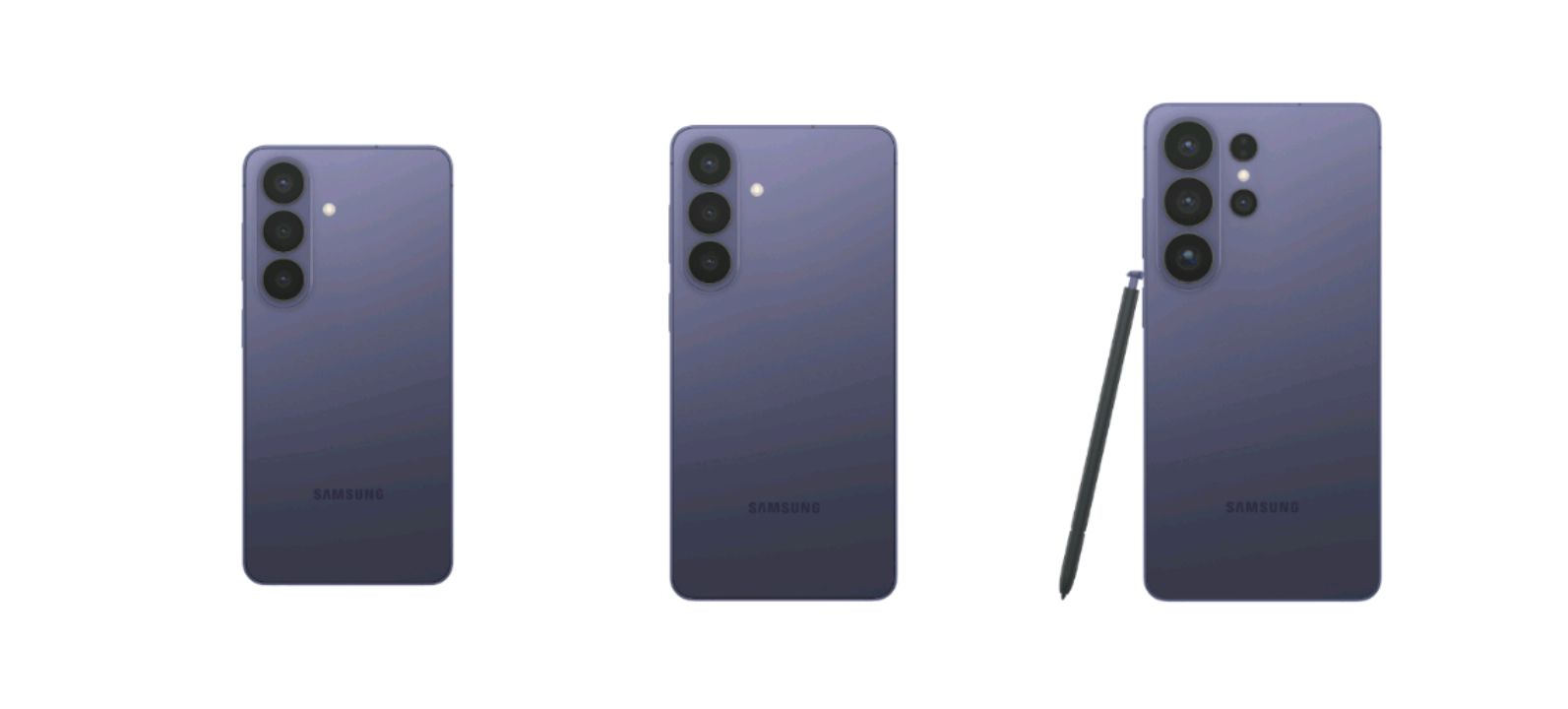
Battery sizes: what Samsung actually put in
The base model is the only one that got a bigger cell this year. The S26+ and S26 Ultra kept the capacities of their predecessors.
| Model | Battery (typical) | Change from last year | Source |
|---|---|---|---|
| Galaxy S26 | 4,300 mAh | Up from 4,000 mAh | Samsung Newsroom; S25 figure via PhoneArena |
| Galaxy S26+ | 4,900 mAh | Unchanged | Samsung Newsroom |
| Galaxy S26 Ultra | 5,000 mAh | Unchanged | Samsung Newsroom |
The EU energy labels, which GSMArena reported on, list slightly lower “rated” figures (4,755 mAh for the S26+ and 4,855 mAh for the Ultra). That is normal. Samsung markets the typical capacity, and the rated one is the minimum guaranteed value.
How long they last on 5G
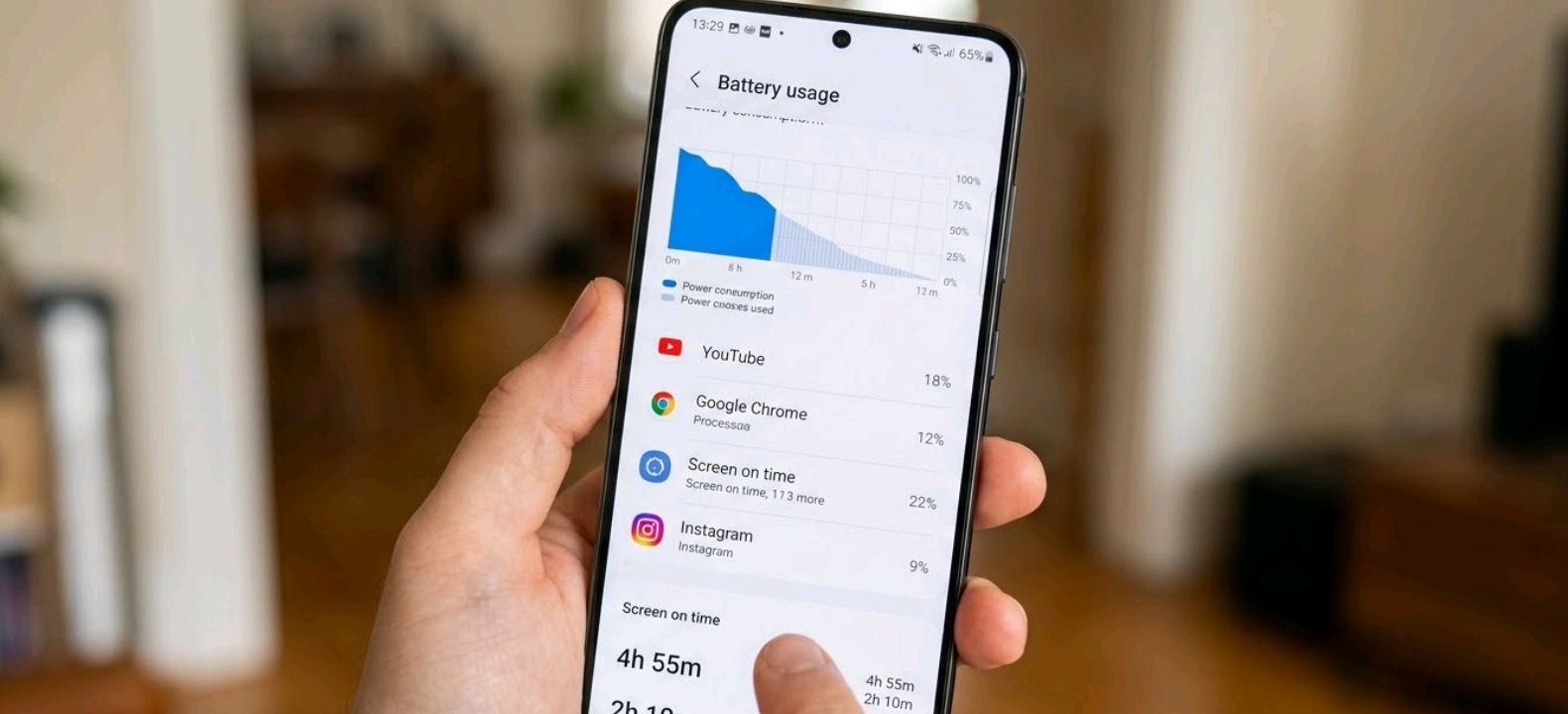
The most useful public numbers come from Tom’s Guide, which loops web browsing over 5G at a fixed 150 nits of brightness until the phone dies. It is a steady, repeatable test, which makes it good for comparing phones and poor for predicting your exact day.
| Phone | Battery | Continuous 5G browsing | Source |
|---|---|---|---|
| Galaxy S26 | 4,300 mAh | 11h 28m | Tom’s Guide S26 review |
| Galaxy S26+ | 4,900 mAh | 13h 13m | Tom’s Guide S26+ review (Snapdragon model) |
| Galaxy S26 Ultra | 5,000 mAh | 16h 10m | Tom’s Guide S26 Ultra battery test |
| iPhone 17 Pro Max | 5,088 mAh | 17h 54m | Tom’s Guide S26 Ultra battery test |
| OnePlus 15 | 7,300 mAh | 25h 13m | Tom’s Guide S26 Ultra battery test |
Tom’s Guide’s S26 and S26+ results reflect its review units and their respective chipsets. The S26+ result above comes from the Snapdragon model, so Exynos versions may deliver different results.
Two things stand out. First, the Ultra gets a lot more out of 5,000 mAh than the S26+ gets out of 4,900 mAh, which tells you capacity is only part of the story. Samsung says the Ultra also has a redesigned thermal system with a larger vapor chamber, and the Ultra sold globally runs a Snapdragon chip. Second, the Ultra still sits behind the iPhone 17 Pro Max and a long way behind the OnePlus 15, whose battery is nearly half as large again. Phones with 6,000mAh batteries or larger, like the ones in our vivo 6,000mAh and larger battery list, may offer longer endurance, but actual battery life also depends on processor efficiency, display settings and network conditions.
The chip question on the S26 and S26+
This is the part most spec sheets skip. The S26 Ultra runs a Snapdragon chip worldwide, but the S26 and S26+ are split by region. Tom’s Guide notes that the U.S. models use the Snapdragon 8 Elite Gen 5 for Galaxy, while many other markets receive Samsung’s Exynos 2600 variant.
The YouTube channel Android Addicts ran a drain test on one of each, both S26 units with the same 4,300 mAh battery, 5G on and Wi-Fi off. The Exynos unit shut down after 6 hours 48 minutes, while the Snapdragon unit kept going for another 2 hours 38 minutes. Put the other way round, the Exynos phone ran about 28 percent shorter. GSMArena and several other outlets reported the result. It is one test on one pair of phones, so read it as a warning sign and not a verdict.
For Nigerian buyers, the practical advice is simple. Before paying for an S26 or S26+, ask the seller which chip the exact unit uses, and check the model number on the box. Imported units from different markets can differ.
Does having 5G on actually drain more?
Honestly, there is no clean public number for it. I could not find a lab that ran the S26 with 5G on and off under identical conditions, so any percentage I gave you would be invented. What is well understood is the cause. A phone drains faster when it holds a weak signal, because the modem raises its transmit power, and when it keeps switching between 5G and 4G.
That matters in Nigeria, where 5G coverage is still patchy outside the big cities. If your area has a weak 5G signal, locking the phone to 4G/LTE can help. The setting sits under Connections, then Mobile networks, then Network mode. For a closer look at how another 5G phone handles this, see our OnePlus Nord 5 battery life test roundup.
Charging speed and battery lifespan
| Model | Wired (Samsung’s claim) | Wireless | Source |
|---|---|---|---|
| Galaxy S26 | Up to 25W, about 55% in 30 minutes | Up to 15W | Samsung Newsroom |
| Galaxy S26+ | Up to 45W, about 69% in 30 minutes | Up to 20W | Samsung Newsroom |
| Galaxy S26 Ultra | Up to 60W, about 75% in 30 minutes | Up to 25W | Samsung Newsroom |
Samsung’s 30-minute numbers are claims under its own test conditions, and the charger is sold separately. Tom’s Guide measured 71% in 30 minutes on the S26+, a little above Samsung’s figure. You also need a charger rated for the phone’s maximum speed, since a basic adapter will charge it more slowly.
The EU energy labels also rate all three phones to keep at least 80 percent of their capacity after 1,200 full charge cycles. For most people that is several years of daily charging. Samsung’s long update window helps too, and we cover it in how long Samsung phones get updates.
Which S26 suits you
The base S26 is the one to pick if you want a small phone and can live with a day that ends near the charger. The S26+ is the middle ground. The Ultra has the strongest endurance result of the three in the published test, making it the safest choice if battery life is your priority. Its screen is also where brightness settings matter most. Our HONOR 600 Lite vs Galaxy A56 display brightness comparison explains why peak brightness numbers and battery drain are linked. If you are weighing a Samsung against an iPhone, the iPhone 18 Pro vs iPhone 17 breakdown shows where Apple is heading on battery.
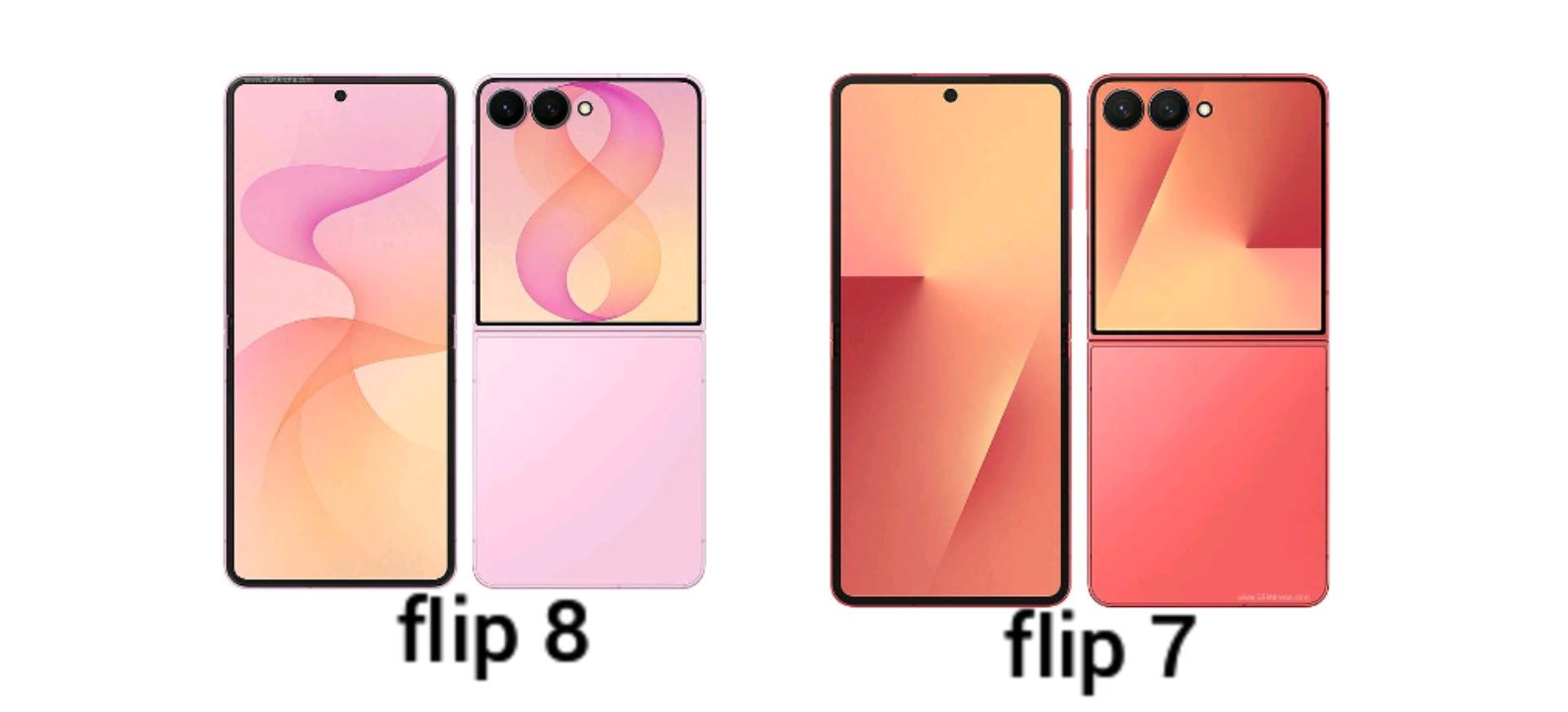
Budget is a fair reason to look elsewhere. Our guide to the best Samsung 5G phones under $300 covers cheaper models, and if you are curious about foldables, the Galaxy Z Flip8 vs Flip7 post looks at how Samsung handles battery in a smaller body.
FAQ
How long does the Galaxy S26 battery last with 5G on? In Tom’s Guide’s continuous 5G browsing test, the S26 lasted 11 hours 28 minutes, the S26+ 13 hours 13 minutes and the S26 Ultra 16 hours 10 minutes. Real days include calls, camera and gaming, so expect less than those figures.
Is the Galaxy S26 battery better than the S25? Only on the base model, which moved from 4,000 mAh to 4,300 mAh. The S26+ and S26 Ultra kept the same capacities as before.
Does 5G drain the battery faster than 4G? It can, mainly when the signal is weak or the phone keeps switching networks. I could not find a published S26 test that isolates 5G on versus off, so there is no reliable percentage to quote.
Does the Exynos or Snapdragon version last longer? One comparison found the Snapdragon S26 outlasting the Exynos S26 by 2 hours 38 minutes. It is a single test, so confirm the chip in the unit you are buying.
Which Galaxy S26 has the best battery life? The S26 Ultra, by a clear margin in the published tests. It is still behind the iPhone 17 Pro Max and OnePlus 15 in the same lab.
How long will the battery stay healthy? Samsung’s EU energy labels rate all three models to retain at least 80 percent capacity after 1,200 full charge cycles.
Sources
The figures in this article come from the published pages below. Lab results come from different outlets and test methods, so compare them as a guide and not as exact rankings.
- Samsung Newsroom: Samsung Unveils Galaxy S26 Series (official specification table: battery capacities, rated capacities and charging speeds)
- Tom’s Guide: Samsung Galaxy S26 review (S26 battery test, 11h 28m)
- Tom’s Guide: Samsung Galaxy S26 Plus review (S26+ battery test, 13h 13m, and charging test)
- Tom’s Guide: Galaxy S26 Ultra battery life tested (S26 Ultra, iPhone 17 Pro Max and OnePlus 15 results)
- PhoneArena: Galaxy S26 battery and charging (Samsung-confirmed capacities and charging speeds)
- GSMArena: EU energy labels confirm S26 battery capacities (rated capacities and 1,200-cycle rating)
- GSMArena: Exynos 2600 Galaxy S26 disappoints in battery test (report on the Android Addicts Exynos versus Snapdragon test)

Comments 0
Leave a comment