Table of Contents
Open Table of Contents
Overview
If you’ve been shopping Redmi phones in Nigeria lately, you already know the frustrating part isn’t finding a good phone — it’s finding one that’s still good after you check the price tag. The $200 mark sits in an odd spot: too much to justify an entry-level A-series, but not quite enough to casually grab a Note Pro+. That’s exactly the bracket this guide covers.
I cross-checked every spec below against Xiaomi’s official Nigeria product pages rather than relying on retailer copy, and left out anything I couldn’t verify. For this guide, I’m treating $200 as roughly ₦272,000–₦280,000, based on today’s exchange rate of ₦1,352–1,381 to $1 — but naira pricing on phones moves independently of the dollar conversion, swinging with import costs and retailer margins, so treat every figure below as a range, not gospel. Always confirm with the seller on the day you buy.
One important caveat: Redmi specifications can differ by region and by storage/RAM configuration, so check the exact model number and variant before buying — a unit sold as “Redmi 14C” imported from a different market may not match the specs listed here.
If you’re working with a tighter ceiling, our best Xiaomi phones under $150 guide covers the true budget tier, and if you can stretch further, the under $250 and under $300 roundups pick up right where this one ends.
How I ranked them: I weighted performance, display quality, battery life, camera hardware, charging speed, connectivity, current Nigerian pricing, and how much phone you get for the money. A cheaper phone doesn’t automatically rank higher — it has to offer a meaningful advantage at its price to earn a spot near the top.
Why $200 Is a Sweet Spot for Redmi Buyers
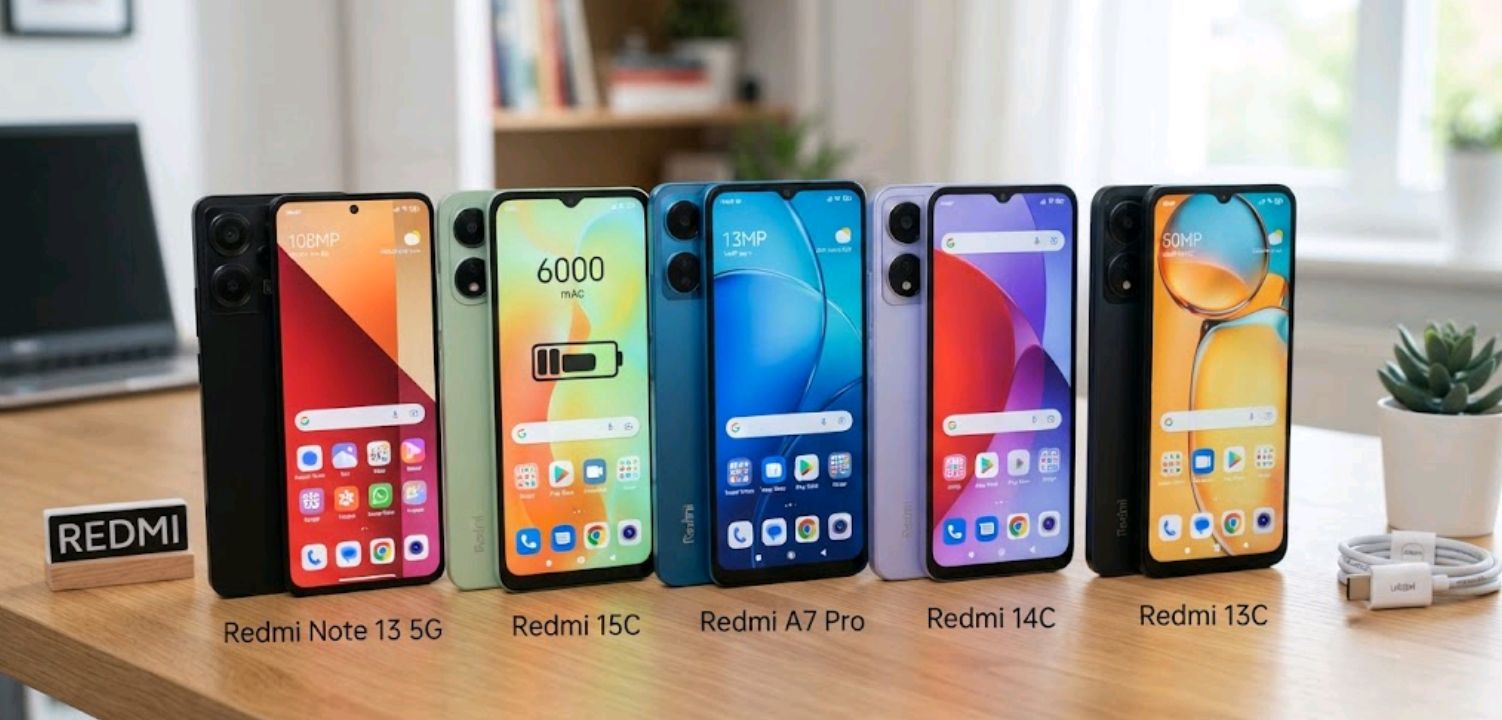
At this price, you start getting larger batteries (6,000mAh on a couple of these), 90–120Hz displays, USB-C charging across the board, and on the Note 13 5G, an AMOLED panel and 5G connectivity. None of that was standard at this price point a couple of generations back.
The Best Redmi Phones Under $200 Right Now
1. Redmi Note 13 5G — Best Overall

Chipset: MediaTek Dimensity 6080 | Display: 6.67” AMOLED, 120Hz | Battery: 5,000mAh, 33W | Camera: 108MP main + 8MP ultra-wide + 2MP macro
This is the only phone on the list with an AMOLED panel and 5G, and the Dimensity 6080 handles multitasking and light-to-mid gaming noticeably better than the Helio and Unisoc chips in the rest of this lineup. It’s the pick if you want the phone to still feel current in two years, not just on day one. Best for: Buyers who want the most “future-proof” spec sheet in this budget. Main drawback: It’s usually the priciest phone on this list, so shop around before committing.
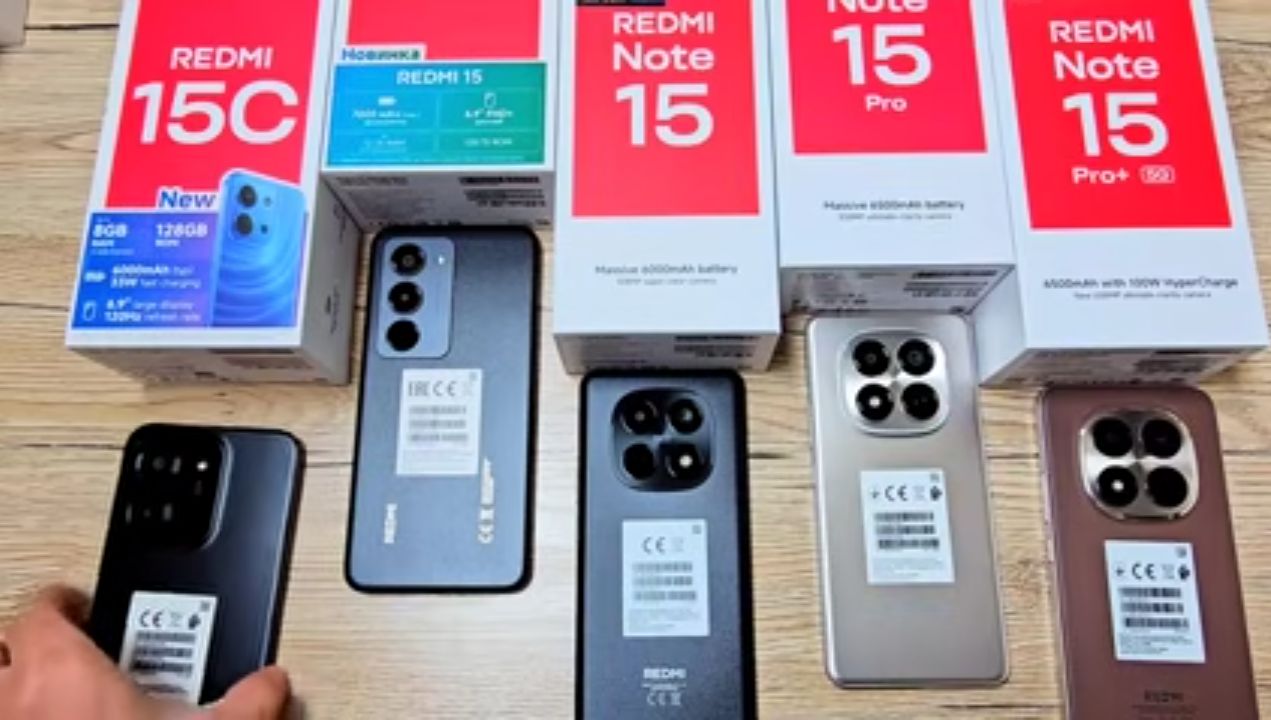
2. Redmi 15C — Best Battery and Value
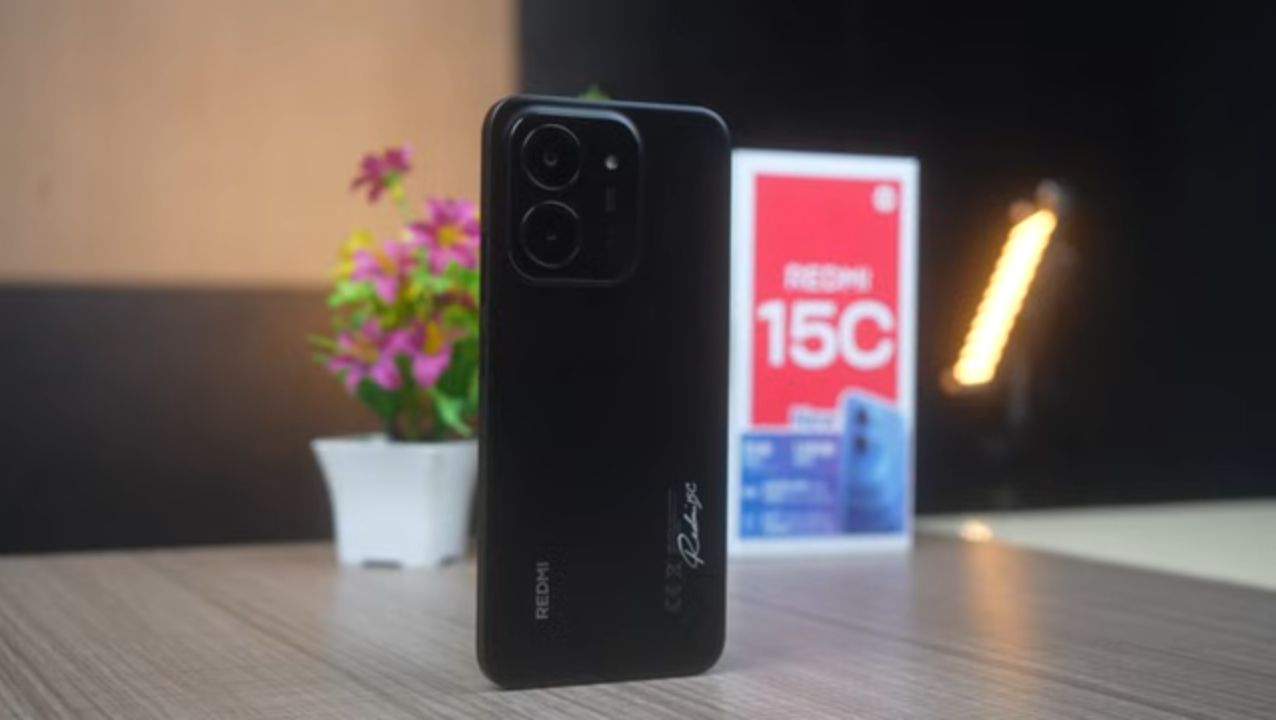
Chipset: MediaTek Helio G81-Ultra | Display: 6.9” IPS LCD, up to 120Hz | Battery: 6,000mAh, 33W | Camera: 50MP main + 2MP secondary
Xiaomi’s newest C-series phone bumps the battery to a genuine 6,000mAh (up from 5,160mAh on the 14C) and adds IP64 splash resistance, while keeping the price well under $200 in most listings. Its larger 6,000mAh battery should give it an endurance advantage over the Note 13 5G, although actual battery life depends heavily on network conditions, brightness, and usage. Best for: Heavy phone users who hate charging mid-day. Main drawback: No AMOLED, and the selfie camera drops to 8MP from the 14C’s 13MP.
3. Redmi A7 Pro — Best Cheap Battery-First Pick

Chipset: Unisoc T7250 | Display: 6.9” LCD, 120Hz | Battery: 6,000mAh, 15W | Camera: 13MP main + auxiliary lens
Launched in early 2026, the A7 Pro undercuts $200 by a wide margin in most listings, which is exactly why it’s here. It’s not a performance phone — the Unisoc T7250 is an entry-level chipset and 15W charging is slow next to the 33W on the 15C — but the 6,000mAh battery and 120Hz display are genuinely solid for the price. It’s part of Xiaomi’s newer budget generation and benefits from newer software than some older Redmi models still on shelves. For demanding games, however, the A7 Pro is the weakest choice here — don’t buy this one if gaming performance is important to you. Best for: First-time buyers or anyone whose main priority is battery life over speed. Main drawback: Weakest processor and camera on this list, and no NFC.
4. Redmi 14C — Good Affordable All-Rounder

Chipset: MediaTek Helio G81-Ultra | Display: 6.88” IPS LCD, 120Hz | Battery: 5,160mAh | Charging: 18W | Camera: 50MP main + 2MP macro
Still widely available and dependable for everyday tasks. It sits between the 13C and 15C in most specs, and often shows up in bundle deals that push it well under budget. Best for: Buyers who want a proven, no-surprises daily driver. Main drawback: Slightly outclassed by the newer 15C on battery and durability if the price gap is small.
5. Redmi 13C — Worth It Only at the Right Price
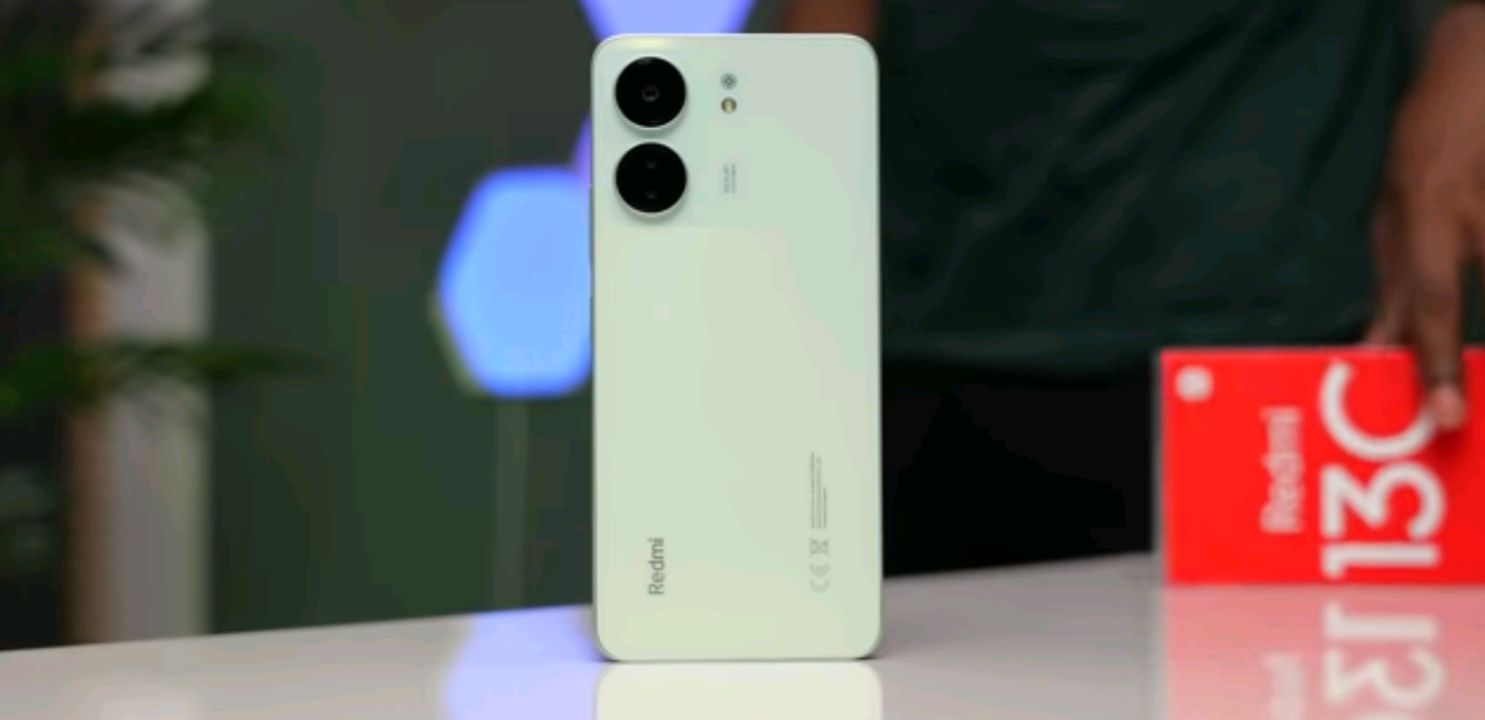
Chipset: MediaTek Helio G85 | Display: 6.74” IPS LCD, 90Hz | Battery: 5,000mAh, 18W | Camera: 50MP main + 2MP macro
The Redmi 13C remains a capable budget phone, and it does use USB-C (an earlier version of this guide incorrectly suggested otherwise — that’s been corrected). The newer 14C and 15C generally offer better value for similar or only slightly higher money, so this one earns its spot mainly when it’s discounted. Best for: Buyers who find it significantly discounted versus the 14C/15C. Main drawback: Smaller battery and slower refresh rate than its newer siblings, for often similar pricing.
Quick Comparison Table
| Model | Chipset | Display | Battery | Camera (Main) | Charging | Approx. Price (NGN)* |
|---|---|---|---|---|---|---|
| Redmi Note 13 5G | Dimensity 6080 | 6.67” AMOLED, 120Hz | 5,000mAh | 108MP | 33W | ₦230,000–₦270,000 |
| Redmi 15C | Helio G81-Ultra | 6.9” LCD, 120Hz | 6,000mAh | 50MP | 33W | ₦155,000–₦190,000 |
| Redmi A7 Pro | Unisoc T7250 | 6.9” LCD, 120Hz | 6,000mAh | 13MP | 15W | ₦122,000–₦150,000 |
| Redmi 14C | Helio G81-Ultra | 6.88” LCD, 120Hz | 5,160mAh | 50MP | 18W | ₦110,000–₦140,000 |
| Redmi 13C | Helio G85 | 6.74” LCD, 90Hz | 5,000mAh | 50MP | 18W | ₦125,000–₦180,000 |
*Figures reflect officially listed specs for the standard variant of each model — regional or imported units can differ, so confirm the exact model number before buying. Prices vary widely by retailer, RAM/storage configuration, and naira volatility — always confirm current pricing before purchase. Buying through an official Xiaomi retail partner or a platform with a return policy is generally safer than an unverified reseller, especially in physical markets.
What to Actually Check Before Buying
- Chipset, not just megapixels. A 108MP camera on a weak chipset still lags when processing shots. For performance, the Dimensity 6080 is the clear step-up in this lineup, while the Helio G85/G81-Ultra and Unisoc T7250 sit in the entry-level range — though real-world performance also depends on RAM, storage type, and software optimization, not chipset alone.
- RAM and storage floor. Aim for at least 4GB/64GB, though 6GB/128GB ages noticeably better as apps grow heavier.
- NFC, if you use tap-to-pay or transit cards. The A7 Pro and some 13C units skip it — check before assuming it’s included.
- Warranty source. Grey-market units sold cheaper often lack official Xiaomi Nigeria warranty coverage — factor that risk into the “discount.”
If you’re also comparing brands rather than committing to Redmi outright, our best Realme phones guide is a fair next stop, since Realme tends to compete directly in this same price band.
FAQ
Is $200 enough for a genuinely good Redmi phone in Nigeria in 2026? Yes, with realistic expectations. You won’t get flagship cameras or top-tier chips, but you’ll get a phone that handles daily use, moderate gaming, and social media comfortably — which is what most buyers in this bracket actually need.
Should I buy new or fairly used at this budget? A well-verified used Note-series phone can outperform a brand-new A-series in raw specs for similar money. It depends on your risk tolerance — new comes with warranty peace of mind, used can stretch your budget toward a better chipset.
Do any of these support 5G? The Redmi Note 13 5G is the clearest option here, thanks to its Dimensity 6080 chipset. The rest of this list (A7 Pro, 13C, 14C, 15C 4G variants) are 4G-only, which is fine for now given how uneven 5G coverage remains in several Nigerian cities.
How reliable is Redmi’s software update policy on these models? Update support varies significantly by model and region, and Xiaomi hasn’t been fully consistent about long-term support on entry-level phones. Check Xiaomi’s current support information for the exact model before buying rather than assuming every Redmi phone receives the same number of Android upgrades.
Where’s the safest place to buy in Nigeria? Official Xiaomi retail partners or established platforms with return policies. Physical markets can offer lower prices, but always test the phone physically — check IMEI, battery health, and screen response — before paying.
Prices and specifications referenced in this guide were checked against official Xiaomi Nigeria and Xiaomi Global specification pages as of publication. Naira figures fluctuate with exchange rates and import costs — treat them as directional, not final.

Comments 0
Leave a comment