Table of Contents
Open Table of Contents
- Overview
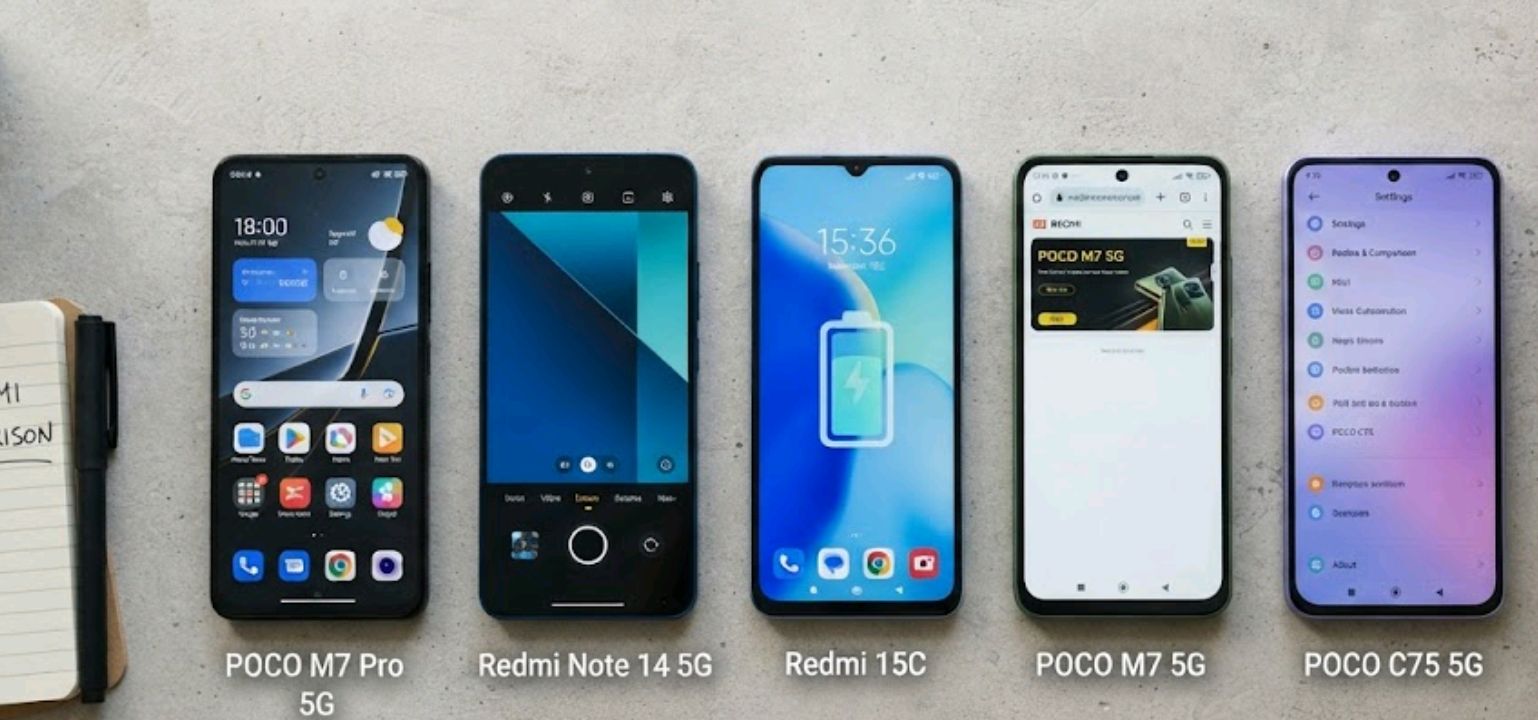
- At a glance
- How we ranked these phones
- Redmi Note 14 5G (6GB/128GB & 8GB/256GB) — the strongest all-round pick
- POCO M7 Pro 5G (6GB/128GB & 8GB/256GB) — same core hardware, sharper styling
- Redmi 15C (4GB/128GB, 6GB/128GB & 8GB/256GB) — built around one number: 6,000mAh
- POCO M7 5G (4GB/128GB & 8GB/256GB) — the biggest screen on this list
- POCO C75 5G (4GB/64GB & 4GB/128GB) — the cheapest phone here that still gets 5G right
- Quick comparison table
- Which one should you actually buy?
- FAQ
- Sources
Overview
Pricing and update-policy details last checked: August 2026. Naira and dollar figures shift with FX rates and retailer stock — always confirm current pricing before buying.
Xiaomi doesn’t sell a single phone under $250 anymore — it sells a small ecosystem of them. Between the Redmi and POCO badges, there are at least five distinct models fighting for the same wallet, and they’re not interchangeable the way marketing copy makes them sound. One prioritizes a genuinely good AMOLED panel. Another exists purely to survive a full day without you thinking about the charger. A third is basically a cut-price gaming phone wearing a budget badge.
The problem for most buyers isn’t a lack of options under $250 — it’s that Xiaomi ships so many of them that picking the wrong one is easy. This guide breaks down the five models actually worth considering right now, what each one trades away to hit its price, and which one fits which kind of buyer.
At a glance
| Need | Recommended Phone |
|---|---|
| Best overall | Redmi Note 14 5G |
| Best battery | Redmi 15C |
| Best display | POCO M7 Pro 5G |
| Best under $130 | POCO C75 5G |
| Biggest screen | POCO M7 5G |
How we ranked these phones
Rankings here weigh six things against each other rather than any single spec: display quality, chipset performance, camera output, real-world battery endurance, software update support, and street price. Where possible, we leaned on third-party lab tests and hands-on reviews (GSMArena, 91mobiles, GadgetMatch, and others cited throughout) rather than manufacturer marketing claims, since Xiaomi’s on-paper battery and brightness figures don’t always match what independent testing finds in practice. A phone that wins on paper but loses in real usage — slower charging than advertised, weaker screen-on time, a chipset that throttles under load — ranks accordingly.
One real-world data point worth calling out: despite having a smaller 5,110mAh battery against the Redmi 15C’s 6,000mAh cell, the Redmi Note 14 5G’s AMOLED display and faster chipset mean it typically delivers around 6–7 hours of screen-on time in independent testing, while the 15C’s simpler LCD panel and lighter chipset regularly stretch past 8–9 hours despite the smaller capacity difference — proof that battery size alone doesn’t predict real endurance. On the performance side, independent AnTuTu benchmarking puts the Dimensity 7025 Ultra (used in the Note 14 5G and M7 Pro 5G) roughly 10% ahead of the Snapdragon 4 Gen 2 in the POCO M7 5G, which tracks with hands-on reports that the Dimensity chip handles titles like PUBG Mobile more comfortably, though neither is built for sustained high-refresh gaming sessions.
Redmi Note 14 5G (6GB/128GB & 8GB/256GB) — the strongest all-round pick
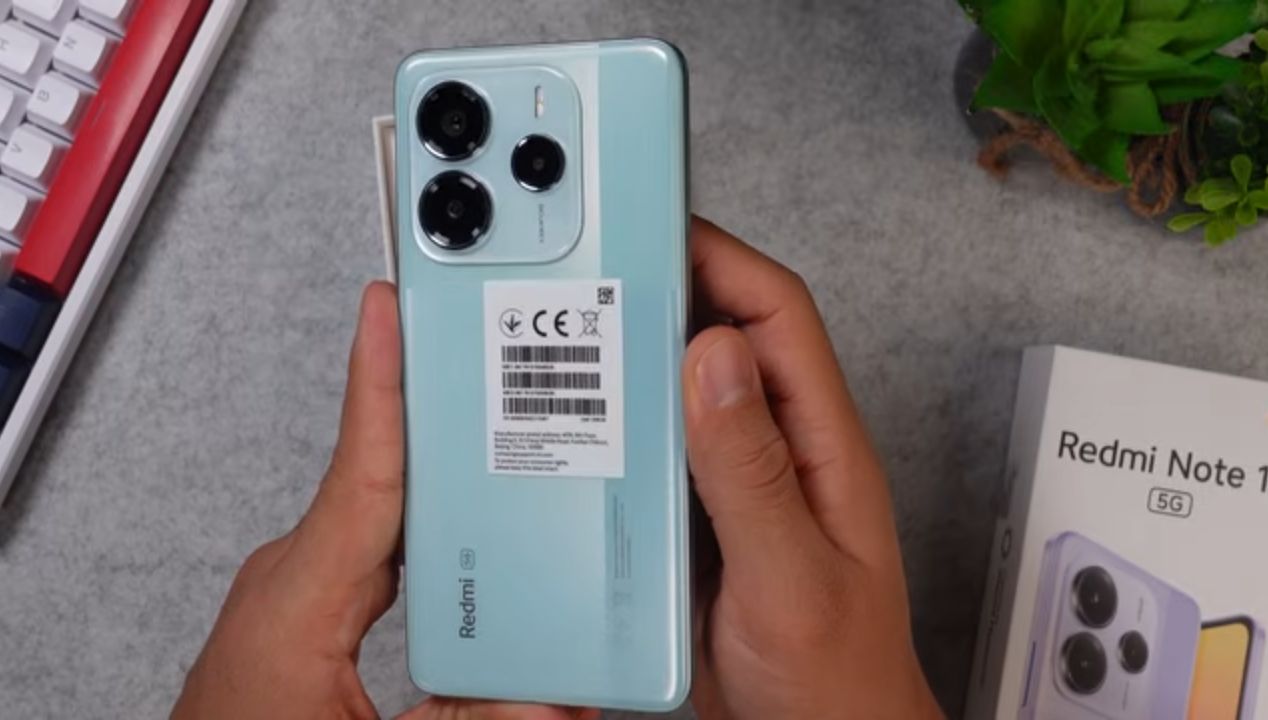
The Redmi Note 14 5G earns the top spot because it has the fewest meaningful compromises in this price range, not because it wins every category outright. The 6.67-inch AMOLED panel runs at 120Hz with a genuinely bright 2,100-nit peak, which matters more than most spec sheets suggest — outdoor visibility is where cheap LCD phones usually fall apart, and this one doesn’t.
Under the hood is a MediaTek Dimensity 7025 Ultra, paired with either 6GB/128GB or 8GB/256GB depending on the configuration you buy. It won’t touch a Snapdragon 7-series chip in raw gaming benchmarks, but for everyday multitasking, streaming, and light-to-moderate gaming it stays smooth. The 108MP main camera adds optical image stabilization (OIS), which is unusual at this price and noticeably improves handheld low-light shots and video steadiness compared to the non-stabilized sensors on cheaper Redmi models — this is the biggest reason it ranks above the POCO M7 Pro 5G below, which shares almost identical internals but drops OIS entirely.
Battery is a 5,110mAh cell with 45W wired charging. On software, Xiaomi’s official India listing confirms two major Android updates plus four years of security updates at launch — and per an early-2026 update-policy expansion reported by multiple Xiaomi-focused outlets, that security window has since been extended to run through 2031, matching the improved commitment also given to the Redmi 15C 5G and POCO M7 5G below. The IP64 rating covers splashes but not submersion, so treat it as rain-resistant rather than waterproof.
Pros
- Bright, sharp AMOLED display at 120Hz
- OIS on the main camera — rare at this price
- Fast 45W charging
- Extended security update window (through 2031, per 2026 policy expansion)
Cons
- Gaming performance is average, not strong
- No official waterproof rating (IP64 only covers splashes)
- 8GB/256GB configuration can creep toward the top of the $250 budget
Skip this one if: you’re chasing serious gaming performance (Genshin Impact–tier titles will show frame drops) or you specifically want the largest possible battery — the Redmi 15C beats it comfortably on endurance.
Verdict: Display ★★★★★ · Camera ★★★★☆ · Battery ★★★★☆ · Performance ★★★★☆ · Value 9.2/10
- Global price (8GB/256GB): ~$180–$240
- Nigeria street price (Jumia/Jiji/Slot listings): ₦230,000–₦350,000, depending on RAM/storage and retailer
POCO M7 Pro 5G (6GB/128GB & 8GB/256GB) — same core hardware, sharper styling
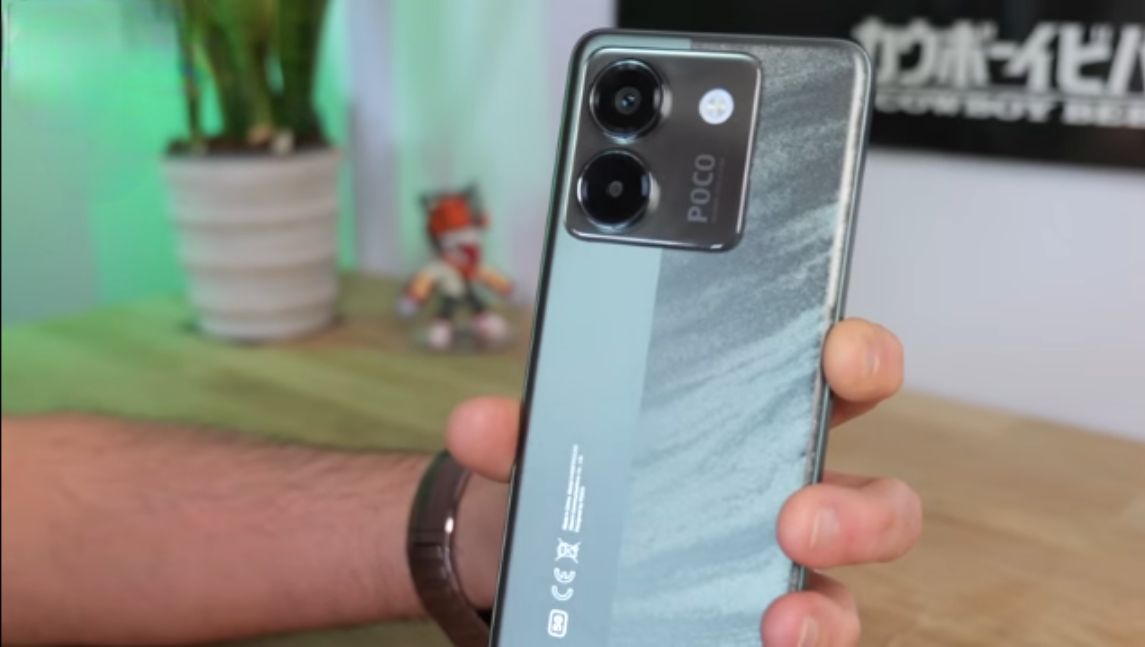
POCO’s M7 Pro is close enough to the Redmi Note 14 5G under the hood — same Dimensity 7025 Ultra, same 5,110mAh battery, same 45W charging — that the decision between them mostly comes down to which camera and display trade-off you’d rather live with. The M7 Pro’s 6.67-inch AMOLED panel hits the same 2,100-nit peak brightness and 120Hz refresh rate, but drops to a simpler camera setup (50MP main plus a 2MP unit, no OIS) instead of the Note 14’s stabilized triple system. That single difference is a large part of why it ranks below the Note 14 despite otherwise near-identical hardware: OIS tends to improve everyday photography more consistently than a styling refresh improves the ownership experience.
What POCO does differently is the finishing: Gorilla Glass 5 up front, an IP64 rating, and colorway options like Lavender Frost and Olive Twilight that lean more toward a younger buyer than Redmi’s more conservative palette. Worth noting on software: unlike the Note 14 5G, the M7 Pro 5G was not included in Xiaomi’s broader 2026 security-update extension — its commitment currently runs to around 2029, roughly two years short of its Redmi sibling.
Pros
- AMOLED display matching the Note 14 5G’s brightness and refresh rate
- Fast 45W charging
- Distinct styling and colorways
Cons
- No OIS on the main camera
- Shorter confirmed security-update window than the Redmi Note 14 5G
- 8GB/256GB configuration commonly lists above the $250 ceiling
Skip this one if: camera stabilization matters to you more than styling, or your budget is firm at $250 — the 8GB/256GB configuration commonly lists above that ceiling, so only the base 6GB/128GB variant reliably fits this list’s budget.
Verdict: Display ★★★★★ · Camera ★★★★☆ · Battery ★★★★☆ · Performance ★★★★☆ · Value 8.5/10
- Global price (6GB/128GB): ~$220–$260 — note that 8GB/256GB configurations frequently exceed $250; confirm the exact variant before buying if the $250 ceiling matters to you
- Nigeria street price (Jumia/Jiji/Slot listings): ₦260,000–₦370,000, depending on RAM/storage and retailer
Redmi 15C (4GB/128GB, 6GB/128GB & 8GB/256GB) — built around one number: 6,000mAh
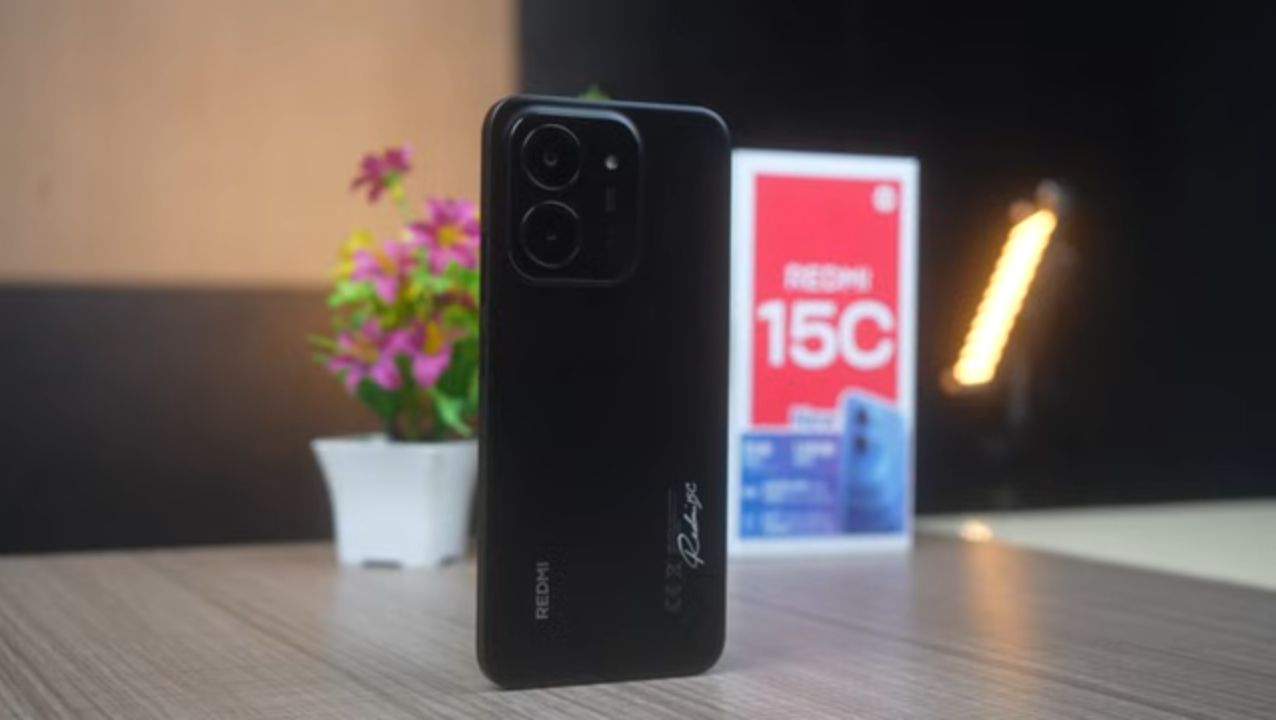
The Redmi 15C doesn’t try to compete on display technology or camera output — it’s an IPS LCD panel, not AMOLED, and the 50MP main camera has no stabilization. What it does instead is chase battery life harder than anything else in this price bracket. The 6,000mAh cell is genuinely large for a sub-$150 phone, and Xiaomi pairs it with 33W charging, up from the 18W on the previous-generation 14C. That single trade-off — display and camera quality for battery capacity — is why it ranks below the Note 14 and M7 Pro overall, but ahead of both for anyone whose main complaint about their current phone is that it dies before dinner.
Real-world battery testing backs up the marketing here: reviewers consistently report a full day of heavy use with charge left over, and Xiaomi’s own claims — up to 22 hours of video playback or 82 hours of music — track reasonably close to what owners report. The MediaTek Helio G81 Ultra chipset (or Dimensity 6300 on the 5G variant) is not built for gaming; it handles social apps, messaging, and light browsing fine but struggles with anything demanding. On software, the Redmi 15C 5G specifically has been reported by multiple outlets — including Notebookcheck — to carry a genuinely long six-year security-update commitment running through October 2031, which is unusually strong for a phone in this price bracket and worth double-checking against Xiaomi’s current support page for your exact regional variant before you buy, since 4G and 5G models aren’t always covered identically.
Pros
- Largest battery in this roundup (6,000mAh)
- Faster 33W charging than the previous-gen 14C
- IP64 splash resistance
- Reportedly long security-update commitment on the 5G variant
Cons
- LCD display, not AMOLED
- No camera stabilization
- Weak for gaming or demanding apps
- Update policy can differ between the 4G and 5G variants — confirm before buying
Skip this one if: you want a sharp AMOLED display, a stabilized camera, or any kind of gaming headroom — the 15C isn’t built for any of those.
Verdict: Display ★★★☆☆ · Camera ★★★☆☆ · Battery ★★★★★ · Performance ★★★☆☆ · Value 9.0/10
- Global price: ~$107–$150 depending on RAM/storage and 4G vs. 5G variant
- Nigeria street price (Jumia/Jiji/Slot listings): ₦140,000–₦220,000, depending on RAM/storage and retailer
POCO M7 5G (4GB/128GB & 8GB/256GB) — the biggest screen on this list
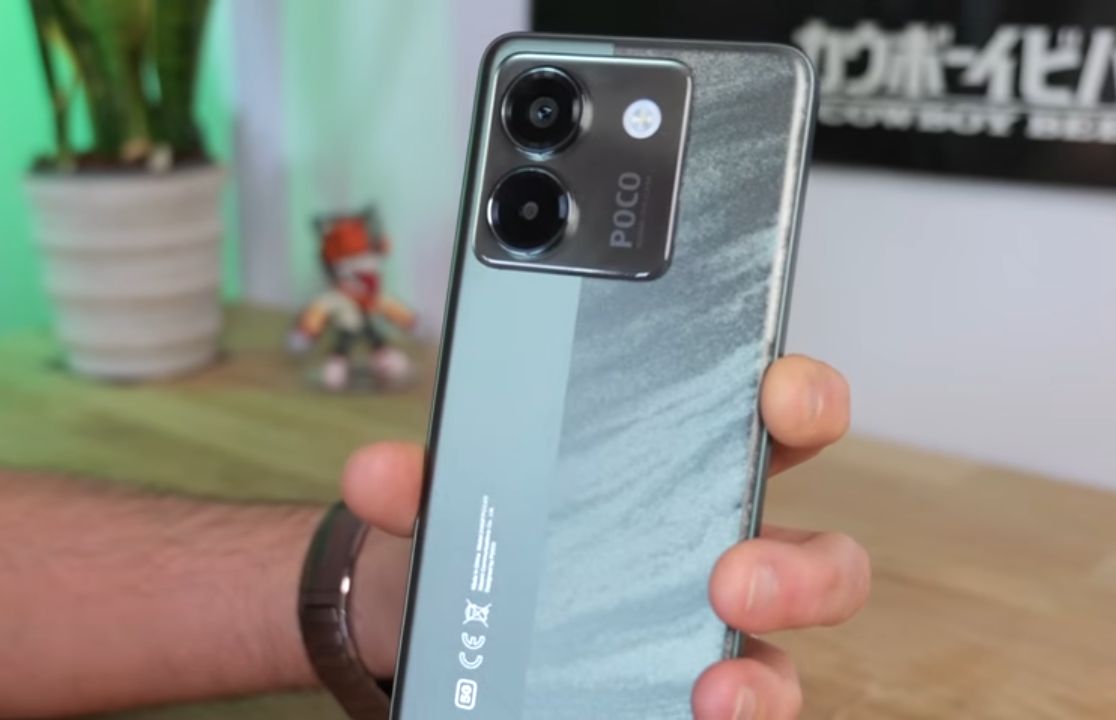
POCO’s regular M7 5G swaps priorities again: a 6.9-inch IPS LCD display running at up to 144Hz, paired with a 5,160mAh battery and a Qualcomm Snapdragon 4 Gen 2 chipset. It’s the largest screen in this roundup by a clear margin, which makes it a reasonable pick for people who mainly use their phone for video and social feeds and don’t mind the size in hand — that screen size, more than any single spec win, is why it sits above the C75 5G and below the AMOLED-equipped models in this ranking.
The trade-off is charging speed — it’s capped at 18W, noticeably slower than the Redmi Note 14 5G or POCO M7 Pro, so topping up takes longer even though the battery itself isn’t dramatically bigger. The 50MP main camera is competent for daylight shots but doesn’t carry stabilization, and there’s no AMOLED panel here, so blacks and contrast are a step below the Redmi Note 14 5G. On the software side, the M7 5G launched with two major Android updates and four years of security patches, and — per the same early-2026 policy expansion mentioned above — has reportedly since been extended to a security window running through 2031.
Pros
- Largest, fastest-refreshing display in this roundup (up to 144Hz)
- Reportedly extended security-update window (through 2031)
- Dust/splash resistance and a 3.5mm headphone jack
Cons
- Slow 18W charging
- LCD panel, not AMOLED — weaker contrast than the Note 14 5G or M7 Pro
- No camera stabilization
Skip this one if: you want a compact phone, fast charging, or a display with real contrast — the LCD panel and slow charging are the two clearest weak points here.
Verdict: Display ★★★☆☆ · Camera ★★★☆☆ · Battery ★★★★☆ · Performance ★★★☆☆ · Value 8.0/10
- Global price: ~$120–$190 depending on region and storage tier
- Nigeria street price (Jumia/Jiji/Slot listings): ₦165,000–₦230,000, depending on RAM/storage and retailer
POCO C75 5G (4GB/64GB & 4GB/128GB) — the cheapest phone here that still gets 5G right
The C75 5G is essentially a rebadged Redmi 14C with a different name on the back, and at under $130 in most markets, it’s the entry point for anyone who wants a Xiaomi-family phone with 5G support without stretching toward $200. The 6.88-inch IPS LCD display runs at up to 120Hz, and the 50MP Sony sensor rear camera is a genuinely unusual inclusion at this price — POCO markets it as the only phone in its segment with a Sony sensor, and while the surrounding hardware doesn’t fully take advantage of it, the sensor itself outperforms typical budget camera modules in daylight. That camera sensor, combined with 5G at this price floor, is what puts it ahead of other sub-$130 options rather than any single headline spec.
Performance comes from a Snapdragon 4s Gen 2, adequate for calls, messaging, and light apps but not something you’d want for gaming. Battery sits at 5,160mAh with 18W charging — serviceable, not exceptional. On software, GSMArena’s hands-on review confirms the C75 5G ships with a commitment of two major Android updates plus four years of security updates — and unlike the Note 14 5G, Redmi 15C 5G, and POCO M7 5G above, it was not included in Xiaomi’s broader 2026 update-policy extension, so its support window currently runs shorter than its stablemates on this list, to around 2028.
Pros
- 50MP Sony sensor camera — unusual at this price
- 5G support well under $130
- Confirmed 4-year security update commitment
Cons
- Not included in Xiaomi’s 2026 update-policy extension — shorter support window than other phones here
- Slow 18W charging
- Weak for gaming
Skip this one if: you want anything more than basic daily use — gaming, serious photography, and fast charging are all outside what this phone is built for.
Verdict: Display ★★★☆☆ · Camera ★★★★☆ · Battery ★★★☆☆ · Performance ★★★☆☆ · Value 8.8/10
- Global price: ~$99–$139 depending on RAM/storage
- Nigeria street price (Jumia/Jiji/Slot listings): ₦115,000–₦150,000, depending on RAM/storage and retailer
Quick comparison table
| Model | Chipset | Display | Battery | Global Price (USD) | Nigeria Street Price (NGN) |
|---|---|---|---|---|---|
| Redmi Note 14 5G | Dimensity 7025 Ultra | 6.67” AMOLED, 120Hz | 5,110mAh, 45W wired | $180–$240 | ₦230,000–₦350,000 |
| POCO M7 Pro 5G | Dimensity 7025 Ultra | 6.67” AMOLED, 120Hz | 5,110mAh, 45W wired | $220–$260* | ₦260,000–₦370,000 |
| Redmi 15C | Helio G81 Ultra / Dimensity 6300 (5G) | 6.9” IPS LCD, 120Hz | 6,000mAh, 33W wired | $107–$150 | ₦140,000–₦220,000 |
| POCO M7 5G | Snapdragon 4 Gen 2 | 6.9” IPS LCD, up to 144Hz | 5,160mAh, 18W wired | $120–$190 | ₦165,000–₦230,000 |
| POCO C75 5G | Snapdragon 4s Gen 2 | 6.88” IPS LCD, 120Hz | 5,160mAh, 18W wired | $99–$139 | ₦115,000–₦150,000 |
Only the base 6GB/128GB POCO M7 Pro 5G reliably fits under $250 — 8GB/256GB configurations often exceed that ceiling.
Global prices reflect retailer and marketplace listings, not a single fixed MSRP. Nigeria figures are street/retail prices pulled from online marketplaces (Jumia, Jiji, Slot) rather than an official Xiaomi Nigeria price list, since Xiaomi doesn’t run direct retail in the market — expect some variance between vendors. Both were last checked in August 2026. Always confirm current stock, warranty coverage, and band compatibility with your carrier before buying — especially on grey-market or import listings.
Which one should you actually buy?
If you’re not sure which trade-off matters to you, default to the Redmi Note 14 5G. It has the fewest weak points of anything on this list, and the AMOLED display plus stabilized camera and longer software runway justify sitting near the top of the $250 ceiling rather than the bottom. If you specifically want the POCO name or a different finish and don’t care about camera stabilization, the M7 Pro 5G is a fair swap at a similar price — just confirm you’re looking at the 6GB/128GB variant if $250 is a hard limit.
For buyers who charge once and forget about it, the Redmi 15C is the easy recommendation — it gives up display quality and camera stabilization, but almost nobody who buys it for battery life ends up disappointed on that specific metric. And if the budget genuinely can’t stretch past $130, the POCO C75 5G is the rare entry-level phone that doesn’t force you into 4G-only hardware to hit that price, even if its update window is shorter than its stablemates.
If Xiaomi’s lineup still doesn’t match what you’re after, our guides to the best Infinix phones and best Tecno phones cover similar budget tiers with different trade-offs, and the best itel phones guide goes even lower if $250 is still more than you want to spend.
FAQ
Is the Redmi Note 14 5G better than the POCO M7 Pro 5G? They share the same chipset and battery, so it comes down to camera and software — the Note 14 5G’s optical stabilization gives it an edge for photos and video, and its confirmed security-update window currently runs longer than the M7 Pro’s. The M7 Pro leans on styling and colorway choices instead.
Which Xiaomi phone under $250 has the best battery life? The Redmi 15C, by a clear margin. Its 6,000mAh cell is the largest in this price bracket, and real-world testing backs up Xiaomi’s day-plus endurance claims.
Do any of these phones support 5G? All five do, though the Redmi 15C is sold in both 4G and 5G variants — double-check the listing before buying if 5G matters to you, since the 4G version is often priced lower and easy to mix up with its sibling, and their update commitments aren’t necessarily identical.
Is the POCO C75 5G really just a rebadged Redmi 14C? Largely, yes. The core hardware — chipset, battery, display resolution — matches the Redmi 14C closely, with POCO branding, colorways, and minor software differences layered on top.
How many years of Android updates do these phones get? It varies more than you’d expect, and it’s changed recently. At launch, most of these phones shipped with a standard commitment of two major Android updates plus four years of security patches. In early 2026, Xiaomi extended that security window for several models — including the Redmi Note 14 5G, Redmi 15C 5G, and POCO M7 5G — out to 2031, according to multiple outlets tracking Xiaomi’s update policy. The POCO C75 5G and POCO M7 Pro 5G were not part of that extension and currently sit at shorter windows (roughly 2028 and 2029 respectively). Because policies can still shift, confirm the current commitment for your specific regional variant on Xiaomi’s official support page before treating any of these as a long-term device.


Comments 0
Leave a comment