Table of Contents
Open Table of Contents
- Overview
- Quick comparison table
- 1. Nothing Phone (3) — the flagship with the most balanced camera trio
- 2. Nothing Phone (4a) Pro — the newest and longest zoom in the lineup
- 3. Nothing Phone (3a) Pro — best affordable long-range zoom
- 4. CMF Phone 2 Pro — best ultra-budget dedicated zoom
- 5. Nothing Phone (3a) — solid all-rounder, shorter zoom
- Also worth a look: Nothing Phone (2a) Plus
- Related reading
- FAQ
Overview
Nothing built its name on transparent backs and Glyph lights, but the camera hardware behind that design has quietly gotten serious. The brand went from a dual 50MP setup on the original Phone (1) to periscope telephoto lenses across multiple price tiers by 2026.
This list ranks the five Nothing-family phones (including the CMF sub-brand) still worth considering for camera performance in 2026, based on official spec sheets and independently researched review data from GSMArena, DPReview, Digital Camera World, Tech Advisor, and Expert Reviews. Not every phone here launched in 2026 — some are 2025 models — but all five remain current, purchasable options this year. The ranking weighs overall camera versatility, with dedicated zoom capability counted more heavily than raw megapixel count, since resolution alone doesn’t determine image quality. Pricing is listed in USD at global launch MSRP, since Naira pricing shifts too often with exchange rates to stay accurate for long — check current listings before buying.
Quick comparison table
| Phone | Main camera | Telephoto | Ultrawide | Selfie | Launch price (USD) |
|---|---|---|---|---|---|
| Nothing Phone (3) | 50MP, 1/1.3”, f/1.68, OIS | 50MP periscope, 3x, f/2.7, OIS | 50MP, f/2.2 | 50MP, no AF | ~$799 |
| Nothing Phone (4a) Pro | 50MP Sony LYT-700C, 1/1.56”, f/1.9, OIS | 50MP Samsung JN5 periscope, 3.5x (80mm), f/2.9, OIS | 8MP, f/2.2 | 32MP, f/2.2 | ~$499 |
| Nothing Phone (3a) Pro | 50MP, 1/1.57”, f/1.9, OIS | 50MP periscope, 3x (70mm), f/2.55, OIS | 8MP, f/2.2 | 50MP, f/2.2 | ~$459 |
| CMF Phone 2 Pro | 50MP Samsung ISOCELL GN9, f/1.9 | 50MP OmniVision OV50D, 2x, f/1.9 | 8MP, f/2.2 | 16MP, f/2.45 | ~$279 |
| Nothing Phone (3a) | 50MP Samsung ISOCELL GN9, f/1.88, OIS | 50MP, 2x (50mm), f/2.0, EIS only | 8MP, f/2.2 | 32MP, f/2.2 | ~$379 |
Confirmed specs sourced from GSMArena and manufacturer listings. Launch prices vary by market and storage configuration; figures shown are approximate global launch prices (typically the lowest-storage US or UK configuration) rather than current retail prices.
1. Nothing Phone (3) — the flagship with the most balanced camera trio
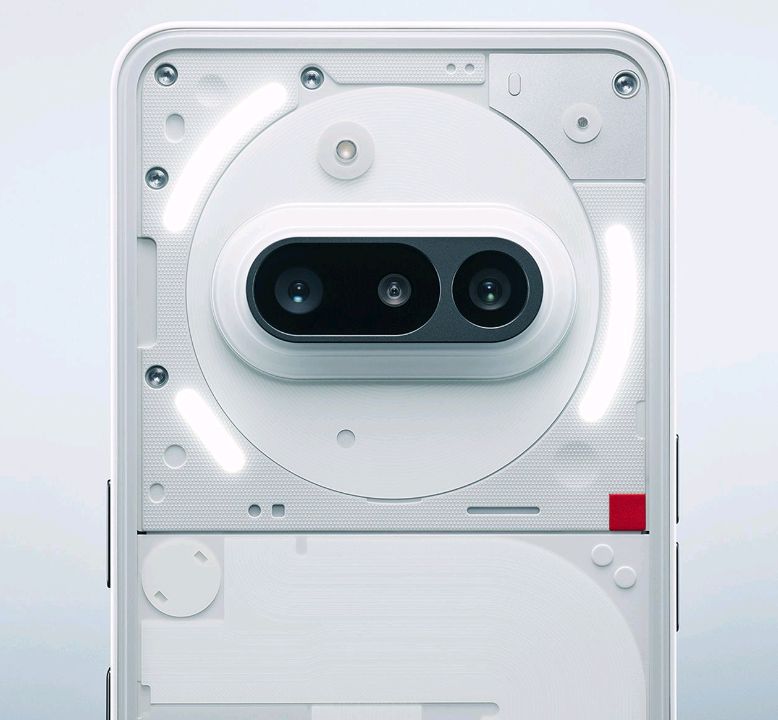
Nothing’s self-described “first true flagship” is also its most complete camera system to date, and the reason it tops this list: it offers the most complete combination here of a large main sensor and genuine long-range periscope zoom, backed by the only 50MP ultrawide and 50MP selfie camera in this lineup. All three rear lenses use 50MP sensors, headlined by a 1/1.3” main sensor behind an f/1.68 lens with optical image stabilization. The telephoto is a 50MP, f/2.7 periscope unit that gives real 3x optical reach instead of the digital-crop zoom most phones in this range settle for.
Reviewers have generally found the main camera’s daylight output detailed and naturally colored, though some note it isn’t quite the sharpest in its class when pixel-peeping. The 50MP front camera also jumps to 4K 60fps video, a big step up from the Phone (2)‘s 1080p 30fps ceiling. Where it loses ground to the Phone (4a) Pro below is raw zoom range — 3x optical against the newer phone’s 3.5x optical and up to 140x ultra zoom — and it costs $300 more.
Best for: buyers who want the most balanced camera trio in the Nothing lineup — strong main, ultrawide, and selfie cameras together — and don’t mind paying flagship money for it.
2. Nothing Phone (4a) Pro — the newest and longest zoom in the lineup
Announced in March 2026, the Phone (4a) Pro is Nothing’s most recent camera flagship and the one this list previously missed. Its main camera uses a Sony LYT-700C sensor, a step up from the Samsung sensors found on the (3a) Pro, paired with a 50MP Samsung ISOCELL JN5 periscope telephoto offering 3.5x optical zoom (80mm equivalent), 7x lossless in-sensor crop, and up to 140x ultra zoom — the longest zoom range Nothing has shipped on any phone. Both the main and telephoto lenses get OIS.
Reviewers have generally praised the camera system for the price, particularly the periscope’s daytime detail and cleaner night shots than the standard Phone (4a). The trade-off is the ultrawide, an 8MP Sony IMX355 sensor identical to the one on the (3a) Pro and CMF Phone 2 Pro — noticeably behind the Phone (3)‘s 50MP ultrawide. It’s worth noting the (3a) Pro’s telephoto actually uses a physically larger sensor (1/1.95” versus the (4a) Pro’s 1/2.75”), so the newer phone’s longer zoom range doesn’t automatically mean better telephoto image quality in every condition — just more reach.
Best for: buyers who want the newest, longest-reaching zoom Nothing currently sells, and are comfortable paying flagship-adjacent money ($499) for it.
3. Nothing Phone (3a) Pro — best affordable long-range zoom
The (3a) Pro undercuts the Phone (3) by roughly $340, and the (4a) Pro by about $40, while still packing a 50MP periscope telephoto — a 1/1.95” Sony LYTIA 600 sensor offering 3x optical zoom (70mm equivalent), 6x lossless in-sensor crop, and OIS. That’s a periscope camera at a price point where most rivals, including the Pixel 8a and older iPhone SE-class devices, skip telephoto lenses entirely, and its telephoto sensor is physically larger than the one on the newer (4a) Pro.
The 50MP, 1/1.57” main sensor — identified by GSMArena as a Samsung ISOCELL GNJ, though Nothing’s own spec pages don’t name the exact sensor model — offers what Nothing describes as 43% faster autofocus and double the pixel full-well capacity compared to the standard (3a), which should help in trickier lighting. The compromise is the ultrawide, capped at 8MP with a small 1/4” sensor — noticeably behind the main and telephoto lenses in resolution and low-light headroom.
If you’re deciding between this and the standard flagship, our guide to which Nothing phone fits your needs breaks down the rest of the hardware differences, not just the cameras.
4. CMF Phone 2 Pro — best ultra-budget dedicated zoom
CMF, Nothing’s budget sub-brand, put a dedicated 50MP telephoto camera on a phone that launches around $279 in the US (£219–£249 in the UK depending on storage) — worth noting this is a fixed 2x zoom, not the 3x-plus periscopes found on the phones above it on this list. That distinction matters: it’s a useful focal-length option rather than genuine long-range reach. The telephoto uses an OmniVision OV50D sensor behind an f/1.9 lens, paired with a 50MP main camera using a relatively large 1/1.57-inch-class sensor.
Reviewers note the tradeoffs that keep this phone affordable: no OIS on any lens, and an 8MP ultrawide with a small 1/4” sensor that Digital Camera World and Expert Reviews both describe as the clear weak point, with muddied detail and an artificial, oversharpened look. Tech Advisor’s testing found HDR handling inconsistent even on the main camera, and low-light performance across the system as merely adequate rather than strong. The main and telephoto cameras give you useful flexibility for the price, but image quality is clearly behind the more expensive Nothing phones, particularly in low light and fine detail. CMF also added swappable macro and fisheye accessory lenses, a novelty feature rather than a core strength.
Best for: shoppers who want a usable 2x zoom without spending mid-range money, and can live with clearly budget-tier low-light and ultrawide results.
5. Nothing Phone (3a) — solid all-rounder, shorter zoom
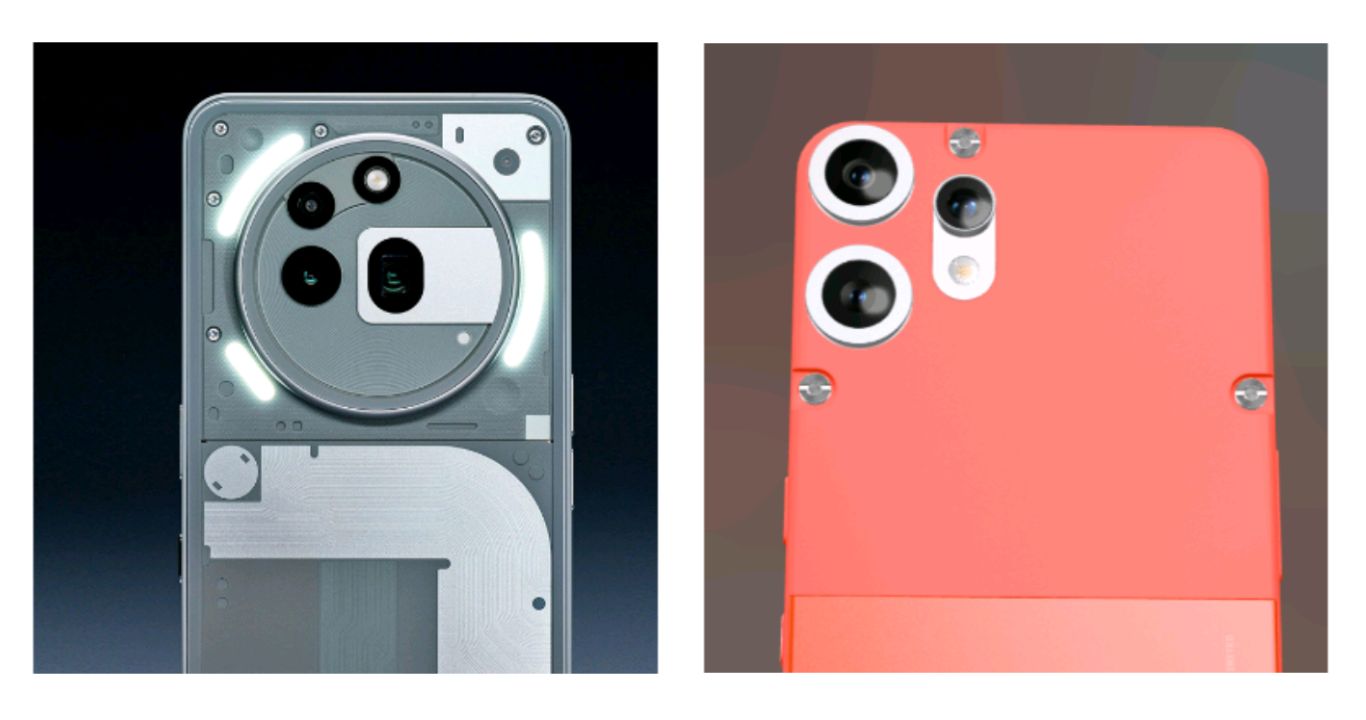
The standard (3a) shares its 50MP main sensor (Samsung ISOCELL GN9) with the (3a) Pro but drops the periscope in favor of a more conventional 2x telephoto — a 50MP sensor at a 50mm equivalent focal length, using electronic rather than optical stabilization. It’s a smaller loss than it sounds; 2x zoom on a large 50MP sensor still holds up better than a pure digital crop.
The ultrawide is identical to the Pro’s 8MP unit, and the front camera steps down to a fixed-focus 32MP sensor rather than the Pro’s autofocus-equipped 50MP module. For everyday shooting — portraits, group photos, casual zoom — it covers the basics competently without the periscope premium.
Best for: buyers who want Nothing’s camera language (natural colors, TrueLens Engine processing) without paying for reach they won’t use.
Also worth a look: Nothing Phone (2a) Plus
The (2a) Plus didn’t make the top five because it skips telephoto entirely, which counts against it under this list’s versatility-first methodology. But it deserves a mention for a hardware trait none of the five phones above have: a full-resolution 50MP ultrawide, using a 1/2.76” Samsung ISOCELL JN1 sensor, instead of the 8MP ultrawides that fund the telephoto lenses on most of this list. If wide-angle landscape or architecture shots matter more to you than reach, and you can find it discounted, it’s still a reasonable pickup — just not a 2026-competitive all-rounder anymore.
Related reading
If you’re weighing a Nothing phone against something from another brand, these comparisons cover ground this list doesn’t:
- Motorola Razr vs. Samsung Galaxy Z Flip — for readers considering a foldable instead of a Nothing bar phone.
- Google Pixel 10 vs. 10 Pro vs. 10a — Google’s camera-focused lineup, a common cross-shop against the Phone (3) and Phone (4a) Pro.
- Huawei Pura vs. Mate vs. Nova: which series is right for you? — for readers exploring Huawei’s competing camera-first phones.
- How long do Samsung phones get updates? — useful context if long-term software support matters as much as camera specs to you.
FAQ
Does any Nothing phone have a periscope telephoto camera? Yes — three phones on this list do. The Nothing Phone (3), Phone (4a) Pro, and Phone (3a) Pro all use 50MP periscope telephoto lenses, ranging from 3x optical zoom on the (3) and (3a) Pro to 3.5x on the newer (4a) Pro.
Which Nothing phone has the best camera for the price? It depends what you’re optimizing for. The Nothing Phone (3a) Pro offers the cheapest route to a periscope telephoto. The Phone (4a) Pro costs about $40 more but is newer, has a longer zoom range, and an upgraded main sensor — arguably the stronger value if you can stretch the budget.
Is the CMF Phone 2 Pro’s camera actually good, or just good for the price? Reviewers consistently frame it as impressive “for the price” rather than a true rival to flagship image quality. The main and telephoto cameras give you useful flexibility, but image quality is clearly behind the more expensive Nothing phones, particularly in low light and fine detail.
Do any of these phones lack a telephoto camera? Yes — the Nothing Phone (2a) Plus, mentioned above the top five, has no dedicated telephoto lens. It compensates with a full-resolution 50MP ultrawide instead, which none of the five ranked phones have.
Are these prices accurate for the Nigerian market? The prices listed are global USD launch prices, not Naira retail prices. Nothing phones are typically imported rather than sold through official Nigerian retail channels, so local pricing will run higher and fluctuates with exchange rates — always confirm current pricing with your vendor before buying.
Which camera setup is best for vlogging or video? The Nothing Phone (3) is the strongest all-around video option here, with 4K 60fps recording and the most versatile camera hardware in the lineup. The Phone (3a) Pro also supports 4K recording, including 4K 30fps from its front camera, while the standard (3a) supports 4K recording from its rear camera but has a more limited front-camera video setup.

Comments 0
Leave a comment