Table of Contents
Open Table of Contents
Overview
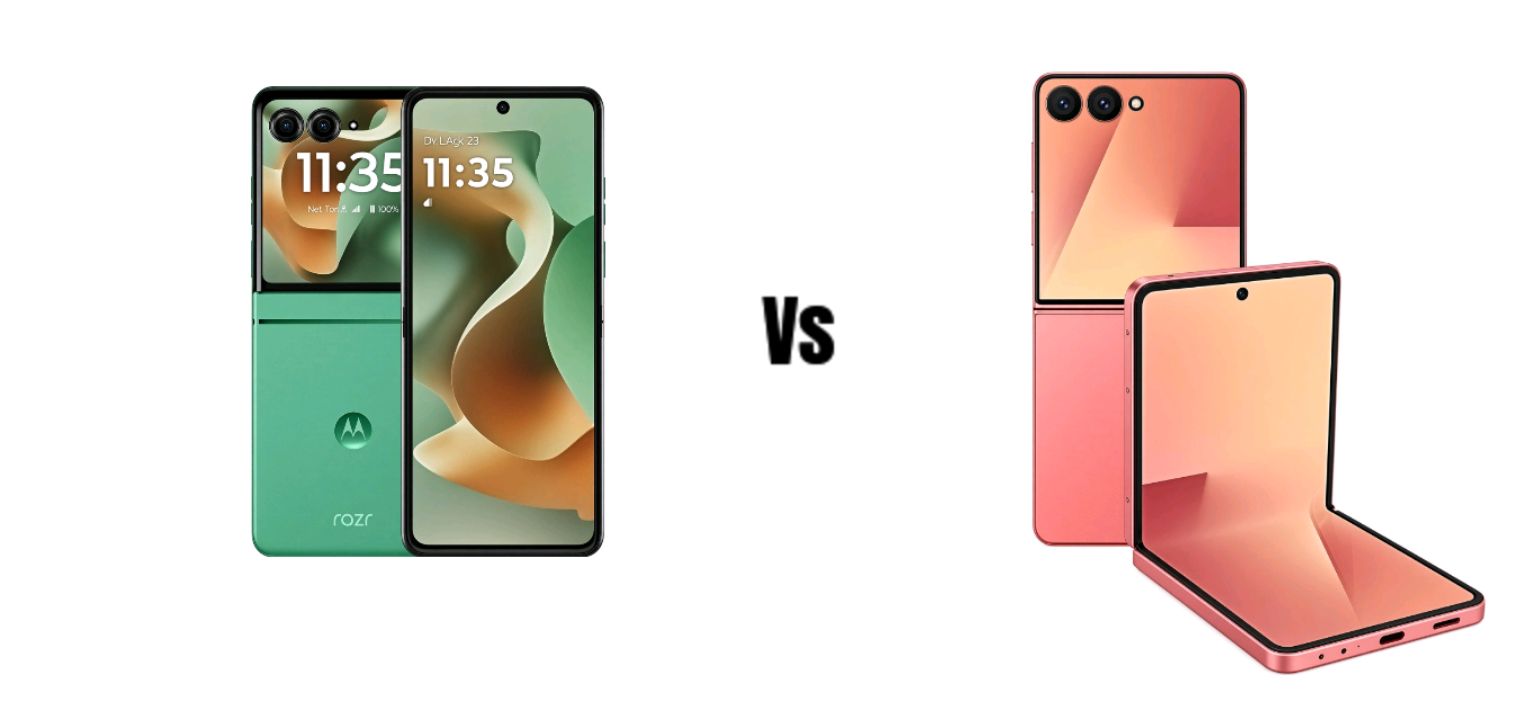
Clamshell foldables have quietly become the most practical foldable form factor, and two names keep coming up whenever the conversation turns to which one to buy: the Motorola Razr and the Samsung Galaxy Z Flip. Both fold down to pocket-sized squares, both put a useful cover screen on the outside, and both have matured past the “gimmick” phase into phones people can realistically use every day.
But they solve the flip-phone problem differently. Motorola leans into camera hardware and a lower price, while Samsung focuses on performance, software support, and a larger cover display. This comparison uses the standard Razr (2025) against the Galaxy Z Flip 7 — the current mainstream models from each brand — and breaks down where each one actually wins.
Quick Spec Comparison
| Spec | Motorola Razr (2025) | Samsung Galaxy Z Flip 7 |
|---|---|---|
| Main display | 6.9” LTPO AMOLED, 120Hz, 3000 nits peak | 6.9” LTPO AMOLED 2X, 120Hz, 2600 nits peak |
| Cover display | 3.6” AMOLED, 90Hz | 4.1” Super AMOLED, 120Hz |
| Chipset | MediaTek Dimensity 7400X | Samsung Exynos 2500 (3nm) |
| RAM / Storage | 8GB / 256GB | 12GB / 256GB or 512GB |
| Main camera | 50MP wide (OIS) + 13MP ultrawide | 50MP wide (OIS) + 12MP ultrawide |
| Selfie camera | 32MP | 10MP |
| Battery | 4,500mAh | 4,300mAh |
| Charging | 30W wired, 15W wireless | 25W wired, 15W wireless |
| Water/dust resistance | IP48 | IP48 |
| Starting price (US MSRP) | $700 | $1,099 |
Sourcing note: figures above are drawn from GSMArena, PhoneArena, and official Motorola and Samsung spec pages current as of this writing.
Design and Build
Hold them side by side and the family resemblance is obvious — both are aluminum-framed clamshells with premium-feeling exterior finishes and IP48 protection, meaning they’re built to handle splashes and dust but aren’t rated for full submersion the way a standard slab phone might be. Where they diverge is the hinge feel and the cover screen shape. Samsung’s 4.1-inch FlexWindow is larger and uses Gorilla Glass Victus 2, and the interface around it is more refined — app shortcuts, widgets, and camera preview all feel like they were designed for that screen size rather than stretched to fit it. Motorola’s 3.6-inch cover display remains useful for notifications, widgets, and quick interactions, though it wraps a smaller area than the Z Flip 7’s.
Neither phone is dramatically lighter than the other; both land in roughly the same weight class once you account for regional SKU differences. If pocketability and one-handed use are the priority, both close the gap on this well enough that it shouldn’t be a deciding factor on its own.
Display Quality
Internally, both phones use similar-generation LTPO AMOLED panels at 6.9 inches with 120Hz refresh rates, so day-to-day scrolling and video playback feel comparably smooth on either device. Samsung’s inner display benefits from several generations of refinement, while Motorola counters with a higher quoted peak brightness.
The bigger practical difference sits on the outside. A 4.1-inch cover screen at 120Hz gives the Z Flip 7 more room for full app usage — replying to messages, checking maps, or running widgets — without unfolding the phone. The Razr’s 3.6-inch cover screen is still functional for notifications and quick camera use but feels a step behind for anything more involved.
Performance and Chipset
This is where the two phones take genuinely different paths. The Razr (2025) runs MediaTek’s Dimensity 7400X, a mid-range chipset built for efficiency and everyday tasks rather than flagship-tier benchmarks. The Galaxy Z Flip 7 runs Samsung’s own Exynos 2500, a 3nm chip that represents a shift away from Qualcomm silicon for this model and offers substantially more performance headroom for demanding apps and GPU-heavy gaming.
If your usage is mostly messaging, social media, streaming, and light multitasking, the gap won’t be something you feel in daily use. If you game regularly or run demanding apps, the Z Flip 7’s chipset has a clear, benchmarked advantage — worth checking against how battery-life-conscious your habits are, since Exynos chips have historically traded some efficiency for that extra power.
Camera Comparison
Camera hardware is arguably Motorola’s strongest pitch in this matchup. The standard Razr (2025) uses a 50MP main camera with a 13MP ultrawide and a 32MP inner selfie camera — more than triple the resolution of Samsung’s selfie sensor. That matters specifically for a clamshell, where the inner camera doubles as your primary selfie shooter unless you’re using the cover screen as a viewfinder.
Samsung’s Z Flip 7 pairs a 50MP main camera with a 12MP ultrawide, backed by its ProVisual Engine for image processing. Output from the main sensor is consistently strong in daylight and holds up reasonably well in low light thanks to software processing improvements. Neither phone has a dedicated telephoto camera, so buyers who want true optical zoom will need to consider other models.
Independently researched sample comparisons from outlets that reviewed both phones suggest Samsung’s main camera has a slight edge in color processing and dynamic range, while Motorola’s ultrawide and selfie camera resolution give it an advantage in framing flexibility. Treat this as a close contest rather than a clear win for either side.
Battery Life and Charging
On paper, the Razr’s 4,500mAh cell out-sizes the Z Flip 7’s 4,300mAh battery, but real-world battery life depends heavily on chipset efficiency and display management, not just capacity. That plays out in PhoneArena’s standardized battery testing: the Z Flip 7 posted an overall estimate of 7h 3min against the Razr’s 6h 29min, and pulled further ahead on browsing (18h 58min vs. 15h 48min). The gap narrows almost to a tie on video playback (9h 32min vs. 9h 27min), and the Razr edges ahead slightly on gaming (7h 37min vs. 7h 31min). Overall, Samsung’s smaller battery delivers the better result in PhoneArena’s testing, likely a reflection of the Exynos 2500’s power management rather than any single spec advantage.
Both phones support 15W wireless charging, so that’s not a differentiator here. Motorola’s standard Razr charges slightly faster over wire at 30W TurboPower, compared with Samsung’s 25W wired charging on the Z Flip 7 — a modest edge for Motorola on topping up quickly.
Software and Long-Term Updates
This is arguably the most important category for anyone planning to keep a phone for three-plus years, and it’s also where the two brands differ most — dramatically so. Samsung has committed to seven years of Android OS upgrades and security updates for the Galaxy Z Flip 7, matching the policy it now applies across its Galaxy flagship and foldable lineup. The Razr (2025), by contrast, is eligible for three Android OS upgrades, with security updates confirmed through June 2029. That’s a meaningful gap in security coverage, and it’s a significant factor if you plan to hold onto the phone well past its second or third year. We’ve broken down exactly how long different Motorola phones get updates for if long-term software support is a priority for you.
Software experience also differs in feel: Motorola’s near-stock Android skin is lighter and faster to navigate, while Samsung’s One UI adds more built-in features, deeper cover-screen integration, and tighter Galaxy ecosystem ties if you already own a Samsung tablet, watch, or earbuds.
Price and Value
The price gap between these two phones is significant, not incremental. The standard Razr (2025) starts meaningfully below flagship pricing, positioning it as the more accessible entry point into the foldable category. The Galaxy Z Flip 7 sits firmly at flagship pricing, closer to what buyers pay for a non-folding flagship slab phone, and that premium buys you the stronger chipset and, above all, a dramatically longer software support window.
For value-focused buyers who mainly want the flip form factor without flagship pricing, the Razr makes a stronger case. For buyers who plan to keep the phone for years and want the strongest overall long-term package, the Z Flip 7’s higher price is easier to justify. If you’re weighing this decision against non-folding options entirely, our comparison of the Razr against Motorola’s own Edge and Moto G lines is worth a look before committing to the foldable form factor at all.
What About the Price in Nigeria?
Nigerian pricing varies considerably because these phones are typically imported rather than sold through an official local retail channel, so what you pay depends heavily on the retailer, the storage configuration, and whether the unit is brand new or a used/imported “UK-used” or “US-used” listing. Checking multiple Nigerian retailers and marketplaces, prices as of August 31, 2026 landed roughly as follows:
- Motorola Razr (2025): roughly ₦750,000 to ₦1.7 million, with used and grey-market import listings sitting at the lower end and new, retailer-warrantied units near the top.
- Samsung Galaxy Z Flip 7: roughly ₦900,000 to ₦2.08 million, following the same new-vs-used pattern, with storage tier (256GB vs. 512GB) also playing a role.
These figures move often with exchange rate shifts and import costs, so treat them as a snapshot rather than a fixed price — always confirm current pricing directly with the retailer before buying, and where possible, ask for the IMEI and warranty documentation to confirm you’re getting a genuine, unlocked unit.
Which One Should You Buy?
Rather than a single overall “winner,” each phone leads in different categories:
| Category | Motorola Razr (2025) | Samsung Galaxy Z Flip 7 |
|---|---|---|
| Starting price | 🏆 Lower | — |
| Cover display size | — | 🏆 Larger, 120Hz |
| Performance | — | 🏆 Stronger chipset |
| Battery testing (PhoneArena) | — | 🏆 Longer overall/browsing |
| Selfie camera resolution | 🏆 32MP vs 10MP | — |
| Wireless charging | Tie (15W) | Tie (15W) |
| Wired charging speed | 🏆 30W vs 25W | — |
| Software support | 🏆 3 OS upgrades / security through 2029 | 🏆 7 OS upgrades / 7 years security |
| Storage ceiling | — | 🏆 Up to 512GB |
- Choose the Motorola Razr (2025) if you want flip-phone convenience at a lower price, care more about selfie camera resolution and cover-screen size than raw performance, and don’t need the longest possible update runway.
- Choose the Samsung Galaxy Z Flip 7 if you want the strongest chipset in this class, better real-world battery endurance, tighter software polish, and a seven-year update commitment that’s more than double what the Razr offers — and you’re comfortable paying flagship pricing for it.
Neither phone is a downgrade from the other; they’re built around different priorities. If battery efficiency and day-to-day performance headroom matter more than upfront price, it’s worth comparing how OnePlus’s battery-focused flagships stack up as a non-foldable alternative, or seeing how the best Pixel for most people compares if software longevity is your top concern outside the foldable category. And if you’re still narrowing down which brand’s lineup fits your budget best, our OnePlus buying guide for 2026 covers a similar decision process for a different price bracket.
Frequently Asked Questions
Is the Motorola Razr as durable as the Samsung Galaxy Z Flip? Both carry an IP48 rating, meaning they’re resistant to dust and can survive brief water exposure, but neither is rated for full submersion the way many standard slab flagships are. Hinge durability over years of daily folding is harder to verify independently and depends heavily on individual usage patterns, so treat long-term durability claims from either brand with some caution until independent teardown and stress-test data is available for the current models.
Does the Motorola Razr support wireless charging? Yes. The standard Razr (2025) supports 30W wired TurboPower charging and 15W wireless charging. The Galaxy Z Flip 7 supports 25W wired charging plus 15W wireless and 4.5W reverse wireless charging, so Samsung’s edge here is reverse wireless charging rather than wireless charging itself.
Which phone has the better cover screen? The Galaxy Z Flip 7 has the better cover screen overall because it’s larger, supports up to 120Hz, and has stronger software integration. The Razr’s 3.6-inch display is still useful, but it gives you less room for apps and interactions.
Are there more affordable versions of either phone? Yes. Motorola sells the Razr alongside Plus and Ultra variants at higher price points. Samsung also sells the Galaxy Z Flip 7 FE as a cheaper alternative to the flagship Flip 7. If budget is the deciding factor, it’s worth checking current pricing on those variants before settling on the standard models compared here.
Can I use either of these phones comfortably as a daily driver in Nigeria? Both are usable as daily drivers, but consider local repair network availability for foldable-specific parts like the hinge and inner display before buying, since foldable repairs are more specialized than standard phone repairs and parts availability varies by brand and region.

Comments 0
Leave a comment