Table of Contents
Open Table of Contents
Overview
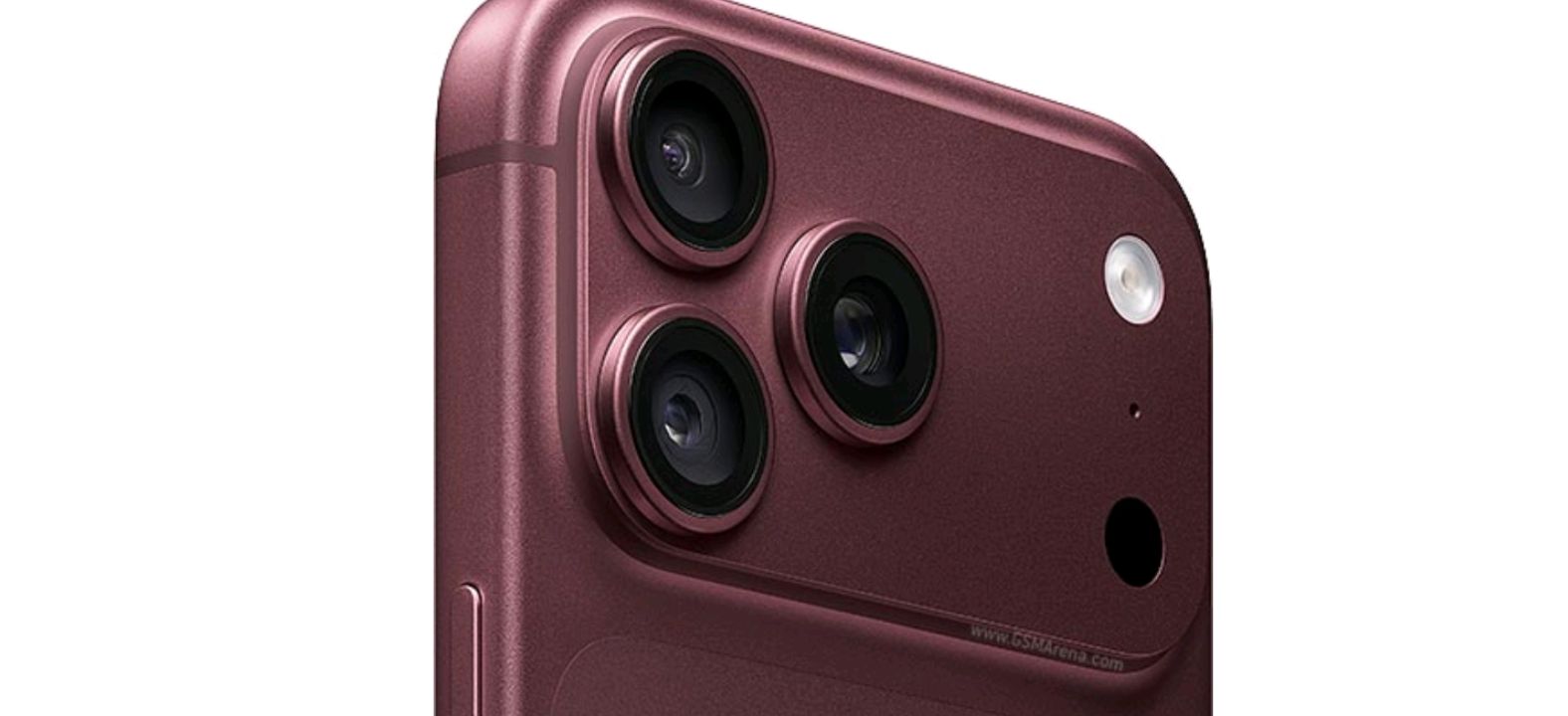
Until the iPhone 18 Pro, Apple’s iPhone main cameras used fixed apertures. You could blur a background in software, but the actual hole letting light into the lens never moved. That changes with the iPhone 18 Pro and iPhone 18 Pro Max, which introduce a mechanical variable aperture on the 48MP Fusion main camera — a first for the iPhone line, arriving years after Samsung introduced a variable-aperture system on the Galaxy S9 and S10.
Join ReviByte Community
Get instant alerts on new posts, phone deals, and mobile gaming updates.
Join WhatsApp ChannelWhat actually changed
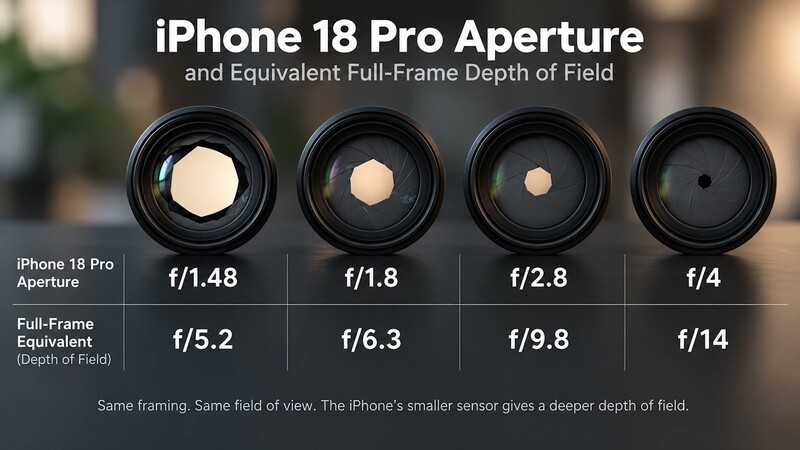
The iPhone 17 Pro’s main camera was fixed at ƒ/1.78. The 18 Pro replaces that with a six-blade iris — Apple says each blade is thinner than a human hair — that physically opens and closes across four aperture settings, from ƒ/1.48 to ƒ/4.0. Apple’s own explanation, given to PetaPixel, is refreshingly practical: pushing the lens to a faster ƒ/1.48 for better low light meant risking blown-out focus in group shots at close range, so a variable iris became the fix rather than the headline feature.
| Setting | Aperture | Useful for |
|---|---|---|
| Wide open | ƒ/1.48 | Low light, stronger background blur |
| Default | ƒ/1.8 | General shooting |
| Mid-stop | ƒ/2.8 | More depth of field |
| Narrow | ƒ/4.0 | Group shots and scenes where you want more of the frame in focus |
The practical benefit isn’t simply “more light” or “less light.” Aperture also changes depth of field. At ƒ/1.48, the camera can create stronger separation between a subject and its background, while stopping down toward ƒ/4.0 keeps more of a group or nearby scene within the zone of acceptable focus. That’s the part a fixed-aperture phone camera cannot reproduce optically, no matter how good the software-based blur has gotten.
The new Pro Controls also add manual adjustment for aperture, shutter speed, white balance, and other exposure controls, with a histogram for checking exposure. The 48MP ultra-wide and 48MP telephoto remain in the system, and the telephoto retains 8x optical-quality zoom (up from 5x on the 17 Pro). The main camera, however, gets both the new variable aperture and a new sensor, and both the 6.3-inch 18 Pro and the 6.9-inch 18 Pro Max use the same main-camera system, so size no longer dictates camera capability the way it used to.
The fragility question nobody’s answering yet
A moving mechanical part inside a phone that gets dropped, pocketed, and exposed to moisture is a legitimate long-term question. Apple says the six aperture blades were designed with durability in mind, but launch-period coverage can’t tell us how the mechanism will behave after years of daily use. That’s something independent long-term testing will need to establish.
Variable aperture isn’t unique to Apple, either. Several Android manufacturers have used mechanically adjustable apertures in flagship phones, though implementation and available controls vary — see our breakdown of Oppo’s 2026 camera lineup for how one competitor approaches it differently.
Who should care
If you shoot mostly in Auto and never touch manual controls, the day-to-day difference may be smaller than the spec sheet suggests — computational photography was already compensating for a fixed aperture reasonably well. Where this matters is genuinely mixed lighting: outdoor group shots that used to soften faces at the edges of frame, or dim indoor scenes where the ƒ/1.48 setting can admit roughly 50% more light than the old ƒ/1.78 aperture, according to Apple’s stated figures and current reporting.
Storage is a separate consideration entirely if you’re stepping up from an older device — our breakdown of 128GB vs 256GB storage walks through how fast RAW and ProRAW files from cameras like this one eat into a smaller tier.
FAQ
Does the variable aperture work automatically, or do I have to set it myself? Both. Auto mode picks the aperture based on the scene, but you can override it manually in the Camera app by tapping one of the four aperture dots.
Is the variable aperture on the ultra-wide or front camera too? No. Apple has only confirmed it on the 48MP Fusion main camera. The ultra-wide, telephoto, and front camera keep fixed apertures.
Does the bigger iPhone 18 Pro Max get a better camera than the standard 18 Pro? Not for the main sensor. Apple confirmed both models share the same main camera and variable aperture system; the size difference is primarily screen and battery, not optics.
Is a mechanical aperture actually worth it, or is this a gimmick? It appears useful rather than merely cosmetic, particularly when you need more depth of field or want more control over exposure for video. PetaPixel’s hands-on testing found sharpness actually peaks at ƒ/2.8, with the wide-open ƒ/1.48 setting noticeably softer and ƒ/4.0 dipping slightly from diffraction — which helps explain why Apple didn’t simply lock the camera to its widest setting. Early hands-on impressions point to real benefits, but longer-term testing is still needed before judging durability and how much difference it makes for typical everyday shooting.
Related reading
- Which iPhone Is Worth Buying in the US in 2026? — how the 18 Pro’s camera upgrade stacks up against the rest of the current iPhone lineup
- Vivo Phones $200–$300: What Should You Look For?
- Oppo’s 2026 Camera Lineup: What Really Changes
- Motorola 128GB vs 256GB Storage

Comments 0
Leave a comment