Table of Contents
Open Table of Contents
Overview
Every OPPO camera phone in 2026 gets called a “flagship camera experience” in marketing copy, and that phrase has stopped meaning very much. The gap between what the Find X9 Ultra’s sensors can physically capture and what the Reno 15 Pro does with a similarly-numbered megapixel count is enormous, and the branding doesn’t make that obvious. This is a breakdown of what actually differs — sensor size, optical zoom range, and where OPPO cut corners to hit a lower price — rather than a spec sheet rewritten in marketing language.
Join ReviByte Community
Get instant alerts on new posts, phone deals, and mobile gaming updates.
Join WhatsApp Channel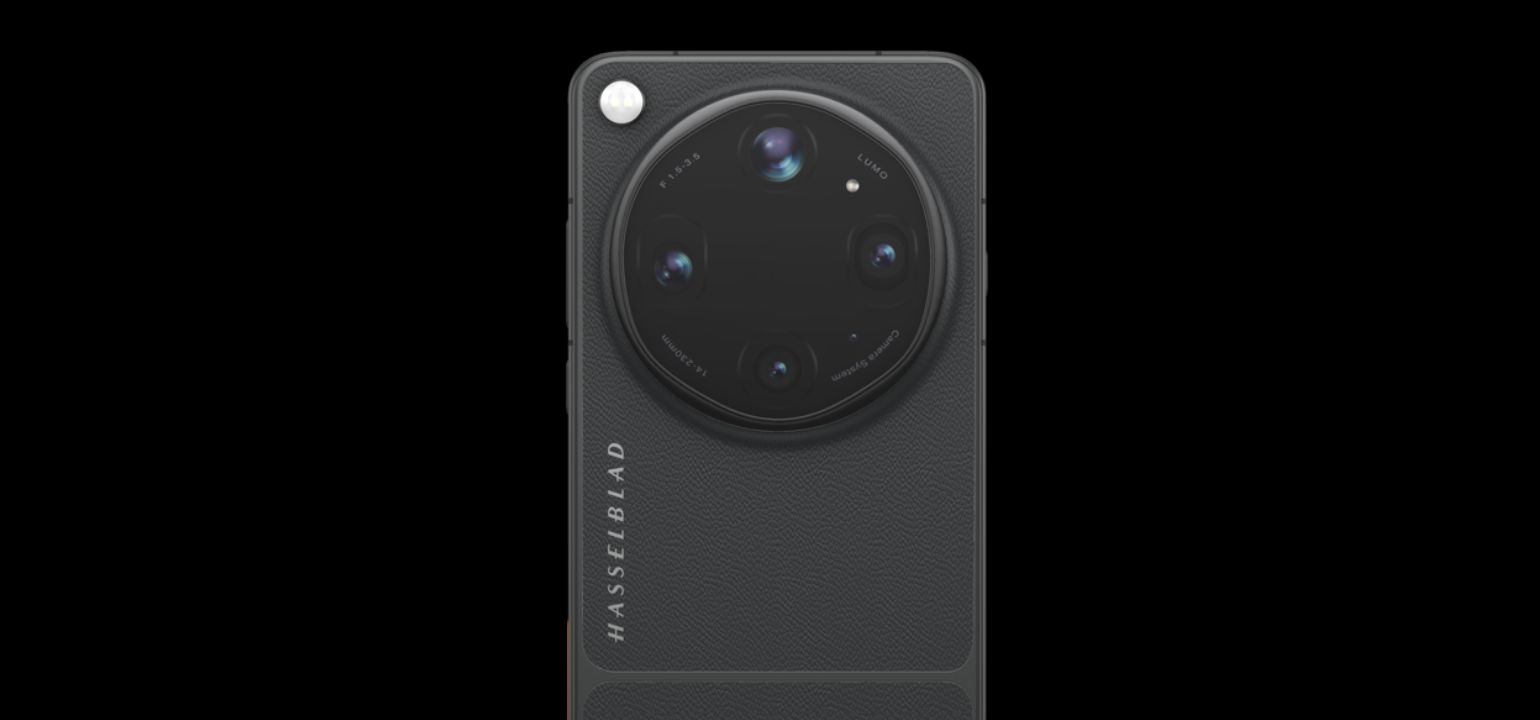
The four camera systems, side by side
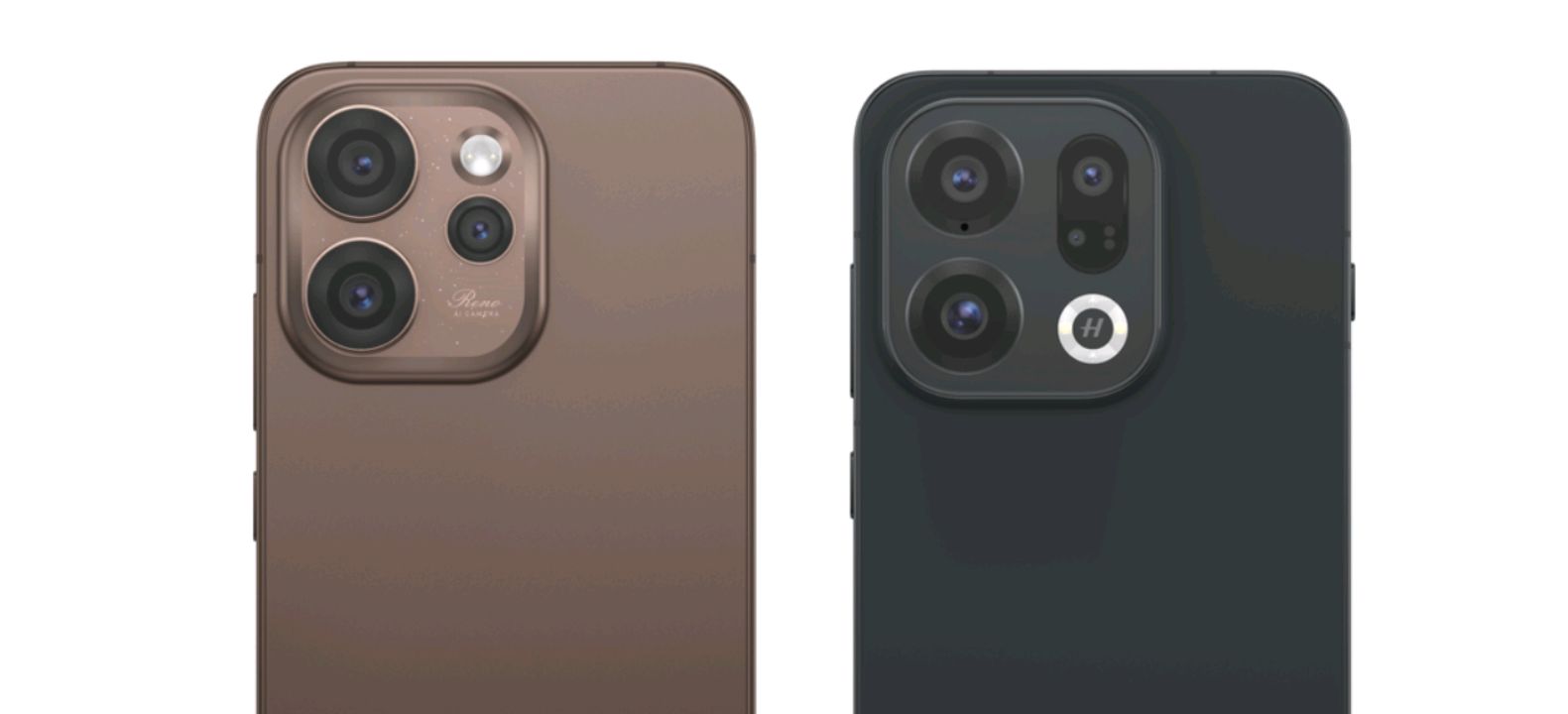
OPPO’s 2026 range splits into two real tiers: the Find X series, where the camera hardware becomes more elaborate as you move from the X9 to the X9 Pro and then the X9 Ultra, and the Reno 15 series, which borrows some of the same megapixel counts on paper but pairs them with smaller sensors and simpler optics.
| Model | Main camera | Telephoto | Ultrawide | Native optical reach |
|---|---|---|---|---|
| Find X9 | 50MP, 1/1.4”, f/1.6, OIS | 50MP periscope, f/2.6 | 50MP | 3x |
| Find X9 Pro | 50MP, 1/1.28” (Sony LYTIA 901), f/1.5, OIS | 200MP telephoto, 1/1.56”, f/2.1 | 50MP, 120° | 3x |
| Find X9 Ultra | 200MP, 1/1.12”, f/1.5, OIS | 200MP 3x, 1/1.28”, f/2.2 + 50MP 10x, 1/2.75”, f/3.5 | 50MP, 14mm, 1/1.95” | 3x + 10x |
| Reno 15 Pro | 200MP HP5 main, f/1.8, OIS | 50MP 3.5x telephoto, OIS | 50MP, AF | 3.5x |
A few things jump out once the numbers are lined up like this. The Find X9 Pro and Reno 15 Pro both advertise a “200MP telephoto” or “200MP main,” but they’re not the same hardware — the Pro’s 200MP sensor sits behind a larger periscope telephoto module, while the Reno’s 200MP count is on the main camera, paired with a much smaller 50MP telephoto. Megapixel count alone tells you almost nothing about which phone actually resolves more real detail at a given zoom level.
Where the Ultra pulls away
The Find X9 Ultra is the only phone in this comparison with two dedicated telephoto cameras at different native optical focal lengths: 3x and 10x. OPPO confirms a 200MP 3x telephoto (1/1.28” sensor, f/2.2) and a separate 50MP 10x optical-zoom telephoto (1/2.75” sensor, f/3.5) built around a quintuple-prism periscope with sensor-shift stabilization — two genuinely different focal lengths rather than one lens with a digital crop standing in for the second. OPPO’s own figures put the main sensor’s light intake roughly 10% ahead of the previous Find X8 Ultra generation, with the telephoto module claiming a larger improvement still. The Ultra’s defining hardware advantage is that combination: a large 200MP main sensor, a 200MP 3x telephoto, and a dedicated 50MP 10x optical telephoto in the same body.
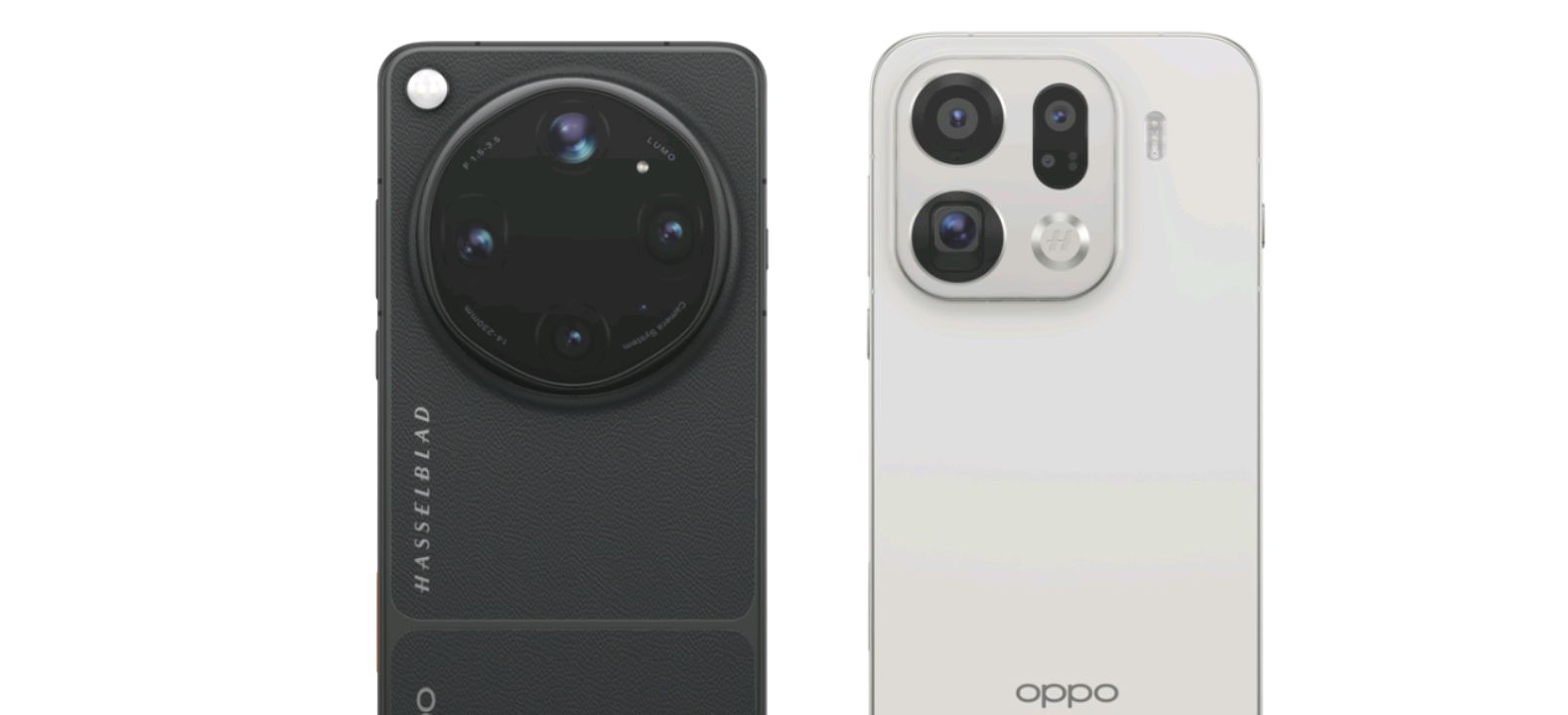
The trade-off is size and price. The Ultra is the heaviest and most expensive phone in the lineup, and its camera bump is noticeably larger than the Pro’s. If a compact form factor matters more to you than a second optical telephoto, the standard Find X9 covers the core Hasselblad color science at a smaller footprint — something we go into more in our full guide to choosing an OPPO phone in 2026.
The Reno 15 Pro isn’t a mini Find X9
It’s tempting to read “200MP main camera” on both the Find X9 Pro spec sheet and the Reno 15 Pro spec sheet and assume they perform similarly. They don’t, even though OPPO hasn’t published a directly comparable sensor-size figure for the Reno 15 Pro’s main camera the way it has for the Find X9 series. The Reno 15 Pro’s 200MP main uses a Samsung HP5 sensor, paired with a 50MP 3.5x telephoto and a 50MP ultrawide — a capable set on paper, but built around different hardware priorities than the Find X9 Pro’s larger main sensor and periscope telephoto. That’s a reasonable trade-off for a phone priced well under the Find series, and it’s consistent with how OPPO positions the Reno line generally — for buyers weighing OPPO against similarly-priced rivals like recent Motorola flagships or Vivo’s 200–300 lineup, camera systems often put more emphasis on the main camera than on the telephoto hardware.
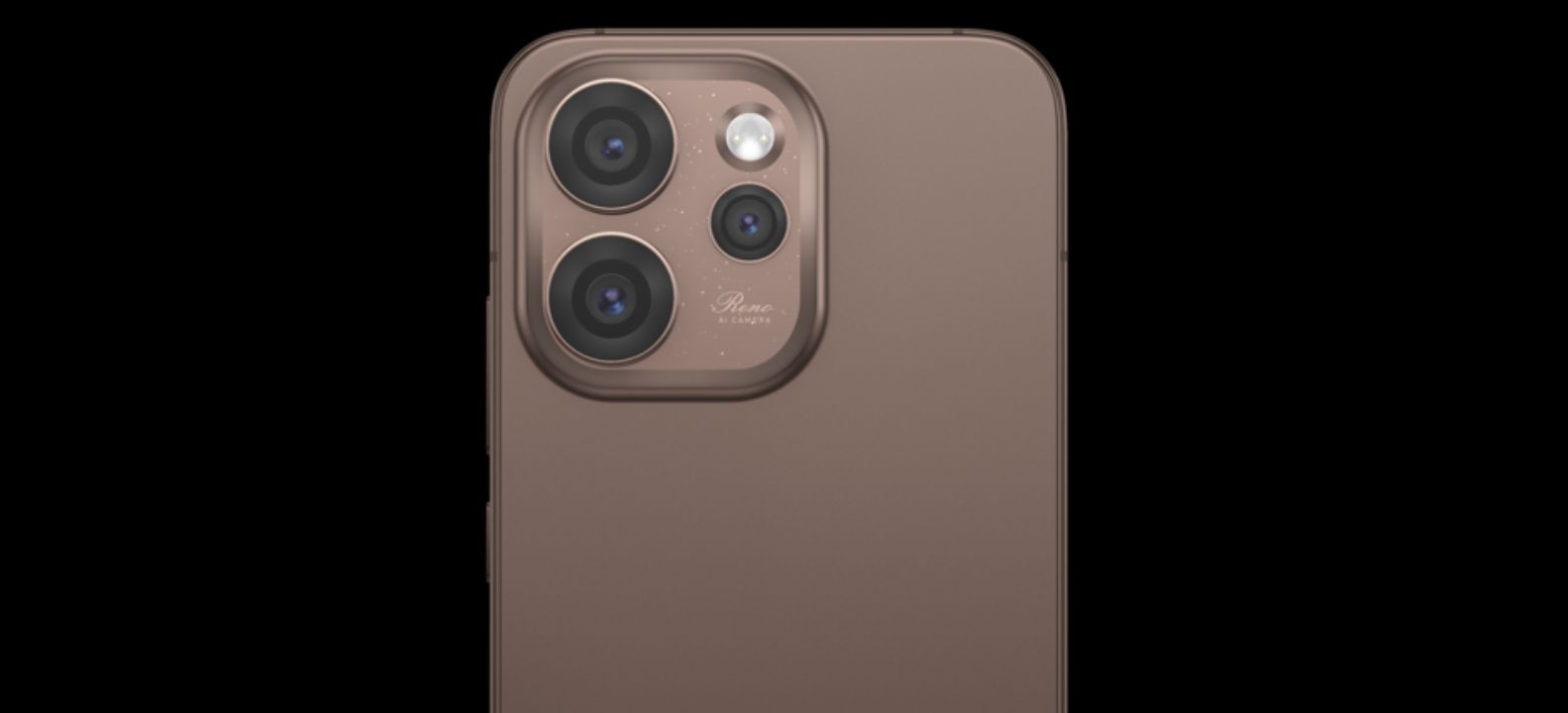
The Reno 15 Pro also gets a dedicated 50MP 3.5x telephoto rather than relying entirely on digital cropping — a segment where OPPO has generally been more generous across its 2026 range than several competitors at similar prices, most of which still lean on a token 2MP depth sensor instead of real telephoto hardware.
Video and everyday shooting differences
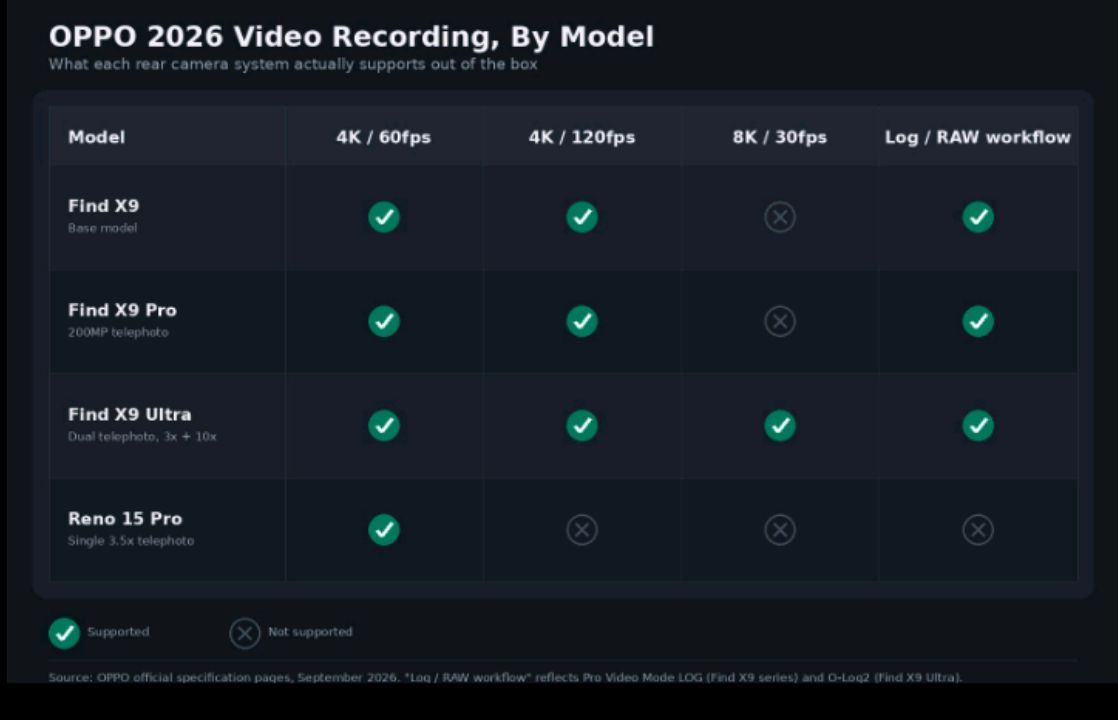
Video capability is another area where the Find X9 Ultra separates itself, although the gap between the top two models is narrower than the marketing might suggest. The Find X9 Ultra is the only model here with 8K recording, while the Find X9 Pro already offers 4K at 120fps with Dolby Vision, plus 4K 120fps Log for anyone grading footage afterward. The Ultra’s real video advantage is 8K 30fps and that more extensive dual-telephoto system feeding it, not exclusive access to high-frame-rate 4K. The Reno 15 Pro sits a clear tier below both, topping out at 4K30/60 without log video or the RAW-heavy workflow options OPPO reserves for the Find series. For anyone shooting mostly for social platforms rather than professional delivery, the practical difference is small; for anyone planning to grade footage afterward, it’s significant.
None of this happens in isolation from battery and charging behavior, either — heavier computational photography and 8K recording draw more power, so it’s worth cross-referencing our breakdown of OPPO phones with the longest battery life in 2026 if all-day shooting on a trip is the priority. And if camera hardware isn’t the deciding factor at all — say you’re shopping under $300 — our OPPO $200–$300 buying guide covers where corners actually get cut at that price, the same way our look at the Moto G Play vs. Tecno Spark 40 Pro does for that budget tier on other brands.
FAQ
Does a higher megapixel count mean a better camera? Not reliably. The Reno 15 Pro and Find X9 Ultra both use 200MP main cameras, but resolution alone doesn’t tell you the sensor size, optics, stabilization, or image-processing capabilities behind those pixels. The Ultra also pairs its 200MP main camera with substantially more advanced dedicated telephoto hardware.
Which OPPO phone has real optical zoom versus digital cropping? The Find X9 Ultra is the only 2026 model with two separate optical telephoto lenses (3x and 10x). The Find X9 Pro and Reno 15 Pro each have a single dedicated telephoto around 3x–3.5x. Beyond their native optical focal length, they use cropping and computational processing to extend the usable zoom range.
Is the Find X9 Ultra worth it over the Pro just for the camera? If a second dedicated optical telephoto and 8K video matter to you specifically, yes — that’s the Ultra’s clearest advantage over the Pro, which already covers 3x optical zoom and 4K 120fps video on its own. For most everyday shooting, the Find X9 Pro’s single 200MP telephoto covers the majority of common use cases at a lower price and in a lighter body.
Do all OPPO phones released in 2026 come with Hasselblad tuning? No. The Find X9 series is built around OPPO’s Hasselblad Master Camera System, with Hasselblad color calibration confirmed across all three models. The Reno 15 Pro is positioned around OPPO’s own imaging technologies rather than Hasselblad camera branding, which is one of the clearer differentiators between the two product lines beyond hardware alone.
How does connectivity affect camera features like cloud backup or AI editing? Some AI photo tools depend on a stable connection to process edits server-side. If you’ve noticed a phone defaulting to a slower connection during heavy app use, it’s worth checking why a 5G phone sometimes shows a 4G connection before assuming it’s a camera or software bug.
What about ultra-budget alternatives with decent cameras? If camera hardware on the Reno 15 Pro is still outside budget, it’s worth comparing against other brands’ battery-and-camera balance at lower price points, including Infinix phones built around long battery life, since sensor quality tends to correlate closely with overall price tier rather than brand alone.
Camera specifications in this article are sourced from OPPO’s official specification pages, GSMArena’s published review data, and retailer listings current as of September 2026. Some Reno 15 series figures reflect regional listings and may vary slightly by market — check OPPO’s local site before purchase for confirmed availability.




Comments 0
Leave a comment