
For the last few years, I’ve noticed something strange about how tech media talks about AI and jobs.
Every article seems to fall into one of two extremes.
On Monday, AI is sold as a post-work miracle — four-hour workweeks, passive income, and machines freeing us from “boring tasks.”
By Friday, a new report claims hundreds of millions of jobs are doomed, and your only hope is to “learn AI” before the door slams shut.
Both stories go viral.
Both feel convincing.
And both miss what’s actually happening.
The real shift isn’t mass unemployment. It’s quieter — and in many ways, worse.
Jobs aren’t disappearing overnight. They’re being unbundled, fragmented, and steadily stripped of leverage. And most of the popular advice about reskilling avoids this uncomfortable reality.
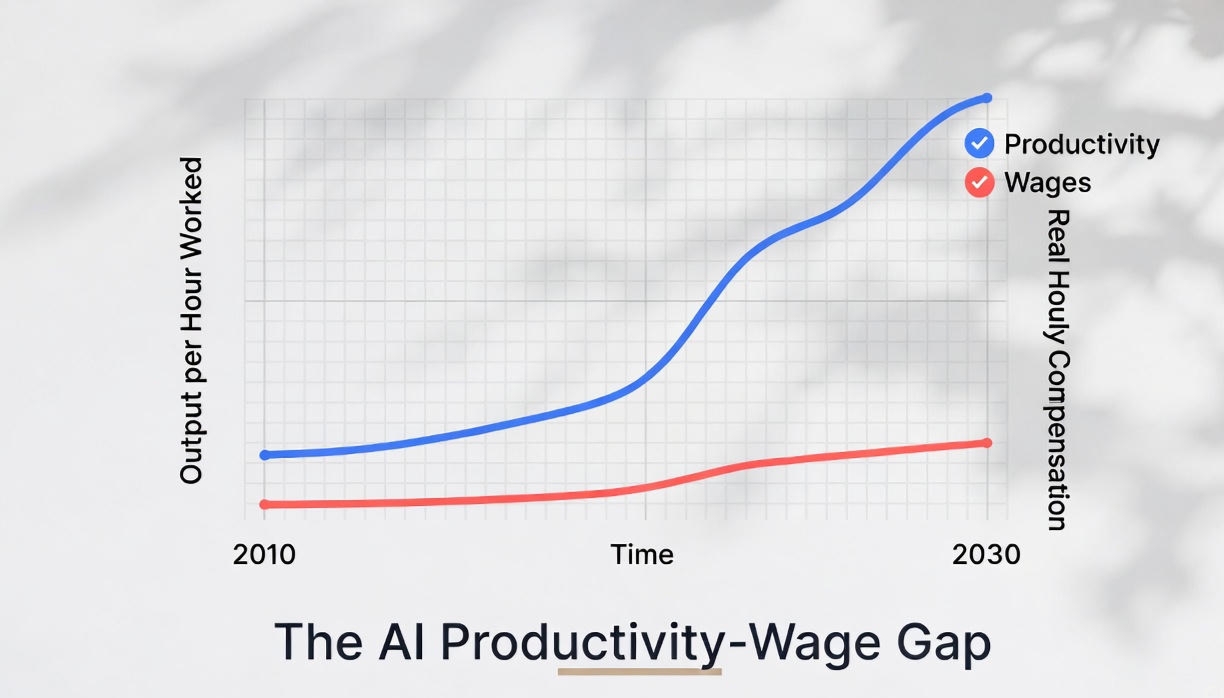
1. The Productivity–Wage Gap: Why Efficiency Doesn’t Protect Workers
Whenever concerns about AI come up, someone inevitably reaches for history.
“The tractor replaced the plow, and we ended up with more jobs.”
That argument isn’t wrong — it’s just incomplete.
The Industrial Revolution unfolded over generations. Entire institutions evolved alongside it. What we’re seeing now is different. Generative AI compresses similar disruptions into months, not decades. A tool can go from toy to enterprise replacement before labor markets, education systems, or regulations even notice.
There’s also a concept tech blogs rarely mention: Jevons Paradox.
When efficiency improves, output increases — but the value per unit often collapses.
If one writer can now produce ten articles in the time it once took to write one, the market doesn’t reward free time. It floods itself with “good enough” content and pushes prices down.
AI doesn’t eliminate the role.
It eliminates the scarcity that once made that role valuable.
And when scarcity disappears, so does bargaining power.
2. Ghost Work and the Invisible Workforce Behind AI
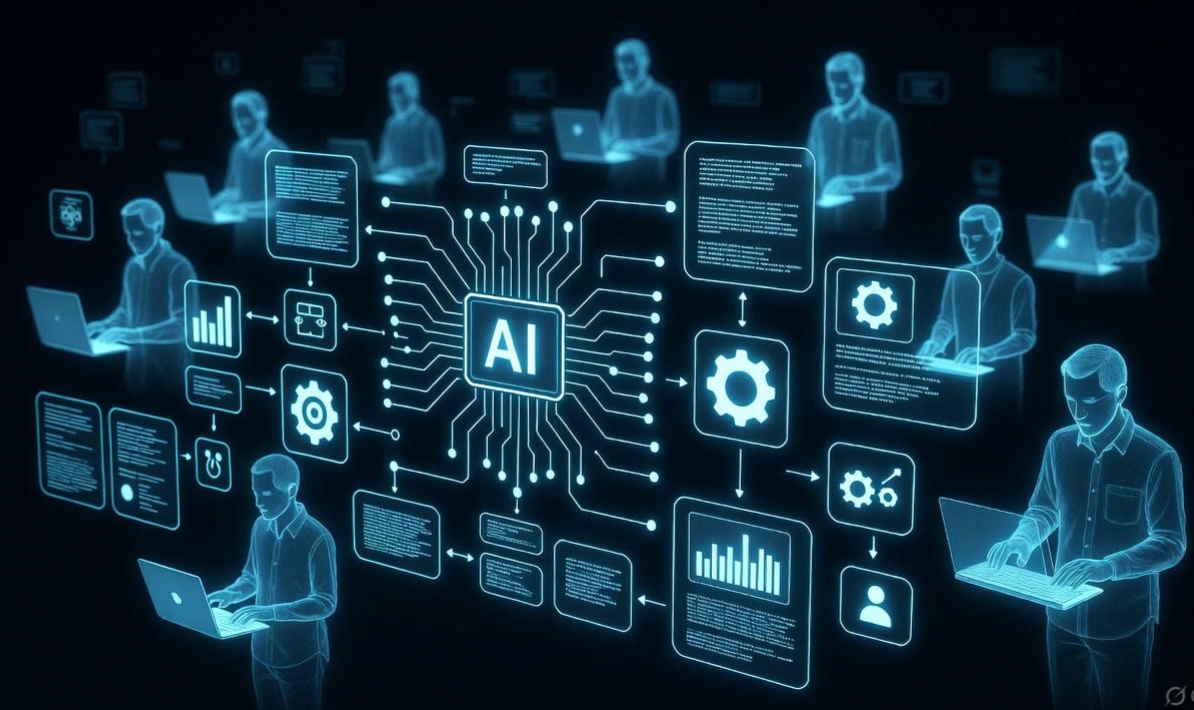
Most AI coverage focuses on founders, prompt engineers, and productivity hacks. Very little attention is paid to the people quietly holding these systems together.
Every modern AI model relies on human labor behind the scenes:
- Content moderators reviewing disturbing material for hours
- Workers labeling images and videos frame by frame
- Contractors rating AI responses to “improve tone” or “reduce bias”
This labor doesn’t disappear — it gets hidden.
What’s emerging is a two-tier system:
- The Algorithmic Class — those who own models, design systems, or control deployment
- The Human-in-the-Loop Workforce — fragmented, task-based labor paid per output
This isn’t classic automation.
It’s career erosion by a thousand microtasks.
3. The Entry-Level Collapse Nobody Is Talking About
One of the most worrying changes I’ve noticed is what AI is doing to entry-level work.
Junior roles were never efficient. They existed to teach.
New developers wrote basic tests.
Junior analysts cleaned data.
Associates summarized documents.
AI now does those things instantly.
So companies ask a reasonable question: Why hire juniors at all?
The result is a paradox:
- Entry-level jobs disappear because AI “handles the basics”
- But without juniors, there’s no pipeline for future experts
This isn’t a skills shortage.
It’s a broken ladder.
And it won’t show up in unemployment numbers until it’s too late.
4. Humans as Liability Buffers
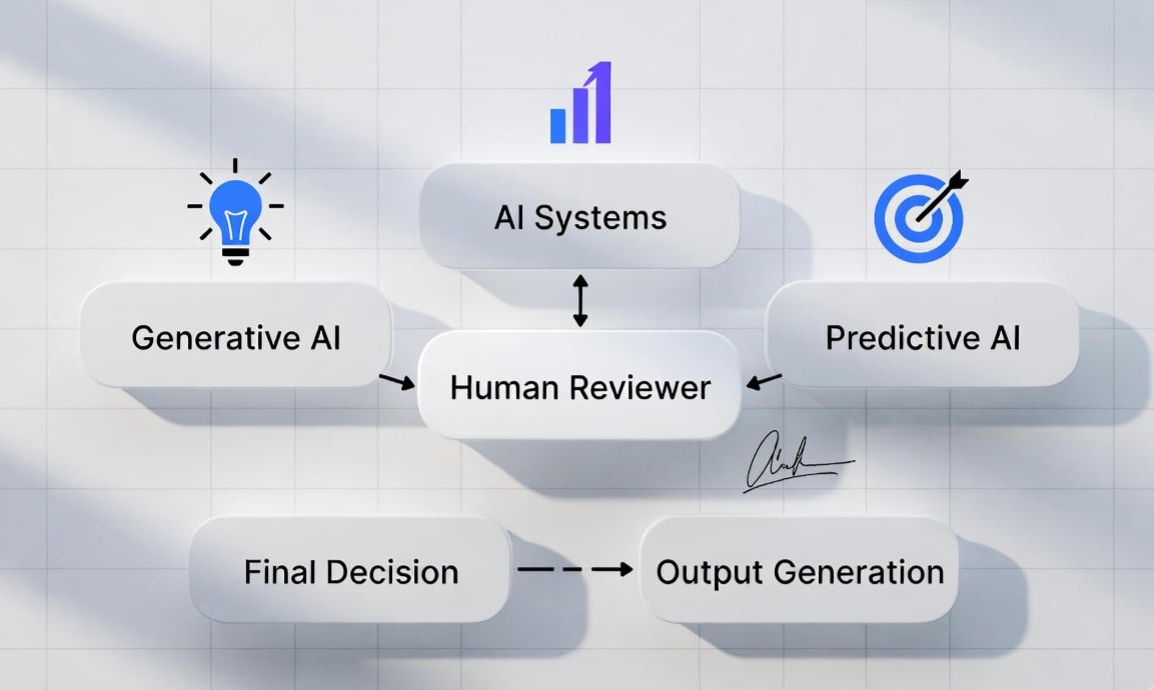
Another uncomfortable truth: many companies keep humans involved not because they outperform AI — but because someone needs to be legally responsible.
When AI gives medical, legal, or financial advice, vendors usually disclaim liability. The human reviewer becomes the shield.
In practice, that means:
- You monitor machine output all day
- You carry responsibility for errors you didn’t create
- You’re expected to catch mistakes at machine speed
Your title may stay the same.
Your role quietly becomes risk absorption.
This mental load is rarely discussed in optimistic “future of work” pieces.
5. The Problem With “Just Focus on Soft Skills”
The most common advice now sounds reassuring:
“Double down on empathy, communication, and leadership.”
But here’s the issue: empathy itself is being automated.
AI already mirrors tone, de-escalates conflict, and simulates emotional intelligence at scale. In many industries, this doesn’t elevate humans — it intensifies their workload.
Take healthcare:
- AI handles documentation and triage
- Nurses are assigned more patients
- Physical labor increases while autonomy shrinks
This isn’t upskilling.
It’s compression.
6. AI and the Global Wage Reset

AI breaks the link between location and compensation.
If translation, formatting, and coordination are instant, companies stop paying for proximity. They pay for output.
That sounds fair — until you realize it turns cost of living into a disadvantage.
AI doesn’t just compete with your skills.
It competes with where you live.
7. Why Friction Is Quietly Protecting Jobs
Ironically, the strongest defense most workers have isn’t innovation — it’s friction.
- Slow regulatory approval
- Legacy systems
- Bureaucratic processes
Tech culture treats these as failures. In reality, they act as shock absorbers.
When everything becomes “AI-first” overnight, displacement accelerates. Resistance isn’t always ignorance. Sometimes it’s survival.
Conclusion: What Actually Matters Now
The future of work isn’t a clean story of jobs lost or created.
It’s a repricing of human cognition.
If your value comes mainly from:
- Moving information
- Repeating known processes
- Producing standard outputs
You’re exposed.
The people who hold ground tend to:
- Own outcomes, not tasks
- Operate in physical or high-risk environments
- Possess deep, local, high-context knowledge AI struggles to generalize
This isn’t comforting.
It won’t go viral on social media.
But it’s far closer to reality than most headlines.
Frequently Asked Questions (FAQ)
Will AI really take most jobs?
Not outright. AI fragments jobs, lowers pay, and removes leverage long before roles disappear completely.
Is learning AI tools enough?
It helps short-term. Long-term security comes from owning responsibility, context, or real-world consequences — not just using software.
Which jobs are safest?
Roles involving physical intervention, legal accountability, or deep institutional knowledge remain hardest to automate.
Why are entry-level jobs vanishing?
AI replaces the “learning work” juniors used to do, breaking career pipelines before replacements exist.
Is AI increasing inequality?
Yes. Power concentrates among model owners and decision-makers while labor becomes more fragmented and invisible.
What should workers focus on now?
Understanding how value is created and captured in their specific industry — not chasing every new AI tool.




Comments 0
Leave a comment