Table of Contents
Open Table of Contents
Overview
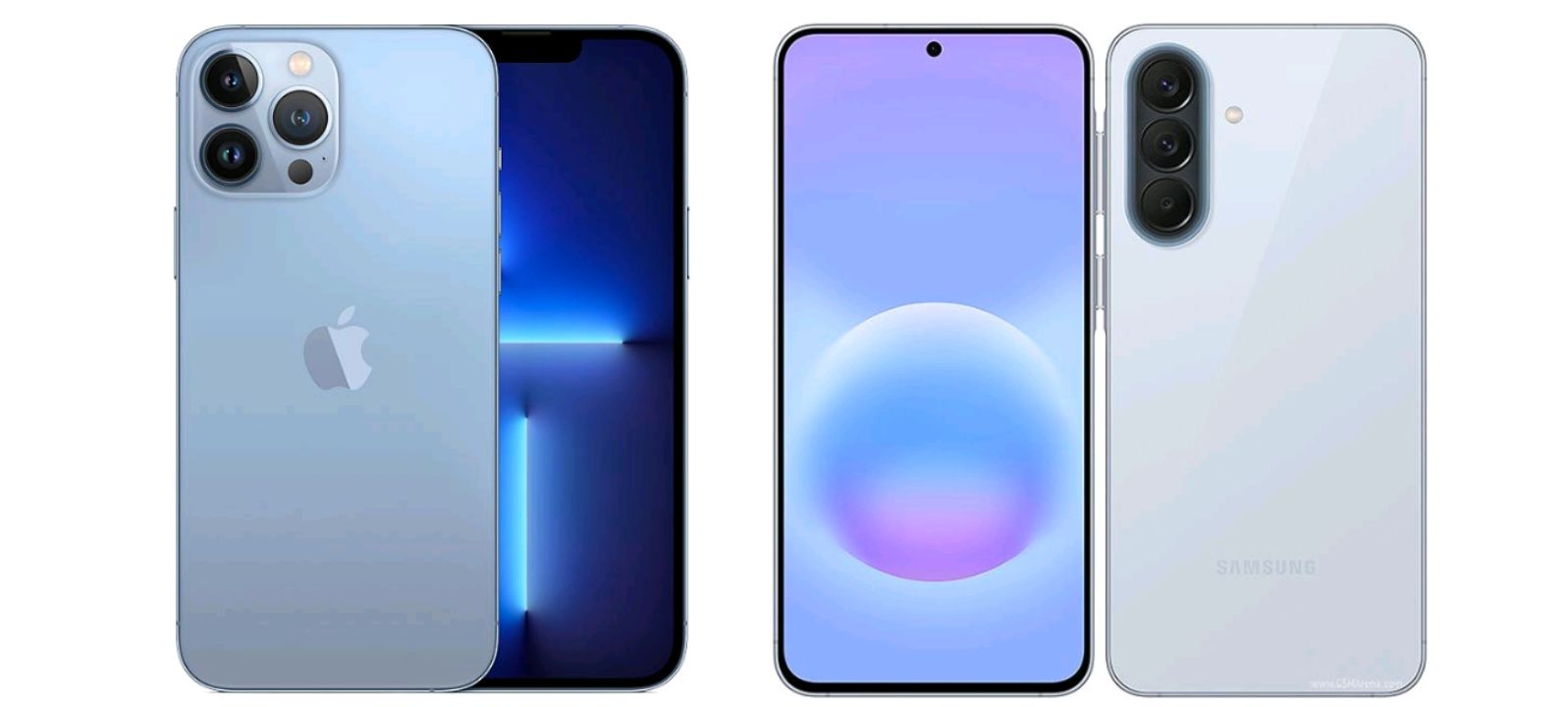
There’s a particular kind of standoff that plays out in phone shops across Lagos, Abuja, and Port Harcourt almost every week: someone holding a UK-used iPhone 13 Pro Max in one hand and a brand-new Samsung Galaxy A57 in the other, trying to decide which one actually deserves their money. On paper, it looks like an easy win for Apple — a Pro-tier flagship, even secondhand, against a mid-range Samsung. In practice, it’s messier than that, and 2026 has changed a few of the old assumptions.
The iPhone 13 Pro Max launched back in September 2021, so by the time you’re reading this, it’s a device closing in on five years old. The Galaxy A57, announced in March 2026 and released in April, is one of Samsung’s newest mid-rangers, built specifically for buyers who want long-term software support without flagship pricing. Comparing them isn’t really “old flagship vs new budget phone” — it’s a question about what you value more: peak hardware from years ago, or fresh software runway on hardware that was never meant to be flashy.
Join ReviByte Community
Get instant alerts on new posts, phone deals, and mobile gaming updates.
Join WhatsApp ChannelQuick answer
If your priority is camera versatility, display quality, and flagship-level performance, the iPhone 13 Pro Max has the stronger hardware package — even used. If your priority is warranty peace of mind, long-term Android updates, and not worrying about a UK import’s battery health or history, the Galaxy A57 is the safer buy. The rest of this piece breaks down exactly where each phone earns that verdict.
Spec-for-spec comparison
| Category | iPhone 13 Pro Max (2021) | Samsung Galaxy A57 5G (2026) |
|---|---|---|
| Display | 6.7” Super Retina XDR OLED, ProMotion 120Hz, 1000 nits typical, 1200 nits HDR peak | 6.7” Super AMOLED+, 120Hz, Vision Booster |
| Chipset | Apple A15 Bionic (5nm) | Exynos 1680 (4nm) |
| RAM/Storage | 6GB RAM; 128GB/256GB/512GB/1TB | 8GB or 12GB RAM; 128GB/256GB |
| Rear cameras | 12MP wide + 12MP ultra-wide + 12MP telephoto (3x), LiDAR scanner | 50MP main + 12MP ultra-wide + 5MP macro |
| Front camera | 12MP TrueDepth | 12MP |
| Battery | ~4,352mAh, up to 28 hrs video playback | 5,000mAh, 45W fast charging |
| Build | IP68, stainless steel frame, glass back | IP68, aluminum frame, Gorilla Glass Victus+ |
| Software commitment | iOS 26 supported; Apple’s update runway for this generation is winding down | Android 16 with One UI 8.5; Samsung has committed 6 years of OS and security updates |
| Age as of 2026 | ~5 years old, condition-dependent | Brand new, full manufacturer warranty |
Chipset and camera specs are sourced from Apple’s and Samsung’s official product pages and cross-checked against GSMArena listings. Real-world performance will vary with unit condition, especially on a used iPhone.
Display and everyday feel
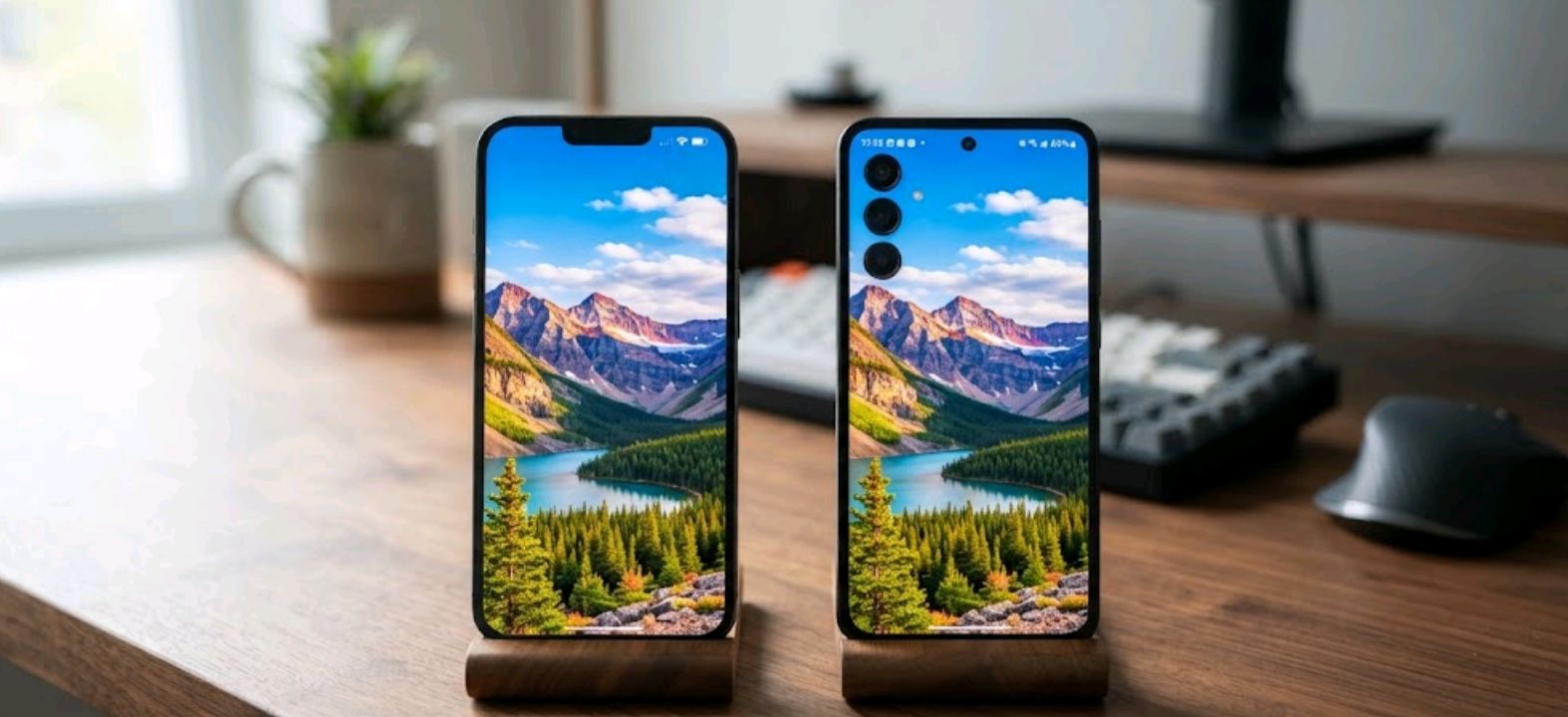
This is where the iPhone 13 Pro Max’s age barely shows. The ProMotion panel still scrolls and animates as smoothly as most 2026 phones, and Apple’s color calibration has aged well. The Galaxy A57’s Super AMOLED+ panel is genuinely excellent for its price bracket too, with Samsung’s Vision Booster feature helping outdoor visibility, though it leans into Samsung’s typically punchier, more saturated color profile rather than the iPhone’s calibrated neutrality. Brightness claims between brands aren’t always measured the same way, so treat on-paper nit figures as a rough guide rather than a like-for-like comparison. Both should remain usable outdoors, although direct sunlight can still make any phone display harder to read.
If you’re also weighing more unconventional form factors before settling on either of these, our breakdown of the Motorola Razr vs Samsung Galaxy Z Flip is worth a look — foldables sit in a completely different price and durability conversation, but it’s useful context if screen size and pocketability are still open questions for you.
Performance and daily use
The A15 Bionic was Apple’s flagship smartphone chip when the iPhone 13 Pro Max launched, and even in 2026 it still handles multitasking, camera processing, and demanding mobile games very well. The Exynos 1680 in the Galaxy A57 is a competent mid-range chip — smooth for social apps, browsing, and light-to-moderate gaming — but it isn’t built to match a Pro-tier Apple chip in sustained or graphically demanding workloads.
Where the A57 claws back ground is charging speed. It supports 45W charging, with Samsung claiming up to 60% charge in around 30 minutes — noticeably quicker than the iPhone 13 Pro Max’s original charging speeds. If you’re curious about whether chasing faster charging is actually good for your battery long-term, we covered that in detail in does fast charging damage phone battery?.
Cameras: still the iPhone’s strongest argument
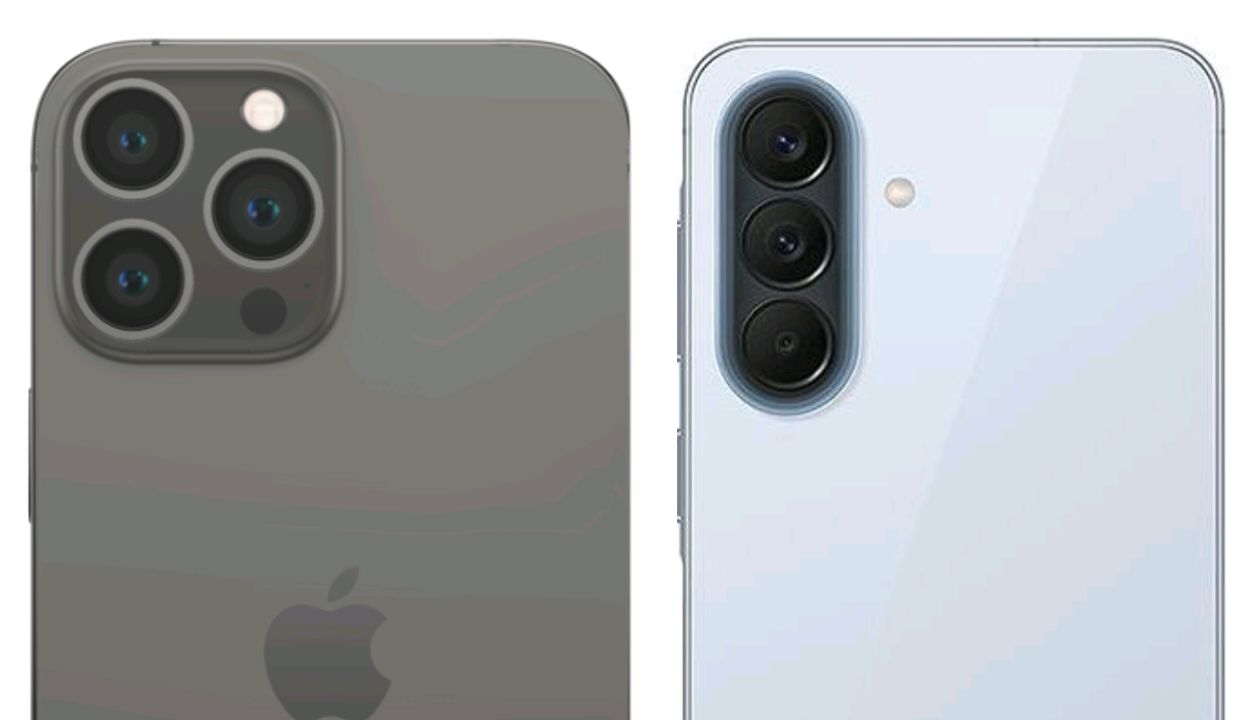
The iPhone’s triple-camera system, sensor processing, and dedicated telephoto lens give it a more versatile setup than most phones in this comparison bracket, particularly for video and framing flexibility. LiDAR also supports depth-related photography and focusing features, but it’s a supporting tool rather than the main reason the iPhone’s photos hold up well — that credit belongs mostly to Apple’s sensor tuning and image processing, which remain capable several years after launch.
The Galaxy A57’s 50MP main sensor produces sharp, detailed shots in good light and benefits from Samsung’s newer Awesome Intelligence editing tools (Object Eraser, Best Face), but the smaller ultra-wide and macro sensors are clearly cost-cut. The iPhone’s more mature camera system is likely to give it an advantage in areas such as low-light photography and video, although results can vary depending on the scene. For anyone who leans on their phone camera heavily — content creators, small business owners shooting product photos — the iPhone still has the edge here, condition allowing.
Battery, network behavior, and longevity
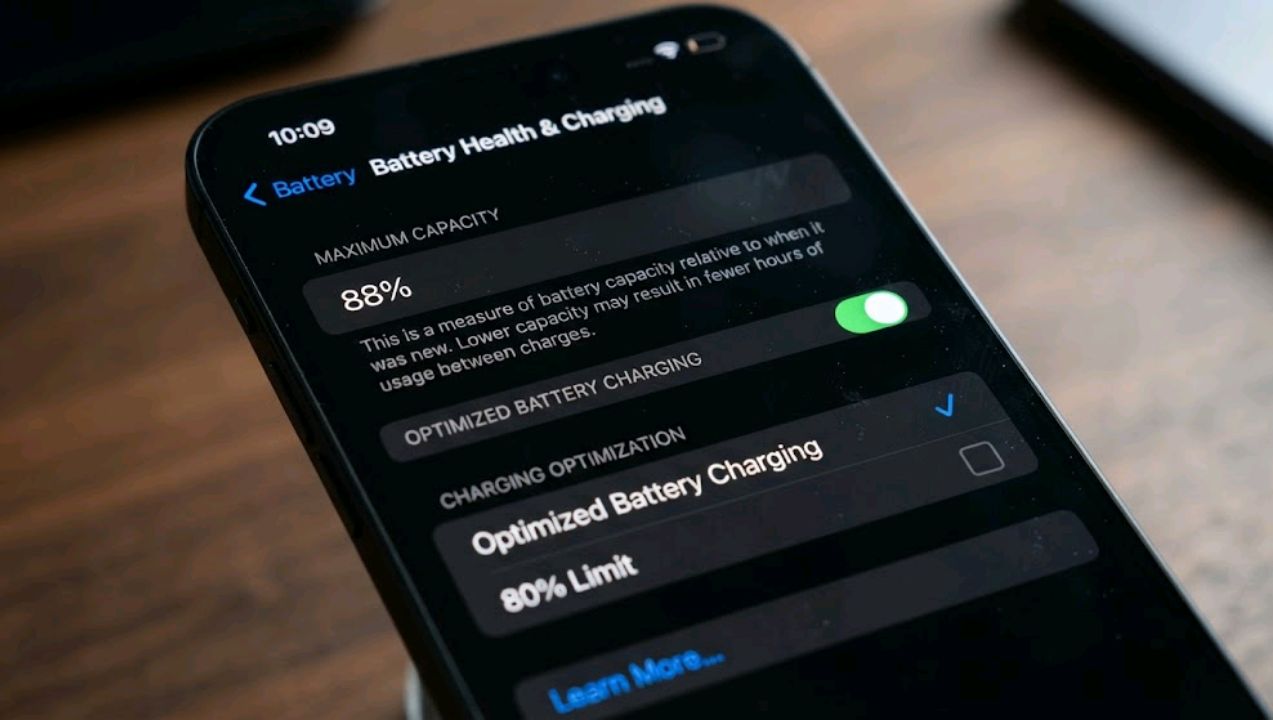
A UK-used iPhone 13 Pro Max’s biggest wildcard is battery health. A unit around 85% or higher can still provide solid everyday battery life, but actual endurance depends heavily on usage patterns, signal strength, and screen brightness, not battery health alone. Always ask for the battery health percentage (Settings > Battery > Battery Health) before buying, and treat it as a bigger price factor than storage size.
On networking, both phones support 5G, but real-world 5G experience in Nigeria still depends heavily on carrier rollout and device band support rather than the phone itself. If you’ve ever wondered why a 5G-capable phone keeps falling back to 4G, that’s rarely a hardware fault — we explain the actual causes in your phone supports 5G, so why does it keep showing 4G?.
Software longevity favors the A57: it has a much longer remaining software-support window. Samsung’s commitment of six years of OS and security updates from the A57’s 2026 launch means it should still be receiving patches around 2032. The iPhone 13 Pro Max will keep getting iOS updates for a while yet, but it’s already several years into its support window, not at the start of one.
Pricing: Nigeria context
| Device | Typical price range (2026) | Source confidence |
|---|---|---|
| iPhone 13 Pro Max (UK-used, 128GB, good condition) | Roughly ₦750,000 – ₦950,000 | Estimated from community marketplace listings — varies heavily by battery health, storage, and seller |
| Samsung Galaxy A57 5G (new, 8GB/128GB) | Around ₦588,500–₦623,500 at listed retail | Sourced from SLOT Systems Nigeria’s authorized retail listing at time of writing |
Because both the Naira exchange rate and grey-market import costs move constantly, treat the UK-used iPhone figure especially as a rough guide rather than a quote — always confirm current pricing directly with a trusted seller before paying.
If budget mid-range phones from other brands are also on your radar, our roundup of the best TECNO 5G phones in Nigeria for 2026 covers a few options that undercut both of these devices on price.
So, which should you actually buy?
- Choose the UK-used iPhone 13 Pro Max if: you want the stronger camera and display package for your money, you’re comfortable inspecting battery health and IMEI status before buying, and you don’t mind buying hardware that’s already a few years into its lifecycle.
- Choose the new Samsung Galaxy A57 if: you want a full manufacturer warranty, the longest possible software support window, faster charging, and zero uncertainty about the device’s history.
Neither choice is objectively wrong — they’re built for different kinds of buyers.
What to check before buying the UK-used iPhone
Buying secondhand is where most of the risk in this comparison actually lives, and it’s worth treating it as a checklist rather than a gut-feeling decision. Before handing over money for a UK-used iPhone 13 Pro Max, ask the seller to let you check:
- Battery Health — under Settings > Battery > Battery Health & Charging; below 80% is a useful negotiation point because the battery is closer to Apple’s service threshold, but actual battery life depends on usage and the phone’s condition.
- Parts & Service History — also under Battery Health & Charging on iOS 15.2+, it flags non-genuine or replaced parts.
- Face ID — set it up on the spot to confirm it works reliably.
- True Tone — check it’s present in Display settings; its absence can indicate a replaced, non-genuine screen.
- Cameras — test all three rear lenses plus the front camera, including autofocus and flash.
- Speakers and microphones — play audio and record a voice memo to check for distortion or dead mics.
- Lightning port — confirm it charges reliably and isn’t loose or corroded.
- SIM/eSIM functionality — insert a local SIM and confirm network registration before paying.
- IMEI and device status — check it through a carrier or a reputable device-status service, separate from Apple’s coverage checker.
- Activation Lock — must be fully removed; a phone still linked to someone else’s Apple ID/Find My is unusable.
- Signs of screen replacement — look for inconsistent bezel gaps, color tint shifts, or touch responsiveness issues.
- Testing before payment — only buy from sellers who let you run through all of the above before you pay, not after.
Skipping this checklist is how buyers end up with a phone that looks fine in the shop and starts showing problems within weeks.
FAQ
Is a UK-used iPhone 13 Pro Max still worth buying in 2026? Yes, for buyers prioritizing camera quality and display performance, provided the unit has good battery health and a clean IMEI. It’s a strong performer even years after release, but it lacks the warranty and update runway of a new device.
How do I check if a UK-used iPhone 13 Pro Max is genuine and not faulty? Check that the IMEI and serial number shown in Settings match the device itself and, where possible, the seller’s documentation. Check Apple’s coverage information separately from IMEI/blacklist status, since they’re not the same thing — Apple’s coverage checker confirms warranty and AppleCare details, not whether a device was reported lost or stolen. Inspect Battery Health, review parts and service history if available, test Face ID, cameras, speakers, and charging, confirm Activation Lock has been removed, and where possible verify the IMEI through a carrier or device-status checker before paying.
Does the Samsung Galaxy A57 support 5G in Nigeria? Yes, the A57 is a 5G-capable device, though actual 5G speeds depend on your carrier’s coverage in your area rather than the phone itself.
Which phone has a better camera, the iPhone 13 Pro Max or the Galaxy A57? The iPhone 13 Pro Max has the more versatile camera system, particularly because it includes a dedicated telephoto camera and strong video capabilities. The A57’s 50MP main camera can produce detailed daylight images, but its ultra-wide and macro cameras are more basic. Actual results will vary by scene and shooting conditions.
Will the Galaxy A57 get more software updates than the iPhone 13 Pro Max? In terms of remaining support from the point of purchase, yes — Samsung has committed six years of OS and security updates starting from the A57’s 2026 launch, giving it a longer runway ahead than an iPhone that’s already several years into its update cycle.
Is buying a UK-used phone risky in Nigeria? It carries more risk than buying new, mainly around battery health, hidden repairs, and IMEI blacklisting, but it isn’t inherently risky if you buy from a reputable dealer and verify the device properly before paying.

Comments 0
Leave a comment