Table of Contents
Open Table of Contents
Overview
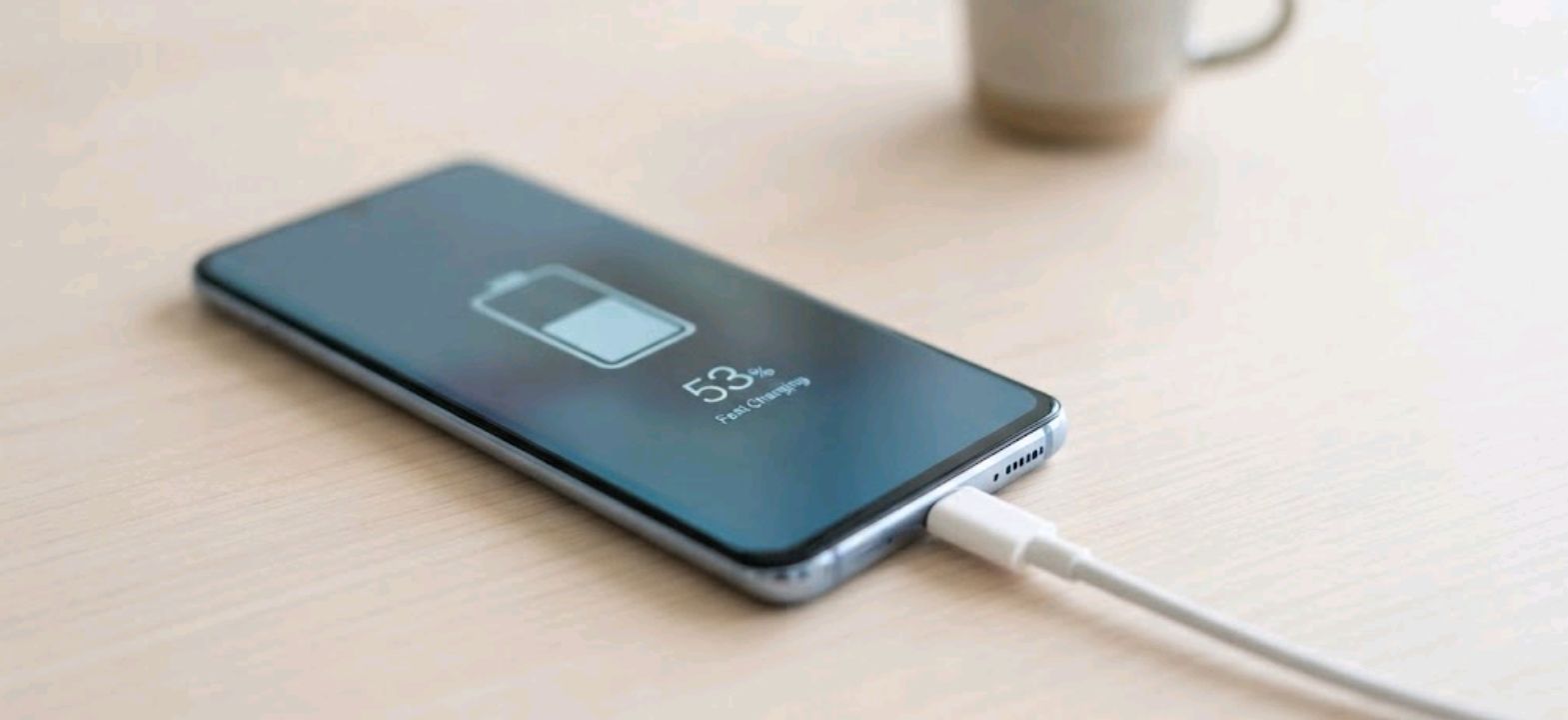
If you’ve ever unplugged your phone and felt it warm to the touch after a 30-minute fast charge, you’ve probably wondered whether you’re quietly wrecking your battery for the sake of convenience. It’s a fair question, and it’s one that gets answered badly online — usually with absolute statements in either direction. The more accurate answer: fast charging isn’t automatically harmful, but higher charging rates can increase stress on a battery. Heat is one of the most important factors in that equation, alongside charging rate and how full the battery already is when you’re pushing power into it — and these factors interact rather than acting alone.
How lithium-ion batteries actually wear out
Every rechargeable lithium-ion phone battery loses capacity over time through chemical and physical changes inside the cell, although the exact degradation mechanisms vary with battery chemistry and design. Two mechanisms matter most:
- Heat stress — elevated temperature accelerates unwanted chemical side reactions inside the cell, thickening the layer that forms on the electrode and permanently eating into usable capacity.
- Lithium plating — when a battery is pushed to accept charge faster than its chemistry can comfortably absorb it, especially in cold conditions or near a full charge, metallic lithium can deposit on the anode instead of intercalating properly. This is one of the dominant degradation pathways researchers point to when a battery is charged at high current. Some of that plated lithium can be reabsorbed under the right conditions, but a portion of it typically stays behind as permanent capacity loss — the exact split depends on the cell chemistry and how the battery is charged afterward.
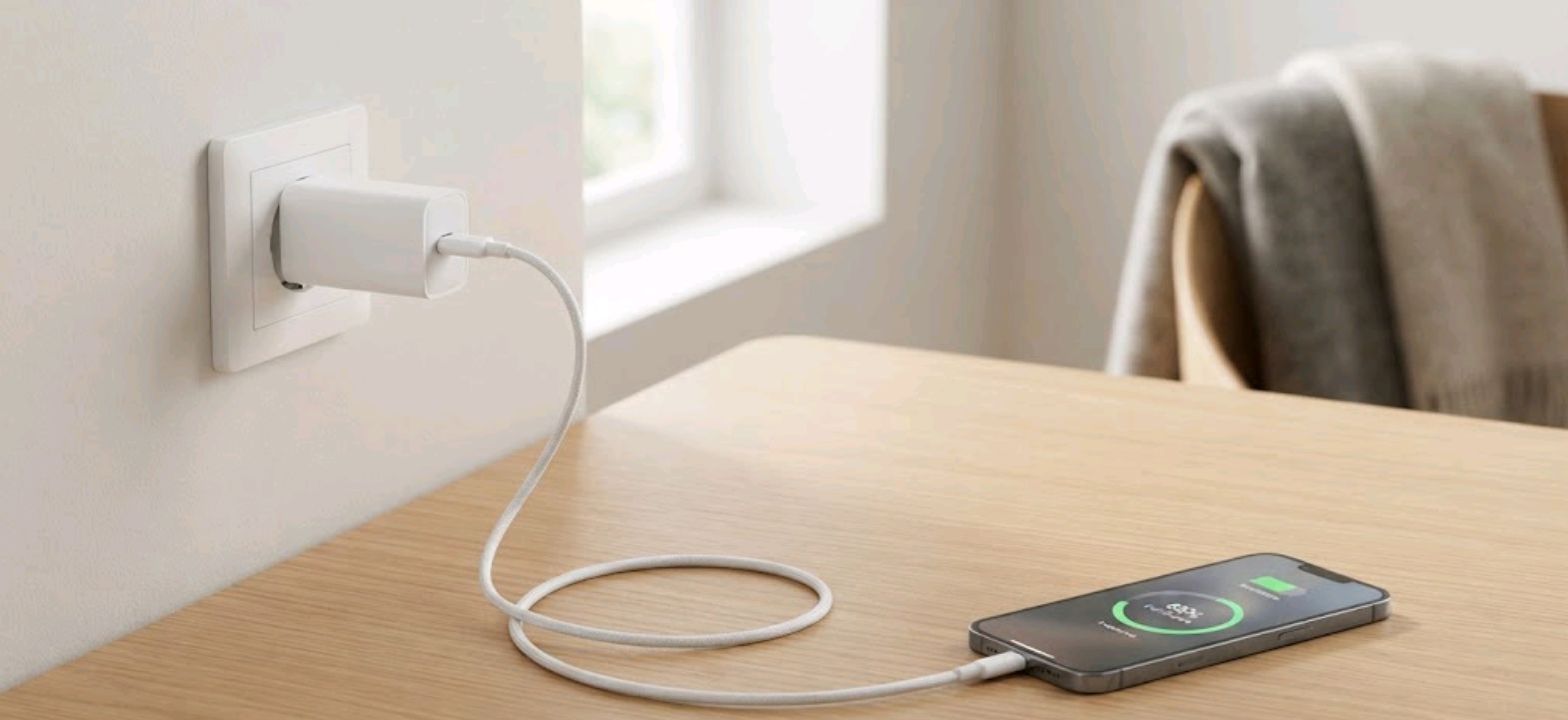
Neither of these is unique to “fast charging” as a marketing term. A charger that doesn’t properly meet the phone’s charging requirements can create safety and charging problems, but the wattage printed on a box doesn’t tell you how much power the battery is actually receiving at any given moment — the phone’s own charging system decides that. A properly designed 65W charging setup can end up gentler on the battery than its wattage suggests, because the phone throttles the current well before it becomes risky.
Why modern phones are more forgiving than people assume
Phones haven’t just gotten faster at charging — they’ve gotten smarter about it. Charging speed isn’t a flat number from 0% to 100%; nearly every modern device fast-charges hardest in the early percentages, then tapers sharply as the battery fills, switching to a slow trickle near the top. That taper helps limit the plating risk and heat buildup that can come with pushing high current into a nearly full cell.
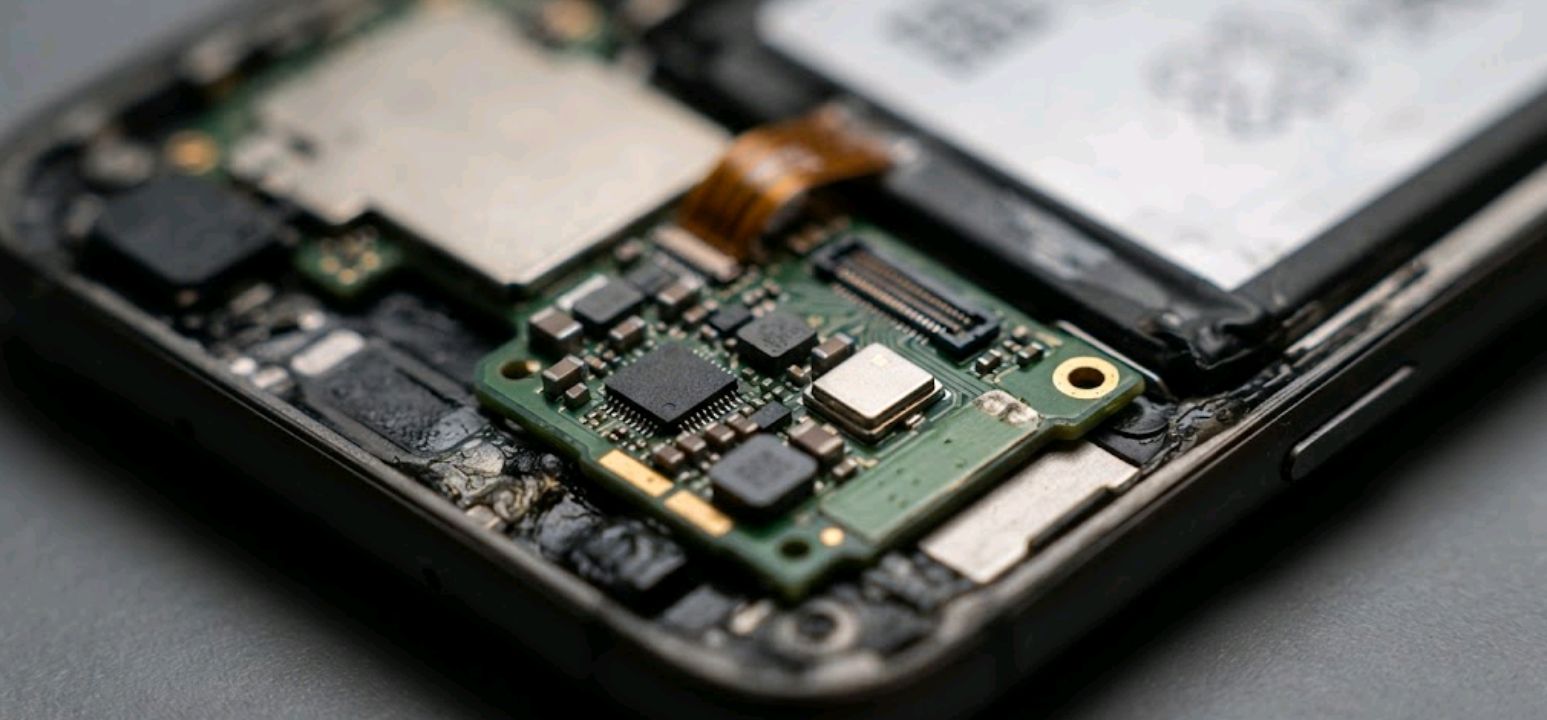
Most brands now also offer software-level protections worth actually using:
| Feature | What it does | Where to find it |
|---|---|---|
| Charge limit / battery protect | Caps charging at 80–85% to reduce time spent at full charge | Battery settings, varies by OEM |
| Adaptive / optimized charging | Learns your routine and slows the final stretch until closer to when you unplug | Battery settings |
| Thermal throttling | Automatically slows charging speed once internal temperature crosses a safe threshold | Runs automatically, not user-facing |
| Dual-cell / split-cell charging | Divides charging load across two smaller cells to reduce heat concentration | Used in some higher-wattage flagship and mid-range phones |
None of these require you to do anything unusual to benefit from them. Many modern phones use some combination of these protections, though the exact features — and how well they’re implemented — vary by manufacturer and model, so it’s worth checking your specific phone’s battery settings rather than assuming a feature is there.
What actually accelerates battery wear
If wattage alone isn’t the main problem, here are some of the habits and conditions that can accelerate battery wear:
| Habit | Why it matters | Easy fix |
|---|---|---|
| Charging under a pillow, in direct sun, or in a thick case | Excessive heat is one of the biggest accelerants of battery aging | Remove the case, charge somewhere ventilated |
| Using an uncertified, no-name charger or cable | Increases the risk of poor charging behavior and safety issues | Use the manufacturer’s charger or a reputable, standards-compliant replacement |
| Leaving the phone at 100% for hours, especially overnight | Prolonged high state-of-charge speeds up chemical aging | Use a charge limit feature if your phone has one |
| Gaming or streaming while fast charging | Combines charging heat with processor heat | Let it charge before heavy use, not during |
| Letting the battery repeatedly drain to 0% | Deep discharge cycles add extra stress compared to partial ones | Top up in smaller, more frequent bursts |
Fast charging can contribute to battery wear through higher charging rates and the additional heat they can generate, but the effect depends heavily on the phone’s battery chemistry, thermal management, charging conditions, and how the battery is used.
Practical advice for budget and mid-range phones
If you’re shopping in the sub-$200 bracket that’s common across the Nigerian market, don’t let fast-charging wattage alone decide your purchase. A well-managed 33W charging system may be gentler on a battery than a poorly managed 67W implementation, so don’t judge battery longevity from the wattage number alone. If you’re weighing options in this range, our guide on TECNO phones under ₦150,000 flags which models include charge-limiting software, and the same applies to our roundup of Infinix 5G phones if speed and connectivity are your priority.
FAQ
Does charging overnight ruin your battery?
Not by itself. Modern phones have charging controls that prevent conventional overcharging, so leaving your phone plugged in overnight doesn’t mean the battery is continuously being forced to charge. The bigger concern is spending long periods at a very high state of charge, particularly in warm conditions — which is exactly why adaptive charging features exist, delaying that final stretch until closer to your wake-up time.
Is wireless charging worse than wired fast charging?
It can be harder on battery longevity when it causes the phone to run hotter, since some energy is lost as heat inside the phone during the wireless transfer. The actual impact depends on the charger, how well the phone is aligned on the pad, the charging power, ambient temperature, and the phone’s own thermal management — it isn’t a fixed rule that wireless is always worse.
Should I avoid 65W+ chargers on a budget phone?
Not necessarily, as long as the charger is the one that shipped with the phone or a certified equivalent. The risk comes from mismatched, uncertified third-party chargers, not from high wattage on its own.
Does using your phone while it’s fast charging cause damage?
It can contribute, mainly because you’re now adding processor heat on top of charging heat at the same time. Occasional use isn’t a major concern, but gaming or video calls during a fast charge session is one of the more avoidable heat sources.
Is it true that fast charging phones degrade faster after a year?
Not inherently, but it’s not a guarantee either. Battery health after a year depends heavily on charging habits, ambient temperature, and charger quality — and a well-managed fast-charging phone can still have good battery longevity. That said, charging rate is one of several interacting factors that influence degradation, so it’s not accurate to say fast charging has zero effect in every case.
Sources & further reading
- Nature Energy — High-throughput Li plating quantification for fast-charging battery design — large-scale study on how charge rate, temperature, and state of charge jointly affect lithium plating, plus its partial reversibility.
- Apple Support — Charge and maintain your iPhone battery — official manufacturer guidance on how heat and charge state affect battery lifespan, and how charging current is throttled near full charge.
- Apple Support — About Charge Limit and Optimized Battery Charging on iPhone — explains how software-level charge limiting reduces time spent at full charge.



Comments 0
Leave a comment