Table of Contents
Open Table of Contents
Overview
Battery life is the first thing people ask about when a phone costs this much, and the Nothing Phone (4a) Pro makes it a fair question. It launched in March 2026 with a 5,080mAh battery in its international version, only 80mAh more than the 5,000mAh cell in last year’s Phone (3a) Pro. On paper that is barely a change. In the reviews, it behaves like a bigger one.
This guide pulls together what outlets with proper test setups have published, explains why their numbers don’t match, and tells you what a full charge is likely to mean for a normal day. It is research-based. We did not run our own battery tests, and where a figure comes from an aggregator instead of a lab, the table says so.
The battery itself
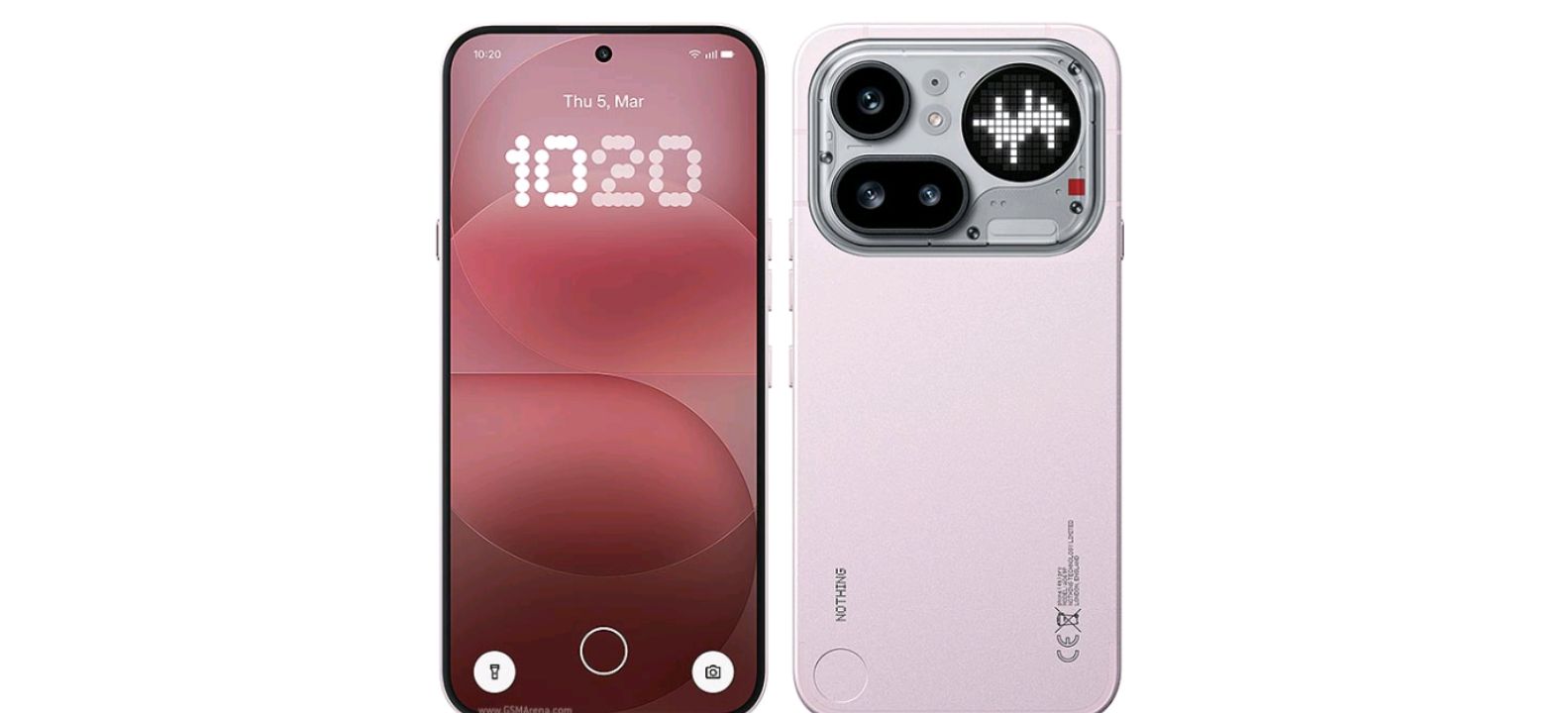
The capacity depends on where the phone was sold. GSMArena’s review unit was the international model with 5,080mAh, while the Indian variant carries 5,400mAh. If you are buying outside official channels, check the listing for the exact figure before you pay.
| Spec | Nothing Phone (4a) Pro |
|---|---|
| Battery capacity (international) | 5,080mAh |
| Battery capacity (India) | 5,400mAh |
| Wired charging | 50W USB Power Delivery |
| Reverse wired charging | 7.5W |
| Display | 6.83-inch AMOLED, up to 144Hz |
| Chipset | Snapdragon 7 Gen 4 |
| Charger in the box | No |
Source: GSMArena review specs and lab page. Capacity split between markets as reported by GSMArena.
How long a full charge lasts, according to the people who measured it
Here is the awkward part. Every outlet uses a different script, a different brightness level and a different definition of “done”, so the headline numbers range from about 13 hours to more than 26. None of them is wrong. They are measuring different things.
| Source | Reported result | What it measures | Confidence |
|---|---|---|---|
| GSMArena | Active Use Score 15h 16m; calls 38h 21m; web browsing 12h 42m; video 24h 04m; gaming 8h 16m | Standardised lab tests on the international model. The Active Use Score is a weighted endurance measure that blends calls, web, video and gaming, not continuous screen-on time | Primary |
| Engadget | 24 hours | Battery rundown test, five hours more than last year’s model | Primary |
| TechRadar | About 13h 40m projected | Its 2K video-streaming test, with 56% remaining after six hours. Nothing’s own advertised figure is 21 hours of YouTube, which is a separate claim | Primary, single scenario |
| PhoneArena | 7h 22m overall estimate; 16h 22m browsing, 12h 29m video, 6h 44m gaming | Its own battery test on the international 5,080mAh phone | Primary |
| Mobilissimo | 26h 37m looped 4K video; 19h 01m PCMark continuous use at 200 lux | Its own lab tests on the 5,080mAh phone | Primary |
| NanoReview | 9h 55m browsing, 21h 01m video, 6h 05m gaming, 132h standby | Aggregated figures | Secondary |
| 91mobiles | 13h 49m | PCMark battery test; the listing shows the 5,400mAh India spec | Secondary, different variant |
| EU energy label (via GSMArena) | 63h 24m endurance per cycle, rated for 1,400 cycles | Regulatory rating listed before launch; the (3a) Pro was a little over 43 hours per 9to5Google | Pre-launch listing |
Don’t line these figures up as if they were the same measurement. TechRadar’s roughly 13h 40m is a projection from six hours of continuous 2K streaming, after which the battery read 56%. Engadget’s 24 hours comes from its own rundown test, and the five-hour gain over last year’s model is the part that carries over to other phones. Different scripts, different questions.
Why your result will differ from theirs
Three things move the number more than the capacity does.
Refresh rate. The panel can reach 144Hz, but GSMArena found that only some apps, Chrome among them, actually use it, and mostly while your finger is on the screen. Most apps top out at 120Hz and the screen drops back to 60Hz when you stop touching it. Locking Standard mode holds it at 60Hz and gives you the longest runtime.
Brightness. In GSMArena’s lab the screen hit about 784 nits at full manual brightness and roughly 1,557 nits in auto mode under bright light. Battery tests are usually run at a fixed, modest brightness, so a day spent outdoors with auto brightness pushing the panel toward its peak will drain faster than any lab figure suggests.
Gaming. Sustained gaming drains the battery faster than browsing or video. PhoneArena measured 6h 44m, NanoReview lists 6h 05m, while GSMArena recorded 8h 16m in its own gaming test. Your actual runtime will depend on the game, graphics settings and network connection. If you are comparing battery-first phones from other brands, our OPPO Reno14 vs Reno15 battery life comparison is a useful next read.
Charging back to 100%
There is no charger in the box. Nothing rates the phone for up to 50W USB PD charging, and GSMArena describes the cable that ships as a standard 3A passive, non-e-marked one. GSMArena measured a peak of about 42W using a 68W USB PD charger, and said a USB PD charger with PPS support rated above 50W should be able to reach the phone’s maximum. That is GSMArena’s guidance, not a guarantee that every charger of that rating will perform the same. Mobilissimo recorded slower charging using a 100W Xiaomi charger: 23% after 15 minutes, 44% after 30 minutes and 1h 20m to full. This differs from GSMArena’s results, although the two outlets used different charging setups, so the figures should not be treated as a direct charger comparison.
| Phone | 15 minutes | 30 minutes | 0 to 100% |
|---|---|---|---|
| Nothing Phone (4a) Pro (5,080mAh, 50W) | 39% | 68% | 1h 01m |
| Nothing Phone (4a) (5,080mAh, 50W) | 38% | 64% | 1h 06m |
| Nothing Phone (3a) Pro (5,000mAh, 50W) | 33% | 60% | 1h 06m |
Source: GSMArena lab charging charts, same test method across all three.
For a market where the grid can drop without warning, those first 30 minutes matter more than the 100% mark. Roughly two thirds of a charge in half an hour is a useful cushion before a power cut, and a good reason to buy a proper PPS charger early instead of relying on an old low-wattage brick. One more check for Nigerian buyers: if your unit is imported, confirm whether it is the 5,080mAh international model or the 5,400mAh Indian one, because the battery capacity and actual endurance may differ between the two variants. Most laboratory results in this guide were obtained using the international model.
Battery health over time
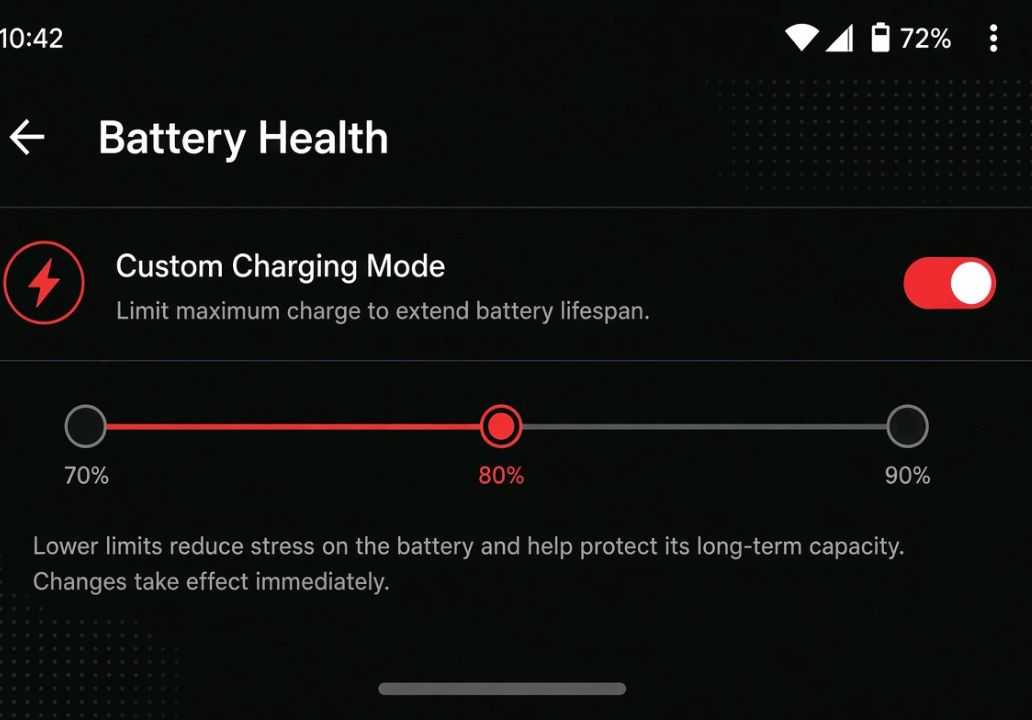
Nothing says the cell keeps 90% of its capacity after 1,200 charge cycles, roughly three years of daily charging. A separate EU listing, reported by GSMArena before launch, rated the phone for 1,400 cycles before it drops below 80%. The two figures use different thresholds, so they do not contradict each other. Both are manufacturer or regulatory ratings, not independent durability tests.
So what should you expect?
Read together, the reviews point to a full day for mixed use: messaging, social feeds, video, some maps. Heavy gaming or hours of continuous streaming will shorten that noticeably. If battery is your single deciding factor, compare it against the rest of Nothing’s range in our longest battery life Nothing phones roundup. If camera quality matters more, the 3.5x telephoto is the stronger reason to pick this model, and our Nothing camera ranking shows where it sits in the lineup.
Is it enough for heavy daily use?
Plenty of buyers here spend hours on mobile data, social apps and games, which is a tougher load than most review scripts. None of the sources above isolate mobile-data drain, so treat that as the unknown. What the evidence does show is a split: video and general use are strong, sustained 3D gaming is not. Nothing’s own estimates, based on its internal testing, are 17 hours of mixed use, 21 hours of YouTube, about 24.5 hours of Instagram and 9.26 hours of gaming, the last measured in Battlegrounds Mobile India at 200 nits. These are manufacturer claims, not independent results, and TechRadar’s streaming test fell well short of the YouTube figure. The independent gaming results above (6h 05m to 8h 16m) also come in below the gaming claim. A heavy social user should get through a day. A heavy gamer should plan on a charger or power bank by evening.
Nothing Phone (4a) Pro battery life: FAQ
How many mAh is the Nothing Phone (4a) Pro battery? The international model has a 5,080mAh battery. The Indian version carries 5,400mAh, so confirm the variant on the box or listing.
Does the Nothing Phone (4a) Pro last a full day? Based on published reviews, yes for typical mixed use. Published results vary by testing method. TechRadar projected roughly 13 hours and 40 minutes from a continuous 2K video-streaming test, while Engadget recorded 24 hours in its separate battery rundown test. GSMArena’s Active Use Score is 15h 16m. These figures should not be compared directly.
How fast does it charge? GSMArena measured 39% in 15 minutes, 68% in 30 minutes and just over an hour for a full charge using a 68W USB PD charger.
Is a charger included? No. Nothing rates the phone for up to 50W USB PD charging. GSMArena says a PPS-capable USB PD charger above 50W should reach the phone’s top speed, though results can vary by charger and cable.
Is the Phone (4a) Pro’s battery better than the Phone (3a) Pro’s? Capacity is only 80mAh larger, but GSMArena’s results show improved endurance over the Phone (3a) Pro, while Engadget measured five more hours in its separate rundown test.
Does it support wireless charging? None of the sources used for this guide list wireless charging. It does offer 7.5W reverse wired charging for topping up accessories.
How long will the battery stay healthy? Nothing states 90% capacity after 1,200 cycles, about three years of daily charging. This is an advertised figure, not an independent test result.
Sources
- GSMArena review, lab tests page
- GSMArena specifications page
- GSMArena on the EU EPREL listing
- Engadget review
- TechRadar review
- TechRadar best cheap phones roundup (13h 40m projection)
- Nothing community announcement post
- Nothing’s product copy as reproduced by JB Hi-Fi Business
- PhoneArena specifications and battery test
- Mobilissimo battery review
- NanoReview
- 91mobiles comparison
- droid.tools review

Comments 0
Leave a comment