Table of Contents
Open Table of Contents
- Overview
- The Spec Sheet Illusion
- What’s Actually Filling Up Your Phone Right Now
- Who Actually Needs 1TB Storage?
- The Real Reason 1TB Phones Exist
- 256GB Is the Real Sweet Spot — Here’s the Proof
- The Cloud Argument That Should End This Debate
- What to Actually Do Before Buying More Storage
- Storage Decision Guide by User Type
- The Longevity Angle Nobody Mentions
- The Bottom Line
- Frequently Asked Questions
Overview
I’m iSamuel, Last year, I was with a friend at one of those phone shops in Lagos — the kind where the glass cases are stacked floor to ceiling and the sales rep talks faster than your brain can process. He was there to buy a Samsung Galaxy S24 Ultra. Decent choice. The problem? Before he could even ask a question, the rep was already steering him toward the 1TB model. “No more storage wahala,” the guy said, practically handing over the box.
My friend was ready to pay. I pulled him back.
He uses WhatsApp, Spotify, Instagram. Takes photos at birthdays and during trips. Streams a little YouTube before bed. His old phone had 128GB, and after two years he’d used maybe 34GB of it — including all the WhatsApp videos he never cleared.
He didn’t need 1TB. Not even close. The rep knew that too. But nobody was about to say it out loud, and that’s the whole conversation I want to have right now.
The Spec Sheet Illusion
Phone manufacturers have gotten disturbingly good at one thing — making you feel like you’re missing out if you don’t buy the biggest number on the box. RAM, processor cores, camera megapixels, refresh rates, and now storage. 1TB sounds enormous because it is enormous. Your laptop probably doesn’t even have 1TB of internal storage.
But enormous and necessary are completely different things.
Here’s what most people don’t stop to think about: your phone doesn’t work like a desktop. You’re not installing software packages that take up 40GB each. You’re not keeping raw video editing projects sitting locally for weeks. You’re not archiving ten years of documents with no backup. The entire architecture of modern smartphone usage is built around the cloud — Google Photos, iCloud, Spotify, Netflix, OneDrive — where the premise is that your content doesn’t need to live on your device permanently to be accessible.
This is the foundation that makes the 1TB spec feel impressive in a store but irrelevant in real day-to-day life. It’s a number designed to make you reach deeper into your pocket, not to solve a real problem you have.
And honestly, it’s part of a bigger pattern. Think about how many features are on your phone right now that you’ve never once touched. We covered exactly that in this breakdown of smartphone features most people never use — storage marketing is just one piece of that same puzzle.
What’s Actually Filling Up Your Phone Right Now
Before you convince yourself you need a terabyte, let’s look at what’s realistically living on your device. I’ve checked mine, I’ve helped friends check theirs across Lagos, Abuja, and Port Harcourt, and the breakdown is almost always predictable.
| Storage Category | Typical Size | Notes |
|---|---|---|
| Operating System (Android/iOS) | 10–20GB | Pre-installed, unavoidable |
| Pre-installed Bloatware | 3–8GB | Often can’t be fully removed |
| WhatsApp media (2 years) | 5–15GB | The most underestimated culprit |
| Installed apps (30–50 apps) | 4–10GB | Most individual apps are small |
| Personal photos & videos | 8–25GB | Varies heavily by shooting habits |
| Offline music (if applicable) | 1–5GB | Most people just stream |
| Downloads, APKs, documents | 1–3GB | Accumulates quietly over time |
| Realistic total | ~32–86GB | Comfortably within 128GB |
The sneaky one on that list? WhatsApp. If you’re in four or five active groups — family, church, alumni, work — you’ve been passively receiving videos, voice notes, and photos for years without realising how much that folder has grown. Go check it right now. I’ll wait.
But even at the high end of that table, you’re sitting around 86GB. On a 128GB phone with some smart cloud habits, that’s workable. On 256GB, it’s not even a real conversation.
Who Actually Needs 1TB Storage?
I want to be fair here. There are real people for whom 1TB is a legitimate requirement. I’m just saying that if you’re reading a blog post trying to decide whether you need it, you’re probably not one of them. Here’s who genuinely is:
Mobile videographers who shoot and hold locally. If you’re recording 4K or 8K footage on your phone for client work, YouTube, or short films — and you’re not offloading to external drives regularly — large local storage genuinely matters. A single 10-minute 4K clip can sit around 3–6GB. That adds up fast on a full shooting day.
People with unreliable internet access. If connectivity is inconsistent where you live or work, the argument for heavy local storage gets stronger. Offline music, saved playlists, downloaded episodes, cached maps — they all pile up. Though even in this case, 256GB usually covers it unless you’re building a serious offline library.
Serious mobile gamers who never rotate their library. Call of Duty Mobile, Genshin Impact, PUBG, EA FC Mobile, Asphalt — a handful of those titles can eat 30–40GB combined. If you’re installing everything and deleting nothing, you’re the edge case these tiers were supposedly built for.
Professional RAW photographers. Shooting RAW on an iPhone 16 Pro or the Samsung Galaxy S26 Ultra generates files anywhere between 25–80MB each. Shoot 300 frames at an event and you’ve consumed 7–24GB in a single afternoon. For working photographers who need everything stored locally before post-processing, storage capacity is a real working constraint.
Outside of those four categories, most people are paying a significant premium for specs they will never stress-test.
The Real Reason 1TB Phones Exist
Let me be direct about this. The 1TB storage tier didn’t arrive because internal research showed users running out of space. It exists because storage upsells are one of the cleanest, highest-margin moves in consumer electronics.
The actual manufacturing cost difference between a 256GB and 1TB NAND flash chip at scale is relatively small — somewhere in the $15–$30 range. The retail price difference? Often $150–$250. Apple charges $200 to jump from 256GB to 512GB on the iPhone 16 Pro. Samsung’s gap is similar. That difference is almost entirely profit margin.
Beyond the money side, there’s a positioning play happening. Offering a 1TB model puts a manufacturer at the top of every spec comparison article and generates attention-grabbing headlines. “New phone ships with 1TB storage” writes itself. It signals premium, even when the person buying it will realistically use maybe 12% of that space over the device’s lifespan.
It’s the same logic that keeps inflating flagship specs far beyond what everyday use demands. This is actually a big part of why mid-range phones are quietly killing flagships in 2026 — people are finally realising they’re paying for spec optics more than actual day-to-day performance gains. Storage is just the most glaring example.
256GB Is the Real Sweet Spot — Here’s the Proof
Let me walk through a realistic scenario. Not a light user. A genuinely heavy smartphone user — the kind who shoots, games, downloads, and rarely cleans up.
| Content Type | Estimated Size |
|---|---|
| System + pre-installed apps | ~25GB |
| 10,000 personal photos (standard JPEG) | ~30GB |
| 500 short videos (1080p, ~50MB average) | ~25GB |
| Offline music library (500 songs) | ~2GB |
| 10 large games (CODM, Genshin, etc.) | ~35GB |
| Documents, downloads, miscellaneous | ~5GB |
| WhatsApp media (2 years, uncleaned) | ~15GB |
| Total | ~137GB |
That is a heavy user by most standards. And they cap out at around 137GB. On a 256GB device, there’s still 119GB of completely untouched space — enough to double the photo library, add five more games, and still breathe easy.
For someone who uses cloud backup and occasionally manages their WhatsApp folder, 128GB remains a perfectly reasonable choice. I personally know people who’ve had the same 128GB device for three years and hover around 55GB used. They’ve never once felt the pinch.
The Cloud Argument That Should End This Debate
Here’s the part that gets glossed over most in storage comparisons: you’re probably already paying for cloud storage you’re not fully taking advantage of.
Google gives every account 15GB free across Gmail, Drive, and Photos. Google One plans start cheap for 100GB of expansion. Apple’s iCloud with “Optimize iPhone Storage” turned on quietly replaces full-resolution photos on your device with lightweight thumbnails — keeping the originals in the cloud and pulling them back only when you actually need them. People go from 20GB of photos clogging their device down to under 3GB, without deleting a single image.
Spotify streams everything on demand. Apple Music does the same. Netflix downloads episodes for offline viewing and auto-deletes them after a set window. The entire model of how we consume content on phones is built around not storing things permanently on-device. The hardware companies understand this completely — they’re just hoping you don’t think about it too carefully while you’re picking a storage tier.
The genuine argument for massive local storage is strongest in places where cloud access is expensive or patchy. But if you’re in Lagos, Abuja, Kano, or any major city with reasonable network coverage, cloud offloading is a real, working solution — not a theoretical one.
What to Actually Do Before Buying More Storage
If you’re standing between a 256GB and 1TB variant right now, or you’re wondering whether your current phone actually needs replacing, here’s the practical path forward.
Audit your current storage first. Go to Settings → Storage on Android, or Settings → General → iPhone Storage on iOS. Look at the actual breakdown — photos, apps, system, other. If you’re sitting at 60GB on a 128GB phone, the problem is not that you need more storage. It’s that you haven’t cleaned house in a while.
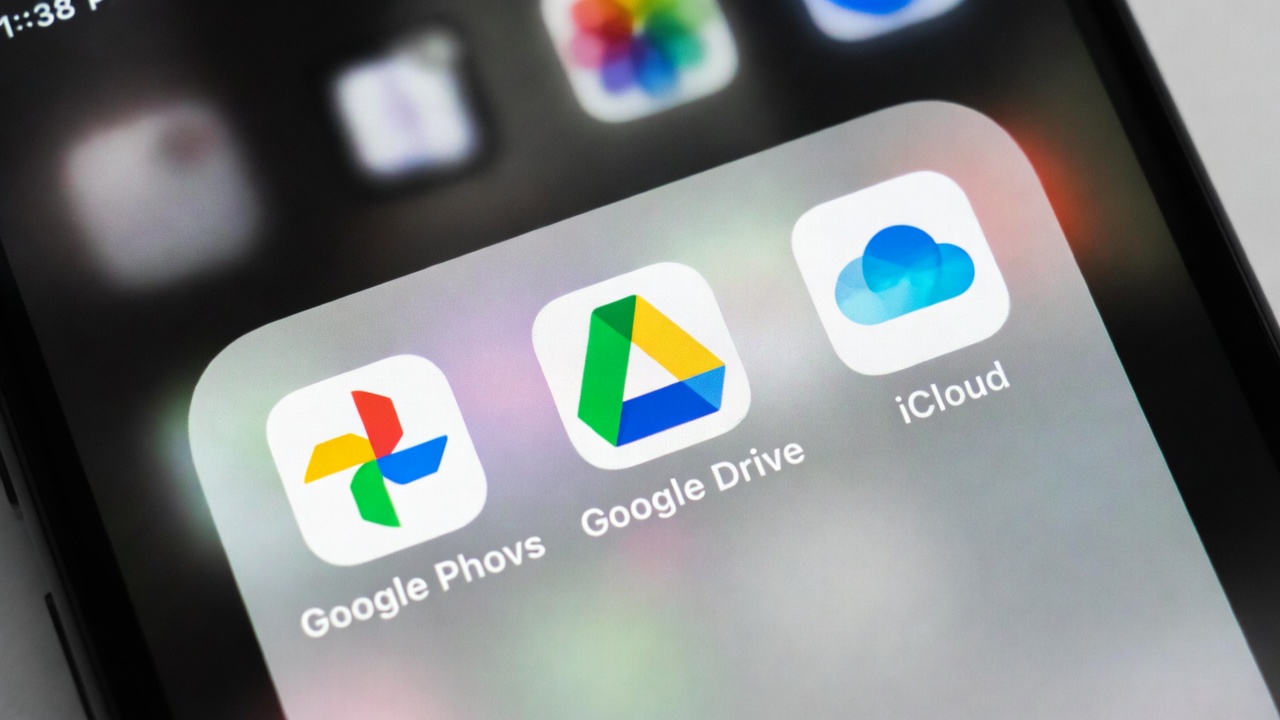
Enable cloud photo backup properly. Turn on Google Photos Backup and set “Free up device storage” to run automatically. On iPhone, enable iCloud Photos with Optimize Storage. This single change has freed up 10–30GB on every device I’ve helped set it up on.
Deal with your WhatsApp folder directly. Open your file manager, navigate to WhatsApp → Media → WhatsApp Videos. Sort by file size. You’ll find videos you watched once and forgot existed. Delete them. WhatsApp also has a built-in storage manager under Settings → Storage and Data → Manage Storage — it’s more useful than most people know.
Ask a more specific question. Not “would more storage be nice?” — that answer is always yes. The question is: “What exact content will I put in the space between 256GB and 1TB?” If you can’t name it specifically, you don’t need the upgrade.
Storage Decision Guide by User Type
| User Type | Recommended Storage | Why |
|---|---|---|
| Casual user (social media, calls, browsing) | 128GB | Comfortable headroom for years |
| Regular user (photos, some gaming, streaming) | 128–256GB | 256GB covers virtually every scenario |
| Heavy photographer (JPEG format) | 256GB | Cloud backup handles the overflow |
| RAW shooter or active videographer | 256–512GB | Needs local buffer before offloading |
| Mobile gamer (10+ large titles) | 256GB | Manageable with occasional game rotation |
| Full-time content creator, offline-heavy workflow | 512GB–1TB | The one case that’s genuinely justified |
The Longevity Angle Nobody Mentions
There’s one more dimension worth thinking about. Storage decisions matter more on phones you intend to keep for a long time. If you’re swapping devices every 12–18 months, this whole debate barely matters — you’ll never fill it before you’re already onto the next phone anyway.
But if you’re planning to run a device for 3–5 years — which is increasingly the sensible financial decision, especially with flagship prices where they are right now — then storage headroom becomes a real consideration. Apps grow in size over time. Major OS updates take up more space. Your photo library compounds year over year. A little breathing room at purchase pays off in year three and four.
This is a thread that runs through long-term phone ownership more broadly. My look at Xiaomi’s durability over time touched on how storage squeeze becomes one of the first friction points that shows up around the 3-year mark — before battery, before performance, before anything else. Getting the storage decision right at purchase is a quieter but real part of how long you’ll actually want to keep using the device.
The Bottom Line
1TB on a phone is a genuine engineering achievement. I won’t downplay that. Fitting a terabyte into a device you carry in your pocket is impressive.
But impressive and useful are not the same thing, and useful and worth the premium are even further apart. For most people, the 1TB tier represents a significant chunk of money spent on storage that will never be touched. The spec arms race in smartphones is largely a margin play dressed up as a feature — and understanding that makes the decision a lot clearer.
Most users sit between 30GB and 90GB of real-world storage usage. 256GB gives you comfortable room to grow. 512GB covers almost every demanding workflow. 1TB belongs to a very specific slice of professional, high-volume users who go into the decision already knowing exactly why they need it.
Do yourself a favour: check your current storage before your next phone purchase. You might be surprised how little of it you’ve actually used — and how much simpler that makes a decision the marketing works hard to complicate.
Frequently Asked Questions
Does having more storage make a phone faster?
No — and this is one of the most persistent myths in smartphone buying. Storage capacity has no meaningful impact on day-to-day speed. What matters is the type of storage: UFS 4.0 is significantly faster than UFS 3.1 regardless of how many gigabytes are involved. A 256GB phone with newer storage technology will feel snappier than a 1TB device running older storage on the same tasks.
What actually happens when phone storage fills up completely?
Your phone starts warning you well before you hit the limit — most systems flag you around 85–90% capacity. At 100%, you lose the ability to take photos, download apps, and in some cases receive media over WhatsApp. The fix is almost never “buy a bigger phone.” It’s clearing media folders, offloading to cloud, and cleaning downloads — tasks that take under 10 minutes.
Is 128GB still a sensible choice in 2025?
Yes, for the right person — and that’s still most people. If you back up photos to the cloud, stream your music, and occasionally manage your WhatsApp folder, 128GB will see you through two to three years without trouble. The users who genuinely struggle at 128GB are usually those who’ve never done any kind of storage housekeeping.
Can you expand phone storage after purchasing?
It depends on the device. Flagship Samsung Galaxy S-series phones dropped the microSD card slot years ago. iPhones have never had one. If expandable storage matters to you, it’s actually a point in favour of mid-range devices — brands like Tecno, Infinix, and Xiaomi frequently retain the microSD slot on their devices, which changes the long-term storage calculus significantly.
What’s the fastest way to recover storage without deleting things you actually want?
Three moves, in order: enable Google Photos or iCloud backup and activate the “free up device storage” option; open WhatsApp Settings → Storage and Data → Manage Storage and clear media from your largest group chats; and sweep your Downloads folder for anything you’ve already opened and no longer need. Most people recover 10–25GB from just those three actions alone.
Why do phone brands keep pushing 1TB if most users don’t need it?
Two reasons: margin and market positioning. The actual cost difference between a 256GB and 1TB chip at manufacturer scale is a small fraction of the retail markup — the rest is pure margin. Beyond that, having a 1TB model at the top of the lineup makes the whole range look more premium and generates spec-sheet media coverage. It’s a smart business move. It’s just not always a smart buying decision for the person on the other side of that transaction.


Comments 0
Leave a comment