Table of Contents
Open Table of Contents
Overview
The A-series was never supposed to have a Pro. Redmi’s budget line has always been about one thing — get a working Android phone into as many hands as possible at the lowest price possible. No frills, no “Pro” branding. Then the Redmi A7 Pro 5G showed up, and suddenly the rules changed.
Launched in India on April 15, 2026, starting at ₹11,499 (~$125), this is the first Pro variant in Redmi’s entire A lineup. On paper, it checks impressive boxes — 5G, a 6.9-inch 120Hz screen, a 6,300mAh battery, 32MP camera, Android 16, and a promise of six years of security patches. For $125, that sounds almost too good.
Almost.
Quick Verdict
The Redmi A7 Pro 5G is a strong battery phone with solid update commitments and a genuinely future-proof 5G chip. But 4GB RAM, a 720p display, and slow 15W charging remind you exactly where every rupee was saved. Buy it if battery and 5G longevity are your priorities. Look elsewhere if you care about display quality or multitasking.
Specs at a Glance
| Category | Specs |
|---|---|
| Display | 6.9″ HD+ IPS LCD, 120Hz, 800 nits peak |
| Chipset | Unisoc T8300 Octa-core (2.2GHz), 5G |
| RAM / Storage | 4GB LPDDR4X / 64GB or 128GB UFS 2.2 |
| RAM Extension | Up to 8GB (virtual, uses ROM) |
| Rear Camera | 32MP + depth sensor (AI dual cam) |
| Front Camera | 8MP |
| Battery | 6,300mAh, 15W charging, 7.5W reverse charging |
| OS | Android 16, HyperOS 3 |
| Update Promise | 4 years OS + 6 years security patches |
| Connectivity | 5G, Wi-Fi, Bluetooth 5.4, GPS, USB-C, 3.5mm jack |
| Protection | IP52 (dust + splash resistant) |
| Colors | Black, Mist Blue, Sunset Orange |
| Price | ₹11,499 (4/64GB) · ₹12,499 (4/128GB) |
Design
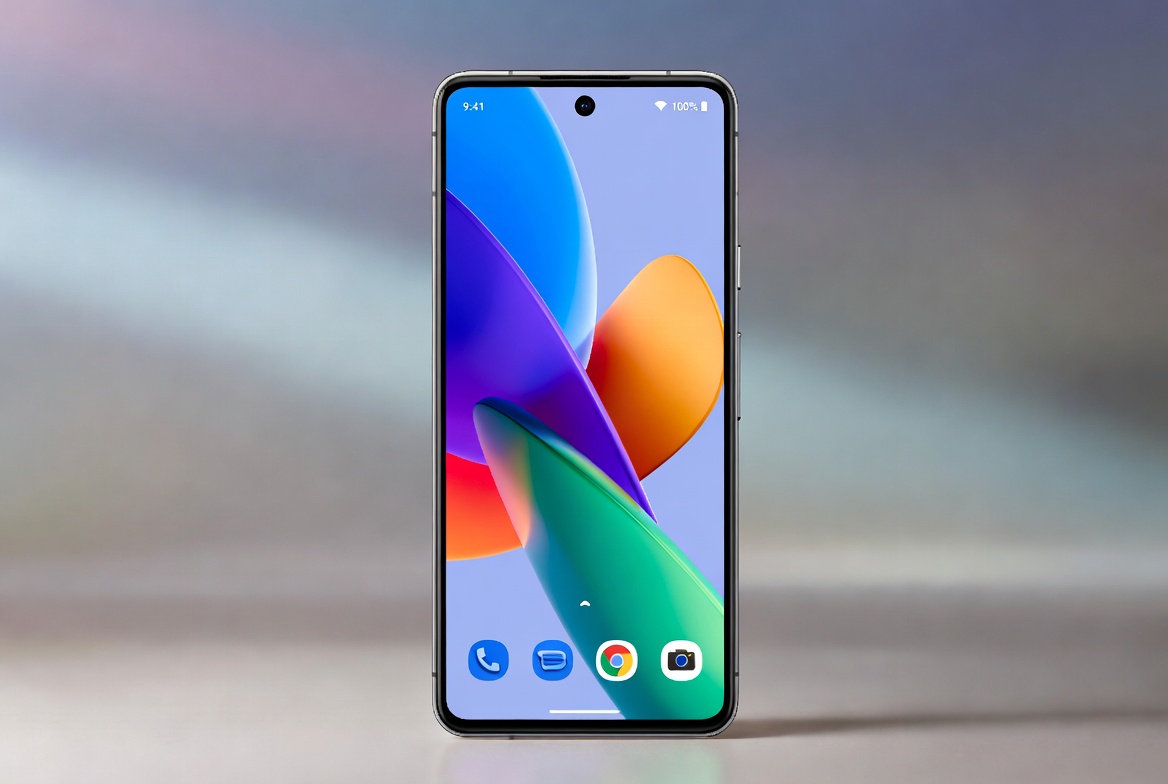
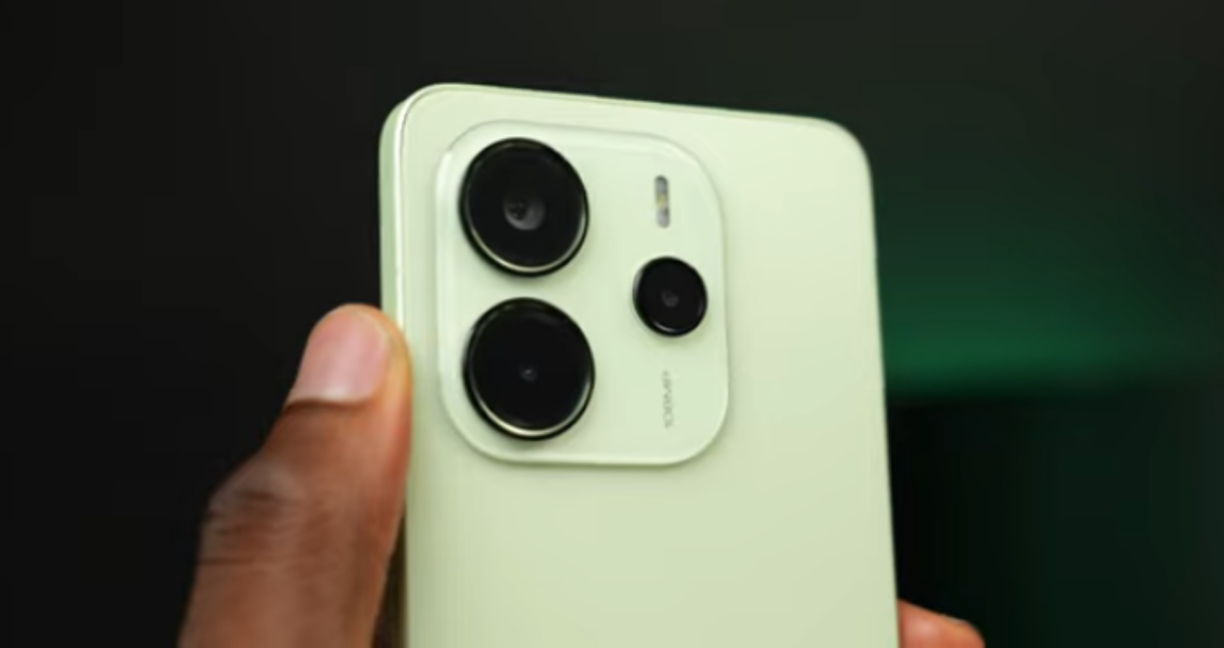
Redmi calls it “Imperial Design” — which is marketing speak for “it looks decent.” The prismatic lens ring around the camera module adds a touch of flair that honestly feels above the price point. At 6.9 inches with a thick chin, this is a big phone. You will know you’re holding a budget device, but it won’t embarrass you in 2026.
The IP52 rating is a nice bonus — splash resistance at this price isn’t common. The side-mounted fingerprint sensor is the right choice here; it’s faster and more reliable than under-display solutions that cost three times as much.
Display
This is where I have to be honest with you. A 6.9-inch screen sounds impressive until you pair it with 720p HD+ resolution. That works out to roughly 219 PPI — you will notice the softness, especially on text and fine detail. On a phone this size, Full HD+ should be the minimum, and Redmi made a deliberate trade-off here to keep costs down and let the Unisoc T8300 run lighter on pixels.
The 120Hz refresh rate does make scrolling feel smooth, and 800 nits peak brightness holds up in outdoor use. Triple TÜV certifications for low blue light, flicker-free, and circadian-friendly tuning are genuinely useful additions — they suggest Redmi thought about the people who’ll be staring at this screen for hours.
For binge-watching and social media? It’s fine. For reading small text or detailed images? You’ll notice the trade-off.
Performance
The Unisoc T8300 is the reason this phone exists. It’s the chip that makes 5G possible at this price — and that’s a meaningful call in markets where 5G networks are expanding fast. Eight cores, 2.2GHz boost clock, Mali-G57 MP2 GPU. Benchmark numbers sit in the same neighborhood as MediaTek’s Helio G99, with the critical advantage that the T8300 actually brings 5G connectivity to the table.
Day-to-day — browsing, calls, WhatsApp, YouTube — it handles everything without complaint. Where it starts to feel the squeeze is with 4GB of physical RAM. Virtual RAM extension (up to 8GB) helps, but let’s be clear: it’s borrowing from your storage, not magic. Heavy multitaskers, mobile gamers running titles like CODM at high settings, or anyone who likes 10+ apps open will feel it.
The UFS 2.2 storage is a legitimate upgrade over the eMMC found in phones at this price a year ago. App loading and file transfers are noticeably snappier for it.
Camera
| Front | Rear | |
|---|---|---|
| Resolution | 8MP | 32MP (primary) + depth |
| Features | AI Beauty | HDR+, Night Mode, AI Sky |
| Video | Standard | Standard |
The 32MP main sensor is the headline, and in daylight it delivers respectable results — sharp, with good color processing from Xiaomi’s AI pipeline. The larger sensor compared to the Redmi A5 means 13% more light intake per Xiaomi’s own lab data, which matters in the low-light situations where budget cameras usually fall apart.
Night mode is present and functional. “AI Sky” adjusts colors and brightness automatically — useful for people who don’t want to fiddle with settings. The depth sensor adds portrait mode capability, though results are inconsistent at the edges, as expected at this price.
The 8MP selfie camera is adequate for video calls and casual selfies. AI Beauty mode is on by default, which will frustrate people who want natural shots — turn it off in settings.
What I won’t do is pretend this trades blows with a midrange camera system. It doesn’t. Manage expectations and you’ll be pleasantly surprised; expect flagship output and you won’t be.
Related Posts:
Battery Life
This is the strongest argument for the Redmi A7 Pro 5G. A 6,300mAh cell in a phone running a relatively efficient chip and a 720p display is a recipe for outstanding endurance. Two-day battery life for moderate users is realistic. Heavy users should comfortably get through a full day without anxiety.
The 7.5W reverse wired charging is an unusual addition at this price — useful for topping up earbuds or another phone in a pinch.
The downside: 15W charging. In 2026, that’s slow. Charging from dead to full will take around 2.5 hours. Given that the whole value proposition is the big battery, faster charging should have been a priority here.
Software
Android 16 with HyperOS 3 out of the box. The four-year OS update and six-year security patch commitment is genuinely remarkable for a $125 device — this is one area where Xiaomi is doing better than competitors charging twice as much. If you’re buying a phone you want to use for four or five years without worrying about security, the software support story here is compelling.
Bloatware is present, as expected on any HyperOS device. Most of it can be disabled.
Google Gemini integration is baked in — Circle to Search works, and AI Sky in the camera pulls on Google’s processing pipeline.
Who Should Buy This?
Buy it if:
- 5G future-proofing matters to you and budget is tight
- You want a big battery phone that lasts two days
- Long software support is a priority
- You don’t game heavily or run heavy multitasking workflows
Skip it if:
- Display quality matters — 720p on a 6.9-inch screen is a real compromise
- You’re a heavy multitasker who needs more than 4GB real RAM
- You want fast charging as a daily convenience
- You’re gaming seriously on mobile
Alternatives to Consider
If you’re shopping in the same budget range, these are the phones you’ll actually be choosing between:
| Phone | Chipset | RAM | Display | Battery | 5G | Price (~) |
|---|---|---|---|---|---|---|
| Redmi A7 Pro 5G | Unisoc T8300 | 4GB | 6.9″ 720p 120Hz | 6,300mAh 15W | ✅ | $125 |
| Infinix Hot 50 Pro | Helio G100 | 8GB | 6.78″ FHD+ 120Hz | 5,000mAh 33W | ❌ | ~$130 |
| Tecno Spark 40 Pro | Helio G100 | 8GB | 6.78″ FHD+ 120Hz | 5,000mAh 18W | ❌ | ~$120 |
| Redmi Note 14 4G | Helio G99 Ultra | 6GB | 6.67″ FHD+ 120Hz | 5,500mAh 33W | ❌ | ~$150 |
| Infinix Note 40 | Helio G99 | 8GB | 6.78″ FHD+ 120Hz | 5,000mAh 45W | ❌ | ~$140 |
The honest breakdown: The Redmi A7 Pro 5G is the only phone on this list with confirmed 5G support at sub-$130. That’s its entire argument. But every single competitor above beats it on RAM, display resolution, and charging speed. If 5G doesn’t matter to you yet — or isn’t available in your area — the Infinix Hot 50 Pro or Tecno Spark 40 Pro gives you significantly better specs for roughly the same money.
The Redmi Note 14 is worth the extra $25 if your budget can stretch. FHD+, more RAM, faster charging, and a more proven chipset. It’s the smarter long-term buy for anyone who isn’t specifically chasing 5G at the floor price.
Frequently Asked Questions
Is the Redmi A7 Pro 5G good for gaming? Casual gaming — yes. PUBG Mobile, Subway Surfers, FIFA Mobile at medium settings — no problem. Serious titles like Call of Duty: Mobile at high graphics settings will push the 4GB RAM limit, causing stutters and app reloads over long sessions. If mobile gaming is a priority, look at something with at least 6GB RAM, like the Infinix Hot 50 Pro or Redmi Note 14.
Does the Redmi A7 Pro 5G support fast charging? It supports 15W wired charging — which, in 2026, is not fast. A full charge from zero takes roughly 2.5 hours. The 7.5W reverse wired charging is a nice bonus for emergencies, but don’t expect the kind of 45W or 65W top-ups you’d get from midrange rivals. This is the phone’s single biggest weakness given how large the battery is.
Is 4GB RAM enough in 2026? Barely, and only with discipline. For calls, messaging, social media, and YouTube, 4GB handles it fine. The virtual RAM extension (up to 8GB using ROM space) helps with app retention in the background. But if you’re the type who keeps 10+ tabs open or switches between heavy apps frequently, you’ll feel it. By 2027 it’ll feel genuinely tight. The 128GB storage variant is worth the extra $10 just so the virtual RAM extension doesn’t eat into your actual storage.
Does the Redmi A7 Pro 5G have a headphone jack? Yes — 3.5mm jack is present, alongside USB-C. Rare for a new release in 2026 and genuinely appreciated at this price.
Is the Redmi A7 Pro 5G available outside India? The 5G variant launched in India first (April 2026). A separate 4G global model with a different chipset (Unisoc T7250) and 13MP camera is available in other markets. If you’re outside India, confirm which variant is available in your region — the specs differ significantly between the two.
| Category | Rating |
|---|---|
| Design | 7/10 |
| Display | 6/10 |
| Performance | 6.5/10 |
| Camera | 6.5/10 |
| Battery | 8.5/10 |
| Software | 8/10 |
| Value | 8/10 |
| Overall | 7.2 / 10 |
The Redmi A7 Pro 5G is a well-intentioned device with a clear identity: a long-lasting, future-ready budget phone with software support that punches above its class. The “Pro” label sets expectations that the screen and RAM don’t fully meet, but for someone who prioritizes endurance and 5G on a tight budget, this is a hard phone to argue with at $125.
Redmi knows exactly who this is for. The question is whether you’re in that group.
Have you used a Redmi A-series phone? Drop your experience in the comments — especially if you’re coming from a TECNO or Infinix device at a similar price point.