Table of Contents
Open Table of Contents
- Overview
- Quick comparison
- Performance: this is where the tiers show
- Heat and long sessions
- Display and battery
- Software support and the rest
- So which one should you buy?
- What they cost in Nigeria
- FAQ
- Is the POCO X7 Pro better than the Redmi Note 15 5G for gaming?
- Can the Redmi Note 15 5G run COD Mobile and PUBG Mobile?
- Which phone has better battery life for gaming?
- Does the POCO X7 Pro have a 6,550mAh or 6,000mAh battery?
- Are the Redmi Note 15 and Note 15 5G the same phone?
- Is the POCO X7 Pro worth the extra money?
Overview
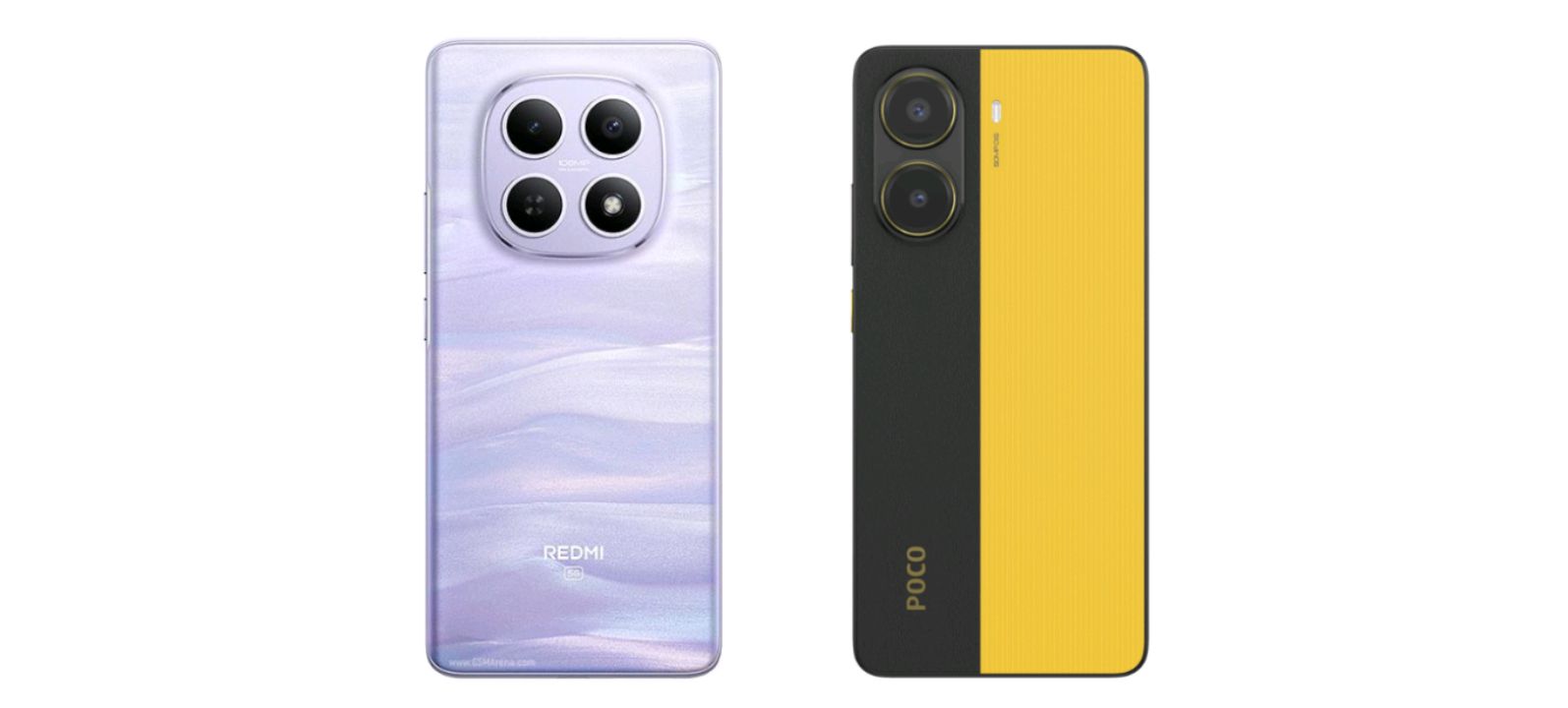
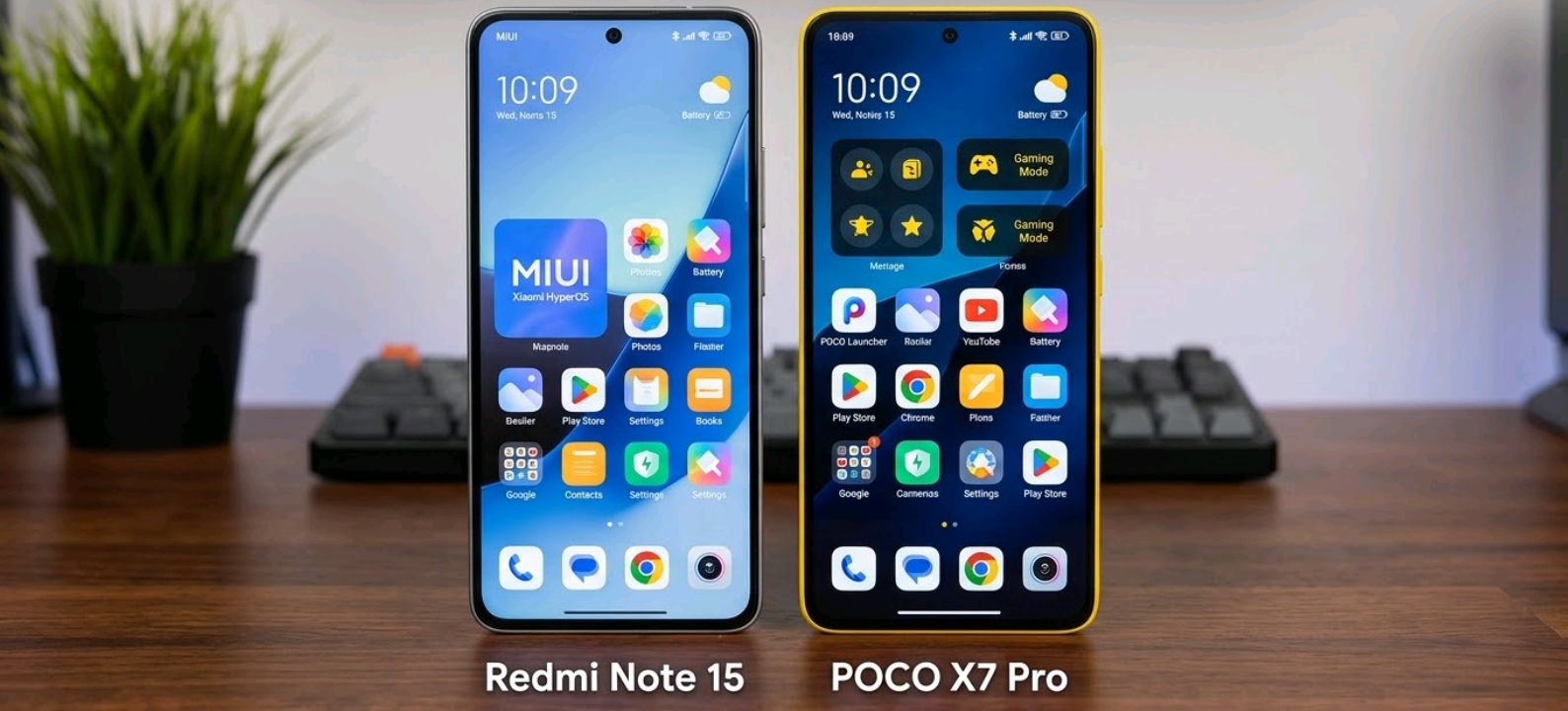
Two Xiaomi-family phones, one question: if most of your screen time goes to Mobile Legends, COD Mobile, PUBG Mobile or eFootball, which one deserves your money?
On paper this is not a fair fight. The Redmi Note 15 5G is a mainstream mid-ranger built around a Snapdragon 6 Gen 3. The POCO X7 Pro is a performance phone built around MediaTek’s Dimensity 8400 Ultra. They sit in different tiers, yet people keep comparing them because the price gap can look small once a sale or a regional discount kicks in. So the real question is whether that gap buys you something you will feel in a match.
This is a research-based comparison, not a test report. Where a number is a manufacturer claim, it is labelled as one.
Quick comparison
| Spec | Redmi Note 15 5G (global) | POCO X7 Pro |
|---|---|---|
| Chipset | Snapdragon 6 Gen 3 | Dimensity 8400 Ultra (4nm) |
| Display | AMOLED, 120Hz, FHD+; 6.67-inch on Xiaomi’s spec sheet, 6.77-inch on its marketing page | 6.67-inch AMOLED, 120Hz, 1.5K (1220 x 2712) |
| Peak brightness | Up to 3,200 nits | Up to 3,200 nits |
| Battery | 5,520mAh (silicon-carbon, per launch coverage) | 6,000mAh global; 6,550mAh in India |
| Wired charging | 45W | 90W |
| Main camera | 108MP | 50MP (Sony LYT-600) |
| Water/dust rating | IP66 on Xiaomi’s global page and in GSMArena’s review; some regional listings say IP65 | IP68 (Xiaomi global specifications) |
| Cooling | No comparable dedicated cooling system was identified in the reviewed Redmi specifications | LiquidCool Technology 4.0 with 3D IceLoop and a 5,000mm² loop pump (POCO’s wording) |
| Launch price reference | From €279 for 6/128GB in Europe | Varies widely by region; check current listings |
A note on the Redmi’s display size: Xiaomi’s own pages disagree with each other. Its official specification sheet lists 6.67 inches, while its marketing page says 6.77 inches, and retailers repeat both. Treat it as a roughly 6.7-inch panel, and check your region’s listing before you quote an exact figure.
Performance: this is where the tiers show
The Snapdragon 6 Gen 3 is a capable everyday chip. Notebookcheck’s coverage describes it as around a 20% performance step over the Note 14 5G, which used a Dimensity 7025 Ultra. That is a real improvement, but it is an improvement within the same weight class.
The Dimensity 8400 Ultra is a different animal. It uses an all-big-core CPU layout on a 4nm process, paired with a Mali-G720 GPU, and GSMArena’s review called it a big step up from the X6 Pro’s chip. For gaming, the GPU and sustained performance matter more than the headline CPU numbers, and this is where the POCO has the clearer advantage.
Here is what that likely means in practice. These are expectations based on chipset class, not measured frame rates.
| Game type | Redmi Note 15 5G | POCO X7 Pro |
|---|---|---|
| MLBB, eFootball (lighter/mid) | Should run well at medium to high settings | Should run at high settings with headroom |
| COD Mobile, PUBG Mobile (heavier) | Playable, with settings likely capped below the top frame-rate options | Better suited to high frame-rate modes |
| Genshin-class open-world titles | Expect compromises on graphics and stability | Much more comfortable |
What reviewers actually saw is a better guide than my chipset reasoning. Digit’s review of the Redmi Note 15 says heavier games or sessions beyond roughly 25 to 30 minutes make performance settle, without collapsing into lag, and it describes the chip as tuned for efficiency rather than sustained high-frame-rate bursts. Business Today’s reviewer reported smooth BGMI at lower graphics settings, with no lag across 40 minutes of continuous play. Both are single-reviewer observations, not lab data, and both fit the table above.
Heat and long sessions
Peak speed gets the marketing. Staying fast after 40 minutes is what decides whether a ranked match ends smoothly.
POCO’s official pages describe LiquidCool Technology 4.0 with a 3D IceLoop system and a 5,000mm² loop pump, a design that separates vapour and liquid flow. The company’s claim that it conducts heat several times better than a traditional vapor chamber comes from its own lab testing, so read it as marketing, but a dedicated cooling system is the kind of hardware that helps a phone hold its clocks. I did not identify a comparable dedicated cooling system in the Redmi Note 15 5G specifications I reviewed. That does not mean it lacks thermal management, only that it is not a headline feature the way it is on the POCO. If you play in a warm room or without air conditioning, which describes plenty of gaming sessions in Lagos, that cooling gap deserves weight.
Display and battery
Both phones quote a 3,200-nit peak brightness and a 120Hz AMOLED panel, so outdoor visibility should be similar on paper and neither refresh rate is a problem for games. The difference is sharpness: the POCO X7 Pro uses a higher-resolution 1.5K panel with Dolby Vision support, which helps in detail-heavy games.
Battery is closer than the capacities suggest, because the Redmi’s chip is less demanding. Still, the POCO has the larger cell and far faster charging. POCO’s own product page claims a full charge in about 42 minutes, and India launch coverage quoted about 45 minutes. Both are manufacturer claims made under the company’s test conditions, not results from my own testing, so treat them as a rough guide rather than what every charger and cable will deliver. The Redmi’s 45W charging is respectable, but if you top up between matches, the POCO gets you back in the game sooner.
One regional catch: the POCO X7 Pro’s 6,550mAh battery is the India figure, while several global listings show 6,000mAh. Check which version your seller is shipping before you compare. For a wider look at battery-first phones, our guide to Infinix phones with long battery life covers what actually lasts beyond the spec sheet.

Software support and the rest
Xiaomi advertises six years of security updates for the Redmi Note 15 5G, alongside four major Android updates, which is long for this price. For the POCO X7 Pro, India launch coverage reported a promise of three Android OS updates and four years of security patches, and third-party update trackers list security support running to January 2029, which fits that four-year figure. I could not find the policy stated on an official Xiaomi or POCO page, so treat it as reported rather than confirmed, and check Xiaomi’s support pages before relying on it. For a phone you plan to keep through years of game updates, support length matters.
The Redmi offers the higher main-camera resolution at 108MP, with a 20MP selfie camera, while the POCO uses a 50MP Sony LYT-600 main sensor. Resolution alone does not settle which camera is better, and reviewers describe the POCO’s ultrawide and selfie cameras as average. POCO lists optical stabilisation on its main camera, with OIS and EIS for 4K/60 video. Some Redmi listings also mention OIS, but GSMArena’s review noted limited video stabilisation, so check that if video matters to you. This article is about gaming, so I would not pick either phone on camera claims alone.
So which one should you buy?
Buy the POCO X7 Pro if gaming is the main reason you are upgrading. It has the stronger chip, the better cooling story, faster charging, and more headroom for heavier titles as they get more demanding over the next two years.
Buy the Redmi Note 15 5G if you play casual to mid-weight games, care about camera resolution, and want a more conventional all-rounder at a lower price. Do not expect it to hold high frame rates in the most demanding shooters.
If you are still working out how Xiaomi’s brands differ, our breakdown of the Redmi vs Xiaomi difference explains where each line fits. And if long sessions worry you more than peak speed, see Xiaomi phones with long battery life in 2026.
What they cost in Nigeria
| Phone | Typical Nigerian price (naira) | USD equivalent at stated rate | Notes |
|---|---|---|---|
| Redmi Note 15 5G (8GB/256GB) | Not confirmed | Not confirmed | I could not find a Jumia listing clearly identified as the 5G model. Listings labelled “Redmi Note 15 8GB/256GB” were the 4G version (Helio G100 Ultra, 6,000mAh) at about ₦395,000 to ₦430,000, so check the chipset and battery before you pay |
| POCO X7 Pro (8GB/256GB) | ₦535,000 | about $397 | Jumia Nigeria listing, marked low stock; confirm warranty and band support |
Prices checked on November 2, 2026, on Jumia Nigeria, converted at roughly ₦1,347 to US$1 (the CBN official-market close on October 29, 2026). Naira prices move with the exchange rate and between retailers, so treat these as a snapshot and check the listing before you buy.
FAQ
Is the POCO X7 Pro better than the Redmi Note 15 5G for gaming?
Based on specs, yes. The Dimensity 8400 Ultra is a higher-tier chip, and the X7 Pro also has a dedicated cooling system and 90W charging. The Redmi Note 15 5G is the cheaper all-rounder, with a higher-resolution main camera and a longer advertised security-update window.
Can the Redmi Note 15 5G run COD Mobile and PUBG Mobile?
It should run them, but expect to lower graphics or frame-rate settings compared with the POCO. These are chipset-class expectations, not measured results.
Which phone has better battery life for gaming?
The POCO X7 Pro has the larger battery, although the Redmi’s less demanding chip narrows the gap. Real gaming endurance depends on the game, brightness and signal strength.
Does the POCO X7 Pro have a 6,550mAh or 6,000mAh battery?
Both appear in listings. The 6,550mAh figure is tied to India, while several global listings show 6,000mAh. Check your region’s official page.
Are the Redmi Note 15 and Note 15 5G the same phone?
No. The 4G Note 15 uses a MediaTek Helio G100 Ultra and a 6,000mAh battery with 33W charging, while the 5G model uses the Snapdragon 6 Gen 3 and a 5,520mAh battery with 45W charging. This article covers the 5G version.
Is the POCO X7 Pro worth the extra money?
That depends on the actual selling prices where you buy. If the gap is small, a daily gamer who keeps phones for years will likely prefer the POCO. If it is large, and you mostly browse, shoot photos and play lighter games, the Redmi Note 15 5G covers it for less.



Comments 0
Leave a comment