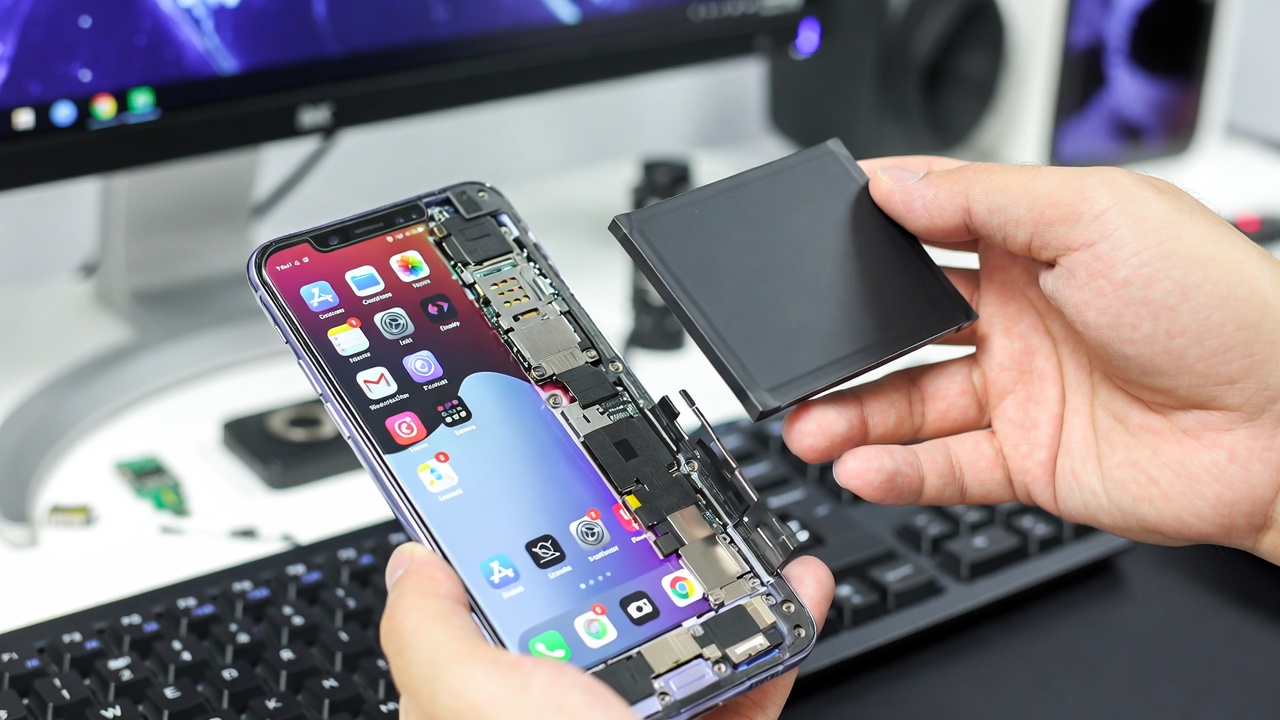
I’ve been using smartphones for over fifteen years now, and I can still remember the satisfying click of snapping a fresh battery into my old Galaxy S3. Back then, if your phone died at 3 PM, you’d just swap in a spare battery from your pocket and keep going. No charging cables, no power banks, no anxiety about finding an outlet. Just… instant 100%.
Now? We carry around portable chargers that weigh more than the phones themselves, we obsess over battery degradation percentages, and we’re told that a phone lasting two years before the battery turns to mush is somehow acceptable. We’ve normalized this, and I think that’s insane.
The removal of replaceable batteries wasn’t some inevitable march of progress. It was a choice—one that benefited manufacturers far more than it ever helped us. And in 2026, with right-to-repair laws gaining traction, environmental concerns reaching critical mass, and battery technology advancing rapidly, there’s never been a better time to bring removable batteries back.
The Lie We’ve Been Sold About “Premium Design”
Let’s address the elephant in the room: the excuse we’ve heard a thousand times. “Removable batteries compromise design. They make phones thicker, uglier, less water-resistant.”
Bullshit.
I say that with the full weight of someone who’s held dozens of phones with swappable batteries that felt just as premium as anything Samsung or Apple ships today. The LG V20 had a removable battery and still managed IP68 water resistance. The Fairphone 5 has a user-replaceable battery and meets IP55 standards—not perfect, but functional. Samsung’s Galaxy S5 had a removable battery AND an IP67 rating back in 2014.
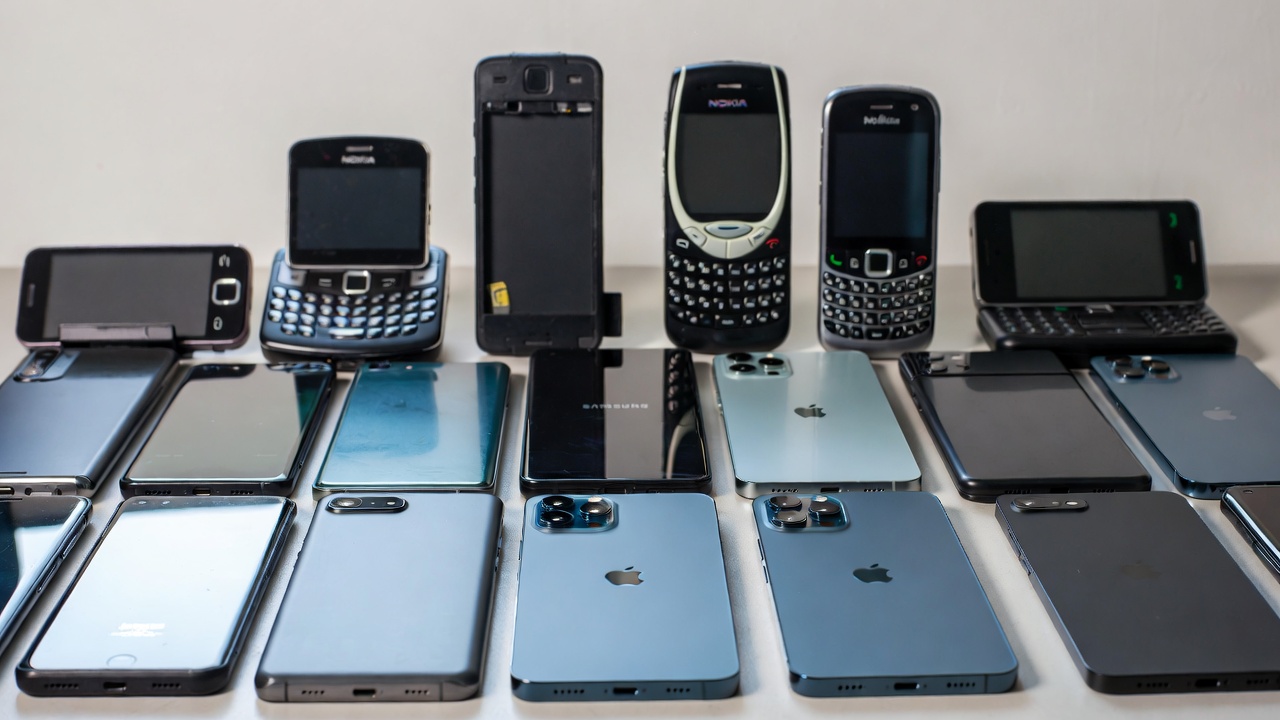
The technology exists. It always has.
What happened was that smartphone manufacturers realized they could kill several birds with one stone by gluing batteries in place. They could make phones slightly thinner (emphasis on slightly—we’re talking 0.5mm differences here). They could force people to upgrade sooner when batteries degraded. They could charge $89 for battery replacements that cost them $12 in parts. And they could claim it was all in service of “premium aesthetics.”
Meanwhile, we’re out here with phones that are 8.9mm thick instead of 9.4mm, acting like that half-millimeter saved our lives, while our batteries crap out after 500 charge cycles and we can’t do anything about it except book a Genius Bar appointment or mail our phones to some repair depot for a week.
You know what’s not premium? Being tethered to a wall charger. That’s the opposite of premium.
The Environmental Catastrophe We’re Ignoring
Here’s a stat that should make you uncomfortable: the average smartphone gets replaced every 2.5 years. Not because the processor can’t handle apps anymore. Not because the screen broke. But because the battery degraded to the point where the phone dies by noon.
Think about that. Perfectly functional computers—because that’s what smartphones are—with high-quality displays, capable processors, decent cameras, all of it ending up in landfills or recycling facilities (if we’re lucky) because a $15 battery component failed.
In 2026, we’re producing approximately 1.5 billion smartphones annually. If even 30% of those are early replacements driven primarily by battery degradation, we’re talking about 450 million devices that didn’t need to become e-waste. That’s not just wasteful—it’s obscene.
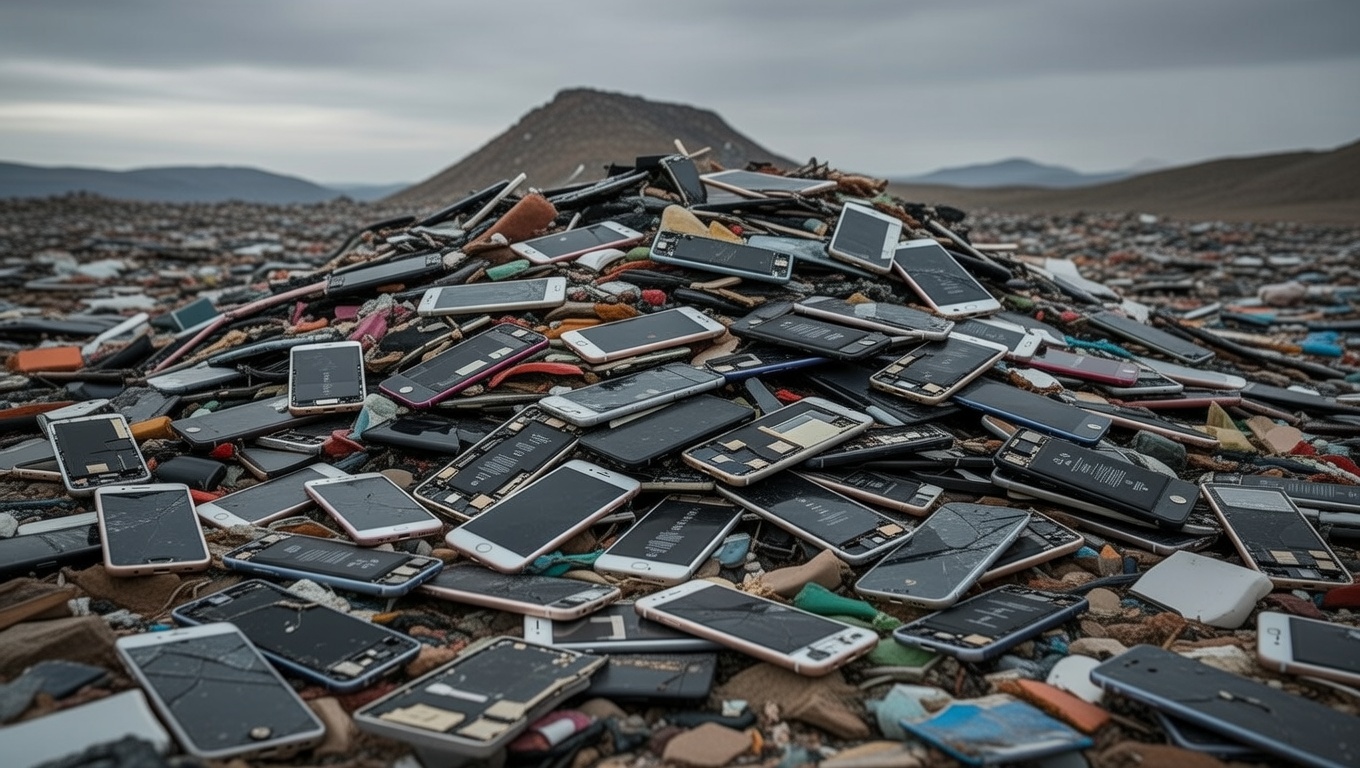
And before someone jumps in with “but recycling!”—yes, phone recycling exists, but it’s inefficient as hell. The recovery rate for rare earth elements in smartphones hovers around 20-30% at best. The rest? Lost. Gone. Requiring new mining operations that devastate landscapes and communities.
A removable battery doesn’t just extend the life of one phone. It fundamentally changes the upgrade calculus. If I can swap a $25 battery and get two more years out of my device, suddenly that four-year-old phone with a still-great camera and plenty of performance becomes viable again. We’re not talking about small potatoes here—this is a systemic fix to planned obsolescence that could cut smartphone production by 20-40% within a decade.
The EU gets this. That’s why they’ve mandated user-replaceable batteries for devices by 2027. But we shouldn’t wait for regulations. Manufacturers should be jumping on this because it’s the right thing to do—and because the market is ready for it.
The Economic Argument Nobody Wants to Admit
Let’s talk money, because that’s what this really comes down to for most people.
A flagship phone in 2026 costs anywhere from $800 to $1,500. That’s a serious investment. But here’s the dirty secret: that $1,200 phone you bought loses about 40% of its value the moment the battery health drops below 85%. Suddenly, your trade-in value tanks, your resale options shrink, and you’re stuck either paying for a battery replacement (which voids some warranties, by the way) or upgrading entirely.
With a removable battery, your phone maintains its value longer. You can sell a three-year-old device with a fresh battery installed and actually get a decent return. You can buy used phones confidently, knowing you can immediately swap in a new battery and effectively reset the device’s longevity.
The used phone market would explode. Right now, buying a used phone is a gamble—you don’t know how degraded the battery is, and there’s no easy way to check beyond trust-me-bro assurances from sellers. With removable batteries, that risk evaporates. Pop in a $20 battery, and you’ve got essentially a refurbished device.
This terrifies manufacturers because it cannibalizes new phone sales, but it’s incredible for consumers. It democratizes smartphone ownership. Someone who can’t afford a $1,000 phone can buy a two-year-old flagship for $300, throw in a $25 battery, and have performance that rivals new mid-range devices.
And for power users? Forget about it. Carrying two spare batteries costs $40 and weighs maybe 80 grams combined. That’s instant, unlimited battery life without the bulk of a 20,000mAh power bank or the hassle of cables. You’re traveling internationally, moving between meetings, shooting video all day—just swap and go.
The economics aren’t even close. Removable batteries save consumers money and expand access to quality devices. The only group that loses is the manufacturers who’ve built business models around planned obsolescence.
Battery Technology Has Actually Gotten Better
One of the weirdest arguments against removable batteries is that modern battery tech—like the lithium-polymer cells in today’s phones—doesn’t work with removable designs.
This is either uninformed or deliberately misleading.
Battery technology has advanced dramatically since 2015. We have stacked battery cells that increase density by 15-20%. We have silicon-carbon anodes that improve longevity and charge rates. We have solid-state batteries entering production that promise even better performance and safety.
None of these innovations require batteries to be glued into place.
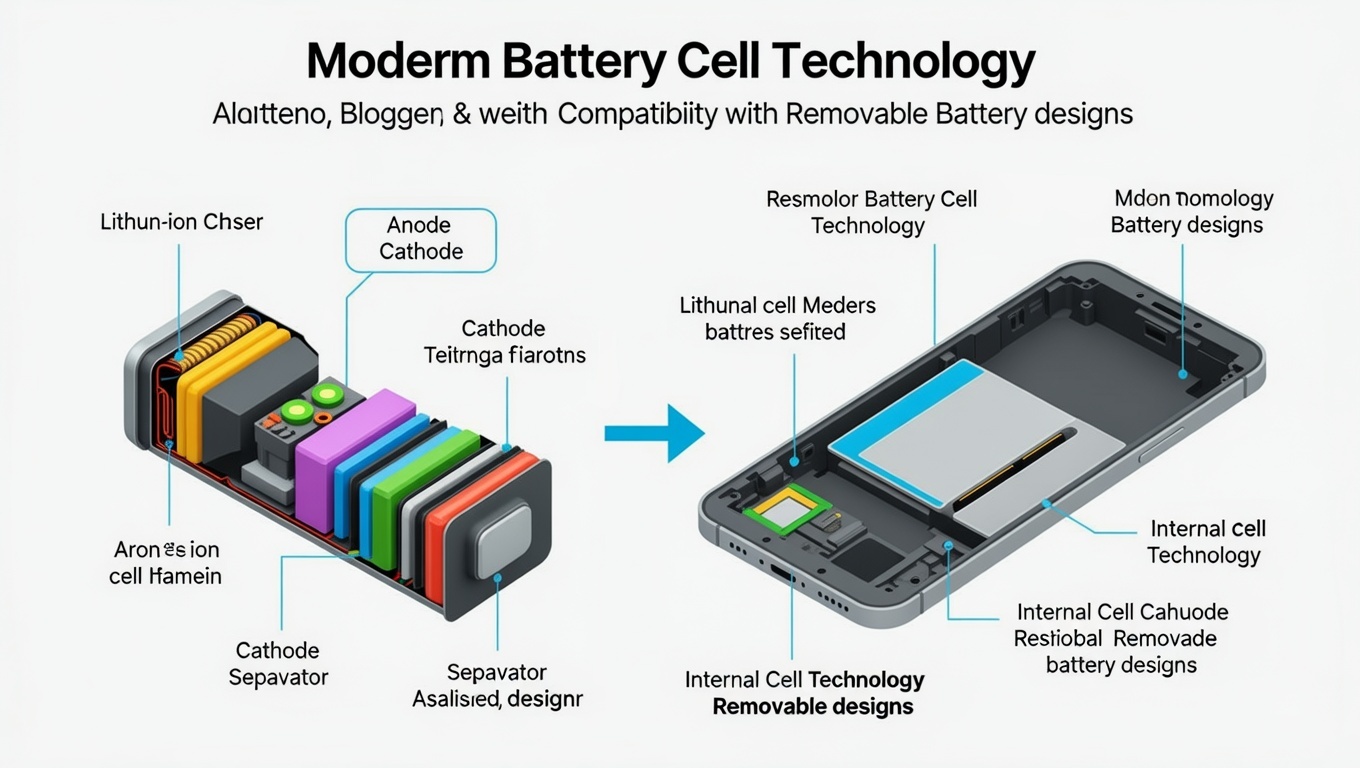
In fact, making batteries removable could accelerate innovation. Right now, if a manufacturer develops a breakthrough battery, you need to buy an entirely new phone to access it. But with removable batteries, companies could sell upgraded battery modules independently. Imagine buying a phone in 2026 and then, in 2028, upgrading to a next-gen battery with 30% more capacity and faster charging—for $50, without replacing the entire device.
That’s not just consumer-friendly; it’s a viable business model. Battery manufacturers could compete on performance, price, and features. Third-party companies could offer specialized batteries—maybe one optimized for longevity over capacity, or another with integrated wireless charging improvements.
We’ve seen this with laptop batteries for decades. Dell, Lenovo, HP—they all offer swappable batteries on business-class laptops, and those devices are thinner and lighter than ever. There’s no technological barrier here. Just a lack of will.
The Real Reason Removable Batteries Disappeared
Let’s be honest about what happened.
Around 2013-2015, Apple was ascendant. The iPhone was the aspirational device, and its unibody aluminum design became the blueprint every Android manufacturer copied. The problem? Apple had never offered removable batteries, and their design language didn’t accommodate it.
So Android OEMs faced a choice: stick with removable batteries and look “dated” compared to iPhones, or ditch them and chase Apple’s aesthetic. They chose aesthetics, because that’s what sold phones in carrier stores where customers made decisions based on how devices felt in-hand during a 45-second interaction.
But here’s the thing: the market has changed.
In 2026, people don’t impulse-buy $1,000 phones at carrier stores as much. They research online, they watch YouTube reviews, they compare specs, they read forums. The educated buyer cares about longevity, repairability, and total cost of ownership.
Removable batteries are no longer a liability—they’re a selling point.
Look at the Fairphone’s growth. Look at Framework’s success in the laptop space with modular, repairable designs. There’s a genuine appetite for products that respect the user’s investment and autonomy. Companies that embrace this will capture a segment of the market that’s currently underserved and increasingly vocal.
What a Modern Removable Battery Phone Could Look Like
I’m not suggesting we go back to 2012. Phones don’t need chunky plastic backs with flimsy clips that break after two removals. Modern engineering can do so much better.
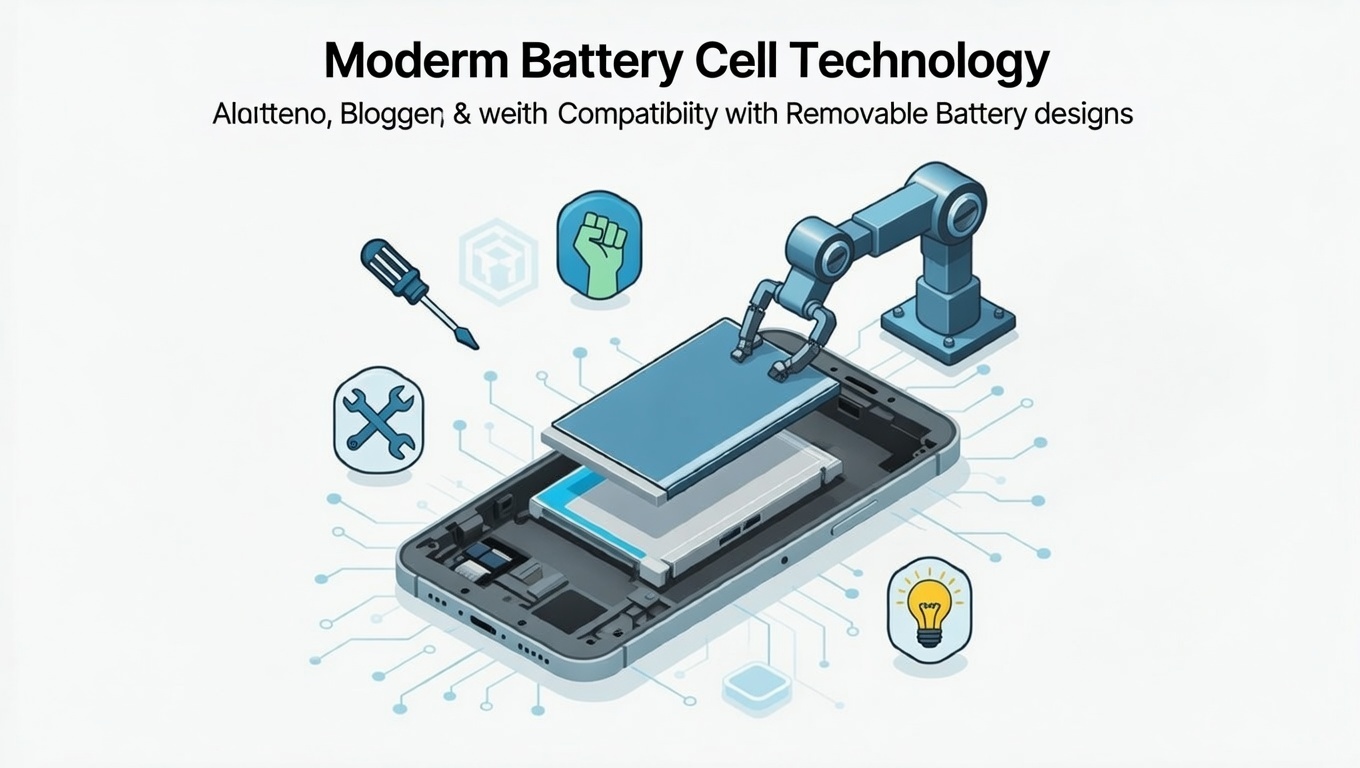
Picture this: a phone with a metal or glass chassis. On the bottom edge, a small release mechanism—maybe a sliding tab or a button—that releases the back panel. The panel itself could be aluminum, ceramic, or even premium plastic with a soft-touch coating. It slides or lifts off smoothly, revealing the battery.
The battery itself sits in a precision-milled tray with contact points that align perfectly—no fumbling, no misalignment. You lift it out, drop in the new one, and it clicks into place with magnetic guidance. Seal the back panel, and you’re done. Total time: 10 seconds.
Water resistance? Use rubber gaskets around the battery compartment and the back panel’s edges, just like camera lens seals or SIM trays already do. IP67 or even IP68 is completely achievable.
Thickness? We’re talking an extra 0.7mm at most—probably less with clever internal engineering. You know what adds 0.7mm? Most phone cases. If we can tolerate cases, we can tolerate a negligible thickness increase for a feature that doubles the device’s usable lifespan.
Wireless charging? It works fine through removable backs. The LG V60 had both.
Structural integrity? Modern phones have internal midframes that provide rigidity independent of the back panel. Removing a glued-on back doesn’t compromise strength anymore than removing a case does.
Every objection has an engineering solution. We’re just not seeing them implemented because there’s no incentive—yet.
The Right-to-Repair Movement Is Changing the Game
Here’s why 2026 is different from 2016: right-to-repair isn’t a fringe movement anymore.
Apple got dragged into offering self-service repairs. Samsung launched a partnership with iFixit. The EU passed legislation requiring replaceable batteries. Multiple US states are advancing repair bills. This isn’t going away—it’s accelerating.
And consumer sentiment is shifting hard. People are tired of $1,200 devices that become paperweights after two years. They’re tired of being told that repairing their own property voids warranties. They’re tired of companies artificially limiting device lifespans to pump quarterly earnings.
Removable batteries are the most visible, most impactful component of repairability. They’re the gateway drug. Once people experience the freedom of swapping a battery in ten seconds, they start questioning why RAM isn’t upgradeable, why storage is soldered, why screens cost $400 to replace.
This scares manufacturers, but it’s inevitable. The question is whether companies get ahead of it and build goodwill by voluntarily adopting user-friendly designs, or whether they get dragged kicking and screaming by regulations and market pressure.
I’d bet on the latter, unfortunately. But a few forward-thinking brands could capture massive mindshare by being early movers. Imagine if OnePlus, ASUS, or even Motorola announced a flagship with a removable battery in 2026. The tech press would lose their minds. The enthusiast community would rally. Sales wouldn’t just be decent—they’d be exceptional, because the product would represent something rare in modern tech: genuine consumer respect.
The Counterarguments (And Why They’re Weak)
Let’s address the common pushback I hear whenever this comes up:
“Wireless charging is the future, removable batteries are backwards.”
Wireless charging and removable batteries aren’t mutually exclusive. You can have both. Also, wireless charging is inefficient, slow, and generates heat—it’s convenient for overnight charging, but it’s not a replacement for actually fixing battery longevity problems.
“Integrated batteries allow for better internal space optimization.”
Marginal at best. Yes, glued batteries can be slightly irregular shapes, but the gains are minimal. We’ve reached diminishing returns on thinness anyway—most people slap a case on their phone immediately, negating any space savings.
“People don’t care about this feature.”
People absolutely care about battery life and longevity. They just don’t know removable batteries are an option because no major manufacturer offers them. It’s like saying “people don’t care about headphone jacks”—no, people adapted because they had no choice, but audiophiles and budget users would absolutely take wired options if they were available.
“Security risks—people could swap in malicious batteries.”
Use authentication chips. Batteries already have circuitry for charge management; adding a verification handshake with the phone’s motherboard is trivial. Apple does this with their proprietary parts. It’s solvable.
“Third-party batteries are dangerous.”
Regulate them. Require certifications. The same way we regulate third-party chargers and cables. This isn’t a technical problem—it’s a regulatory and quality control problem that we’ve already solved in other industries.
None of these objections are showstoppers. They’re excuses.
What Happens If We Don’t Bring Them Back
If removable batteries stay dead, here’s what we’re looking at:
Continued planned obsolescence, with devices hitting landfills every 2-3 years. Environmental damage that compounds annually. Consumers spending more on phones, more frequently, with less control over their devices. A further erosion of ownership rights as companies tighten their grip on repairs and parts.
We’ll also see a bifurcation: wealthy users will keep upgrading, while budget users get stuck with degraded devices or cheap, low-quality phones. The digital divide widens, not because of access to technology, but because of access to functional technology that lasts.
And creatively? We’ll miss out on an entire ecosystem of innovation around modular batteries—extended-life packs for travelers, rapid-swap systems for photographers, compact high-density options for minimalists. All of it locked away because manufacturers won’t relinquish control.
That’s the future we’re heading toward if nothing changes. It’s bleak, and it’s unnecessary.
How We Get There From Here
So what needs to happen?
First, regulatory pressure needs to continue. The EU’s 2027 mandate is a start, but it needs teeth, and it needs to expand globally. Right-to-repair laws should explicitly include battery replaceability as a baseline requirement.
Second, consumer demand needs to vocalize. If you care about this, tell manufacturers. Respond to surveys, leave feedback, amplify voices pushing for repairability. Companies track sentiment—they just need to see it’s a large enough segment to matter.
Third, we need at least one major manufacturer to take the risk. It doesn’t have to be Samsung or Apple (though that’d be ideal). A brand like ASUS, OnePlus, or even a resurgent LG-style competitor could make waves by positioning themselves as the pro-consumer choice.
Fourth, tech media needs to reward these features in reviews. Instead of docking points for slightly thicker phones with removable batteries, reviewers should celebrate longevity and repairability as premium features. Shift the narrative.
And finally, third-party ecosystems need to emerge. Battery manufacturers, repair shops, accessory makers—build the infrastructure so that when removable batteries come back, the market is ready to support them.
Why I’m Optimistic (Despite Everything)
Here’s the thing: I genuinely think this is going to happen.
Not because corporations will suddenly grow a conscience, but because the confluence of regulatory pressure, environmental awareness, and consumer fatigue is creating a perfect storm. Companies that adapt early will win; those that resist will get steamrolled.
We’re already seeing it play out in other sectors. Framework laptops are thriving. Fairphone keeps growing. Patagonia built an entire brand around repairability. Consumers want this, and when they want something badly enough, markets respond.
Removable batteries won’t return exactly as they were. They’ll come back better—smarter designs, better materials, improved integration. And when they do, it’ll feel like common sense. We’ll wonder why we ever accepted anything less.
In 2026, we’re at the tipping point. The question isn’t whether removable batteries should come back. It’s whether manufacturers will lead the change or be dragged into it kicking and screaming.
I know which I’m betting on. And I know which kind of company I’ll be supporting with my wallet.
The era of glued-in, non-replaceable batteries was a detour. It’s time to get back on the right path—one where we own our devices, not the other way around.
Frequently Asked Questions
Can removable batteries really be as safe as sealed batteries?
Absolutely. Modern removable batteries can include authentication chips that verify genuine parts, preventing counterfeit or dangerous batteries from working with your device. We already have safety certifications for third-party chargers and cables—the same standards can apply to batteries. The safety concern is largely overblown; phones from 2010-2015 with removable batteries had excellent safety records.
Won’t removable batteries make phones thicker and bulkier?
The difference is minimal—we’re talking about 0.5-0.7mm at most. For context, most phone cases add 2-3mm of thickness, and nobody complains about that. Modern engineering can create slim, premium-feeling phones with removable batteries. The LG V20 and Galaxy S5 proved this was possible years ago with older technology.
How would water resistance work with a removable back panel?
The same way it works with SIM trays, USB ports, and speaker grills—precision gaskets and seals. The Galaxy S5 achieved IP67 water resistance with a removable battery back in 2014. Current technology is far more advanced. Proper rubber seals around the battery compartment and back panel edges can easily achieve IP67 or IP68 ratings.
Would this make phones more expensive?
Not necessarily. The engineering might cost slightly more upfront, but it could actually reduce costs long-term. Manufacturers wouldn’t need to offer battery replacement services, repair infrastructure would simplify, and the used phone market would expand (which benefits everyone). For consumers, the savings are massive—a $25 battery swap versus buying a new $800 phone.
What about wireless charging compatibility?
Wireless charging works fine through removable back panels. The LG V60 and several other phones had both features. The coils can be integrated into either the back panel or the phone’s internal frame. There’s zero technical conflict between removable batteries and wireless charging.
Don’t people prefer thin phones over replaceable batteries?
Not really. Most people immediately put a case on their phone, which adds more thickness than a removable battery design would. Surveys consistently show that battery life and longevity are top priorities—far more important than shaving off half a millimeter. The “thin at all costs” trend is manufacturer-driven, not consumer-driven.
How long do removable batteries typically last?
A quality lithium-ion or lithium-polymer battery typically maintains 80% capacity after 500-800 charge cycles (roughly 2-3 years of daily use). With removable batteries, you simply swap in a fresh one for $20-30 and instantly restore 100% capacity. This can extend your phone’s useful life to 5-7 years instead of 2-3 years.
What if I lose or damage my removable battery?
You’d buy a replacement the same way you’d buy a phone case or charger—from the manufacturer, authorized retailers, or certified third-parties. It’s no different from losing any other accessory. In fact, it’s easier because batteries are standardized components that multiple vendors can produce.
Would this hurt the environment by encouraging battery production?
The opposite. Currently, entire phones get discarded when batteries degrade—that’s 150+ grams of materials (glass, aluminum, rare earth elements, copper, gold) wasted for a 40-gram battery problem. Replaceable batteries would dramatically reduce e-waste by extending device lifespans. Manufacturing one extra battery is environmentally insignificant compared to manufacturing an entire replacement phone.
Can’t I just get my battery replaced at a repair shop?
You can, but it costs $70-150, takes days, often voids warranties, and requires shipping your phone or visiting a store. A removable battery swap takes 10 seconds, costs $25, and you can do it anywhere—at your desk, on a plane, in a meeting. The convenience and cost difference is enormous.
What about storing spare batteries? Don’t they degrade over time?
Modern lithium batteries, when stored at 40-60% charge in cool, dry conditions, degrade very slowly—losing only 2-5% capacity per year. A spare battery stored properly will still have 85-90% capacity after 2-3 years. That’s still far better than being stuck with a degraded built-in battery you can’t replace.
Would major manufacturers actually do this?
They will if forced by regulation (EU’s 2027 mandate) or market pressure. Some brands might lead voluntarily to differentiate themselves and capture the growing repairability-focused market segment. History shows companies resist until they can’t—but the momentum is building fast.
Older posts:
Ultimate 2026 Mobile Gaming-guide Tecno infinix Redmi
2026 Definitive guide Top Offline Mobile Games
Balatro Vs Luck Be a Landlord 2026 Offline Showdown
Why 8gb Ram is The Real Minimum for Smartphones in-2026


Comments 0
Leave a comment