Table of Contents
Open Table of Contents
- Overview
- Why Samsung Still Makes Sense for Students in 2026
- 1. Samsung Galaxy A16 5G — The Obvious Starting Point
- 2. Samsung Galaxy A35 5G — If You Want to Step Up Without Losing Your Mind
- 3. Samsung Galaxy A55 5G — The Premium Student Pick
- 4. Samsung Galaxy A06 — The “I Just Need It to Work” Option
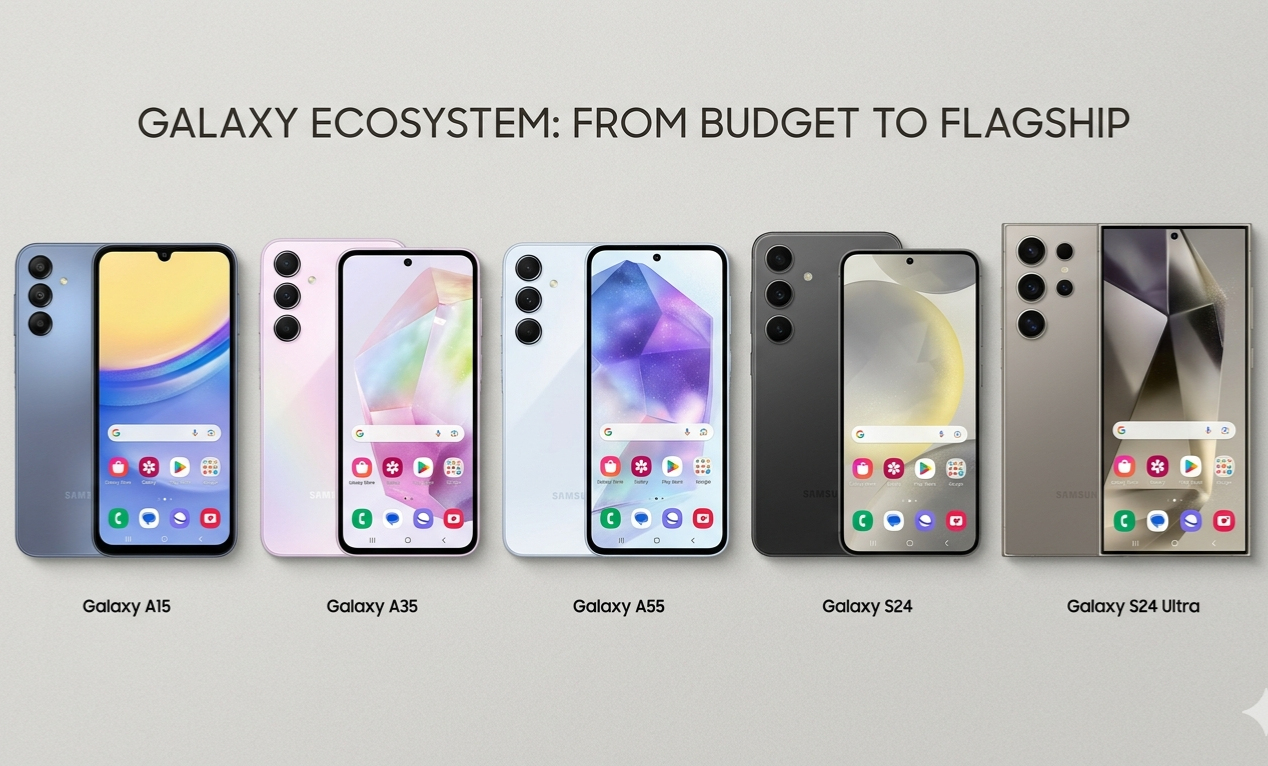
- The Honest Comparison Table
- What Actually Matters for Students (And What Doesn’t)
- Student Budget Reality Check (Nigeria Focus)
- One More Thing: AI Features and Student Life
- FAQ
Overview
Let me be real with you for a second. When I was deep in my final year — Physics and Electronics, no joke — the last thing on my mind was spending ₦300k on a flagship phone. But I needed a phone that could handle everything: lecture notes, research tabs, a quick gaming session between classes, emails to supervisors, and yes, keeping up with social media so my brain could breathe. The budget was tight. The expectations weren’t.
That’s where Samsung’s mid-range lineup becomes genuinely interesting. Not because of hype. Because most students have already figured out that you don’t need a Galaxy S25 Ultra to survive school — you need something dependable that won’t embarrass you in front of your course mates or die halfway through a three-hour lecture.
I’ve spent time going deep on Samsung’s current student-friendly lineup. This isn’t a spec sheet copy-paste. These are phones I’ve thought through, compared, and would actually recommend to someone asking me face-to-face.
Why Samsung Still Makes Sense for Students in 2026
Before we get into specific models, let’s address the obvious: there are cheaper options. Tecno, itel, Infinix — they all offer phones that cost less and punch surprisingly hard at entry level. I’ve written about them. I respect them.
But Samsung brings something those brands can’t fully replicate yet: software consistency and longevity. We’re talking six years of OS updates on certain A-series phones. That’s not a throwaway feature — that’s your phone staying relevant from year one of school until you’re two years into your first job. The One UI experience is also polished in a way that matters when you’re constantly switching between apps, annotating PDFs, and managing your chaotic schedule.
For students specifically, the Galaxy A-series is where the conversation should start and often end. Here’s what I’d actually buy.
1. Samsung Galaxy A16 5G — The Obvious Starting Point
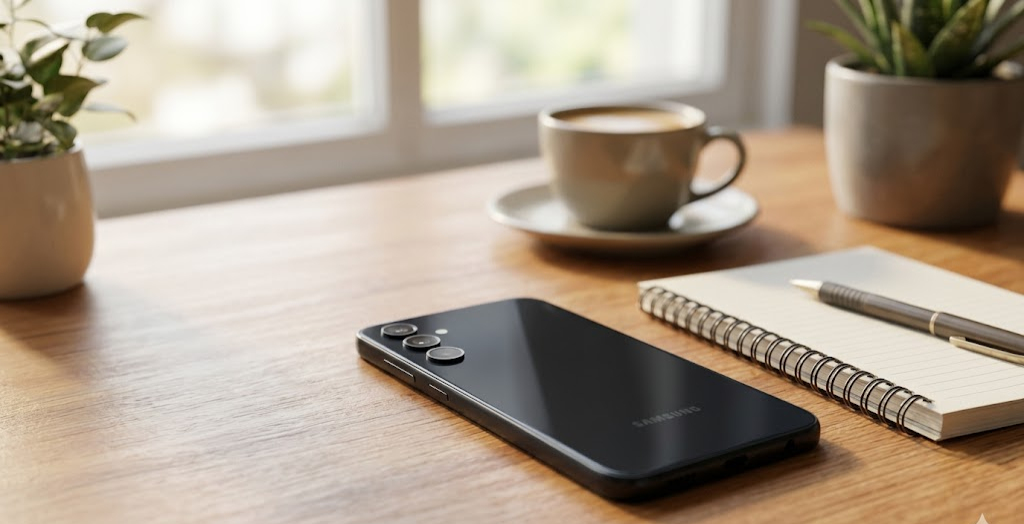
If someone asks me “which Samsung phone should I buy as a student?” and I have about eight seconds to answer, it’s the A16 5G. Full stop.
This phone sits at roughly $148–$170 internationally and around ₦130,000–₦150,000 in the Nigerian market depending on where you’re sourcing it. For that price you’re walking away with a 6.7-inch Super AMOLED display running at 90Hz, a 50MP triple camera system, 5,000mAh battery with 25W charging, IP54 splash resistance, and NFC. That NFC detail matters more than people think — tap-to-pay is growing, and NFC on a budget phone is still not a given everywhere.
But honestly, what sells this phone for students is the six years of OS and security updates Samsung committed to. Six years. I don’t know many students who are thinking five years ahead, but your phone outlasting your degree program is not a bad deal.
Where it struggles: the Exynos 1330 chip (or Dimensity 6300 depending on region) isn’t going to set any benchmarks on fire. Heavy multitasking with 4GB RAM can feel slightly labored — keep your tabs in check. And the build is plastic, which is fine but worth knowing.
Still, for most students? The A16 5G hits all the marks that actually matter day to day.
2. Samsung Galaxy A35 5G — If You Want to Step Up Without Losing Your Mind
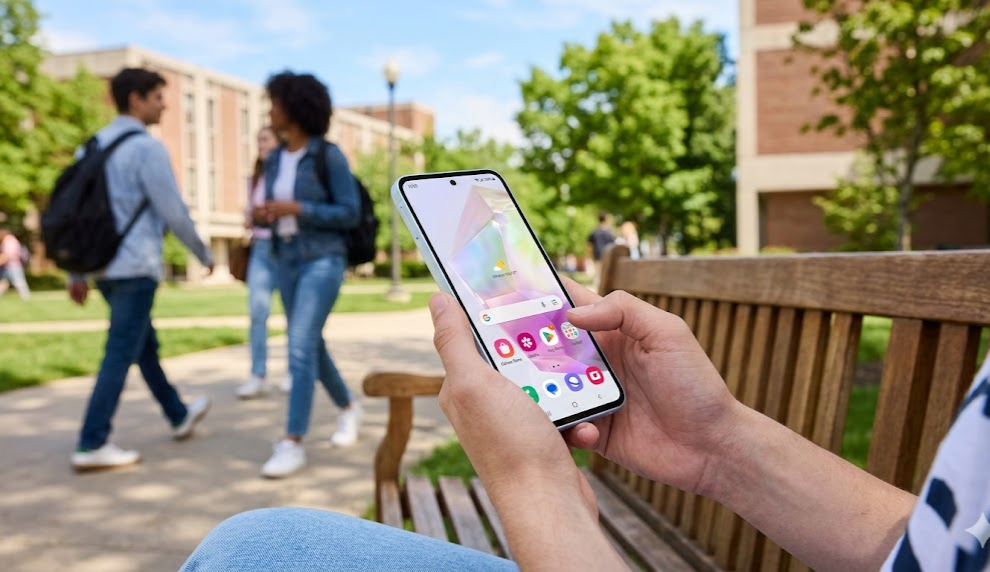
The A35 is where things get genuinely comfortable. The upgrade over the A16 isn’t massive on paper, but in practice, it’s meaningful.
You’re getting an Exynos 1380 chip — noticeably snappier than the 1330, especially when you’re bouncing between heavy apps. The 6.6-inch Super AMOLED hits 120Hz this time, which sounds like a minor detail until you’ve used both back to back. The battery sits at 5,000mAh with 25W charging, same as the A16, so no regression there.
The camera system on the A35 is also genuinely better — optical image stabilization on the main shooter makes a real difference for shaky handheld shots in lecture halls or outdoor events. The 50MP front camera is legitimately good for video calls, which have become a non-negotiable for students dealing with hybrid learning.
It’s also worth noting the A35 has IP67 water resistance — a full submersion rating, not just splash protection. If you’ve ever dropped your phone in a puddle or panicked during unexpected rain on campus, you’ll appreciate the extra margin.
Pricing comes in at around $250–$270 internationally, which does push it slightly above “budget,” but for students who have a little more room and want to avoid replacement costs down the line, the A35 is a sensible stretch.
3. Samsung Galaxy A55 5G — The Premium Student Pick
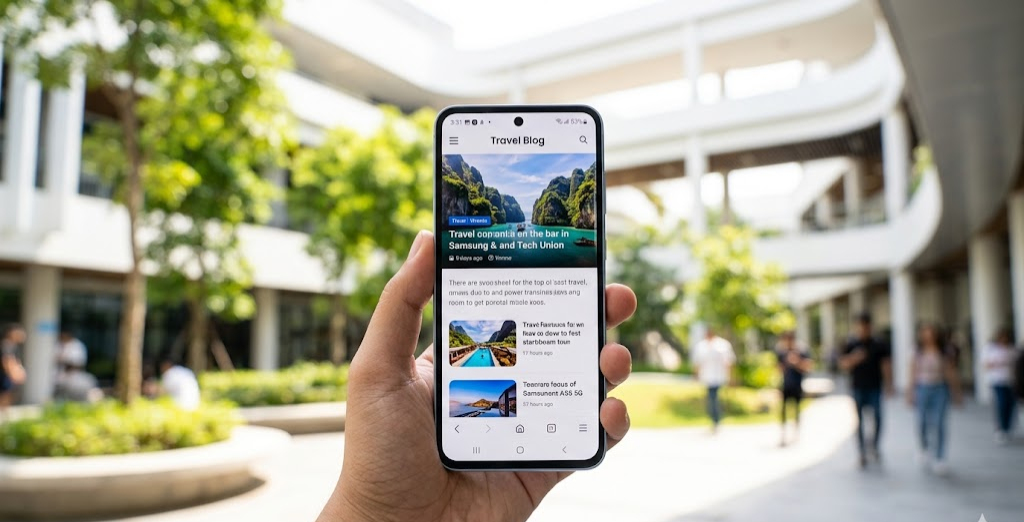 For students who aren’t going the budget route but still want value, the Galaxy A55 5G is where I’d land.
The Exynos 1480 chip inside is a meaningful jump — this one handles multitasking, gaming, and camera processing with noticeably less friction. The display is a 6.6-inch Super AMOLED at 120Hz with a peak brightness that actually works outdoors. And unlike the A-series phones below it, the A55 uses a metal frame instead of plastic — it feels like a mid-range phone that’s trying to act like a flagship, and mostly succeeds.
Battery is 5,000mAh with 45W fast charging. That 45W matters during busy days when you need to top up fast between classes. OIS is present on the main camera, and the overall photography output — especially in low light — is the best you’ll find in Samsung’s student-appropriate range.
The A55 is priced around $350–$380 internationally. For many students, that’s a stretch. But if you’re the type who treats your phone as a work tool and not just a gadget, the longevity and performance make it defensible.
I’ve gone deeper on Samsung’s camera performance across the lineup in my Top Samsung Phones for Best Camera breakdown — worth reading if the photography side matters to you.
4. Samsung Galaxy A06 — The “I Just Need It to Work” Option
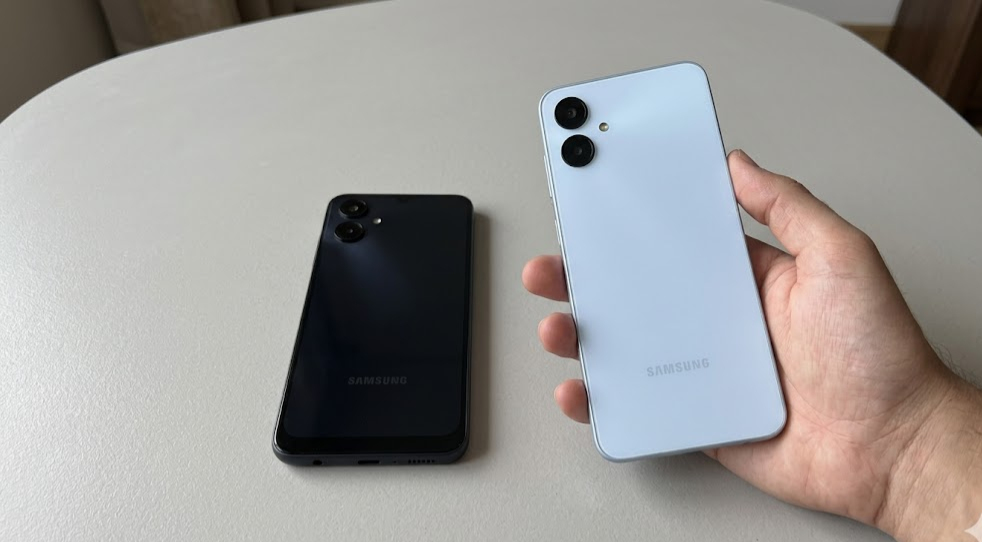
I know some students are genuinely on the floor budget-wise. Scholarship payments are delayed, part-time income is inconsistent, and spending more than ₦80,000 on a phone feels reckless. The A06 exists for exactly that situation.
It’s not glamorous. You’re looking at a 6.7-inch PLS LCD display (not AMOLED), a MediaTek Helio G85 chip, a 50MP main camera with a 2MP depth sensor, and a 5,000mAh battery. The battery life is genuinely solid — this is a phone that can get through a full day on most usage patterns without drama. I’ve covered Samsung’s battery behavior in detail in my Samsung Battery Life breakdown if you want the granular picture.
What you won’t get: 5G, NFC, AMOLED, fast charging beyond 25W, or any kind of IP rating. The A06 is a tool, not an experience. If your main use cases are calls, WhatsApp, light browsing, and music during commutes — this phone won’t let you down. But the moment you push it harder, it’ll remind you of its limitations.
Priced at under ₦70,000 in Nigeria and around $100–$120 internationally, it occupies a market position where there’s very little Samsung competition below it.
The Honest Comparison Table
| Phone | Display | Chip | Battery | Charging | 5G | Water Resistance | Approx. Price |
|---|---|---|---|---|---|---|---|
| Galaxy A06 | 6.7” LCD | Helio G85 | 5,000mAh | 25W | ❌ | ❌ | ~$110 |
| Galaxy A16 5G | 6.7” AMOLED 90Hz | Exynos 1330 | 5,000mAh | 25W | ✅ | IP54 | ~$155 |
| Galaxy A35 5G | 6.6” AMOLED 120Hz | Exynos 1380 | 5,000mAh | 25W | ✅ | IP67 | ~$260 |
| Galaxy A55 5G | 6.6” AMOLED 120Hz | Exynos 1480 | 5,000mAh | 45W | ✅ | IP67 | ~$370 |
What Actually Matters for Students (And What Doesn’t)
Here’s a framework I wish someone had given me earlier, because students often get distracted by specs that don’t move the needle in real life.
Things that genuinely matter for student use:
- Battery life — You will not always have access to a charger. A phone that dies at 2 PM on a long campus day is a liability. All four phones above hit 5,000mAh, which is the baseline I’d set.
- Software updates — A phone that stops receiving security updates is a phone with a silent security problem. Samsung’s A-series commitment here is genuinely competitive.
- RAM and storage — 4GB RAM is workable but tight. 6GB or 8GB is noticeably more comfortable for students who live in multiple apps simultaneously. Buy the highest storage you can afford because photos, notes, and app data accumulate faster than you think.
- Display quality — You’re staring at this screen for hours daily. AMOLED at 90Hz or higher isn’t a luxury; it’s the difference between eye strain after long study sessions and not.
Things that genuinely don’t matter as much:
- Flagship camera specs — Unless you’re a content creator running a monetized channel, a 50MP camera on a budget Samsung will handle your photos just fine.
- Ultra-thin bezels — Nobody cares during a lecture.
- Wireless charging — Nice to have, not worth paying a premium for as a student.
If you want to see how Samsung stacks up against the wider budget Android market, my Best Smartphones Under $200 in 2026 post covers the full competitive landscape, including non-Samsung options.
Student Budget Reality Check (Nigeria Focus)
For students in Nigeria specifically, pricing context shifts. International prices don’t directly translate to local ₦ pricing because of import duties, currency exchange rates, and retailer margins. Here’s a rough local guide based on current market conditions:
| Phone | Approx. Nigeria Price (₦) |
|---|---|
| Galaxy A06 | ₦65,000 – ₦80,000 |
| Galaxy A16 5G | ₦130,000 – ₦155,000 |
| Galaxy A35 5G | ₦220,000 – ₦260,000 |
| Galaxy A55 5G | ₦310,000 – ₦360,000 |
I’ve done a more granular breakdown of Samsung pricing within the Nigerian market in my Best Samsung Phones Under 150k Nigeria 2026 post, which is worth reading if you’re working within that budget ceiling specifically.
One More Thing: AI Features and Student Life
Samsung has been quietly baking AI tools into its One UI experience — summarization, note assist, live translation, circle to search. For students writing research papers, dealing with PDFs in foreign languages, or trying to pull key points from a lecture recording, these tools are more useful than they sound.
The A35 and A55 have the best implementation of these features in the student-appropriate range. The A16 gets some of it, the A06 barely touches it. If AI-assisted productivity matters to you — and if you’re juggling a heavy academic load, it might — that’s worth factoring into your decision.
I’ve also written about the best AI tools for students more broadly if you want to see how your phone can work alongside web-based AI tools to make academic life less painful.
FAQ
Which Samsung phone is best for students on a tight budget? The Galaxy A16 5G is the sweet spot. It hits the important checkboxes — AMOLED display, 5G connectivity, six years of updates, and a solid battery — without crossing into uncomfortable pricing territory for most students.
Is the Samsung Galaxy A06 worth buying for students? If your budget is genuinely below ₦80,000 and you need something reliable for calls, WhatsApp, and light usage, yes. But if you can stretch to the A16 5G, do it. The display, software support, and 5G make a meaningful difference long-term.
How long will a Samsung A-series phone last as a student? With Samsung’s current update policy — six years on the A16, four to six years on the A35 and A55 — you can realistically use any of these phones through an entire four or five-year degree program without feeling left behind on software.
Does the Samsung Galaxy A35 have good enough cameras for content creation? Yes, with caveats. The OIS-equipped 50MP main camera handles most content creation needs — social media clips, photos, YouTube vlogs at a basic level. It’s not a content creation flagship, but it’s capable enough that it won’t bottleneck a student creator.
Should students consider Samsung over Xiaomi or Tecno? It depends on priority. Xiaomi often wins on raw specs per dollar. Tecno wins on local market pricing. Samsung wins on software longevity and ecosystem reliability. For a phone you plan to use for four or more years, Samsung’s update commitment gives it a real edge.
Is 5G actually important for students right now? In most Nigerian cities, 5G is still expanding rather than mainstream. But since 5G-capable phones are priced similarly to 4G-only options in this bracket, there’s no reason to deliberately choose 4G — you want the forward compatibility even if you’re not using the network today.
There’s no perfect student phone. What there is: a phone that fits your budget, lasts your degree, and doesn’t become a distraction when it should be a tool. The Samsung A-series sits in that lane better than most options at these price points. Pick the highest model your budget can honestly handle, and don’t overthink the rest.