Table of Contents
Open Table of Contents
- Best Google Pixel Phone in 2026: An Honest Breakdown of Every Model Worth Buying
- The 2026 Pixel Lineup at a Glance
- 1. Google Pixel 10 Pro — Best All-Rounder
- 2. Google Pixel 10 Pro XL — When You Need More of Everything
- 3. Google Pixel 10 — The One People Overlook
- 4. Google Pixel 10a — Budget Value With One Important Caveat
- 5. Google Pixel 10 Pro Fold — The Foldable for the Committed
- 6. Google Pixel 9 Pro XL — The Smart Discount Option
- Pixel vs. Competition: Full Spec Comparison
- Buying a Pixel in Nigeria: What You Actually Need to Know
- How to Pick: A Quick Decision Guide
- Frequently Asked Questions
Best Google Pixel Phone in 2026: An Honest Breakdown of Every Model Worth Buying
Not every Pixel in 2026 is worth your money — and the gap between the right one and the wrong one is wider than it looks from the outside.
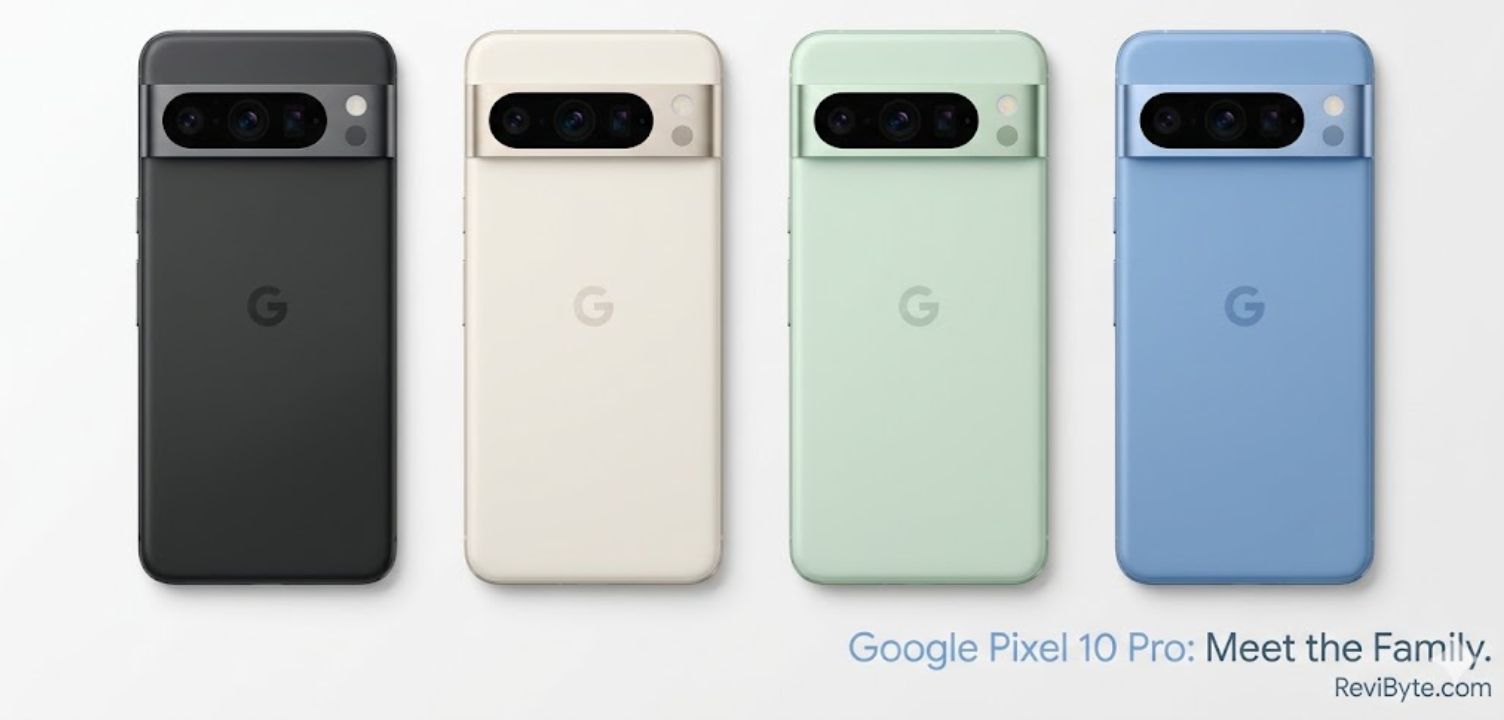
The Pixel lineup this cycle spans six models across three years of hardware generations, three chip architectures, and a price range from $499 to $1,799. The Tensor G5 (Google’s first chip built by TSMC on a 3nm process) is genuinely better than what came before — but it’s not in every model. Qi2 magnetic charging is a real quality-of-life upgrade — but the 10a doesn’t have it. And the base Pixel 10 is a more capable phone than Google’s own marketing implies.
Whether your budget runs to ₦300,000 or well past ₦1.5 million, there’s a right Pixel for you. Here’s how to find it — verified specs, real trade-offs, nothing inflated.
Quick Answer: Best Pixel in 2026 🥇 Best overall: Pixel 10 Pro — flagship cameras, Tensor G5, Qi2, compact size 🔋 Best battery: Pixel 10 Pro XL — 5,200mAh, 45W wired, 25W Qi2 wireless 💰 Best budget: Pixel 10a — $499, 5,100mAh, Tensor G4, standard Qi only 📱 Best deal: Pixel 9 Pro XL — discounted, supported until 2031 📺 Best foldable: Pixel 10 Pro Fold — first with IP68, 8” inner display
The 2026 Pixel Lineup at a Glance
| Model | Price (US MSRP) | Display | RAM | Battery | Wired Charging |
|---|---|---|---|---|---|
| Pixel 10 Pro XL | $1,099 | 6.8” LTPO OLED | 16GB | 5,200mAh | 45W |
| Pixel 10 Pro | $999 | 6.3” LTPO OLED | 16GB | 4,870mAh | 30W |
| Pixel 10 | $799 | 6.3” OLED | 12GB | 4,970mAh | 30W |
| Pixel 10a | $499 | 6.3” OLED | 8GB | 5,100mAh | 30W |
| Pixel 9 Pro XL | ~$699 (discounted) | 6.8” LTPO OLED | 16GB | 5,060mAh | 37W |
| Pixel 10 Pro Fold | $1,799 | 8.0” inner / 6.4” cover | 16GB | 5,015mAh | 45W |
Prices are US MSRP as of June 2026. Nigerian import pricing covered in its own section below.
1. Google Pixel 10 Pro — Best All-Rounder
The Pixel 10 Pro is the model most people should buy, and the reason is straightforward: it gives you every flagship feature without forcing you into the larger XL footprint.
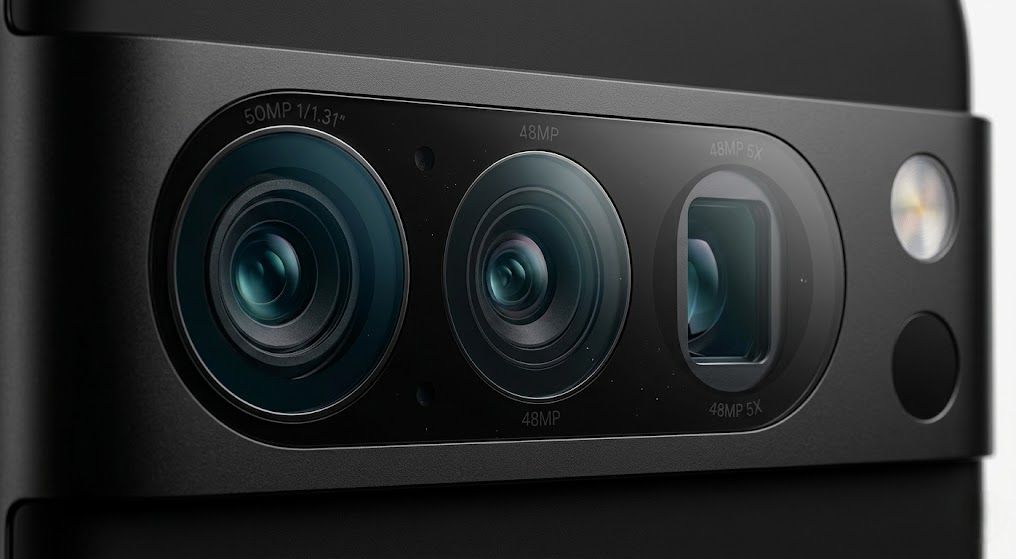
The 6.3-inch LTPO OLED display peaks at 3,300 nits, making it one of the brightest phone displays you’ll find anywhere right now. The Tensor G5 chip — paired with 16GB of RAM on all Pro models — powers Google’s full suite of on-device AI features without needing cloud processing for most tasks. The triple rear camera system (50MP main, 48MP ultrawide, 48MP periscope telephoto with 5x optical zoom) is the same hardware shared with the Pro XL.
What you give up by choosing the Pro over the XL is mostly about size and charging: the 4,870mAh battery is smaller than the XL’s 5,200mAh, and wired charging maxes out at 30W versus the XL’s 45W. For most users, the Pro still handles a full day without issue, though heavy users — long screen-on time, lots of video, GPS navigation — may want to factor that in before deciding.
One genuinely useful addition this year: Pixelsnap, Google’s branding for Qi2 magnetic wireless charging. Built-in magnets mean it snaps cleanly to Qi2 chargers and a growing ecosystem of magnetic accessories. The Pro XL gets 25W Qi2 wireless; the Pixel 10 Pro tops out at 15W Qi2.
Best for: People who want the full Pixel Pro experience in a manageable size.
Consider instead: The Pixel 10 Pro XL if battery life is a priority, or the base Pixel 10 if you want to save $200 and don’t need the Pro’s larger, higher-quality camera sensors.
2. Google Pixel 10 Pro XL — When You Need More of Everything
The Pixel 10 Pro XL is the Pixel 10 Pro — same chip, same cameras, same RAM — but with a 6.8-inch panel, a 5,200mAh battery, and 45W wired charging. Those aren’t minor differences if you fall into the right category of user.
The 45W charging is a meaningful upgrade over the standard Pro’s 30W. In real-world testing, the Pro XL reaches a full charge in roughly 80–90 minutes with a compatible adapter — faster than the standard Pro’s ~92 minutes at 30W, though still behind Samsung’s Galaxy S25+, which does it in around an hour. The 25W Qi2 wireless charging support is a step above Samsung’s Galaxy S25+, which is limited to 15W wireless.
Battery endurance is where the XL makes its clearest argument. The 5,200mAh cell, helped by the efficiency improvements in the Tensor G5, should carry most users through a full day under heavy use and potentially longer under lighter conditions — though your actual experience will depend on screen brightness, background apps, and whether you use a lot of 5G. Don’t treat any manufacturer’s runtime claims as guarantees.
The display is rated at up to 3,300 nits peak brightness (measured at 5% screen coverage), and in independent lab testing consistently lands above 2,300 nits under real conditions — measurably higher than competing flagships from Samsung and Apple this cycle. Outdoors readability is genuinely strong.
Best for: Power users, large-screen fans, and anyone who’s been frustrated by phone battery life.
3. Google Pixel 10 — The One People Overlook

Here’s the honest version: the base Pixel 10 is a better phone than the marketing suggests, and the $200 price gap between it and the Pixel 10 Pro is real money.
It runs the same Tensor G5 processor. The software experience is identical. The 4,970mAh battery is actually larger than the Pixel 10 Pro’s. One legitimate gap is RAM — the Pixel 10 ships with 12GB versus 16GB on the Pro models — which may matter more as AI tasks get heavier, but for typical everyday use in 2026, most people won’t feel the difference.
The camera story is worth understanding properly. The Pixel 10 is actually the first standard (non-Pro) Pixel to include a dedicated telephoto lens — a 10.8MP 5x unit that gives it a full triple-camera system. That’s a genuine upgrade over the Pixel 9 base model, which had no telephoto at all. However, DPReview’s hands-on testing noted a trade-off: Google slightly downgraded the main and ultrawide sensor quality to make room for the third camera. For most people this won’t be noticeable day-to-day, but serious photographers comparing the Pixel 10 to the Pixel 10 Pro will find the Pro’s larger sensors produce better results in demanding conditions, especially at night or with fast-moving subjects.
The Pixel 10 also supports Qi2 magnetic wireless charging, putting it ahead of competing Android flagships at this price point.
Best for: Everyday users who want clean Android and long-term support without the Pro price.
4. Google Pixel 10a — Budget Value With One Important Caveat
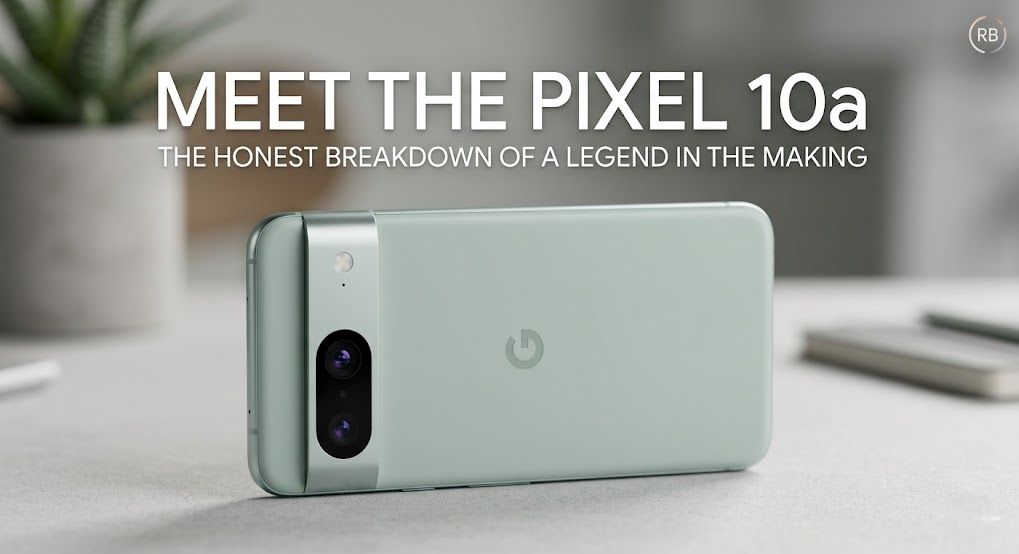
At $499, the Pixel 10a makes a strong case for itself — but there’s something you need to know upfront before this article earns its “honest breakdown” label.
The Pixel 10a does not run the Tensor G5 chip. Google cut costs by equipping it with the older Tensor G4 (the same chip found in the Pixel 9 series, built on Samsung’s 4nm process). In practice, the G4 still handles everyday tasks — social media, calls, camera processing, navigation — without meaningful friction. For the typical 10a buyer, you probably won’t feel the gap during normal use. But for AI-intensive workloads, video processing, or intensive multitasking, the G5 in the Pixel 10 is noticeably faster, and the G4 is less efficient, which has some effect on heat and battery endurance under sustained load.
The second caveat: wireless charging on the Pixel 10a is standard Qi at 10W — not Qi2. There are no built-in magnets, which means no Pixelsnap compatibility and no snapping to magnetic accessories or chargers. This is the only Pixel 10 model that sits outside the Pixelsnap ecosystem entirely. Wired charging is 30W, which is a real improvement over the 23W on the Pixel 9a.
What you do get is real: Google’s full Android 16 software experience, seven years of OS and security updates, a dual rear camera system (48MP wide + 13MP ultrawide), and a 5,100mAh battery — the second-largest cell in the current lineup. The trade-off Google made was clear: same price point, same battery, faster charging than before, but an older chip and no Qi2 to hit $499 without cutting corners elsewhere.
For students, budget-conscious buyers, or anyone upgrading from a 3+ year old phone, the value is still there — just go in knowing what you’re not getting.
Best for: Budget buyers who prioritize software longevity, battery size, and clean Android over cutting-edge performance.
Worth knowing: If the Tensor G4 vs G5 gap matters to you, the Pixel 10 at $799 closes it — along with adding the 5x telephoto camera and Qi2 charging. For a wider comparison of phones at the Pixel 10a’s price tier, our best phones with big battery life in 2026 shows how it stacks up against alternatives from other brands.
5. Google Pixel 10 Pro Fold — The Foldable for the Committed

The Pixel 10 Pro Fold starts at $1,799 for the base 16GB/256GB configuration, the same price as its predecessor. It launched in October 2025 — a few months after the rest of the Pixel 10 lineup.
What’s new and genuinely significant this generation: it’s the first foldable phone to carry an IP68 dust and water resistance rating. For a form factor that’s had durability question marks since the beginning, that’s a real milestone. The 8-inch inner display and 6.4-inch cover display both peak at 3,000 nits brightness. The 5,015mAh battery is larger than the previous Pixel fold model, and wired charging is 45W.
The camera system — a 48MP main, 10.5MP ultrawide, and 10.8MP 5x telephoto — is strong but shares more in common with previous-generation Pro hardware than the Pixel 10 Pro’s updated sensors. The hinge has been refined again, and the overall build feels more deliberate than early Google foldable attempts.
At $1,799, this phone is a commitment. It makes sense for people who genuinely want a tablet they can pocket. For most people deciding between a Pixel 10 Pro and a Pixel 10 Pro Fold, the $800 price gap and the added bulk of the fold design will settle it.
Best for: Foldable enthusiasts who want Google’s software experience and IP68 protection in that form factor.
6. Google Pixel 9 Pro XL — The Smart Discount Option
The Pixel 9 Pro XL is a 2024 phone running the Tensor G4 chip. It’s been discounted significantly since the Pixel 10 series launched, and it still receives full software support through 2031.
You’re missing the Tensor G5 efficiency gains, Pixelsnap magnetic charging, and a few of the newer AI features. But the four-camera system, 5,060mAh battery, and six-inch-plus LTPO display are still competitive. If you can find it at a compelling price — particularly on Jiji or through grey-market importers in Nigeria — it offers real value.
Just verify the model number before buying: some units circulating in West Africa are region-locked variants, and warranty support for Google hardware in Nigeria is limited regardless of variant.
Best for: Deal hunters who don’t need the latest chip and can catch a good discount.
Pixel vs. Competition: Full Spec Comparison
| Spec | Pixel 10 Pro | Samsung Galaxy S25+ | iPhone 16 Pro |
|---|---|---|---|
| Chip | Tensor G5 (TSMC 3nm) | Snapdragon 8 Elite | Apple A18 Pro |
| RAM | 16GB | 12GB | 8GB |
| Display | 6.3” LTPO, 3,300 nits | 6.7” LTPO, ~1,750 nits | 6.3” LTPO, ~2,000 nits |
| Main Camera | 50MP, 1/1.31” sensor | 50MP | 48MP |
| Zoom | 5x periscope | 3x optical | 5x periscope |
| Storage (base) | 128GB | 256GB | 128GB |
| Battery | 4,870mAh | 4,900mAh | ~3,582mAh |
| Wired Charging | 30W | 45W | 25W |
| Wireless Charging | 15W Qi2 (built-in magnets) | 15W Qi2 (needs case) | 25W MagSafe |
| OS Updates | 7 years Android | 4 years Android | 5 years iOS |
| Bloatware | None | Samsung apps pre-installed | Minimal |
| Starting Price | $999 | $999 | $999 |
A few things worth noting here: Samsung’s 45W wired charging is a clear win over the Pixel 10 Pro’s 30W, and the Snapdragon 8 Elite outperforms the Tensor G5 in raw CPU and gaming benchmarks. The Pixel’s advantages are elsewhere — display brightness, software cleanliness, update longevity, and the built-in Qi2 magnets that Samsung requires a case to match. For a closer look at how Samsung handles battery life in practice, that context helps round out the picture.
Buying a Pixel in Nigeria: What You Actually Need to Know
Google doesn’t officially sell Pixel phones in Nigeria. That’s the starting point, and everything else flows from it.
Where people buy them: Most Pixel phones in Nigeria arrive through grey-market importers or UK-used (tokunbo) channels. Jiji is the most active secondary marketplace, where you’ll find units ranging from Pixel 7 series up to Pixel 10 Pro. Dedicated gadget stores in Lagos (particularly around Computer Village, Ikeja) and Abuja also stock imported units, often at a premium over the grey-market price.
Price reality: In June 2026, a Pixel 9 Pro XL (brand new, imported) runs approximately ₦1.2–1.4 million depending on the seller. Pixel 10 Pro pricing at import sits higher — expect to pay significantly more than the US dollar equivalent once you factor in shipping, duty, and retailer margin. The Pixel 10 Pro Fold, which retails at $1,799 in the US, realistically clears ₦2.5 million or more at current parallel market exchange rates — and availability is inconsistent.
5G and network bands: Nigeria’s 5G rollout (MTN and Airtel currently lead) uses sub-6GHz bands. Most international Pixel variants (the GEHN3 model sold in the US and global markets) include the bands that work with Nigerian 5G infrastructure. Confirm the model suffix before purchasing — the carrier-locked US variants (G4QUR) may have band restrictions that affect performance.
eSIM: All Pixel 10 series phones support dual SIM (physical + eSIM). eSIM support in Nigeria is available through MTN and Airtel, though activation processes can vary by branch. This is useful if you want to run a local SIM alongside an international one.
Warranty and repairs: Google’s official warranty does not cover Nigerian purchases. If you need hardware repair, you’re relying on third-party technicians. Screen replacements and battery swaps for Pixel phones are increasingly available in Lagos and Abuja, but parts availability varies by model generation — newer models take longer to filter through. Factor this into your decision, especially for expensive models.
The honest verdict for Nigerian buyers: The Pixel 10a represents the best value-to-risk ratio for most Nigerian buyers. At import, it’s the most accessible new Pixel, and its 5,100mAh battery handles the kind of day where charging access isn’t always predictable. For those who want the full flagship experience, the Pixel 9 Pro XL at a discounted import price is often a smarter spend than importing a Pixel 10 Pro at full grey-market rates. If you want to understand how to check your Pixel’s battery health after a few months of use, our Android battery health guide covers it without needing root access.
How to Pick: A Quick Decision Guide
You shoot a lot of photos and want the best results → Pixel 10 Pro or Pixel 10 Pro XL
You want the biggest battery Google makes right now → Pixel 10 Pro XL (5,200mAh)
You want a flagship Pixel but $999 is too much → Pixel 10 ($799)
You’re on a budget but want long software support → Pixel 10a ($499)
You’ve been watching foldables and want IP68 protection → Pixel 10 Pro Fold
You want a deal on last-gen hardware → Pixel 9 Pro XL when discounted
You’re in Nigeria and want the best value-to-risk ratio → Pixel 10a (imported) or Pixel 9 Pro XL (discounted import)
Frequently Asked Questions
Which Google Pixel phone is the best overall in 2026? The Pixel 10 Pro. It carries the full Pro camera system (50MP main, 48MP ultrawide, 48MP 5x periscope), 16GB RAM, Tensor G5, and Pixelsnap Qi2 — in a manageable 6.3-inch frame at $999. Most people who want a great Pixel don’t need to spend more.
What’s actually different between the Pixel 10 Pro and Pixel 10 Pro XL? Three things: screen size (6.3” vs 6.8”), battery (4,870mAh vs 5,200mAh), and charging speeds (30W wired/15W wireless vs 45W wired/25W wireless). Camera systems and every other spec are identical. If those three differences don’t matter much to you, the standard Pro saves $100.
Is the base Pixel 10 worth buying, or is the Pro that much better? For serious photographers, the Pro wins — the sensor quality is genuinely higher and low-light performance is a step up. For everyday use — calls, social media, navigation, casual shooting — the Pixel 10 at $799 is a smarter spend. It has a slightly larger battery than the Pro (4,970mAh vs 4,870mAh) and the same Tensor G5 chip. The main thing you’re trading away is camera sensor quality, not camera capability.
How long will Pixel phones receive software updates? Seven years of Android OS and security updates, from the date of first sale. A Pixel bought today will be supported through at least 2031.
Is the Tensor G5 actually competitive with Snapdragon? Closer than any previous Tensor chip, but not equal. In raw CPU and gaming benchmarks, the Snapdragon 8 Elite in the Galaxy S25 series still leads. The Tensor G5 pulls ahead in on-device AI processing — image computation, real-time translation, voice tasks — which reflects where Google has focused its engineering.
Is the Pixel 10 Pro Fold worth $1,799? For the right person, yes. It’s the first foldable with IP68 water resistance, the hinge is refined, and the 8-inch inner display genuinely changes how you interact with content. For most people weighing it against a $999 Pixel 10 Pro, the $800 premium only makes sense if the foldable form factor is what you specifically want.
Are Google Pixel phones officially sold in Nigeria? No. Google has no retail presence in Nigeria — all units are imported through third-party or grey-market channels. Official warranty and repair support are unavailable regardless of model.
Which Pixel works best in Nigeria for 5G? The global variants of all Pixel 10 models (model suffix GEHN3) include sub-6GHz 5G bands compatible with MTN and Airtel’s Nigerian networks. Avoid carrier-locked US variants (G4QUR suffix) when importing.
Does the Pixel 10a use the same chip as the Pixel 10? No. The Pixel 10a ships with the Tensor G4 (Samsung 4nm), not the Tensor G5 (TSMC 3nm) in the Pixel 10, 10 Pro, and Pro XL. Google broke its own tradition here to keep the price at $499. For everyday use the G4 is capable, but it’s slower on AI workloads and less efficient than the G5.
Does the Pixel 10a support Qi2 magnetic charging? No. It supports standard Qi wireless at 10W and wired at 30W, but has no built-in magnets — making it the only Pixel 10-series model outside the Pixelsnap ecosystem. The base Pixel 10 at $799 is the cheapest model with Qi2.
For budget Android alternatives at this price range, our Infinix Hot 70 review covers one of the stronger locally-available options. And if raw battery endurance is your main filter across all brands, the best phones with 6,000mAh batteries in 2026 puts the Pixel lineup in broader perspective.

Comments 0
Leave a comment