Table of Contents
Open Table of Contents
- Why Phones Under $400 Are Better Than Ever in 2026
- What Actually Changed at the Mid-Range
- Best Camera Phone Under $400
- Best Gaming Phone Under $400
- Best Battery Phone Under $400
- Full Comparison Table
- Software Support — The Number That Changes Everything
- Where Budget Phones Still Fall Short
- Who Should Buy a Phone Under $400
- FAQ
- What About Nigeria?
- Final Verdict
Why Phones Under $400 Are Better Than Ever in 2026
Something shifted in the mid-range smartphone market around 2024, and it hasn’t reversed. Phones priced under $400 — which used to be a polite way of saying “fine for calls and WhatsApp” — now carry hardware that would have anchored a flagship spec sheet two years ago. Optical image stabilisation. Multi-day battery life. Chipsets that don’t choke on demanding apps. Software support windows measured in years, not months.
This piece is based on confirmed specifications, published long-term reviewer testing, and current market positioning of devices available in mid-2026. Where pricing varies by region, that’s flagged. The goal isn’t to list phones — it’s to explain what the category actually looks like now, who should buy into it, and what you’re still giving up.
What Actually Changed at the Mid-Range
The short version: chipsets and competition.
Qualcomm’s Snapdragon 7-series — previously a mid-range chip that felt like a compromise — arrived in genuine form with the 7s Gen 2 and 7+ Gen 3. These aren’t budget chips wearing a respectable name. The 7+ Gen 3 in particular benchmarks within striking distance of the Snapdragon 8 Gen 2, which was Qualcomm’s flagship silicon just two years ago. That chip now lives in phones under $400.
MediaTek’s Dimensity line went through the same shift. The Dimensity 7300 and 7350 variants handle 4K video export, multi-app multitasking, and sustained gaming in ways the old mid-range silicon couldn’t sustain without thermal throttling.
The other change is software. Four and five-year update commitments — which used to be Pixel territory exclusively — are now a standard line item in mid-range press releases. That matters for how long your phone stays secure and functional, and it’s the reason the value-per-year calculation on a $380 phone can now beat a $1,100 device.
 Camera hardware that required $700+ just two years ago is now standard at the $350–$400 tier.
Best Camera Phone Under $400
Google Pixel 8a — $499 (frequently on sale at $379–$399)
The Pixel 8a’s launch price puts it above $400, but it routinely sells at $379–$399 through Google Store sales and carriers. At that price, nothing in this category touches it for camera performance.
The reason is the Tensor G3 chip and Google’s computational photography stack. This is the same image processing pipeline that runs on the Pixel 8 Pro, applied to a $400 phone. Night Sight — Google’s low-light processing mode — produces results that require double the spend to match from any other manufacturer. Photos taken indoors with poor ambient light, subjects that aren’t staying still, difficult mixed-light situations — the 8a handles these better than anything near its price.
The confirmed specs: 64MP main camera, 13MP ultrawide, Tensor G3, 8GB RAM, 4,492mAh battery, 18W wired charging, IP67, Android 14 (upgradeable), Gorilla Glass 3. Google confirmed seven years of OS and security updates — meaning support until 2031.
What it gives up: 18W charging is slow. The Tensor G3 runs warmer under sustained load than equivalent Qualcomm chips. No telephoto lens. These are real trade-offs, not footnotes.
For an in-depth look at how this compares to Google’s current flagship lineup, the best Google Pixel phones in 2026 breakdown covers the full picture.
Best Gaming Phone Under $400
OnePlus Nord 4 — $329–$399 (varies by region and storage)
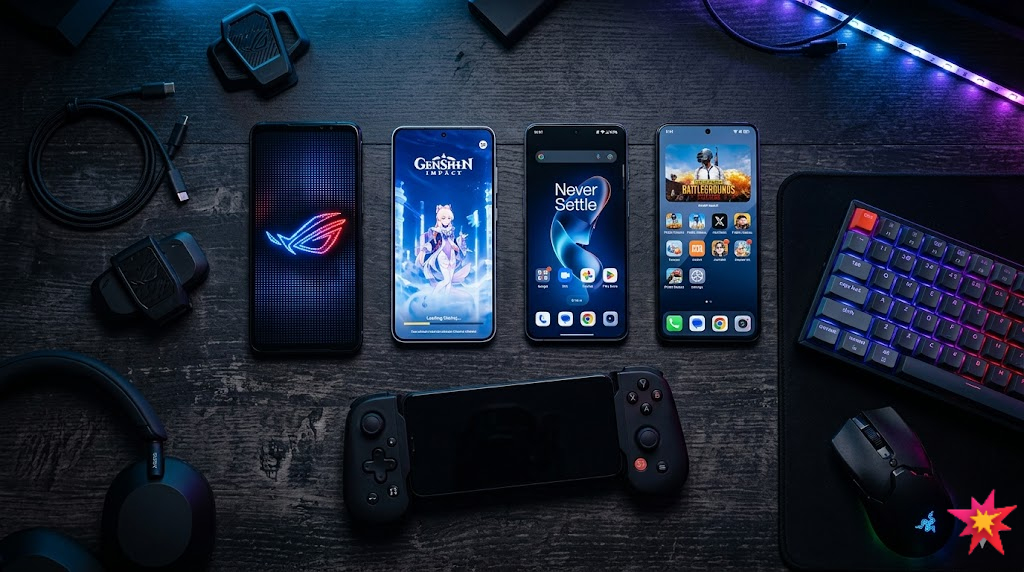
The Nord 4 runs a Snapdragon 7+ Gen 3 — and that chip changes what gaming performance means at this price. PUBG Mobile runs at high graphics settings without significant frame drops. Genshin Impact handles medium-high settings without sustained throttling. Games that would force a compromised chipset to drop frames or reduce resolution run normally here.
Confirmed specs: Snapdragon 7+ Gen 3, 8GB or 12GB RAM (model-dependent), 5,500mAh battery, 100W wired charging, 50MP main camera, 8MP ultrawide, 6.74-inch 120Hz AMOLED display, metal unibody design, Android 14, OxygenOS 14.
The 100W charging deserves a moment: from flat to full in approximately 30 minutes in testing documented by GSMArena. For gaming sessions that drain the battery faster than normal use, that recovery time matters.
What it gives up: OxygenOS has drifted from the clean software experience that made early OnePlus phones popular. The camera is competent but not a category leader. No telephoto. IP54 rating instead of IP67 or IP68.
If you’re comparing chipsets between this and other options in the mid-range — the best AI apps for Android guide is a useful companion for understanding what these chips actually unlock in software.
Best Battery Phone Under $400
Motorola Edge 50 Fusion — $299–$349
The Edge 50 Fusion sits at the lower end of this price bracket and holds up well on battery. The 5,000mAh cell paired with a Snapdragon 7s Gen 2 is an efficient combination — Motorola’s own testing puts it at up to two days of moderate use, and independent reviewers have confirmed all-day performance on heavy use without hitting 20% by bedtime.
Confirmed specs: Snapdragon 7s Gen 2, 8GB RAM, 256GB storage, 5,000mAh battery, 68W wired charging, 50MP main camera with OIS, 13MP ultrawide, 6.7-inch 144Hz pOLED display, IP68 rated, Android 14 with three years of OS updates confirmed.
The OIS on the main camera deserves mention — optical image stabilisation at this price still isn’t universal, and it makes a measurable difference in video quality when shooting while moving.
What it gives up: three years of OS updates is the shortest window among the top picks here. The Snapdragon 7s Gen 2 is a capable chip but not the performance leader in the category. The ultrawide camera underperforms in low light.
Full Comparison Table
All pricing reflects mid-2026 market rates. Sale pricing and regional variation apply.
| Phone | Chipset | RAM | Battery | Charging | Camera Highlight | IP Rating | OS Updates | Price Range |
|---|---|---|---|---|---|---|---|---|
| Google Pixel 8a | Tensor G3 | 8GB | 4,492mAh | 18W | Best low-light processing | IP67 | 7 years | $379–$499 |
| OnePlus Nord 4 | Snapdragon 7+ Gen 3 | 8–12GB | 5,500mAh | 100W | Fast AF, 50MP main | IP54 | 4 years | $329–$399 |
| Motorola Edge 50 Fusion | Snapdragon 7s Gen 2 | 8GB | 5,000mAh | 68W | OIS video, reliable | IP68 | 3 years | $299–$349 |
| Samsung Galaxy A55 | Exynos 1480 | 8GB | 5,000mAh | 25W | OIS, Gorilla Glass Victus+ | IP67 | 4 years | $349–$449 |
| Nothing Phone (2a) Plus | Dimensity 7350 Pro | 12GB | 5,000mAh | 50W | Consistent output | IP54 | 3 years | $349–$399 |
Note on the Samsung Galaxy A55: Its launch price frequently exceeds $400, but it sells regularly at $349–$399 on promotions. It’s included because it consistently lands in this price bracket in practice, and skipping it based on MSRP alone would be misleading. If you need a firm sub-$400 guarantee, the Edge 50 Fusion and Nord 4 are the safer bets.
For Samsung-specific context across their full lineup, the top Samsung phones with the best camera guide covers where the A55 fits relative to the S-series.
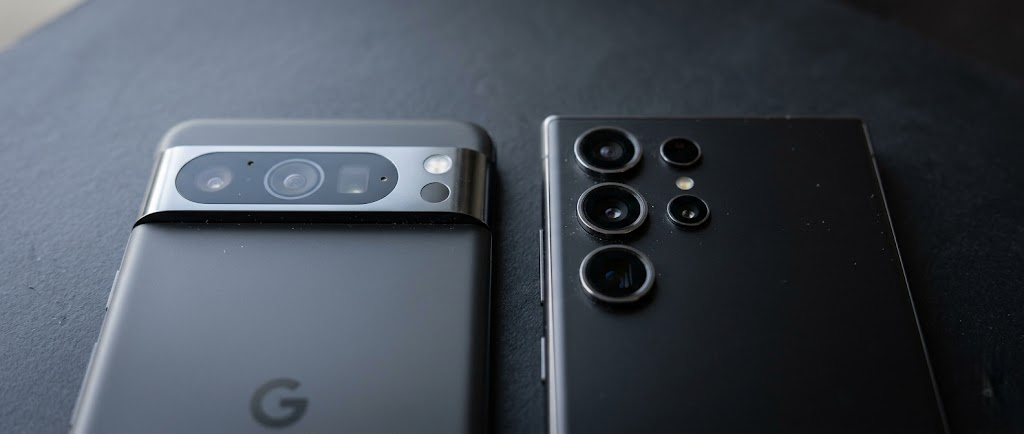 Computational photography has closed the gap significantly for everyday photography scenarios like restaurants and indoor events.
Software Support — The Number That Changes Everything
This section matters more than most buyers realise when they’re making the purchase decision.
| Phone | OS Updates | Security Patches | Supported Until* |
|---|---|---|---|
| Google Pixel 8a | 7 years | 7 years | 2031 |
| Samsung Galaxy A55 | 4 years | 5 years | 2029 |
| OnePlus Nord 4 | 4 years | 5 years | 2029 |
| Nothing Phone (2a) Plus | 3 years | 4 years | 2028 |
| Motorola Edge 50 Fusion | 3 years | 4 years | 2027 |
*Calculated from each device’s release date based on the manufacturer’s published update commitment. Google’s seven-year promise for the Pixel 8a is confirmed in their official product documentation. Samsung, OnePlus, Motorola, and Nothing commitments are sourced from their respective product pages and press releases at launch. Verify current policy on manufacturer sites before purchasing.
The Pixel 8a’s seven-year commitment reshapes the value argument entirely. At $399, that’s roughly $57 per year across the support window — before accounting for resale value. A $1,100 flagship phone that’s security-unsupported after four years costs more per supported year, not less.
If long-term value is a priority, the Pixel 8a’s update window is the strongest argument in this price category.
Where Budget Phones Still Fall Short
Honest assessments require naming the gaps, not just the wins.
Optical zoom. This is the clearest visible divide between sub-$400 phones and flagships. Anything beyond a 2x optical crop is rare in this price range. Wildlife, sports, or subjects at distance require a dedicated telephoto lens — and that hardware mostly lives above $500. The Pixel 8a has a usable 2x crop mode. The others have nothing equivalent. If zoom photography is a regular requirement, this category has a real limitation.
Display brightness in direct sunlight. The Samsung Galaxy S24 Ultra or iPhone 15 Pro Max are visibly easier to read in full outdoor sunlight than any phone on this list. The best panels here — the Nord 4’s AMOLED, the Edge 50 Fusion’s 144Hz pOLED — are genuinely good. They’re not at the same ceiling. For most use, this surfaces maybe 10% of the time.
Build materials on some models. The Galaxy A55 is the exception, using Gorilla Glass Victus+ front and back with a full IP67 seal. Others use polycarbonate. It’s durable — polycarbonate is more impact-resistant than glass in many drop scenarios — but it doesn’t carry the same perceived solidity of a metal-and-glass device.
Charging speed on the Pixel. 18W wired charging on the Pixel 8a is the weakest charging specification in this tier by a significant margin. The Nord 4 charges at 100W; the Edge 50 Fusion at 68W. If your morning includes a 20-minute charge window before leaving, the Pixel’s charging speed is a practical limitation.
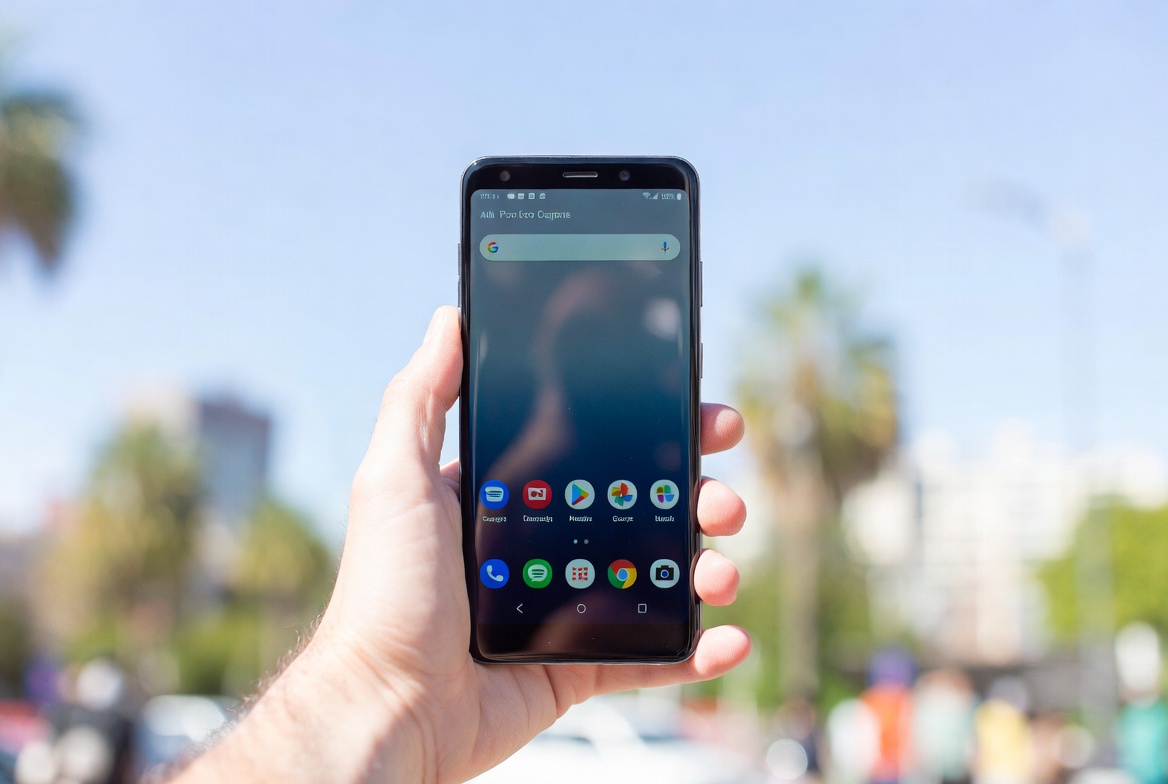 Outdoor display brightness is the category where flagship panels still hold a measurable advantage.
Who Should Buy a Phone Under $400
If your phone use covers communication, social media, streaming, photos of daily life, and navigation — that’s most people — there’s no case for spending more than $400 in 2026. The experience gap between a well-chosen $380 device and a $1,100 flagship is real but narrow, and it appears in scenarios most buyers encounter a handful of times per week at most.
Buy the Pixel 8a if: Camera quality and software longevity are the priority. Seven years of updates and Google’s image processing at this price is a combination nobody else offers.
Buy the Nord 4 if: Performance is the priority — gaming, heavy multitasking, fastest charging in the tier. The Snapdragon 7+ Gen 3 is genuinely fast, not mid-range-fast.
Buy the Edge 50 Fusion if: You want a capable all-rounder at the lower end of the bracket. IP68, OIS, 68W charging, and a two-day battery are a strong package at $299–$349.
Buy the Galaxy A55 if: You’re in Samsung’s ecosystem, need reliable OIS video, and want Gorilla Glass Victus+ build quality. Confirm the sale price before buying — at full MSRP it pushes above $400.
If you’re making a decision that also involves iPhones in this general price range, the best iPhones under $300k in Nigeria guide and best iPhones for battery life cover the Apple side of the same question.
FAQ
Are phones under $400 actually capable for mobile gaming?
For most titles, yes. The OnePlus Nord 4’s Snapdragon 7+ Gen 3 handles PUBG Mobile at high settings, Call of Duty Mobile at high-very high, and Genshin Impact at medium-high without sustained frame drops in testing. The ceiling exists — the most demanding game settings may require dropping resolution — but the practical gaming experience on the Nord 4 specifically is strong. The other phones in this list with less capable chipsets are better suited to lighter titles. If gaming is the primary use case, the Nord 4 is the clear pick in this price bracket.
How do cameras compare to an iPhone 15 or Galaxy S24?
In good light, photos from the Pixel 8a are difficult to distinguish from either in casual viewing. The processing approach differs — Google leans on computational photography, Apple on hardware quality and video consistency — but the output at the consumer level is competitive. In low light, the iPhone 15 and S24 retain an edge, particularly in mixed artificial lighting and motion. The gap is visible in a side-by-side comparison; it’s less obvious looking at a single photo on social media. For a deeper camera comparison at the flagship tier, the Galaxy S26 Ultra vs iPhone 17 Pro Max vs Pixel 10 Pro breakdown shows how the architecture differences play out at the high end.
Will a sub-$400 phone feel slow after two years?
On the Pixel 8a or Nord 4, based on the chipset tier and historical performance patterns of comparable hardware, no — not in ways that affect daily use. The Snapdragon 7+ Gen 3 is well ahead of what typical app workloads demand. The more relevant question is software support. A phone that’s performance-adequate but no longer receiving security updates is a real problem. That’s where the Pixel 8a’s seven-year commitment changes the answer compared to the other options here.
Is buying a refurbished flagship better value than a new mid-range phone?
It depends entirely on the remaining software support window. A refurbished Samsung Galaxy S23 at $300 is an excellent hardware value — until you account for when Samsung stops updating it. Cross-reference the refurbished price against the support end-date and the remaining supported years. Sometimes it’s a better deal. Often, a new mid-range phone with a longer update commitment wins on total value even if the specs look weaker on paper.
Do all these phones support 5G?
All five phones reviewed here support 5G. Sub-6GHz 5G — the variant available across most urban and suburban coverage areas — is confirmed on every model. mmWave 5G (the short-range, ultra-fast version available at specific venues and urban hotspots) is not available on most variants outside specific US market configurations. For everyday 5G browsing, streaming, and calls, you won’t notice the absence of mmWave.
What’s the single biggest compromise compared to a flagship?
Optical zoom. Every other gap in this category — display brightness, build materials, charging speed on some models — is manageable in daily use. The absence of a dedicated telephoto lens shows up every time you try to photograph something at distance and the digital crop reveals its limits. If you regularly shoot at events, photograph people across rooms, or need to bring distant subjects closer, this is a real and recurring limitation that the mid-range hasn’t solved yet.
Is the Samsung Galaxy A55 actually under $400?
At launch MSRP, no — it typically launches at $449. In practice, it consistently sells at $349–$399 through Samsung promotions, carrier deals, and retail sales. Including it here reflects real market pricing rather than launch pricing. If you’re buying at full retail without a sale, it technically sits above the category. Confirm current pricing before purchase.
What About Nigeria?
Most of the pricing in this article reflects US market rates — which don’t translate directly to what you’ll pay in Nigeria.
Import costs, exchange rate fluctuations, and retailer markups mean phones that sit comfortably under $400 globally can land significantly higher locally. A phone listed at $349 in the US might reach ₦600,000–₦750,000 at current rates through grey-market importers, depending on timing and who’s selling.
A few practical notes before buying:
Check Slot, Pointek, and authorised dealers first. Some phones in this list — particularly Samsung’s A-series — have official distribution in Nigeria and carry local warranty support. That warranty matters if hardware fails.
The Pixel 8a and Nord 4 have no official Nigerian distribution. You’re buying through importers. The phones work on Nigerian LTE bands, but warranty claims require going back to your seller, not Google or OnePlus directly.
The Samsung Galaxy A55 is often the most practical pick locally. Wider availability, local warranty through Samsung Nigeria, and consistent pricing from authorised channels mean fewer variables. For more Samsung context at various price points, the top Samsung phones with the best camera guide covers the full range from budget to flagship.
Dollar pricing moves. What costs $380 today may be priced differently next month at local retailers. If you’re comparing the iPhones side of things at Nigerian price points specifically, the best iPhones under ₦300k in Nigeria breakdown is the right starting point for that conversation.
Final Verdict
The mid-range has crossed a real threshold. A $380 phone in 2026 isn’t a compromise most people will feel in daily life — it’s a deliberate choice to stop paying for hardware that returns diminishing value above a certain price point.
The Pixel 8a wins on camera and software longevity. The Nord 4 wins on raw performance and charging speed. The Edge 50 Fusion wins on overall value at the lower end of the bracket. None of them are perfect. All of them are genuinely good.
The flagships still have advantages — optical zoom, peak display brightness, build materials on some models, faster charging on Pixel. But those advantages are narrower than a $700 price gap suggests. For most people buying a phone in 2026, the honest advice is to spend $400 or less, pick the right phone for your specific priorities, and put the savings somewhere that actually changes your life.
That’s the case the mid-range has finally earned the right to make.

Comments 0
Leave a comment