Table of Contents
Open Table of Contents
- Overview
- First, Something That Needs Saying
- The Core Philosophy Difference
- Thermals: The Part That Actually Determines Your Gaming Experience
- Display: ROG Pulls Ahead
- Charging and Battery: RedMagic Gets Aggressive Here
- Shoulder Triggers: Getting This Right
- Software: Deeper vs. Cleaner
- Build Quality: What You Notice After a Month
- Pricing — The Real Conversation
- Things Most Reviewers Skip Over
- Full Verified Spec Table
- FAQ
- What I’d Actually Buy
Overview
About 75 minutes into a Genshin session I shifted my grip on the ROG Phone without really thinking about it. Not a dramatic thing. Just — the frame had gotten warm enough that I moved my fingers slightly. I didn’t stop playing. But I noticed it.
That small moment is basically what this whole comparison comes down to.
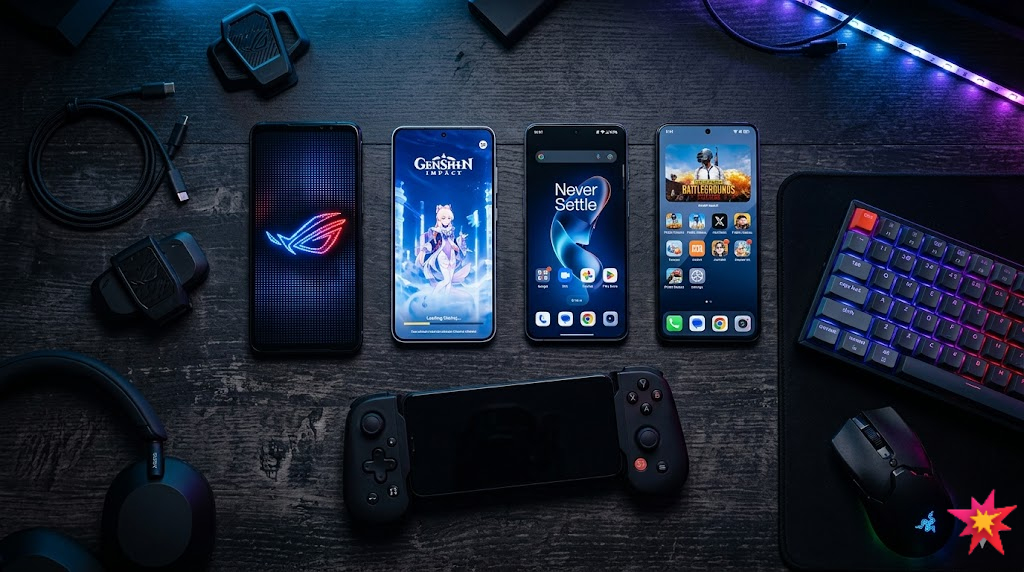
I’ve run both phones through the kind of usage that actually tests them — PUBG ranked, back-to-back CODM matches, Genshin open world for well past the point where most reviews stop. Not because I’m trying to break them. Because that’s what owning a gaming phone actually looks like after the first week of excitement fades.
Here’s what I found, with the numbers verified this time around.
First, Something That Needs Saying
The “gaming phone” label is doing a lot of work in 2026. Every brand has game modes now. Mid-rangers have trigger buttons. Your grandma’s Samsung has a performance mode.
So when I talk about RedMagic and ROG Phone, I’m talking about the two brands that still take this category seriously. Not because they slapped a logo on a regular phone — but because they made real hardware decisions that a normal flagship wouldn’t bother with. An actual fan. Ultrasonic shoulder sensors. Bypass charging. Vapor chambers big enough to matter.
The question isn’t whether either phone is good. They both are. The question is which set of decisions lines up with how you actually play.
The Core Philosophy Difference
RedMagic (made by Nubia) is essentially saying: you want maximum specs for minimum money? Here. They compete aggressively on price, they put a physical fan in the phone, and they optimize everything around raw gaming performance. There’s no pretense about lifestyle positioning. They’re making a gaming tool.
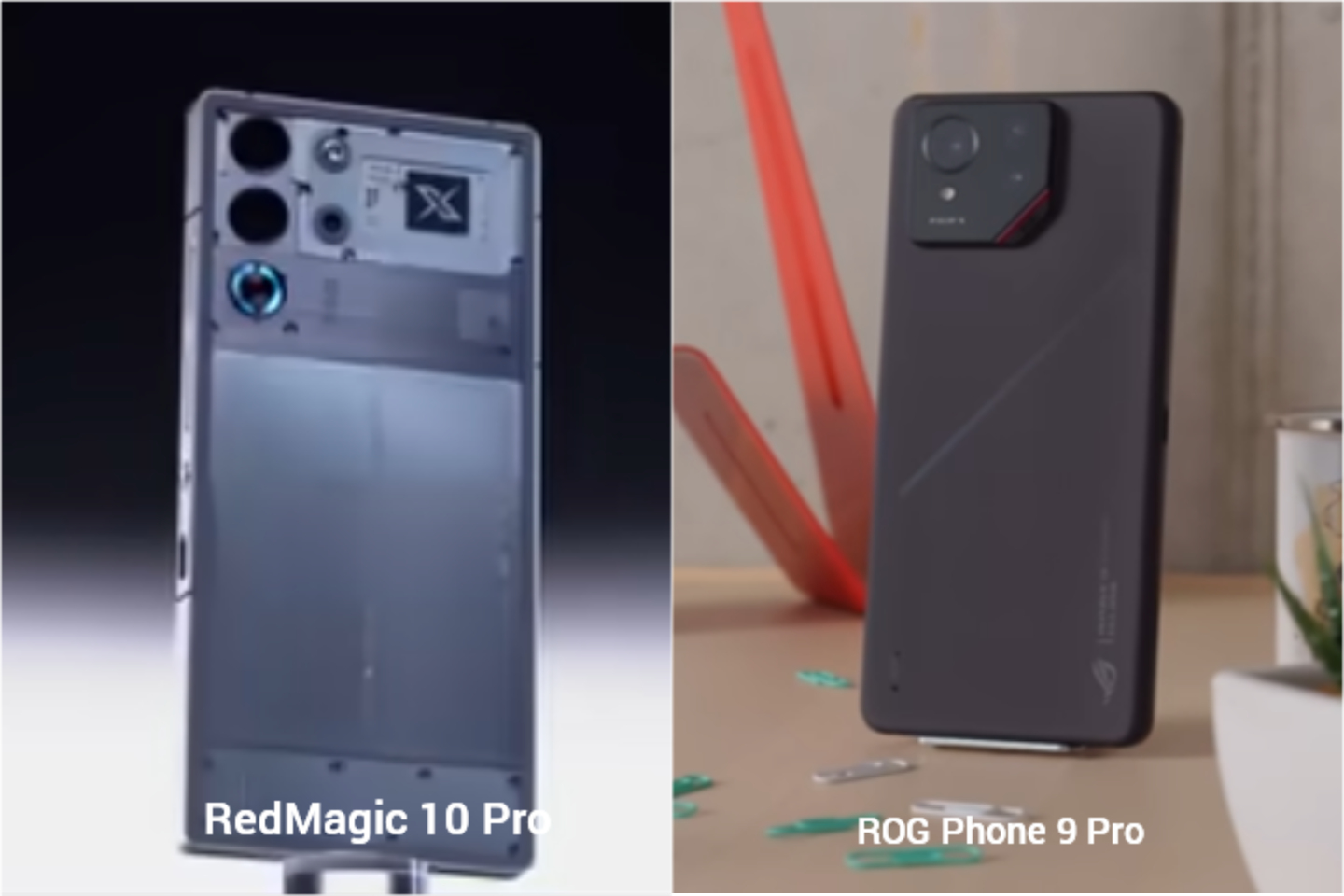
ASUS ROG Phone is building something closer to an ecosystem. The AeroActive Cooler add-on. The AniMe Vision LED panel on the back. The Armoury Crate software depth. ROG wants you to feel like you’re holding a proper gaming device, not just a phone that happens to have some modes enabled. You pay for that feeling, and honestly, the feeling is real.
Neither is wrong. The problem is most reviews compare them on specs alone, which misses the point almost entirely.
Thermals: The Part That Actually Determines Your Gaming Experience
Both phones run the Snapdragon 8 Elite. So in a 5-minute benchmark, they’re identical. In a 40-minute Genshin session, they’re not.
The RedMagic 10 Pro has a built-in ICE 13 cooling system — vapor chamber, liquid metal thermal compound, and a physical fan spinning at up to 23,000 RPM according to RedMagic’s official specs. That last part is the differentiator nobody can replicate in a passive design. When thermals are handled by airflow instead of throttling, your chip holds its performance curve longer.
The tradeoff is noise. Not terrible noise — at medium fan speed it’s roughly background-noise level. But it’s there, and in a quiet room you’ll hear it. I know people who turned the fan off because of this and then complained about their phone getting warm. Don’t do that. Leave the fan on.
The ROG Phone 9 Pro uses a vapor chamber system without a built-in fan (the AeroActive Cooler external attachment is sold separately at around $79). Passively, it does well — better than most flagships. But in sustained sessions, Digital Trends measured the frame reaching 51°C during intensive stress testing, getting uncomfortably hot to hold. It doesn’t throttle dramatically. The heat just moves to your hands instead.
ROG gets hot. That’s the honest summary.
Winner for sustained thermals: RedMagic. It’s not close after 45 minutes. The fan matters more than any benchmark.
Display: ROG Pulls Ahead
The ROG Phone 9 goes up to 165Hz in system settings, and 185Hz when you activate it through Game Genie — confirmed on ASUS’s own spec page. The RedMagic 10 Pro sits at 144Hz. That’s a real gap.
More than refresh rate though — ROG’s Samsung-made AMOLED panel is tuned noticeably better. Colors are balanced. It doesn’t scream “gaming phone” the way some panels do. For anything outside of games, it just looks better.
RedMagic’s 144Hz display is still fast. In an actual match, most people won’t feel the difference between 144Hz and 185Hz. But the color quality difference is visible every single day you use the phone for anything that isn’t a game. That matters if this is your only device. It’s not a gaming spec — it’s a livability spec.
Touch sampling: RedMagic claims 960Hz, ROG claims 720Hz. In theory RedMagic wins. In practice this becomes a marketing argument more than a real one — both feel fast enough that the gap isn’t the deciding factor in a PUBG gunfight.

Charging and Battery: RedMagic Gets Aggressive Here
| RedMagic 10 Pro | RedMagic 10 Pro+ | ROG Phone 9 Pro | |
|---|---|---|---|
| Battery | 7,050 mAh | 7,050 mAh | 5,800 mAh |
| In-box charger | 80W | 120W | 65W |
| Max supported | 100W | 120W | 65W |
| Full charge time | ~35 min | ~27 min | ~45 min |
| Wireless charging | No | No | Yes, 15W Qi |
The RedMagic 10 Pro ships with an 80W charger and supports up to 100W with a separately purchased cable. The Pro+ jumps to 120W — in testing by NubiaMart, it hit 50% at the 11-minute mark and full charge in 27 minutes from a 7,050mAh battery. The ROG, per PhoneArena’s review, takes just under an hour at 65W.
ROG does have 15W wireless charging. RedMagic has neither wireless nor reverse charging. If you’re on a wireless pad setup, that matters.
The bigger battery plus faster charging in RedMagic adds up in real use. 65W on a 5,800mAh cell is fine — for a normal flagship. For a phone sold specifically as a gaming device in 2026, it’s the one spec that hasn’t moved.
Shoulder Triggers: Getting This Right
Both phones have shoulder trigger zones when held in landscape. I want to be specific here because this gets exaggerated in most comparisons.
ROG’s AirTriggers are ultrasonic capacitive sensors — not physical mechanical buttons. ASUS’s own support documentation describes them as ultrasonic sensor zones that detect pressure. You press the area on the frame, the sensor fires, and haptic feedback makes it feel like a click. The haptics are good. But there’s no physical moving part. Sensitivity and pressure threshold are configurable in Armoury Crate.
RedMagic’s shoulder buttons work similarly — capacitive touch zones on the frame with haptic response. Both can be remapped per game. Both work.
ROG’s haptic feedback is slightly more convincing. RedMagic’s zones feel slightly more like pressing a flat surface. Neither is bad. Neither is a physical trigger. Don’t let marketing copy tell you otherwise.
Software: Deeper vs. Cleaner
ROG’s Armoury Crate is genuinely powerful. Per-game CPU/GPU profiles, touch sensitivity zones, macro assignments, display behavior tweaks — there’s a lot here. If you’re the type to spend 45 minutes dialing in a setup, it rewards that time.
RedMagic’s Game Space is less deep but faster to get into. Good defaults, clear performance mode labels, clean layout. Tap twice and you’re gaming. No configuration required if you just want it to work.
Software longevity: ASUS officially promises 2 major Android OS updates and 5 years of security patches — listed plainly on the ROG Phone 9 Pro product page. Nubia’s update track record for RedMagic is patchier. Recent years have been better, but it’s not something you can fully bank on. Neither brand is competing with Google on update commitments. That’s just the gaming phone reality.
Build Quality: What You Notice After a Month
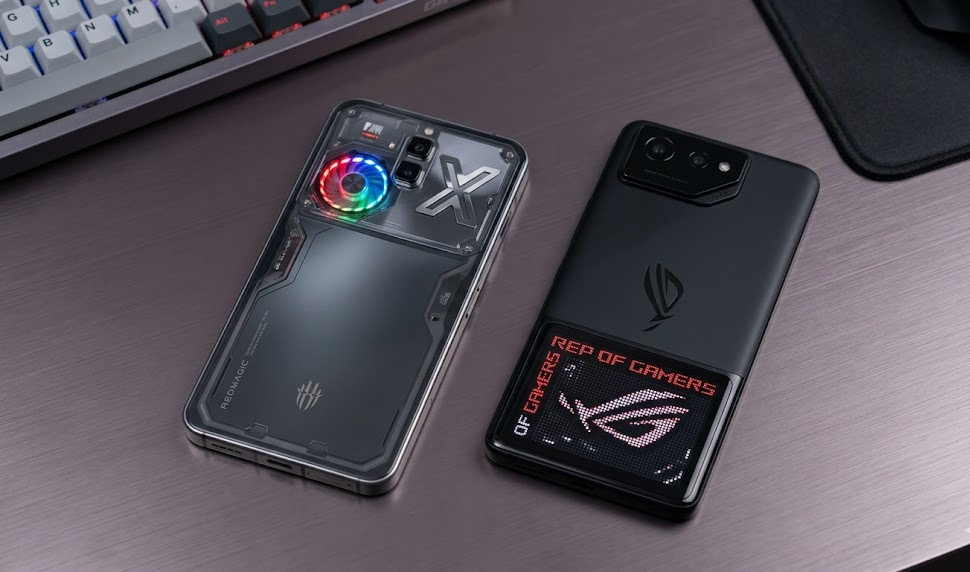
RedMagic goes all-in on the aesthetic. RGB fan window, angular lines, transparent back options. It looks like a gaming phone in the way that announces itself to anyone across the table. I’m neutral on this. The all-black ROG design is easier to carry in public without explaining yourself.
ROG Phone 9 Pro is IP65/68 rated. RedMagic 10 Pro has no IP certification. In practice, gaming phones don’t get dropped in pools, but heavy sweaty sessions are common — and IP68 is a quiet peace of mind that RedMagic doesn’t offer.
Weight: ROG is 227g, RedMagic around 229g. Both are heavy. Your wrists will know after an hour in landscape. This is the gaming phone tax. Accept it or buy something lighter.
Pricing — The Real Conversation
| Model | Approx. Price |
|---|---|
| RedMagic 10 Pro (16GB/256GB) | ~$649 |
| RedMagic 10 Pro+ (24GB/512GB) | ~$799 |
| ROG Phone 9 (16GB/256GB) | ~$999 |
| ROG Phone 9 Pro (24GB/512GB) | ~$1,099 |
| AeroActive Cooler X Pro (add-on) | ~$79 |
RedMagic 10 Pro at $649 with Snapdragon 8 Elite, 7,050mAh, and active cooling is legitimately remarkable value. That spec sheet would have cost you $1,000+ two years ago. The price alone makes it hard to dismiss.
ROG Phone 9 Pro at $1,099 needs to justify the gap. What you’re paying for: better display quality, IP68 protection, wireless charging, more convincing build feel, and an accessory ecosystem. If you want the ROG to perform at its thermal best in serious sessions, the AeroActive Cooler is more or less required — add $79 to that price.
For context on the wider field, the best phones for gaming in 2026 covers options at multiple budgets if you’re not locked into either of these.
Things Most Reviewers Skip Over
RedMagic’s camera is mediocre. Not just “gaming phone mediocre” — genuinely behind what you’d get from a camera-focused phone at the same price. If photography matters at all to you, that’s a real problem. The Google Pixel lineup in 2026 shows what the other end of that priority scale looks like.
Both phones get uncomfortable in extended sessions — just in different ways. RedMagic runs cooler but the fan creates a faint chassis vibration you feel in your palms after an hour. ROG runs hotter in hand without the external cooler. Pick your discomfort.
Battery health degrades faster on gaming phones. High-drain sessions, fast charging cycles, elevated temperatures during play — all of it accelerates wear compared to normal use. Worth knowing how to check your battery health on Android and developing some habits around battery protection before assuming default settings are optimal.
Some behavior during sessions is just Android being Android. Throttled notifications mid-match, background apps killed, display behavior shifting under heat — these get misdiagnosed as phone defects constantly. Read up on weird Android behaviors that are completely normal before assuming something’s broken.
Full Verified Spec Table
| Spec | RedMagic 10 Pro | ROG Phone 9 Pro |
|---|---|---|
| Chip | Snapdragon 8 Elite | Snapdragon 8 Elite |
| RAM | Up to 24GB LPDDR5X | Up to 24GB LPDDR5X |
| Storage | Up to 1TB UFS 4.1 Pro | Up to 1TB UFS 4.0 |
| Display | 6.85” AMOLED, 144Hz | 6.78” AMOLED, 165Hz / 185Hz in-game |
| Touch Sampling | 960Hz | 720Hz |
| Battery | 7,050 mAh | 5,800 mAh |
| Wired Charging | 80W (box) / 100W (max) | 65W |
| Wireless Charging | No | 15W Qi 1.3 |
| Active Cooling | Built-in fan (23,000 RPM) | Optional AeroActive Cooler (~$79) |
| Shoulder Triggers | Capacitive touch + haptics | Ultrasonic AirTriggers + haptics |
| IP Rating | None | IP65/68 |
| Weight | ~229g | 227g |
| OS Updates | 2 major (track record inconsistent) | 2 major + 5yr security patches |
FAQ
Q: Which is better for CODM ranked?
Honestly close. CODM isn’t as thermally brutal as Genshin, so both handle it without struggling. ROG’s 185Hz in-game mode is a real edge in fast-reaction moments. But your connection quality and skill ceiling will hit before the hardware does in CODM specifically.
Q: Does the RedMagic fan make it annoying to use?
At medium speed — not really. Quieter than most laptop fans, mostly inaudible with headphones on. At max speed it’s noticeable in a quiet room. Most people set it to medium and stop thinking about it. Speakers-only gaming in silence is the one scenario where it gets distracting.
Q: Is the ROG AirTrigger actually a physical button?
No, and this gets misrepresented constantly. It’s an ultrasonic capacitive sensor with haptic feedback — not a physical switch. The haptics are good enough that it feels like a click, but there’s no moving part. Works well in practice, just don’t expect it to feel like a controller L2.
Q: Can I daily drive either of these?
RedMagic is more compromised as a daily phone — mainly the camera, which trails badly against other phones in this price range. Everything else is fine. ROG handles daily life better: more restrained design, acceptable camera, more comfortable overall as a single device. Neither replaces a proper camera phone if that matters to you.
Q: Which one for Genshin Impact?
RedMagic, and it’s not really debatable. Genshin is one of the most thermally punishing games on Android, and the active fan makes a legitimate difference in hours two and three. Enable the fan in Game Space before launching, run medium performance mode unless you specifically need Ultra settings, and you’ll have a much more consistent experience than you will on ROG without the external cooler.
Q: How bad is battery degradation over time?
Both phones charge fast and run hard, which accelerates degradation compared to a typical flagship. RedMagic’s 100W maximum is more aggressive than ROG’s 65W per cycle — though both have temperature management during charging. If you’re keeping either phone for 2+ years, charging to 80% daily makes a real difference long-term.
Q: Is the ROG actually worth $1,099?
If you have the budget and want it as your main phone: yes. The build quality, IP68, wireless charging, and display are all real advantages. If you’re stretching to afford it over the RedMagic 10 Pro+: probably not — you’d be paying $300 for refinement, not capability. The RedMagic offers about 85% of the gaming performance at 60% of the cost.
What I’d Actually Buy
RedMagic 10 Pro if I’m buying a dedicated gaming device on a real budget. $649 for Snapdragon 8 Elite, 7,050mAh battery, and an active cooling system is hard to argue against. Accept the camera limitations, accept the look, and it’s a genuinely strong purchase.
ROG Phone 9 Pro if this is my only phone and I need it to handle both gaming and daily life without feeling like I compromised. The build, display, and IP rating make it a more complete device. Just budget the AeroActive Cooler separately if you’re serious about it.
For most people: RedMagic is the smarter buy. For people where the extra $300–$450 doesn’t sting: ROG Phone is the better phone.
Neither is wrong. The gaming phone space is actually competitive now. That’s the real headline.