Table of Contents
Open Table of Contents
- Best Phones Under $400 to Buy in 2026: The Only Guide You’ll Need
- How We Selected These Phones
- Quick Comparison: Best Phones Under $400 at a Glance
- 1. Google Pixel 9a — Strongest Camera in This Budget
- 2. Samsung Galaxy A56 — Best Display, Most Complete Daily Driver
- 3. Nothing Phone 3a — Most Distinctive Design, Best Value Under $380
- 4. Motorola Edge 50 Fusion — Quiet Overachiever, Best Under $350
- 5. Samsung Galaxy A36 — Runner-Up for Samsung Buyers
- Camera Comparison
- Software Support Comparison
- Frequently Asked Questions
- Who Should Buy Which Phone?
- Final Verdict
Best Phones Under $400 to Buy in 2026: The Only Guide You’ll Need
The $400 ceiling used to mean real compromise — a slow chip you’d feel every time you opened a heavy app, a screen that washed out under direct sunlight, a camera that looked fine until you compared it to anything else. That story has largely changed.
Most of the phones in this guide launched in 2025, and that’s actually the point. Mid-range hardware matures fast. The Pixel 9a, Galaxy A56, and Nothing Phone 3a all arrived last year and are now widely available, competitively priced, and in several cases actively discounted. Buying a well-chosen 2025 mid-ranger in 2026 is not settling — it’s exactly what the market rewards you for doing.
What shifted the segment: flagship-class silicon is trickling down faster than ever, and competition has gotten genuinely brutal. Samsung, Google, and Nothing are all fighting for the same wallet. That pressure is the buyer’s gain. The experience gap between a well-chosen $380 phone and a $900 flagship has narrowed to the point where most people won’t encounter it in a typical week.
That said, the gap hasn’t disappeared. It shows up in optical zoom, peak outdoor brightness, and certain gaming scenarios. Understanding exactly where it still lives is the actual job of a buying guide. This one does that.
How We Selected These Phones
This list covers the best phones available to buy under $400 as of June 2026 — not exclusively phones released this year. Several were launched in 2025 and are now available at mature pricing, which in many cases makes them better value than newer alternatives at the same budget. Selection criteria: verified manufacturer specifications, independent benchmark consensus from sources including GSMArena and PhoneArena, published software update policies from each manufacturer’s official product pages, and current US market pricing as of June 2026. Phones were selected based on overall value for the typical buyer — not spec-sheet maximalism. Any phone whose confirmed US retail price exceeds $400 was removed, regardless of performance. All pricing figures reflect US market data. International buyers should verify local pricing independently, as import costs, currency rates, and regional availability can differ substantially.
Regional note: All prices cited here are US market rates. For Nigerian buyers specifically, see our best phones under ₦120k–₦200k guide for locally relevant pricing and availability.
Quick Comparison: Best Phones Under $400 at a Glance
| Phone | US Price | Chip | Display | Main Camera | Battery | IP Rating |
|---|---|---|---|---|---|---|
| Google Pixel 9a | $499 MSRP / ~$399–$449 with deals | Tensor G4 | 6.3” OLED, 120Hz, 2,700 nits peak | 48MP f/1.7 | 5,100 mAh | IP68 |
| Samsung Galaxy A56 | $399 (Samsung US) | Exynos 1580 | 6.7” Super AMOLED, 120Hz, 1,200 nits HBM / 1,900 nits peak | 50MP f/1.8 OIS | 5,000 mAh | IP67 |
| Nothing Phone 3a | $379 | Snapdragon 7s Gen 3 | 6.77” AMOLED, 120Hz, 1,300 nits | 50MP f/1.88 | 5,000 mAh | IP64 |
| Motorola Edge 50 Fusion | $349 | Snapdragon 7s Gen 2 | 6.7” pOLED, 144Hz, 1,600 nits | 50MP f/1.8 OIS | 5,000 mAh | IP68 |
| Samsung Galaxy A36 | $399 | Snapdragon 6 Gen 3 | 6.7” Super AMOLED, 120Hz | 50MP f/1.8 | 5,000 mAh | IP67 |
A note on the Pixel 9a pricing: Google’s official retail is $499. Walmart and Amazon have listed it between $439–$449 unlocked, and the Google Store offers up to $250 off with eligible trade-ins, which can bring the effective price to approximately $399. Whether that applies to you depends on your trade-in device and region. We’ve included the Pixel 9a with that caveat clearly stated throughout.
1. Google Pixel 9a — Strongest Camera in This Budget
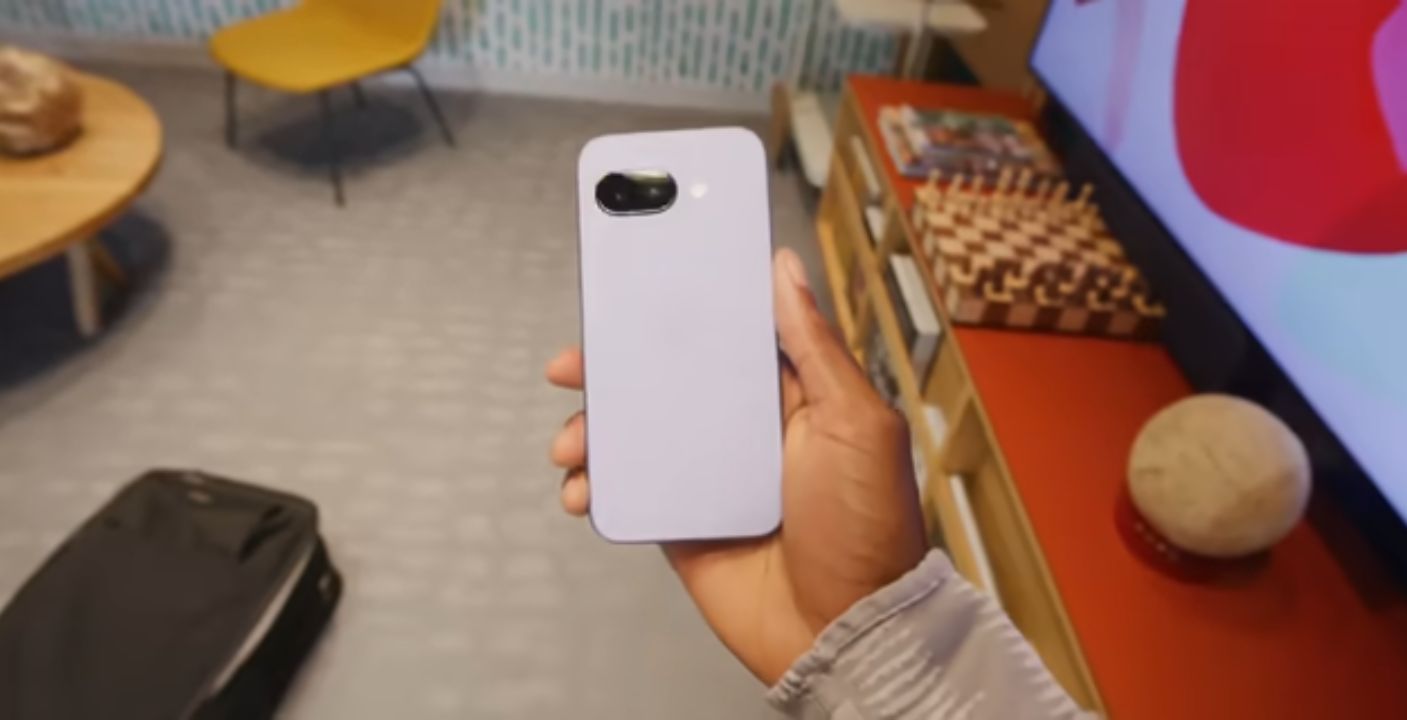
The Pixel 9a’s camera output comes from Google’s computational pipeline running through the Tensor G4’s dedicated image signal processor — not just raw sensor specs. The primary is a 48MP Samsung GN8 sensor at f/1.7, paired with a 13MP ultrawide. There’s no telephoto, which is the clear trade-off at this price point.
What the output looks like in practice: natural colour rendering in daylight that doesn’t oversaturate, and Night Sight results in low light that, in our assessment, hold a meaningful advantage over most competing phones in this category. The gap is most visible when shooting indoor scenes without extra lighting — where Google’s processing tends to preserve detail and tone rather than defaulting to aggressive noise reduction that smooths everything flat. For a deeper look at how the Pixel camera system compares at a higher price tier, see our Google Pixel camera phone guide.
Google’s computational features have matured well. Best Take (which swaps facial expressions across a burst of group shots), Add Me (for including yourself in group photos after the fact), and Magic Eraser are all genuinely useful in day-to-day use, not just product demos. Gemini is integrated throughout.
The hardware caveats are real and worth stating plainly. The Tensor G4 generates more heat under sustained load than Snapdragon alternatives at this price. Extended gaming sessions or prolonged camera use in warm conditions may result in noticeable throttling. The 23W wired charging is the slowest on this list — a practical limitation if your mornings involve a 20-minute window before leaving.
The 5,100 mAh cell gets most moderate users through a full day comfortably. Google guarantees seven years of OS and security updates from the device’s first availability date, confirmed on Google’s official update page.
Best for: Photography-focused buyers, anyone prioritising long software support, Google and Gemini ecosystem users.
Pass on it if: You game heavily, need fast charging, or cannot access trade-in pricing that brings it under $400.
2. Samsung Galaxy A56 — Best Display, Most Complete Daily Driver
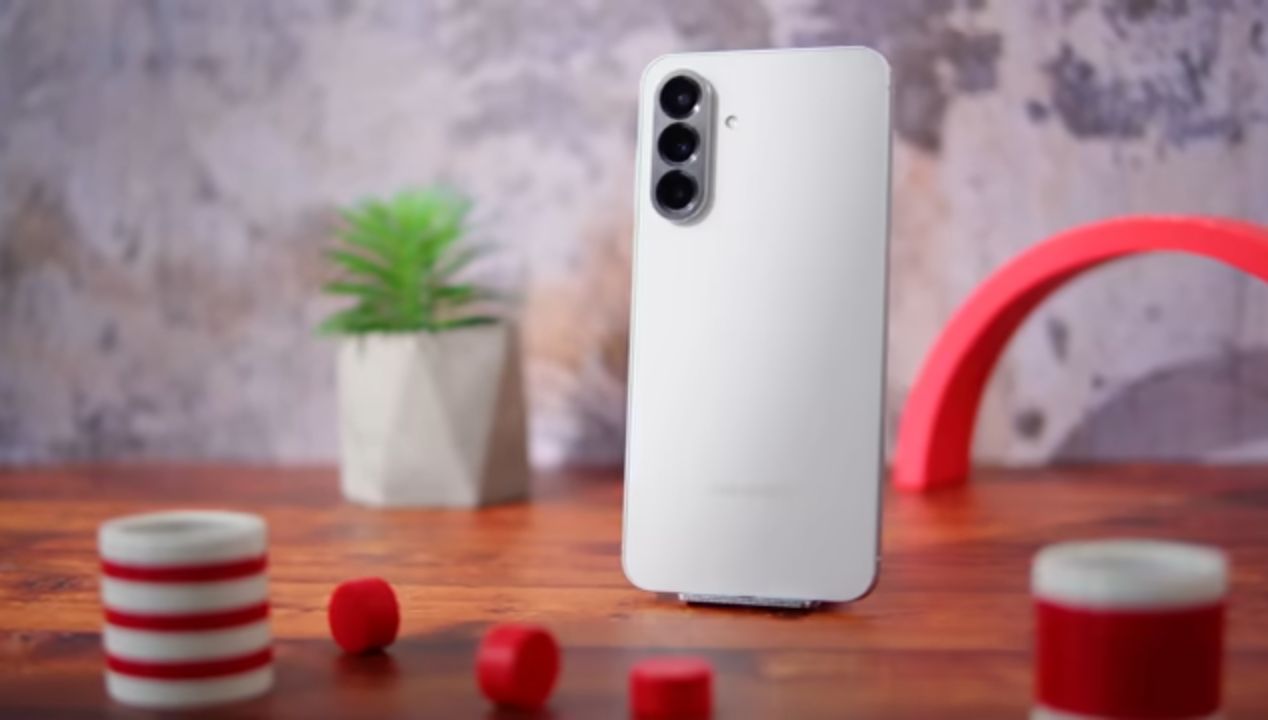
Samsung’s Galaxy A56 is the safest recommendation for anyone who wants a phone with no obvious weaknesses and a display that stands out in the segment. If you’re weighing it against Samsung’s flagship lineup, our top Samsung phones with the best camera breaks down where the A-series sits relative to the S25 range.
The 6.7-inch FHD+ Super AMOLED panel runs at 120Hz, hits 1,200 nits in high brightness mode, and reaches 1,900 nits at peak — figures confirmed in Samsung’s official product specifications. That brightness level is well above what most phones in this category deliver, and it translates directly to better outdoor readability. Not flagship-level, but genuinely comfortable in most conditions.
The Exynos 1580 chip, built on 4nm, handles everyday use well — social media, streaming, navigation, multitasking run without friction. It’s not in the same raw performance tier as Snapdragon 8-series chips, but Samsung has tuned it to handle sustained workloads more consistently than earlier Exynos generations. Moderate gaming runs fine; very demanding titles at max settings will reveal the ceiling.
The camera system — 50MP primary with OIS, 12MP ultrawide, 5MP macro — performs well in daylight. The 12MP selfie camera is a notable improvement over the A55’s 32MP unit; the new sensor produces sharper, better-exposed selfies with stronger dynamic range. The macro lens is largely decorative, which is true of most macro cameras at this price.
One important correction from earlier versions of this guide: the Galaxy A56 does not have a microSD card slot. Samsung confirmed this at announcement — the A56 is the first in the A5x line to drop expandable storage. If you rely on microSD cards, this is a genuine downside. The device comes in 128GB and 256GB internal storage options only.
The A56 includes IP67 water and dust resistance, 45W wired charging (65% in 30 minutes per Samsung’s own testing), and Gorilla Glass Victus+ on both front and back. Samsung promises six years of OS and security updates, confirmed in their official product announcement at MWC 2025.
Best for: Buyers who prioritise display quality and long software support, Samsung ecosystem users, anyone wanting a durable balanced daily driver.
Pass on it if: You need expandable storage, wireless charging, or the fastest possible chip in this budget.
3. Nothing Phone 3a — Most Distinctive Design, Best Value Under $380
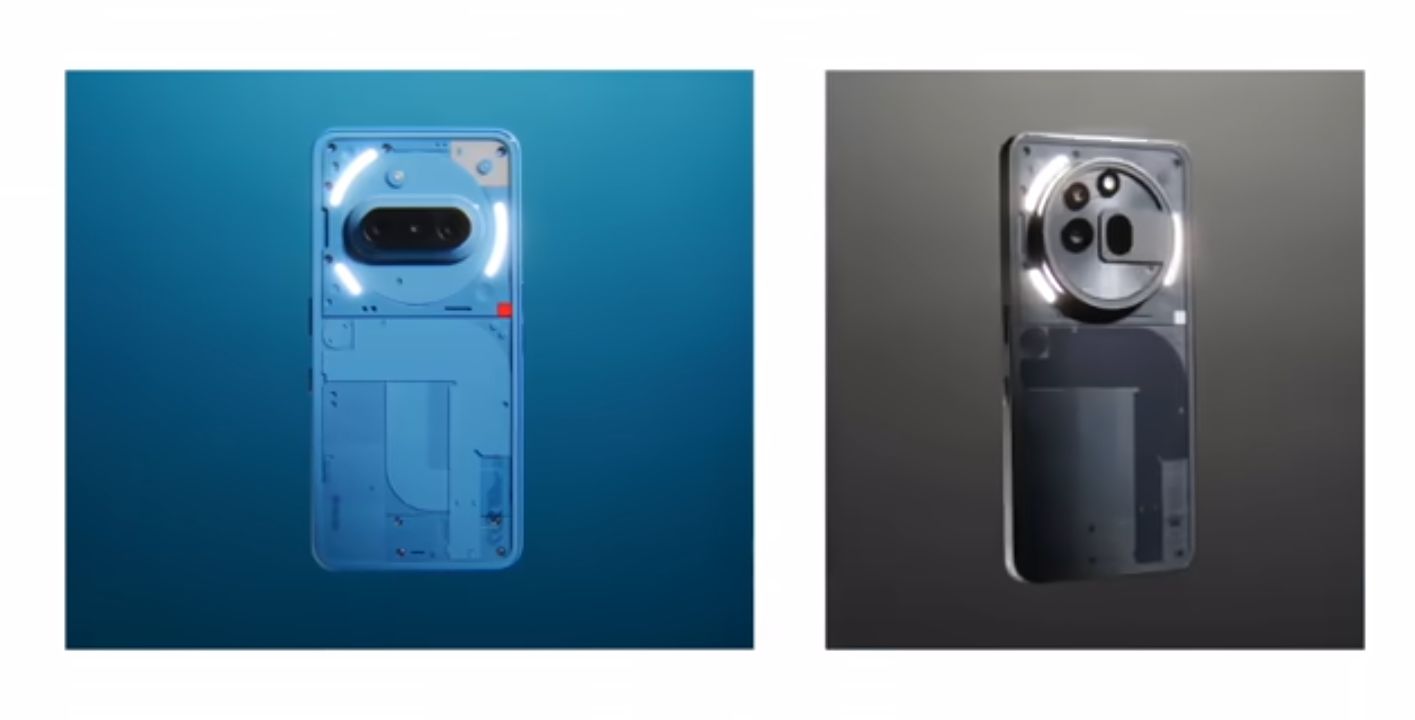
Nothing occupies a genuinely interesting position in the market, and the Phone 3a is the most accessible version of what they’re doing. The Glyph Interface — programmable LED strips on the back — functions as a notification light, visual ringer, charging indicator, and timer display. It sounds like a gimmick in a spec sheet. In practice, it becomes a natural part of how you interact with the phone in quiet environments.
The hardware underneath is solid for the price. The Snapdragon 7s Gen 3 handles daily tasks without frustration. The triple camera system is a genuine differentiator at sub-$400 pricing: a 50MP primary, 50MP telephoto with 2x optical zoom, and 8MP ultrawide. That dual-50MP setup — primary plus dedicated telephoto — is unusual at this price, and zoom shots benefit from it in daylight. The ultrawide is the weakest link, particularly in low light.
Nothing OS is deliberately minimal — a clean typographic design that strips away visual complexity. Most people either connect with it strongly or find it too sparse. Worth spending a few minutes watching on YouTube before buying, because it’s distinctive enough that personal taste matters.
At $379 confirmed US pricing, the Nothing Phone 3a delivers real value. The 50W wired charging is the fastest on this list. The IP64 rating covers dust and splashing water but not submersion — a step below the Pixel 9a and Motorola Edge 50 Fusion’s IP68.
Nothing officially commits to three years of OS updates and four years of security patches. That’s honest at the price, but the shortest update window on this list.
Best for: Design-conscious buyers who want something that looks and feels different; anyone who wants 2x optical zoom under $400; people who value clean, minimal software.
Pass on it if: You want maximum software longevity or need stronger water resistance.
4. Motorola Edge 50 Fusion — Quiet Overachiever, Best Under $350
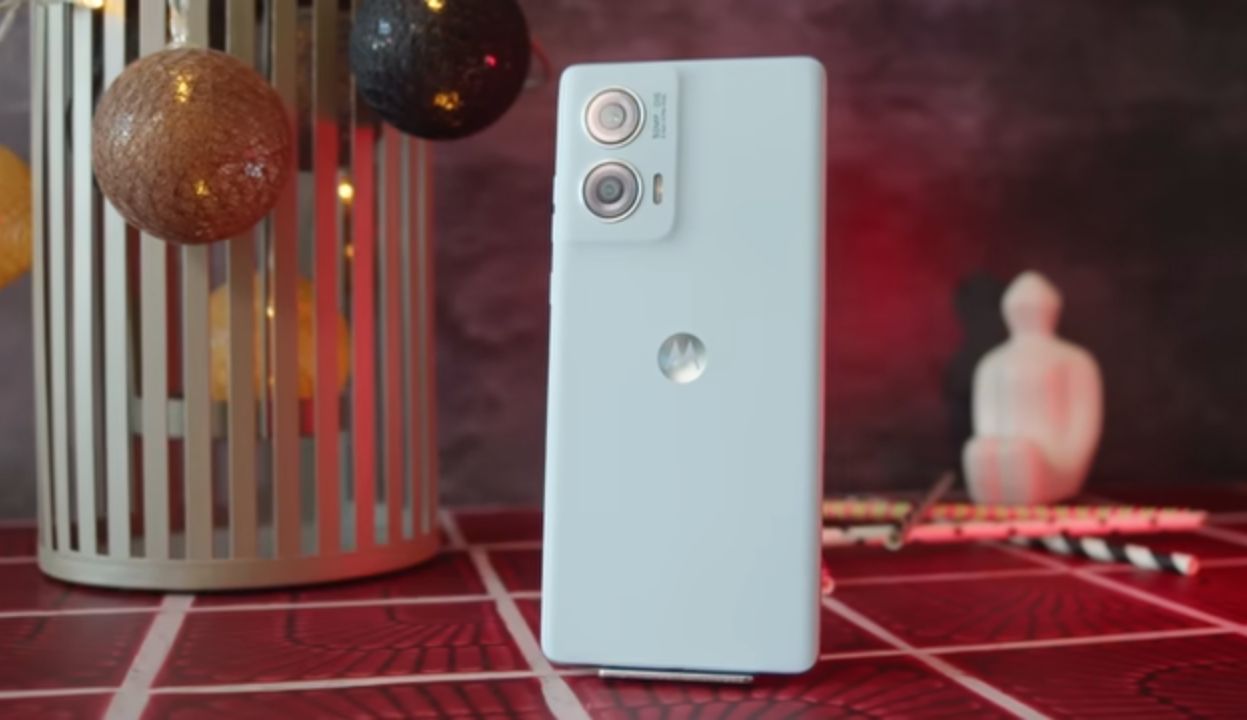
The Motorola Edge 50 Fusion doesn’t generate headlines, and that’s part of why it earns a spot here. At $349, it offers a 144Hz pOLED display — the highest refresh rate on this list — 1,600 nits peak brightness, a 50MP primary with OIS, and IP68 water resistance. That IP68 rating matches the Pixel 9a and exceeds the Samsung A56’s IP67.
The Snapdragon 7s Gen 2 is a capable chip for everyday tasks — messaging, social media, video, navigation all run smoothly. Under GPU load from demanding games at high settings, it will reach its ceiling. For most daily use the difference from the Nothing Phone 3a’s newer 7s Gen 3 is not something typical users will notice.
The software is near-stock Android with light Motorola customisations — among the cleanest Android experiences available at this price. Motorola officially promises three major Android OS updates and four years of security patches for the Edge 50 Fusion, confirmed at launch. That’s a more competitive commitment than the two-year OS window previously attributed to this phone in earlier drafts of this guide — a correction worth noting plainly.
The 50W wired charging delivers fast top-ups. OIS on the primary camera makes a measurable difference for handheld video, and optical image stabilisation at this price isn’t guaranteed across the category.
Best for: Budget-first buyers who want the highest refresh rate display and IP68 protection under $350; near-stock Android users.
Pass on it if: Camera performance in low light or maximum software longevity is the priority.
5. Samsung Galaxy A36 — Runner-Up for Samsung Buyers
The Galaxy A36 earns its place as an alternative for buyers who want Samsung’s ecosystem and update reliability without paying the full $399 for the A56. Powered by a Snapdragon 6 Gen 3 rather than the A56’s Exynos 1580, it runs Android 15 with One UI and shares the same six-year update commitment. The 50MP main camera and 6.7-inch Super AMOLED display are comparable on paper. For a detailed look at how Samsung’s battery performance holds up across its lineup, see our Samsung battery life guide.
Worth noting: like the A56, the Galaxy A36 also dropped microSD card support, confirmed at the same MWC 2025 announcement. Buyers who need expandable storage should look at the Galaxy A26, which still includes a microSD slot.
The primary reasons to choose the A56 over the A36 are the display brightness, the faster 45W charging (versus 25W on the A36), and the Exynos 1580’s stronger sustained GPU performance.
Camera Comparison
| Phone | Daylight | Low Light | Zoom | Selfie |
|---|---|---|---|---|
| Pixel 9a | Excellent | Strong advantage over peers | No optical zoom | Excellent |
| Samsung A56 | Very Good | Good | No optical zoom (digital only) | Great — significant upgrade over A55 |
| Nothing Phone 3a | Good | Average | 2x optical (50MP telephoto) | Fair |
| Motorola Edge 50 Fusion | Good | Good (OIS helps) | No optical zoom | Good |
| Samsung A36 | Good | Adequate | No optical zoom (digital only) | Good |
In our assessment, the Pixel 9a holds a clear advantage in low-light photography driven by Google’s computational pipeline rather than hardware specs alone. For buyers who frequently photograph in dim restaurants, indoor events, or evening scenes, that matters more than the daylight results. In daylight, the gap between these phones is small enough that most buyers would be satisfied with any of them.
The Nothing Phone 3a is the only phone on this list with true 2x optical zoom — a meaningful differentiator for anyone who zooms regularly.
Software Support Comparison
These figures are sourced directly from manufacturer official product pages and press announcements. Update commitments can vary by market; these figures reflect what has been confirmed for the US and global markets.
| Phone | OS Updates | Security Updates |
|---|---|---|
| Google Pixel 9a | 7 years | 7 years |
| Samsung Galaxy A56 | 6 years | 6 years |
| Samsung Galaxy A36 | 6 years | 6 years |
| Motorola Edge 50 Fusion | 3 years | 4 years |
| Nothing Phone 3a | 3 years | 4 years |
Motorola’s update commitment for the Edge 50 Fusion — three OS updates and four years of security patches — is confirmed at launch. Motorola’s delivery cadence on updates has historically been slower than Samsung’s or Google’s, which is worth factoring in alongside the commitment itself.
For buyers planning to keep a phone for four or more years, the Pixel 9a and either Samsung model hold a meaningful practical advantage in this table.
Frequently Asked Questions
What is the best phone under $400 overall in 2026? For most people, the Google Pixel 9a offers the strongest combination of camera quality, software longevity, and daily reliability — particularly when accessible at $399–$449 through retailers or trade-in deals. If the MSRP pricing puts it above your budget, the Samsung Galaxy A56 at a confirmed $399 is the next most complete option.
Is the Pixel 9a actually under $400? Google’s official retail price is $499. Walmart and Amazon have listed it at $439–$449 unlocked as of mid-2026. The Google Store offers up to $250 off with eligible trade-ins, which can bring the effective price to approximately $399. Whether this applies depends on your trade-in device and region. We’ve included it with that caveat stated clearly.
Does the Samsung A56 have a microSD card slot? No — and this was an error in an earlier version of this guide. Samsung confirmed at the A56’s launch that it is the first A5x-series phone to drop expandable storage. It ships in 128GB and 256GB options only. If expandable storage matters to you, the Galaxy A26 still includes a microSD slot.
Which phone under $400 has the best camera? In our assessment, the Pixel 9a produces the strongest results — particularly in low light — due to Google’s computational photography approach. The Nothing Phone 3a is the only phone on this list offering 2x optical zoom, which gives it a different kind of advantage for zoom shots in daylight.
Do all these phones support 5G? Yes, all five phones covered here support 5G. Band compatibility varies by carrier and region. Always verify unlocked device compatibility with your specific carrier before purchasing.
Which phone is best for gaming under $400? The Nothing Phone 3a’s Snapdragon 7s Gen 3 is the strongest chip on this list at sub-$400 pricing. It handles demanding titles at medium-to-high settings more consistently than the Exynos 1580 in the A56 or the Snapdragon 7s Gen 2 in the Motorola Edge 50 Fusion.
How long will any of these phones actually last? With the Pixel 9a (seven years of updates) and Samsung A56/A36 (six years), a realistic usage life of five to six years is achievable before the software support ceiling becomes a practical limitation. The Nothing Phone 3a and Motorola Edge 50 Fusion are better planned for replacement at the three-to-four year mark.
Which is better for switching from iPhone? The Pixel 9a’s clean Android interface and deep Google account integration tend to make the transition feel less abrupt than jumping into a heavily customised Android skin. Nothing OS is also relatively clean, though more stylistically distinctive.
Are these phones available internationally? The Pixel 9a, Samsung A56, Samsung A36, and Motorola Edge 50 Fusion are available in most major markets including the UK and Europe. The Nothing Phone 3a has broader availability in the UK and Europe than in the US, where buyers may need to check regional listings carefully. Prices outside the US — particularly in Nigeria — will differ substantially due to import duties, currency rates, and local retail markup. Our Nigeria phones guide covers locally relevant options and pricing.
Who Should Buy Which Phone?
| If you want… | Buy… |
|---|---|
| Best camera performance | Google Pixel 9a |
| Best display quality | Samsung Galaxy A56 |
| Best value overall | Nothing Phone 3a |
| Best phone under $350 | Motorola Edge 50 Fusion |
| Longest software support | Google Pixel 9a (7 years) |
| Best for gaming | Nothing Phone 3a |
| Optical zoom under $400 | Nothing Phone 3a |
| Samsung reliability on a tighter budget | Samsung Galaxy A36 |
| Switching from iPhone | Google Pixel 9a |
| IP68 water resistance | Pixel 9a or Motorola Edge 50 Fusion |
Final Verdict
The best phone under $400 in 2026 depends on your actual priorities — not a universal ranking.
Pixel 9a if camera quality and long-term software support are the top two priorities, and you can access pricing at or below $449. Samsung A56 if you want the best display in this segment and a phone that handles everything well without a notable weak point — just don’t expect a microSD slot. Nothing Phone 3a if design distinctiveness and optical zoom matter, and you’re comfortable with a shorter update window. Motorola Edge 50 Fusion if you want the highest display refresh rate and IP68 protection at the lowest price on this list. Samsung A36 if you want Samsung’s long update track record at potentially under $350 on discount.
None of these are settling. All of them are genuinely capable daily drivers in 2026.
Last reviewed: June 2026. Prices and availability are subject to change. Always verify current pricing at the point of purchase.
Related reading:

Comments 0
Leave a comment