Table of Contents
Open Table of Contents
- Overview
- What Actually Matters for Mobile Gaming
- 1. ASUS ROG Phone 9 Pro — The Serious Option
- 2. Samsung Galaxy S25 — Best All-Rounder for Gamers
- 3. Xiaomi 15 — The Dark Horse Pick
- 4. Infinix GT 20 Pro — Best Budget Gaming Phone
- Full Comparison Table
- Which Games Should You Optimize For?
- Phones Worth Skipping for Gaming
- FAQ
- Final Take
Overview
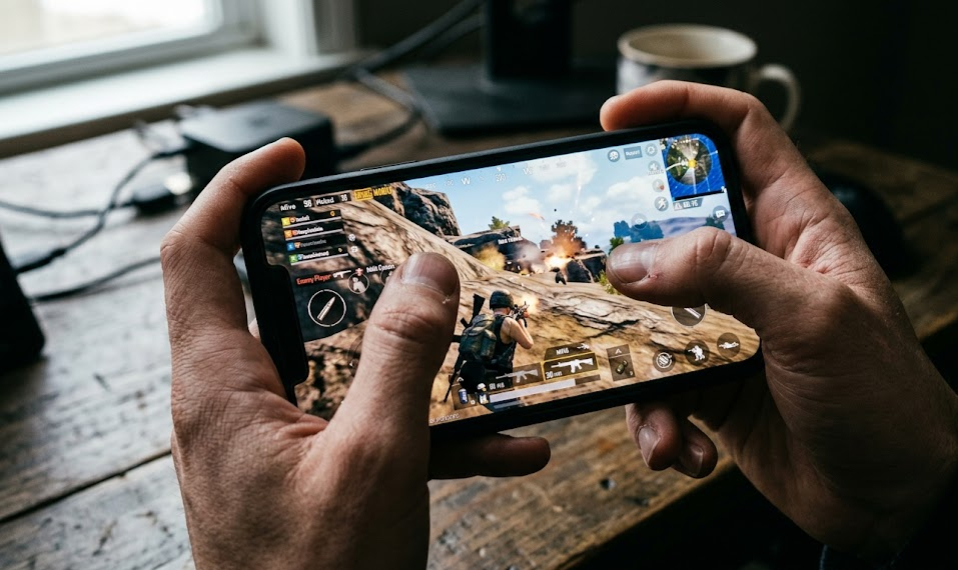
I’ll be honest — “gaming phone” has become one of the most meaningless phrases in the smartphone industry. Every brand sticks a game mode button in their software, calls the phone a gaming device, and calls it a day. Meanwhile, you’re dropping frames in CODM, your phone is throttling 20 minutes into PUBG, and your thumbs are sweating on a screen that can’t hold 90fps for more than a round.
I’ve been through enough of these phones to know the difference between a phone that’s marketed for gaming and a phone that actually survives a serious session — the kind where you’re in a finals circle, your connection is good, your aim is on point, and the last thing you need is your SoC hitting thermal limits.
This guide covers the phones that actually hold up. Some are expensive. Some aren’t. All of them pass the basic test: can you run CODM or PUBG Mobile at high settings, for 90+ minutes, without your frame rate turning into a slideshow?
If you want to compare these to how Samsung’s smooth performers stack up, that’s a good companion read. But for this one, we’re talking about gaming specifically — and that changes the priority list.
What Actually Matters for Mobile Gaming
Before I name phones, let me be clear about what I’m measuring against. Because there are people out there buying phones based on RAM numbers alone, and that’s not how this works.
The chip is everything. Not the clock speed. Not the core count. How the chip handles sustained load without thermal throttling. A Snapdragon 8 Elite at 20% performance after 30 minutes of Genshin Impact is worse than a Dimensity 9300 running at 85% for an hour. Sustained performance is what you should care about.
Thermal design. This is where budget gaming phones usually fall apart. The chip might be capable, but if the phone has no vapor chamber or a tiny graphite pad, it will throttle fast. Some phones ship with a clip-on cooler in the box — that’s a red flag, not a feature.
Display refresh rate and touch sampling rate. There’s a difference between a 120Hz display and a 120Hz display with a 240Hz touch sampling rate. The second one registers your inputs twice as fast. For CODM, PUBG, or anything where your shot needs to register the moment you tap — this matters more than most reviews acknowledge.
RAM and storage speed. 8GB RAM is functional but tight if you’re on a recent build of CODM or Genshin. 12GB is the better floor. Storage speed affects how fast textures load — on a slow UFS 2.2 drive, you’ll see pop-in on higher-detail maps.
Battery. Gaming drains batteries aggressively. A 5,000mAh phone running at 90fps high settings will last you roughly 90 minutes of active play. Plan accordingly.

1. ASUS ROG Phone 9 Pro — The Serious Option
If you’re treating mobile gaming as an actual hobby and not just something you do on the bus, this is the phone. The ROG Phone 9 Pro runs a Snapdragon 8 Elite, has a 165Hz AMOLED with a 300Hz touch sampling rate, a 5,800mAh battery, and an AeroActive Cooler 9 that clips onto the back and keeps temperatures down for extended sessions. ASUS also gives you physical air triggers — shoulder buttons that mount to the sides of the phone — which is a genuine competitive advantage in any shooter.
Is it overkill for casual CODM players? Yes. Is it the right answer for someone who plays two hours daily and is tired of excuses? Also yes.
The downsides are real: it’s thick, it runs a little warm even with the cooler, and the camera is only average. You’re buying this for performance, not for Instagram.
| Spec | Detail |
|---|---|
| Chipset | Snapdragon 8 Elite |
| Display | 6.78” AMOLED, 165Hz, 300Hz touch |
| RAM | 16GB / 24GB |
| Battery | 5,800mAh, 65W charging |
| Gaming Feature | AeroActive Cooler 9, Air Triggers |
| Price (approx.) | ~$1,099 |
2. Samsung Galaxy S25 — Best All-Rounder for Gamers
The Galaxy S25 isn’t marketed as a gaming phone. That’s actually why it’s interesting. It runs the Snapdragon 8 Elite (same chip as the ROG Phone 9), has 12GB RAM, a vapor chamber cooling system, and 120Hz display. What Samsung did differently this year is lean into sustained performance in One UI 7 — the thermal management actually lets the chip run long without throttling the way the S24 did.
For CODM and PUBG specifically, the S25 runs both at max settings without dropping below 90fps in a typical match. Genshin Impact is where it starts breathing a little heavier, but it holds 60fps on high settings for well over an hour.
The bigger reason this makes the list: it’s a normal phone. You can use it daily without people asking why you’re carrying a brick. The Galaxy S25 Ultra is the better performer on paper, but the size is harder to game with for most people — the S25’s 6.2-inch form factor is actually more comfortable for extended sessions.
3. Xiaomi 15 — The Dark Horse Pick
This one doesn’t get mentioned enough in English-language gaming phone discussions, probably because Xiaomi’s Western availability is patchy. But if you can get your hands on one — via import or a local distributor depending on your region — the Xiaomi 15 is one of the best gaming phones you can actually carry daily.
Snapdragon 8 Elite, 16GB RAM, 120Hz AMOLED, 5,400mAh battery with 90W charging, and HyperOS 2 which has genuinely gotten lighter and more optimized than MIUI ever was. The gaming mode actually works — it kills background processes aggressively, reserves CPU headroom for the game, and the phone’s cooling system is well-engineered for its size.
The camera module is legitimately excellent too, co-engineered with Leica. So unlike the ROG Phone, you’re not making a camera sacrifice here.
| Spec | Detail |
|---|---|
| Chipset | Snapdragon 8 Elite |
| Display | 6.36” AMOLED, 120Hz |
| RAM | 12GB / 16GB |
| Battery | 5,400mAh, 90W charging |
| Software | HyperOS 2 |
| Price (approx.) | ~$799 (import) |
4. Infinix GT 20 Pro — Best Budget Gaming Phone
Let’s come back down to earth for a second.
Not everyone is spending $800+ on a phone. And if you’re in that group but you still want to game seriously on mobile, the Infinix GT 20 Pro is probably the most honest answer available right now. It runs a Dimensity 8200 Ultimate, has a 6.78-inch 144Hz AMOLED, 12GB RAM, and a 5,000mAh battery. It also ships with a built-in shoulder trigger mechanism and RGB lighting on the back — which is either cool or embarrassing depending on who you ask.
For CODM and PUBG, this phone performs above what its price suggests. It doesn’t match a Snapdragon 8 Elite in raw benchmark numbers, but real-world gameplay on these titles — which are well-optimized and not as demanding as Genshin — is smooth. It does get warm on long sessions, but not hot enough to throttle in a single match.
If you’re on a tight budget and gaming is the main use case, this is the pick I’d actually recommend over the typical “get a mid-range Samsung” advice.
Full Comparison Table
| Phone | Chipset | Display | RAM | Battery | Best For | Price Range |
|---|---|---|---|---|---|---|
| ASUS ROG Phone 9 Pro | SD 8 Elite | 6.78” 165Hz AMOLED | 16/24GB | 5,800mAh | Hardcore gamers | ~$1,099 |
| Samsung Galaxy S25 | SD 8 Elite | 6.2” 120Hz AMOLED | 12GB | 4,000mAh | Daily use + gaming | ~$799 |
| Samsung Galaxy S25+ | SD 8 Elite | 6.7” 120Hz AMOLED | 12GB | 4,900mAh | Long sessions + daily | ~$999 |
| Xiaomi 15 | SD 8 Elite | 6.36” 120Hz AMOLED | 12/16GB | 5,400mAh | All-round + gaming | ~$799 |
| Infinix GT 20 Pro | Dimensity 8200 Ultimate | 6.78” 144Hz AMOLED | 12GB | 5,000mAh | Budget gaming | ~$250–$300 |
| OnePlus 13 | SD 8 Elite | 6.82” 120Hz LTPO | 12/16GB | 6,000mAh | Endurance gamers | ~$899 |
Which Games Should You Optimize For?
This matters more than most people think, because different titles have different demands.
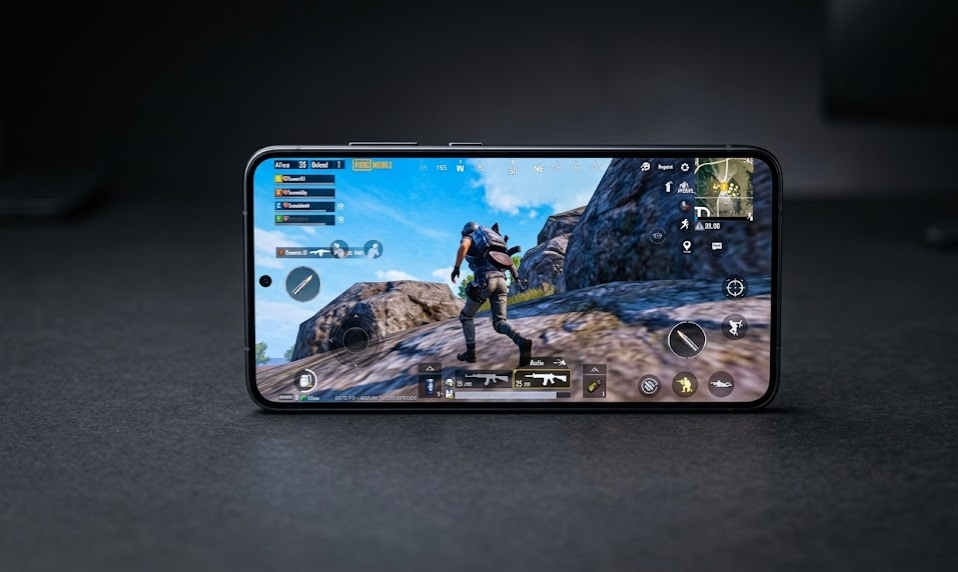
Call of Duty: Mobile — The most optimized mobile shooter on the market. Runs well even on mid-range hardware. The ceiling is 120fps on supported devices, and phones like the ROG Phone 9 Pro and S25 both hit it. If CODM is your primary game, you don’t need the most expensive hardware on this list.
PUBG Mobile — Slightly more demanding than CODM. The Unreal Engine base means larger maps and more objects being rendered. On highest graphics settings (Ultra HDR), you want a Snapdragon 8-series chip with proper thermal management.
Genshin Impact — The most demanding title on this list by a significant margin. Open world, live events, dense environments — it will stress any phone. Even the ROG Phone 9 Pro gets warm on extended Genshin sessions. If this is your main game, thermal management and the cooler accessory matter more than anything else.
Mobile Legends / Arena of Valor — Far lighter than the above. Even mid-range phones handle these at max settings. Don’t buy a $1,000 gaming phone for MLBB.
Phones Worth Skipping for Gaming
Not going to name every phone on the market, but a few specific ones come up repeatedly in gaming discussions and deserve a direct response:
Tecno Pova 6 Pro — The 144Hz display sounds great until you realize the Helio G99 underneath it starts throttling fast under sustained load. Good for casual use; not good for serious gaming sessions.
Samsung Galaxy A35 — It’s a solid mid-ranger for everything except gaming. The Exynos 1380 doesn’t have the sustained performance headroom for high-settings PUBG or Genshin, and the thermal management suffers for it.
Any phone with “gaming” in the name but a Helio G85 or G88 inside — These chips are fine for light tasks and basic gaming at lower settings. Marketing them as gaming phones is just aggressive branding.
FAQ
What’s the minimum RAM I need for mobile gaming in 2026? 8GB is technically playable for CODM and PUBG, but 12GB is the better baseline if you want background apps to survive and texture loading to feel fast. For Genshin Impact, 12GB is basically the floor.
Do gaming phones overheat? All phones heat up during gaming — that’s just physics. The difference is whether the phone throttles its performance when it gets hot. Good thermal design (vapor chambers, graphite sheets, active coolers) lets the chip keep running at sustained speeds rather than dropping performance to manage heat.
Is 120Hz enough for mobile gaming or do I need 144Hz / 165Hz? For most mobile games, 120Hz is excellent. CODM and PUBG Mobile both support up to 120fps on capable devices. 144Hz and 165Hz displays are more relevant for console-port games and future titles. Don’t choose a phone purely based on this number.
Can a budget phone play CODM competitively? Yes — with some conditions. CODM is well-optimized and runs on surprisingly modest hardware. A Dimensity 8200 or Snapdragon 7s Gen 3 phone can absolutely compete. Where budget phones struggle is extended sessions (thermal throttling) and frame consistency in complex scenes (GPU limits).
Does display size matter for gaming? Bigger isn’t always better. A 6.7-inch+ display gives you more screen real estate for map awareness, but it’s harder to reach controls on the edges. Most serious CODM players prefer something in the 6.4–6.7 inch range. Personal preference plays a big role here.
Should I buy a gaming phone or a flagship phone for gaming? For 95% of people reading this: a flagship phone. Gaming phones like the ROG Phone 9 Pro have niche advantages (air triggers, higher touch sampling, active coolers) that matter at a competitive level. For everything else, a Galaxy S25 or Xiaomi 15 is more versatile and nearly as capable.
Does fast charging damage battery health if I charge while gaming? It’s not ideal but it’s also not catastrophic. Most phones manage charging and gaming draw separately in hardware. That said, playing plugged in at 90W while gaming does generate more heat than just charging normally. If you care about long-term battery health, charge to 80% before a session rather than playing plugged in at full blast.
Final Take
You don’t need a dedicated gaming phone to game seriously on mobile. You need a phone with a capable chip, proper thermal management, and enough RAM to not swap your game out of memory every time you check a notification. Most flagship Android phones in 2026 clear that bar.
Where it gets interesting is the edge cases — extreme endurance sessions, competitive play where every frame counts, or a tight budget where you need to squeeze maximum gaming performance per dollar. That’s where the tier list above actually matters.
For most people: Galaxy S25 or Xiaomi 15. For serious gamers who want every edge: ROG Phone 9 Pro. For the budget-conscious: Infinix GT 20 Pro, and don’t let anyone make you feel bad about it.
Pick the phone that fits your actual life — and then go win some matches.