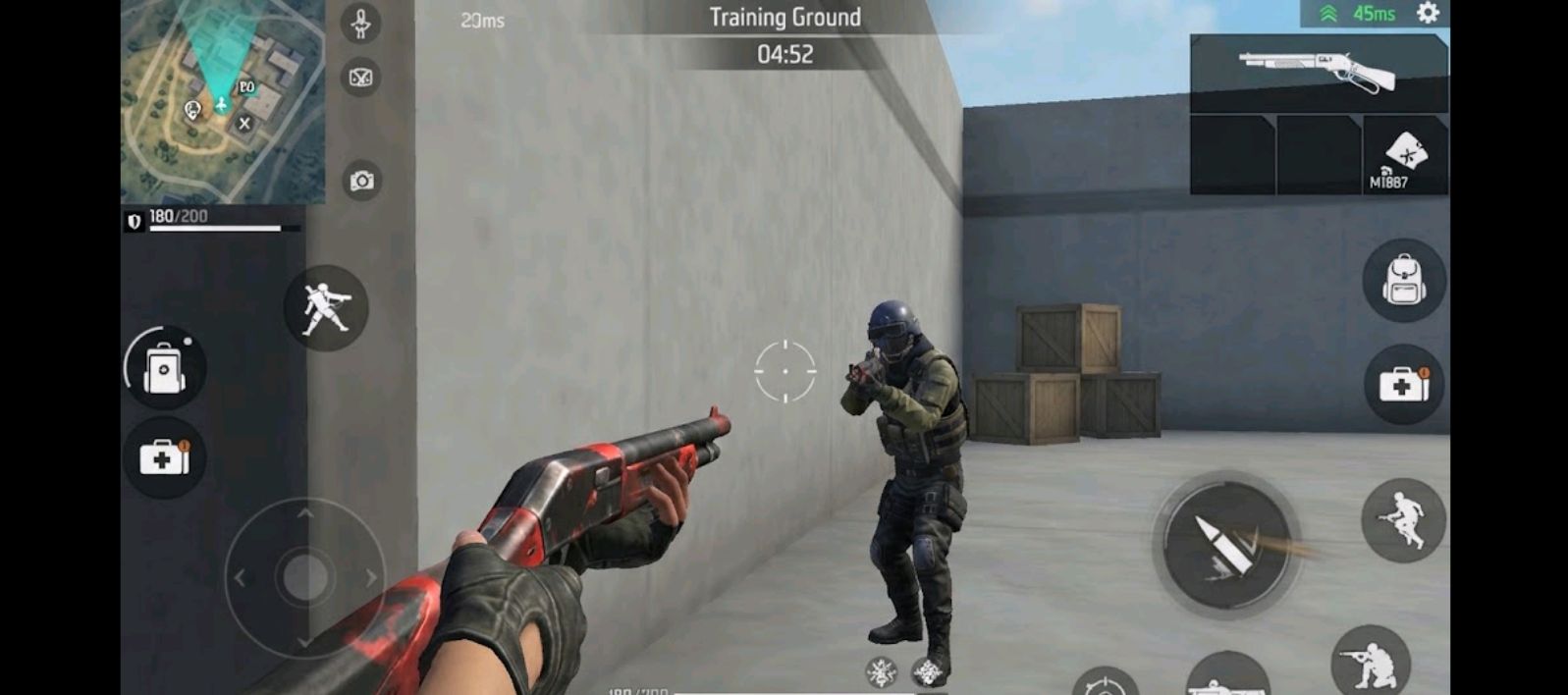
When headshots aren’t landing, it’s easy to blame the phone, the network, or the lobby. But crosshair placement, sensitivity, and firing technique can have a bigger effect on consistency than any of those.
Headshots in Free Fire come from three things working together: where your crosshair rests before the fight, how your hand moves once it starts, and whether your settings fit your device. Fix those in order and the results follow.
Start With Crosshair Placement
Before you worry about drag shots, look at where your crosshair sits while you run and rotate. Keep it roughly at head height, even when you’re not in a fight. When an enemy appears around a corner, your aim then has a few degrees to travel, not a whole screen.
Two habits help here:
- Aim at the top edge of doors and windows, not the middle. Heads show up there first.
- Slow down for a half second before peeking. Moving while shooting can make it harder to keep your crosshair on the target, especially during precise head-level adjustments.
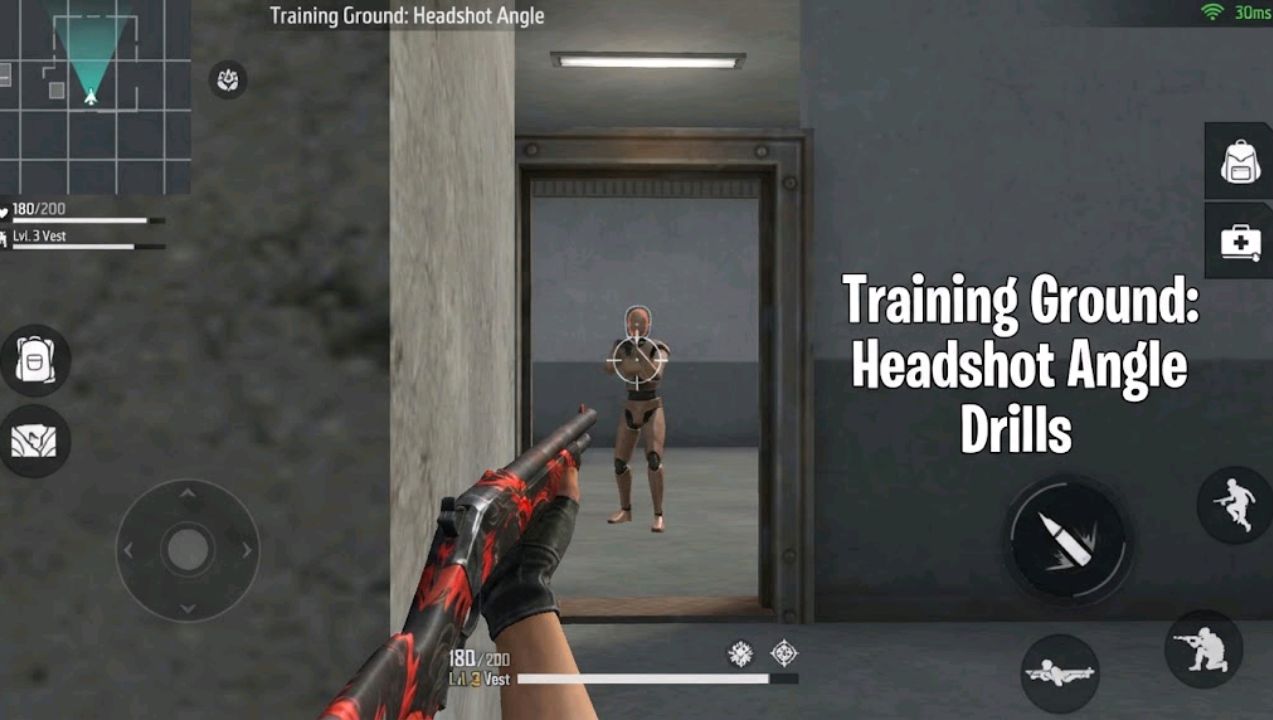
Sensitivity: Use a Starting Point, Then Adjust
There is no single sensitivity that works for everyone. Screen size, refresh rate, and finger speed all change what feels right.
Sensitivity starting points: These ranges are starting points, not official Garena recommendations. Your ideal values depend on your device, touch response, screen size, and play style.
| Setting | Starting range | What to watch for |
|---|---|---|
| General | 85–100 | Too high and your crosshair overshoots the head on quick flicks |
| Red Dot | 80–95 | Should feel steady at mid range, not twitchy |
| 2x Scope | 75–90 | Lower it if you keep missing just above or below the head |
| 4x Scope | 70–85 | Slower is better for tracking |
| AWM Scope | 50–70 | Precision matters more than speed here |
Test in the training ground, not in ranked. Put a dummy at medium range, flick onto it, and check whether the crosshair stops on the head or slides past. If it slides past, lower the value by five and try again.
Understanding Drag Headshots
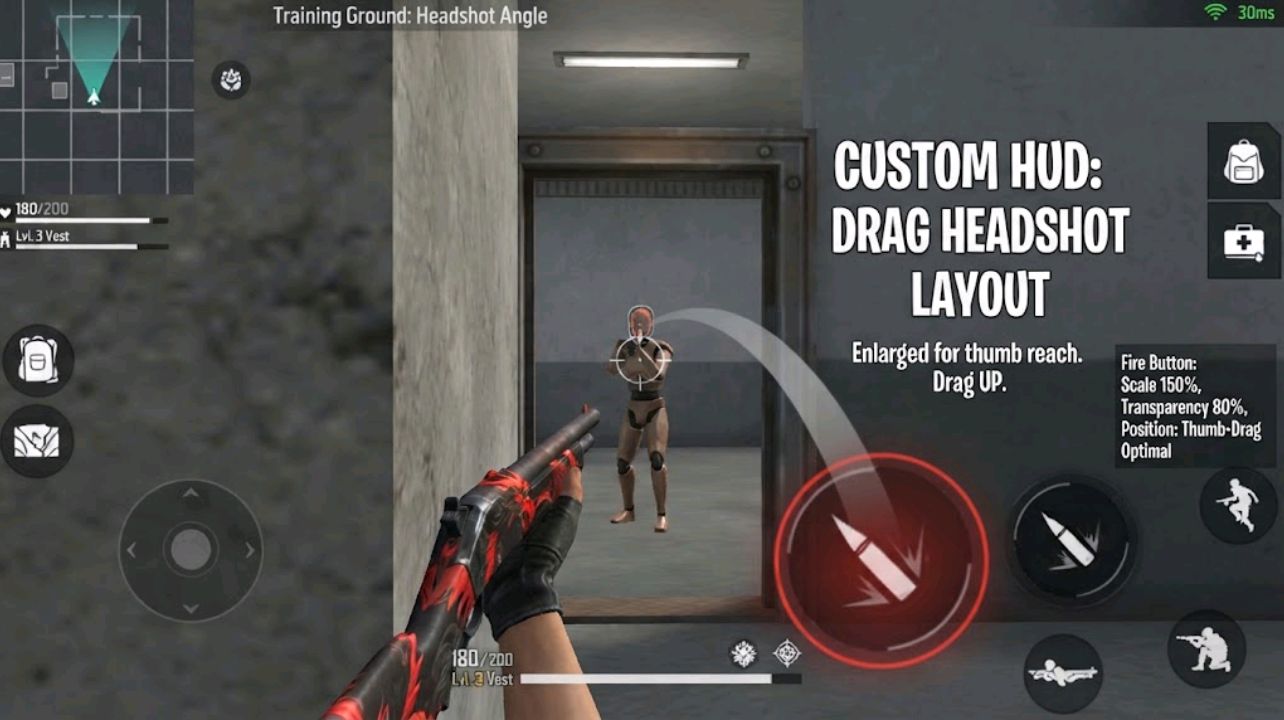
A drag headshot means pressing the fire button and sliding your thumb upward so the crosshair travels from the body to the head as the first shots fire. It works because your aim starts near the chest, where it is easy to land, and finishes on the head.
The common mistakes are dragging too far and dragging too fast. If your crosshair ends up above the head, shorten the motion. If it stops at the neck, extend it slightly. Practice the same distance repeatedly until your thumb remembers it.
Your HUD layout matters just as much. A fire button that is too small or too far from where your thumb rests will cost you accuracy. Resize it and move it until the drag feels natural, then leave it alone for a few weeks so your muscle memory can settle. If you’re coming off a recent patch, our guide on what changed in Free Fire in 2026 covers control and weapon changes worth knowing before you adjust anything.
Weapons That Reward Head Aim
Weapon behavior varies a lot between guns, and it shifts with balance updates. Shotguns can be effective at very close range, while SMGs are generally easier to control during close- to mid-range fights. Rifles and snipers ask for a steadier line at distance. The table below covers the headshot technique that fits each type.
| Weapon type | Typical range | Headshot approach |
|---|---|---|
| Shotguns | Very close | Keep the crosshair at upper-body height and make small corrections upward |
| SMGs | Close to mid | Short bursts with a small upward drag |
| Assault rifles | Mid | Controlled bursts, keep the crosshair at head level between bursts |
| Snipers and marksman rifles | Long | Patience; wait for the target to stop or strafe predictably |
Pick one primary weapon and stay with it for a while. Sticking with one primary weapon for a while gives you more time to learn its recoil and firing behavior.
Movement Makes Your Aim Better
A common mistake is treating aiming and movement as separate skills. Good players shoot while strafing, since a target that moves unpredictably is harder to hit and harder to be hit by. Learning to peek, shoot, and reposition builds the same reflexes that make headshots feel automatic. Our Free Fire movement guide breaks down the techniques worth practicing alongside your aim drills.
A Simple Weekly Practice Routine
You don’t need hours. Fifteen focused minutes beat an hour of random matches.
- Five minutes in the training ground flicking onto dummies at three distances.
- Five minutes practicing drag shots only, with no worry about winning.
- One or two Clash Squad rounds, where fights are short and repeatable.
Write down which setting you changed, so you know what helped.
FAQ
Does a higher sensitivity give more headshots? Not by itself. Higher sensitivity makes the crosshair move faster, which helps with quick turns but can make small corrections harder. If you keep overshooting the head, lowering a value slightly is worth trying.
Can I get headshots without a drag shot? Yes. Holding your crosshair at head height and tapping or bursting works well, especially with assault rifles and sniper rifles. Drag shots are one technique among several.
Why do my shots go over the enemy’s head? Usually the drag is too long, or the sensitivity for that scope is too high. Shorten the motion first, then lower the scope’s value in small steps.
Does my phone affect aim? It can. A low frame rate makes the crosshair feel delayed, and a small screen limits how far your thumb can travel comfortably. Closing background apps and setting graphics to a level your phone holds steadily helps more than raw specs.
Is there a best weapon for headshots? No single answer. It depends on range, your hand speed, and the current balance of the game. Shotguns can be effective at very close range, SMGs are generally easier to control in close- to mid-range fights, and rifles and snipers ask for patience at distance.
How long until my aim improves? Consistent short practice sessions should make it easier to identify which movements and settings work for you.
Related Posts
- Free Fire 2026 Updates: What Has Changed: a rundown of recent changes that may affect your settings and weapon choices.
- Free Fire Movement Guide: techniques for moving and shooting at the same time.

Comments 0
Leave a comment