Table of Contents
Open Table of Contents
Overview
Possession football in eFootball has never been about hoarding the ball for the sake of it. It’s about starving your opponent of chances while you pick your moment. With the eFootball 2027 v6 update bringing Fluid Formation, tighter defensive marking, and dribbling adjustments to the game, some of the formations that worked in 2026 need tweaking, and a few new ones have opened up.
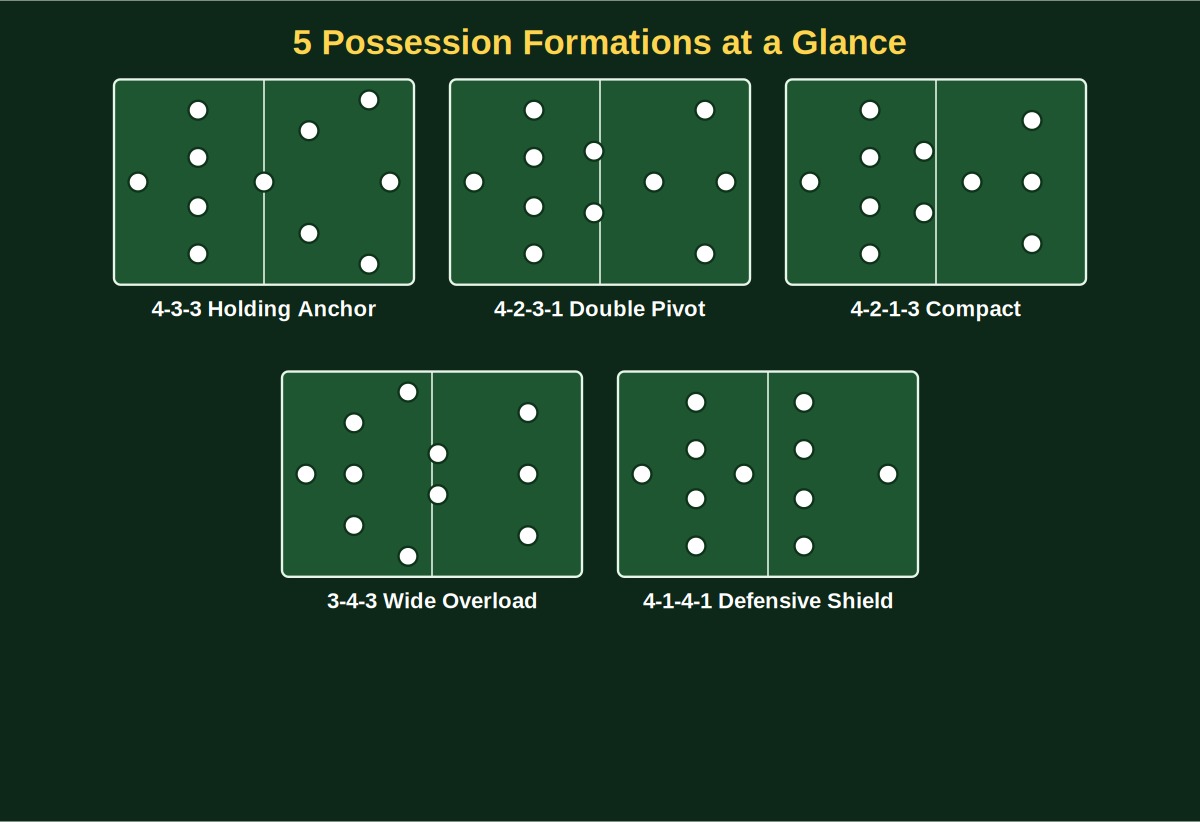
Below are five formations worth testing if your goal is control rather than chaos — with the actual setup instructions, not just the shape.
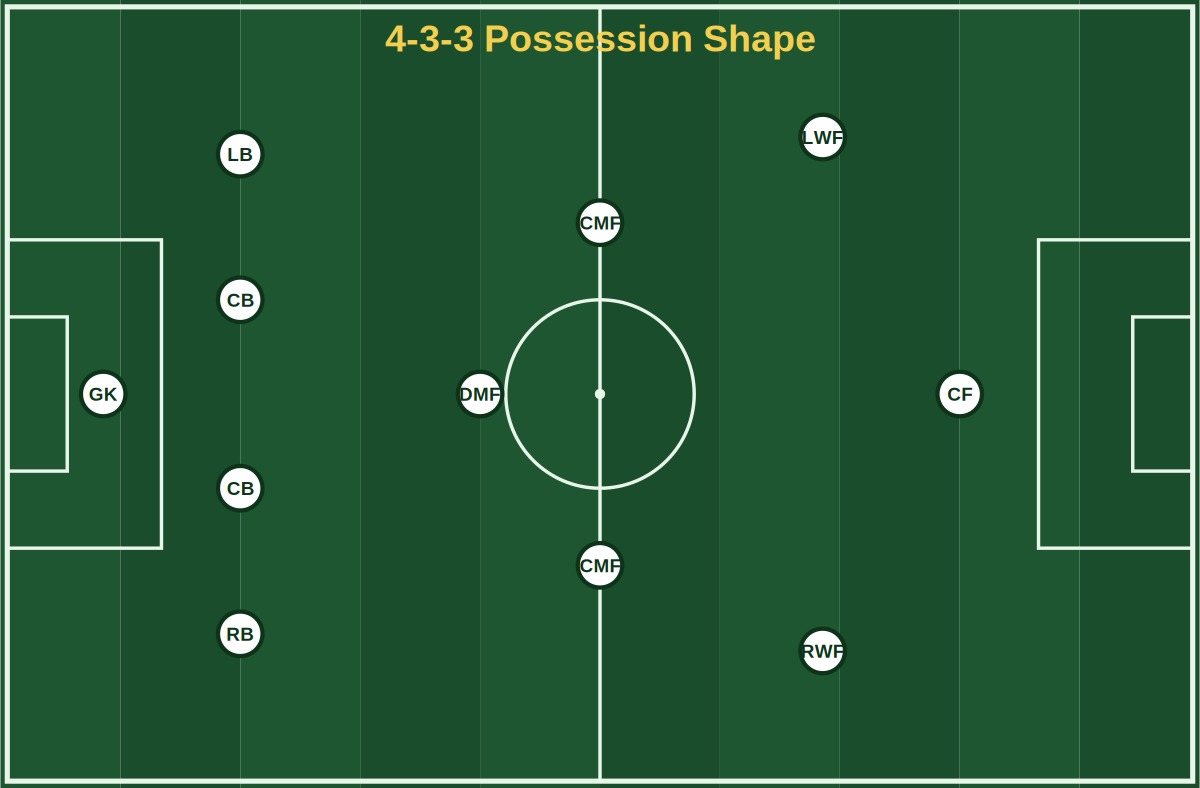
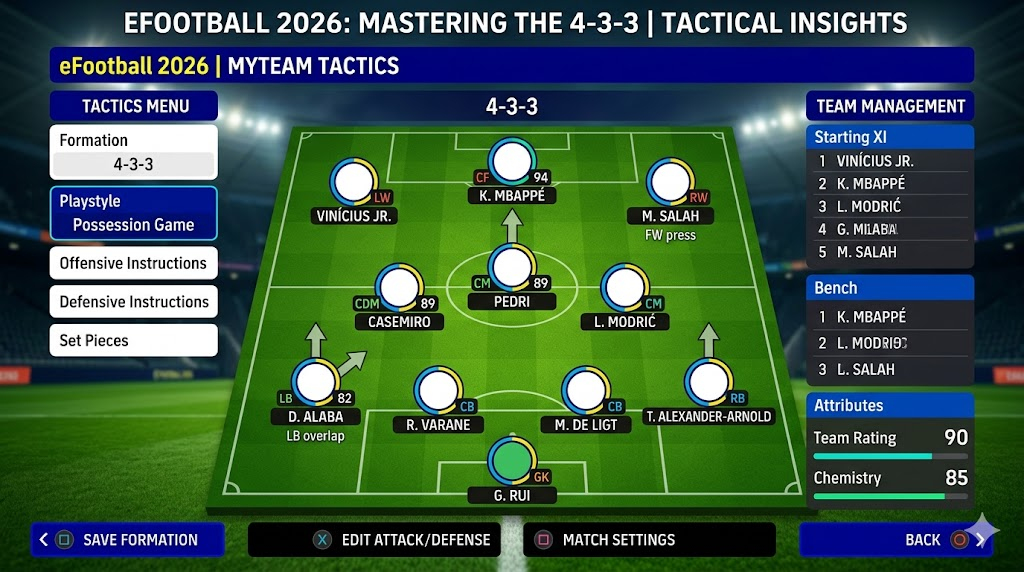
1. 4-3-3 (Holding Anchor)
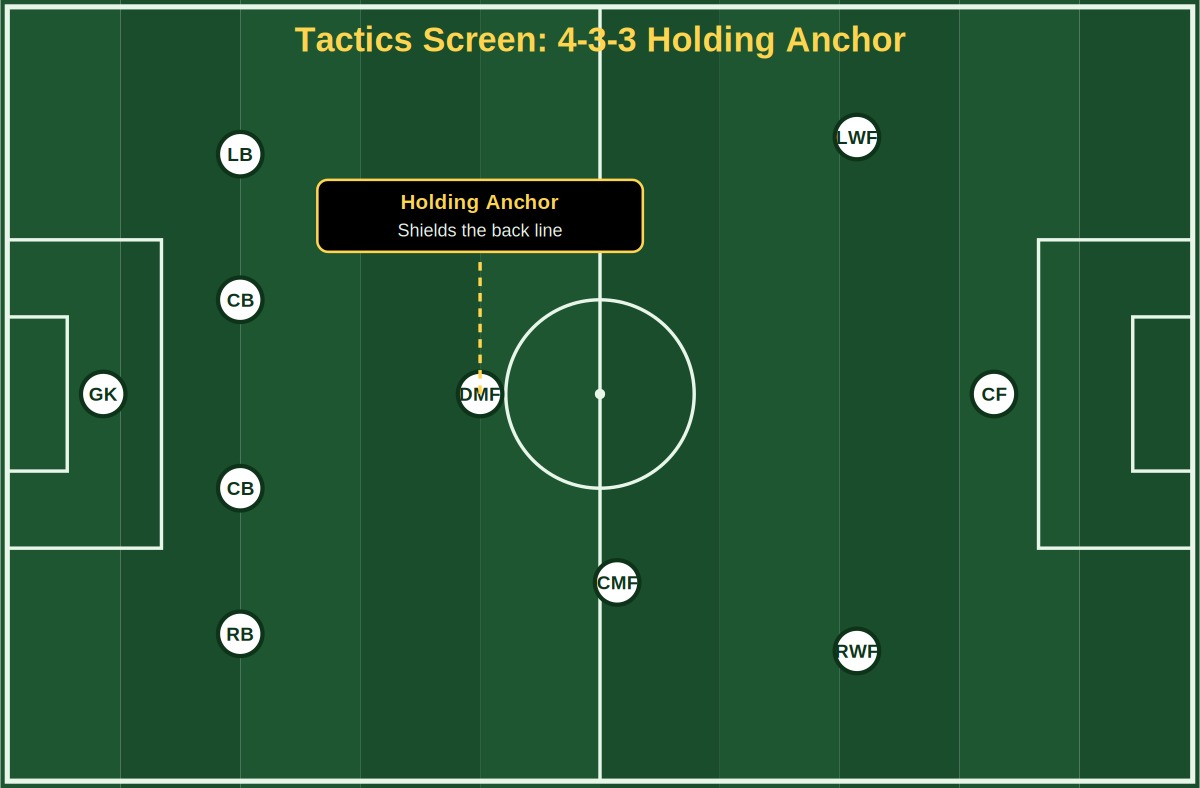
This is still the backbone of most possession setups, and if you’ve already read our 4-3-3 formation guide, the shape itself hasn’t changed much — what has changed is how much you now rely on the holding midfielder to actually shield the back line rather than join every attack.
Midfield configuration: A single DMF sitting just in front of the back four, with two box-to-box CMFs either side of them rather than stacked behind. The DMF should almost never push past the halfway line — their job is to be the first out-ball and the first line of cover if possession breaks down.
Player styles: Anchor Man or Orchestrator for the DMF, Box-to-Box for the CMFs, Prolific Winger or Roaming Flank for the wide forwards, and a Fox in the Box or Target Man at CF depending on whether you want the striker combining short or holding the ball up.
DMF positioning: Stays central and deep, drops between the center-backs during build-up if you’re facing a high press, and rarely commits to tackles high up the pitch.
CMF movement: One CMF favors the half-space to link with the winger and overlapping fullback on that side, the other stays slightly deeper to keep a passing lane open back to the DMF. They shouldn’t both push forward at once.
CF role: A CF who drops into midfield to receive to feet works better here than a pure penalty-box striker, since it gives you an extra passing option through the middle and drags a center-back out of position.
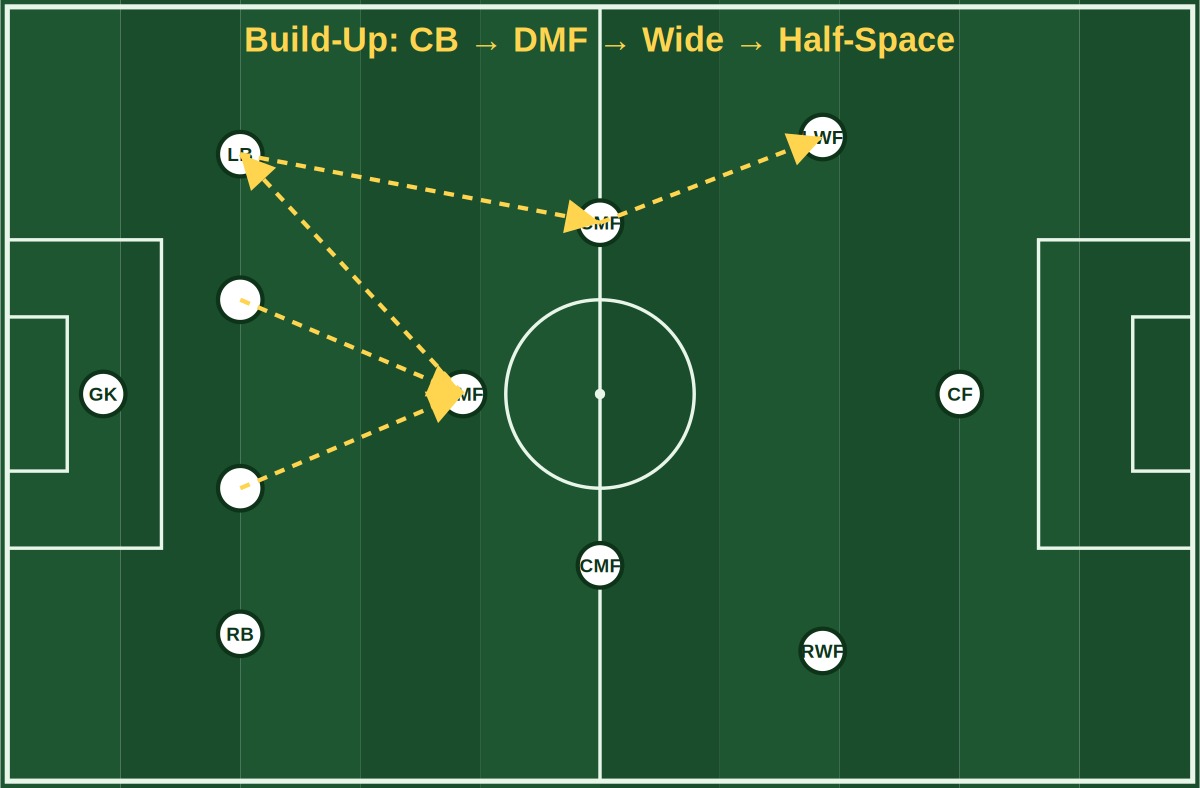
Progressing the ball: Build through the CBs into the DMF, out wide to the fullbacks, then into the half-spaces where the CMFs and wide forwards combine. Avoid long diagonals early — the shape is built for short combinations, not direct play.
Losing possession: The DMF and both CBs form an immediate triangle to slow the counter, while the CMF closest to the ball presses to win it back or force a backward pass.
Main weakness: If the DMF gets dragged out of position or dribbled past, there’s a direct lane to the back four.
Who should use it: Players who want a possession base that can still transition into direct attacks quickly — the most balanced option on this list.
2. 4-2-3-1 (Double Pivot Control)
Two defensive midfielders sitting side by side gives you a passing outlet under pressure that a single pivot can’t match.
Midfield configuration: A flat double pivot in front of the back four, with the AMF playing between the opponent’s midfield and defensive lines.
Player styles: Anchor Man and Destroyer for the pivot pairing (one shields, one wins the ball), Creative Playmaker or Hole Player for the AMF.
DMF positioning: Both pivots stay roughly level with each other and rarely both step forward together — if one presses, the other holds the space behind them.
Pivot movement: The two pivots should rotate responsibility during build-up. If one moves toward the ball or steps forward, the other stays behind to protect the center.
CF role: The lone striker needs to be comfortable holding up play with their back to goal, since they’re often the release point before the AMF or wide players join in.
Progressing the ball: Circulate through the double pivot to draw the opponent’s press out of shape, then thread the ball into the AMF, who becomes the release valve into the final third.
Losing possession: The double pivot is the whole point here — losing the ball in midfield still leaves two players screening the back four, which is what makes this shape so hard to counter against.
Main weakness: Can be passive if both pivots sit too deep and the AMF gets isolated between the lines.
Who should use it: Players who want to control tempo against opponents who commit numbers forward early, without sacrificing defensive stability.
3. 4-2-1-3 (Compact Possession)
Covered in more depth in our 4-2-1-3 formation guide, this setup narrows the pitch and forces short combination play through the middle third before releasing wide forwards late.
Midfield configuration: A double pivot behind a single AMF, with three forwards ahead who tuck narrow rather than hug the touchline.
Player styles: Orchestrator or Destroyer for the pivot pair, Hole Player for the AMF, and Prolific Winger for the wide forwards so they can cut inside and combine rather than just cross.
DMF positioning: Both pivots stay compact and central, deliberately narrowing the pitch to force play through congested areas where your technical advantage matters most.
AMF movement: The AMF is the key mover here, constantly shifting between the opponent’s midfield lines to find pockets of space rather than holding a fixed spot.
CF role: A CF comfortable combining in tight areas — this isn’t a target man system, it’s a give-and-go system.
Progressing the ball: Short combinations through the pivot and AMF first, with the wide forwards staying narrow until late in the move, then releasing them into space only once the opponent’s defensive shape has been stretched.
Losing possession: Because the whole team is compact, the counter-press is immediate — everyone is already close enough to the ball to close it down.
Main weakness: Width comes late, so against a deep low block you can run out of ideas if the wide forwards don’t time their runs well.
Who should use it: Players who want maximum control over tempo and are comfortable being patient rather than forcing the issue.
4. 3-4-3 (Wide Overload Possession)
A more aggressive possession shape, built around the overload principles we broke down in our overload formations piece.
Midfield configuration: A flat four across midfield with two wingbacks providing the width, freeing the front three to stay narrow and combine centrally.
Player styles: Box-to-Box or Orchestrator for the central pair, Prolific Winger or Roaming Flank for the wingbacks, and a front three built around combination play rather than pure pace.
DMF positioning: No true DMF in this shape — the two central midfielders share defensive responsibility, with whichever one is on the ball-far side tucking in to cover.
CMF movement: Both central midfielders shuttle to support the wingback in possession and to double up centrally when defending, since the back three needs cover if a wingback is caught upfield.
CF role: The central forward should be comfortable dropping toward midfield to combine, while the two wide forwards stay higher and stretch the defensive line.
Progressing the ball: Wingbacks provide the width so the front three can stay narrow and combine through the middle, drawing defenders in before switching play to isolate a wingback one-on-one.
Losing possession: This is the shape’s biggest risk — if a wingback is caught high, the back three is exposed to a direct counter, so both central midfielders need to recover immediately.
Main weakness: Vulnerable on the counter if your wingbacks lack the stamina or discipline to track back.
Who should use it: Players who want aggressive width, overloads out wide, and multiple forward options rather than pure central control — this is the least conservative shape on the list, not the most tempo-controlled one.
5. 4-1-4-1 (Defensive Possession Shield)
The most conservative option on this list, and functionally a different flavor of possession football to the other four — this is a defensive-possession variant, where the objective is to retain the ball and reduce transition risk rather than dominate the opponent’s half.
Midfield configuration: A lone DMF screens the defense while a flat four across midfield rotates possession patiently in front of them.
Player styles: Anchor Man for the DMF, Orchestrator types across the midfield four to prioritize retention over creativity.
DMF positioning: Stays central and deep at all times — this is the one shape on the list where the DMF should almost never join an attack.
CMF movement: The midfield four shift side to side as a block to keep possession, rather than making forward runs into the box.
CF role: A lone striker who can hold the ball up and buy time for the midfield to advance in support, rather than one who needs service in behind.
Progressing the ball: Deliberately slow and lateral — the priority is not losing the ball, not breaking lines quickly.
Losing possession: The DMF and midfield four collapse into a compact block immediately, making the team very hard to counter against even if the ball is lost high up the pitch.
Main weakness: Low goal threat if used as an everyday formation rather than a situational tool.
Who should use it: Players who want to protect a lead or grind out low-event matches by minimizing transition risk, not players chasing highlight-reel goals.
Formation Comparison
| Formation | Build-Up Style | Best For | Key Player Type Needed |
|---|---|---|---|
| 4-3-3 | Balanced wide/central | All-round possession | Holding midfielder with high defensive awareness |
| 4-2-3-1 | Central, patient | Breaking mid-block defenses | Creative AMF |
| 4-2-1-3 | Narrow, combination-heavy | Controlling tempo | Double pivot with strong passing and defensive awareness |
| 3-4-3 | Wide overloads | Attacking possession | Stamina-heavy wingbacks |
| 4-1-4-1 | Conservative, low-risk | Protecting a lead | Disciplined lone pivot |
Which One Should You Actually Use?
If you’re newer to possession play, start with the 4-3-3 or 4-2-3-1 — both are forgiving and don’t demand perfect player instructions to function. Once you’re comfortable reading pressing triggers, the 4-2-1-3 offers tighter central combinations, while the 3-4-3 gives you more aggressive width and overload options. The 4-1-4-1 is a situational tool rather than an everyday formation.
FAQ
Which formation is best for possession in eFootball 2027? There’s no single “best” formation — it depends on your midfield players. The 4-3-3 and 4-2-3-1 are the most balanced starting points for most teams.
Do I need high individual stats to run a possession formation? Not necessarily elite stats, but consistent ones matter. Passing, ball control, tight possession, and players with a low centre of gravity can make possession play noticeably smoother.
Is 3-4-3 too risky for possession football? It can be if your wingbacks lack stamina, since gaps open up on the counter. Pair it with defensively aware central midfielders to compensate.
Can I switch formations mid-match to protect possession? Yes — switching to a more conservative shape like the 4-1-4-1 in the closing minutes is a common way to run the clock down without inviting pressure.
How does the eFootball 2027 v6 update affect possession play? Fluid Formation, tighter defensive marking, and dribbling/turning adjustments from the v6 update change how forgiving certain formations are under pressure — see our full breakdown of the changes for specifics.



Comments 0
Leave a comment