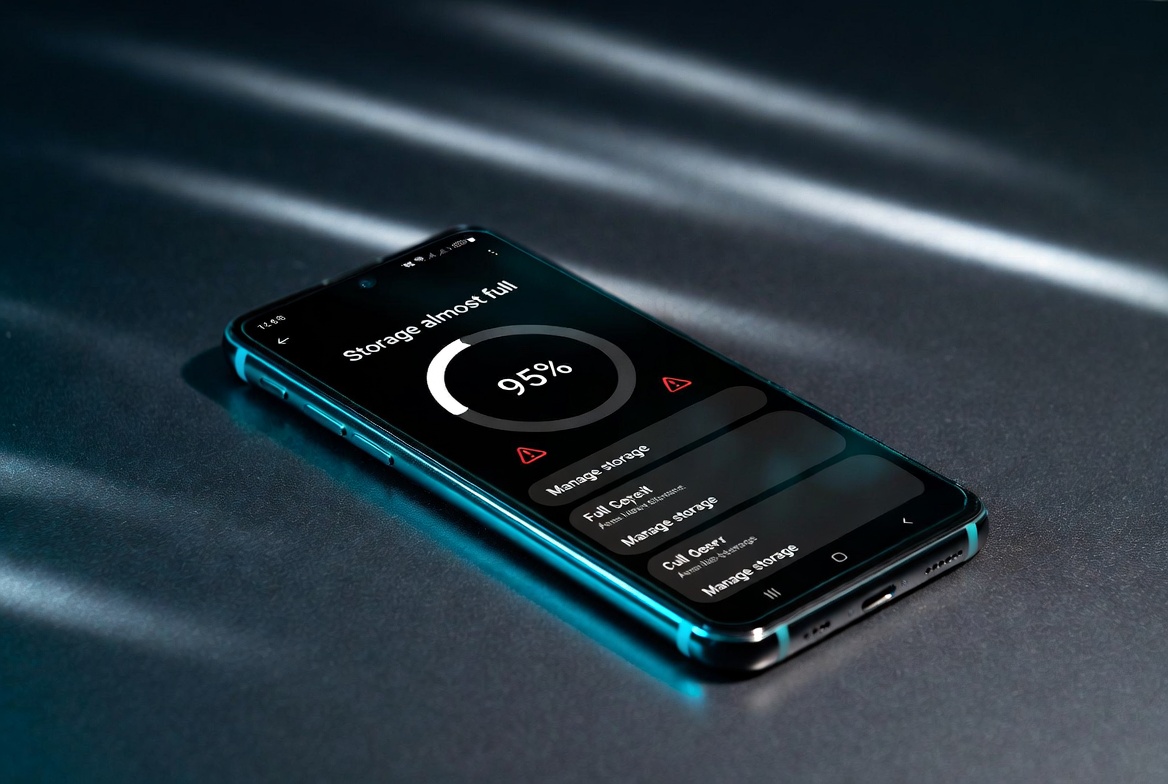
There’s a specific frustration that mid-range phone buyers know well. You unbox a new device, set it up, install your usual apps, move over your photos — and before six months have passed, you’re staring at a storage warning. Not because you did anything wrong. Not because you’re careless with your files. Just because 128GB in 2026 doesn’t go as far as it did in 2022.
The math has quietly shifted. Apps are heavier. Android itself takes more space than it used to. Cameras now shoot in formats that were rare three years ago. And if you play any mobile game with serious graphics, you already know the feeling of a 2GB update notification landing on a phone with 4GB free.
This isn’t just about people who do too much on their phones. It’s about what a normal, moderate phone user actually needs — and that number has crossed a threshold.
The Hidden Storage Tax
Before we talk numbers, let’s be honest about where the storage goes. Because the usual advice — “delete your old photos, clear your cache” — misses the structural problem.
The operating system is hungrier than it used to be. Android 15 and manufacturer skins like HyperOS, ColorOS, and One UI don’t just sit in 8GB and leave the rest for you. Between the OS partition, system apps you can’t uninstall, pre-loaded services, and the recovery partition, a 128GB phone often ships with closer to 105–110GB of usable space before you’ve installed a single thing. That’s a 15–18% haircut right out of the box.
App sizes have ballooned. This one is harder to argue against because it’s so visible. WhatsApp crossed 200MB years ago and keeps growing with every feature add. Google Maps, if you have any offline regions saved, can comfortably sit above 2GB on its own. Instagram, YouTube, and Chrome each run well north of 500MB before you account for their internal caches. This isn’t new — Google’s own engineering team documented that app sizes on the Play Store have grown steadily since Android’s early years, and that trend has only accelerated with richer media, AI features, and larger asset bundles baked into each update. Install ten social and utility apps and you’ve likely burned 5–8GB before you even open them.
Mobile gaming is the real accelerant. Call of Duty Mobile, PUBG, Free Fire — these aren’t small files anymore. COD Mobile alone regularly crosses 4GB of base install, and after a few seasonal content updates, you’re looking at 6–7GB for a single game. If gaming is part of your phone use at all, 128GB becomes a serious constraint fast. We’ve written about how much RAM you actually need for mobile gaming — but storage is arguably the less-discussed half of the same problem.
Camera output has grown silently. This is the one most people don’t account for when buying. Modern mid-range cameras — even on phones in the ₦150k–₦250k range — now shoot at higher resolutions with formats like HEIF and Apple’s ProRAW equivalent. A single 50MP shot in high quality can run 8–12MB. Take 100 photos on a weekend trip and you’ve used over 1GB without a single video. Shoot any short clips in 4K and you’re burning through storage at a rate that would’ve seemed extreme five years ago.
The 128GB Ceiling: A Realistic Breakdown
Here’s what a typical user setup actually looks like on a 128GB device after the first few months of normal use.
| Category | Estimated Storage Used |
|---|---|
| OS + system apps (Android skin) | 18–22GB |
| Social media apps (WhatsApp, Instagram, TikTok, X) | 4–6GB |
| Google apps + services | 3–5GB |
| One gaming title (COD Mobile, PUBG, or similar) | 5–8GB |
| Offline maps (Google Maps with 2 regions) | 2–3GB |
| Music streaming app with downloads | 2–4GB |
| Camera photos & videos (6 months) | 15–25GB |
| App caches, temp files, downloads | 8–12GB |
| Total (conservative estimate) | 57–85GB |
| Total (moderate user, 6 months in) | 85–105GB |
That last row is the uncomfortable one. A moderate phone user — not a content creator, not a power user, just someone who uses their phone normally — can realistically exhaust a 128GB device within six months to a year. And once you cross 80% capacity, Android’s performance starts to suffer. We’ve covered this in depth in why your phone starts lagging — but the short version is that the OS needs headroom for temp writes, cache, and virtual memory. Fill that up and you’re throttling yourself.
Here’s what that actually looks like visually for a moderate user at the 6-month mark:
What fills a 128GB phone (moderate user, ~6 months)
────────────────────────────────────────────────────
OS + skins         ████████████████░░░░  18GB
Social apps        ████████░░░░░░░░░░░░   5GB
Google services    ██████░░░░░░░░░░░░░░   4GB
One game (COD)     ████████████░░░░░░░░   7GB
Offline maps       ████░░░░░░░░░░░░░░░░   2GB
Music downloads    █████░░░░░░░░░░░░░░░   3GB
Photos & videos    ████████████████████  20GB
Cache + downloads  █████████████░░░░░░░  10GB
────────────────────────────────────────────────────
Total used:        ~69GB  ████████████████████░░░░░  (67%)
Practical ceiling: ~85GB before performance degrades
Headroom left:     ~21GB  ██░░░░░░░░░░░░░░░░░░░░░░
Why Manufacturers Still Ship 128GB as the Base
The honest answer is margin preservation. A phone with 256GB of storage costs more to manufacture — typically $8–15 more in component cost at scale — and at competitive price points, that difference matters to OEMs.
The second reason is perception. When a budget phone is listed at 128GB, it sounds generous to buyers comparing it to devices from four years ago. The spec sheet wins the sale even when the lived experience doesn’t hold up.
Some manufacturers have started to respond. Samsung’s Galaxy A-series now ships 256GB as the default on several mid-tier models. Xiaomi’s Redmi Note lineup increasingly offers 256GB variants without jumping to flagship prices. But the pattern isn’t universal, and in markets where cost sensitivity is high — including Nigeria, Ghana, Kenya, and most of West Africa — the 128GB option still dominates retail shelves because it’s the cheaper ask at point of sale.
This is worth knowing before you buy. Choosing 128GB today to save ₦10,000–₦20,000 often means upgrading sooner, or living with constant storage management. The 256GB version of the same phone is almost always the better long-term value.
256GB vs. 128GB vs. 512GB: Where You Actually Land
| Storage Tier | Best For | Reality Check |
|---|---|---|
| 64GB | Basic calls, SMS, minimal apps | Effectively obsolete for Android in 2026 |
| 128GB | Light users, cloud-first lifestyles | Viable but tight; requires regular cleanup |
| 256GB | Most users, including moderate gamers | Comfortable buffer for 2–3 years of normal use |
| 512GB | Content creators, heavy gamers, power users | Future-proof, but expensive and rarely necessary for typical use |
| 1TB | Professionals, videographers | Niche; rarely available outside flagship territory |
256GB hits the sweet spot because it’s where you can actually stop thinking about storage. You’re not managing your phone — you’re just using it. That cognitive load of “do I have space for this?” disappears, and the phone stops being something you need to actively maintain just to function normally.
The Cloud Isn’t a Real Substitute
This argument comes up every time storage limitations are raised: “just use the cloud.” It’s worth taking seriously — and then rejecting it for most people’s actual situations.
Cloud storage works well as a backup layer. It works terribly as a primary storage strategy in contexts where data is expensive, connections are inconsistent, or you need your content to be available offline. Google Photos compresses your images unless you pay for a storage plan. Automatic backups chew through data allowances. And in Nigerian and other African markets where most users are on mobile data plans — not unlimited Wi-Fi — the calculus is different from someone with fast home broadband streaming everything from the cloud without thinking about it.
Local storage isn’t a legacy preference. For most phone users in these markets, it’s still the practical reality. A phone that requires cloud reliance to stay functional is an incomplete product for that audience.
What This Means When You’re Buying
If you’re choosing between a 128GB and 256GB variant of the same phone — and the price gap is within ₦15,000–₦25,000 — take the 256GB. Every time. The performance headroom alone is worth it, before you even consider the actual space.
If you’re comparing phones across brands and only one offers 256GB at your budget, that storage difference should weigh heavily. Check out our best 5G budget phones under ₦250k for a breakdown of what’s available at different price points in the Nigerian market, with storage tiers factored in.
And if you’re already on a 128GB device struggling with space — the Android performance guide has practical steps to recover headroom, the weird Android behaviors explained post covers storage quirks that look like bugs but aren’t, and best apps for Android in 2026 is worth scanning if you want lighter alternatives to your heaviest installs.
But the actual fix, if you can make it, is getting a phone that gives you the space to stop worrying about this at all.
FAQ
Is 128GB still enough for a new phone in 2026? It depends on your habits, but for most users — especially those who game, shoot video, or use their phones heavily — 128GB is tight by 2026 standards. The OS alone consumes 15–20GB, and normal app usage fills the rest faster than most buyers expect. If you’re buying a device you plan to use for two or more years, 256GB is the safer choice.
Why does my 128GB phone show only around 105GB available out of the box? The gap between advertised storage and usable storage comes from the OS partition, system apps, recovery partitions, and manufacturer pre-installs. Android skins like MIUI, ColorOS, and One UI are particularly large. This isn’t unique to any one brand — it’s how Android storage is structured. Expect to lose 13–20% of advertised capacity before you install anything.
Does more storage actually make a phone faster? Not directly — storage capacity doesn’t speed up the processor or add RAM. But it affects performance indirectly. Android needs free space for temp writes, virtual memory, and cache operations. When storage exceeds roughly 80% capacity, the OS starts throttling I/O operations, which causes the lag and stutter that feels like a slow phone. More available storage means the system can operate normally without hitting that ceiling.
Will a microSD card solve the storage problem? Partially. A microSD card works well for offloading photos, videos, and music. It does not help with app installs — most Android apps cannot be moved to SD storage since Android 6+, and games in particular must remain on internal storage. So a 128GB phone with a 256GB SD card still has only 128GB of usable app space. The SD card extends your media capacity but doesn’t fix the app and OS storage crunch.
At what point does 512GB actually make sense? If you’re a content creator storing unedited video footage on your phone, a serious mobile gamer with a large game library, or someone who travels frequently and needs extensive offline maps and downloaded media without cloud reliance — 512GB makes real sense. For most regular users, 256GB is enough headroom for three or more years of normal use.
Why do budget phones still come with 64GB in 2026? Cost. The 64GB NAND flash used in budget devices is significantly cheaper per unit than 128GB or 256GB. At sub-₦100k price points, manufacturers are making hardware decisions that hit margin targets. The result is a phone that’s functionally constrained almost immediately. If you’re being offered a 64GB device, it’s worth asking what compromises were made elsewhere — storage is usually not the only corner that was cut.
Is there a way to increase internal storage after buying? No. Internal storage on Android phones is soldered to the motherboard and cannot be expanded or replaced after purchase. Whatever you buy is what you have. This makes the storage decision at point of purchase one of the more permanent choices you make, which is why getting it right matters more than it might seem.
The shift from 128GB to 256GB as the sensible baseline isn’t a luxury upgrade — it’s the storage floor finally catching up to what modern software actually demands.
Buy accordingly.

Comments 0
Leave a comment