Table of Contents
Open Table of Contents
- Overview
- The Game That Refuses to Die
- The Mechanics Are Simple Enough to Pick Up in Thirty Seconds
- The Weekly Hunt Is Psychological Warfare
- The Progression System Is Expertly Calibrated
- Why It Hits Different in 2026
- The Ad Problem: It’s Gotten Worse
- How It Compares to Other Runners in 2026
- The Score That Never Satisfies
- Is It Still Worth Playing?
- Frequently Asked Questions
- If You’re Trying to Cut Back — Start Here
Overview
I told myself it was just five minutes.
That’s how it always starts, right? You’re bored, you’ve scrolled through everything worth scrolling, and Subway Surfers is just sitting there — the same game that’s been sitting on phones since 2012. I hadn’t played it in about eight months. Then last Tuesday, somewhere between lunch and a Physics assignment I was avoiding, I opened it.
Two hours and seventeen minutes later, I put my phone down.
I’m not telling you this to be relatable. I’m telling you this because I cover mobile tech for a living, I understand dark patterns, I know what dopamine loops look like in code — and Subway Surfers still got me. That should tell you something. Either about the game’s genius, or about my discipline. Probably both.
Let’s talk about it properly.
Why is Subway Surfers so addictive in 2026? Subway Surfers is addictive because it combines five overlapping reward systems — score chasing, coin collection, mission completion, Weekly Hunt urgency, and character progression — so your brain always has something unfinished to return to. Developed by Sybo Games, the game also exploits the Zeigarnik Effect (we fixate on incomplete tasks), variable reward timing, and loss-aversion ad prompts to keep sessions running longer than intended. It’s not one trick. It’s the whole toolkit, working at once.
The Game That Refuses to Die
Subway Surfers launched in May 2012. To put that in perspective: Instagram was six months old, the iPhone 5 hadn’t been announced yet, and “mobile gaming” mostly meant Angry Birds and Temple Run.
Thirteen years later, it is still one of the most downloaded mobile games on the planet. It crossed 4 billion downloads a few years back and hasn’t slowed down. New players discover it every month. Old players return to it like an old habit they swore they’d quit.
I fall into that second category more often than I’d like to admit.
What Sybo Games built here isn’t just a game — it’s a system. And once you understand the system, the addiction makes perfect, uncomfortable sense.
The Mechanics Are Simple Enough to Pick Up in Thirty Seconds
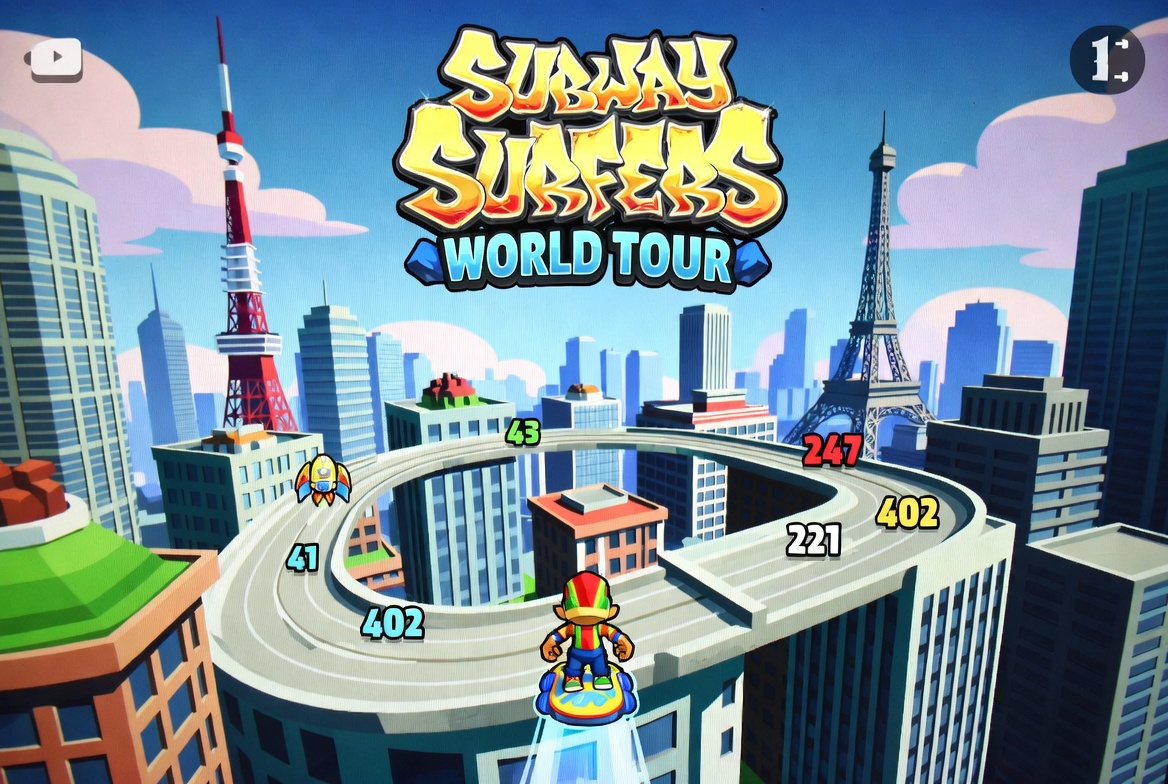
This is the first trick. Subway Surfers has exactly four core inputs: swipe left, swipe right, swipe up to jump, swipe down to roll. Any six-year-old can start playing in under a minute.
But that simplicity is deceptive. The skill ceiling is real. Learning when to switch lanes, how to chain hoverboard saves, how to read track patterns at speed — none of this gets explained. You figure it out by dying. Which means you’re always learning, always feeling like the last run was just slightly preventable.
When you crash in Subway Surfers, you rarely feel cheated. You feel like you made a mistake. And the natural human response to a mistake is wanting to correct it.
So you tap “Try Again.”
The Weekly Hunt Is Psychological Warfare
Let me tell you what hooked me this time around.
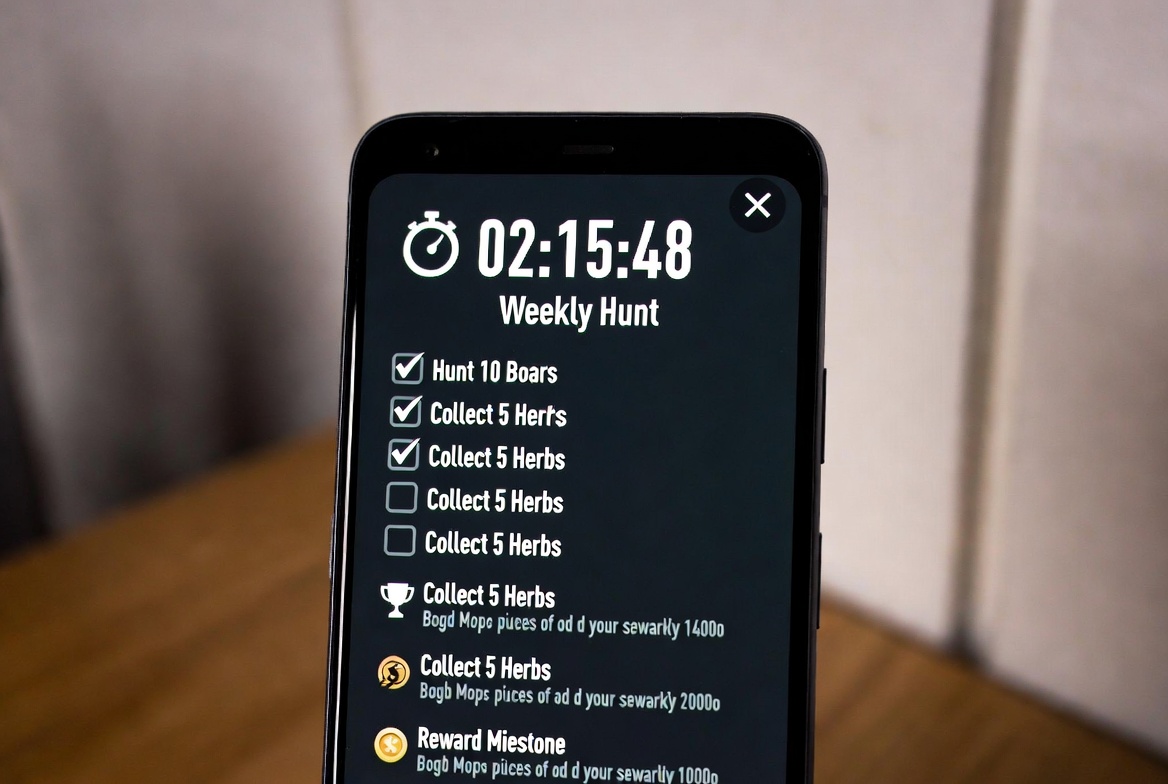
The Weekly Hunt. Every week, Subway Surfers presents you with a series of challenges tied to a timer. Complete them, earn rewards. Sounds harmless.
The issue is the timer is always running. It doesn’t care that you have a deadline or that you’re supposed to be sleeping. By Wednesday, you’ve got maybe five days left. By Friday, it starts feeling urgent. By Sunday evening, you’re either completing the last challenge or watching the timer count down with a weird mix of relief and regret.
This is textbook urgency engineering. It’s the same psychology that makes flash sales feel important, that makes limited-time social media posts feel like emergencies. Sybo didn’t invent it. But they’ve baked it into the core loop so cleanly you barely notice it working on you.
The Progression System Is Expertly Calibrated
Here’s the part that impressed me most when I came back to it.
Subway Surfers has built what I’d call a layered reward architecture. You’re never working toward just one thing at once. On any given session, you might be:
- Completing a mission to unlock a board piece
- Collecting coins toward a character skin
- Progressing through the Weekly Hunt challenges
- Trying to beat your personal high score
- Working toward a Score Booster upgrade
That’s five different reward systems running simultaneously. If one of them feels boring or out of reach, another one steps in to keep you engaged. The game always has something for your brain to latch onto.
Compare this to most other endless runners from the same era, and you see how much thought went into the structure. Temple Run 2 — built by Imangi Studios and released in January 2013 — never built this kind of depth. It felt like a game. Subway Surfers feels like a schedule.
And schedules, once started, are hard to abandon.
Why It Hits Different in 2026
I genuinely did not expect Subway Surfers to feel as sharp as it does in 2026. We have console-quality mobile titles now, deep narrative experiences, games that take months to finish. And yet here’s this fourteen-year-old endless runner still commanding attention.
Part of that is the World Tour system — a rotation of themed city environments that keeps the visuals from going stale. But the bigger reason is simpler: it loads in two seconds, runs smoothly on virtually any Android phone, and you can pick it up for sixty seconds and still feel like you accomplished something. In a landscape where mobile games have become increasingly demanding on both hardware and your schedule, Subway Surfers still respects the form factor it was built for.
I have a whole post on the best offline mobile games in 2026 if you want alternatives that deliver full experiences without the psychological hooks. Subway Surfers isn’t on that list.
The Ad Problem: It’s Gotten Worse
Here’s where I stop being impressed and start being honest.
Subway Surfers is free. It has always been free. And the way it makes money has evolved into something I find genuinely uncomfortable to watch.
The ad frequency in 2026 is aggressive. Not “mildly annoying” aggressive — actively disruptive aggressive. You crash, and before you can process what happened, an ad plays. You finish a Weekly Hunt task, ad. You collect a mystery box, there’s a prompt to watch an ad for double rewards. Decline, and you feel like you left something on the table.
That last bit is the dark pattern I want to highlight: the illusion of loss. The game never forces you to watch ads. But it frames declining as giving something up. “Watch to double your coins.” If you don’t watch, you didn’t earn those extra coins — but the game makes it feel like you lost them.
This is not honest design. It’s manipulative design, and it works on adults just as well as it works on the kids who make up a large portion of this game’s audience. I’m more bothered by it now than I was in 2018 because I understand it better now.
If you’re letting younger family members play this unsupervised, at least be aware of what it’s teaching them about value and attention.

How It Compares to Other Runners in 2026
| Game | Developer | Core Loop | Offline Playable | Ad Frequency | Progression Depth | Best For |
|---|---|---|---|---|---|---|
| Subway Surfers | Sybo Games | Endless runner | Yes (with limits) | Very High | High | Casual sessions |
| Temple Run 2 | Imangi Studios | Endless runner | Yes | Medium | Low | Distraction-free play |
| Alto’s Odyssey | Snowman / Team Alto | Snowboard runner | Yes | Very Low | Medium | Focused experience |
| MARVEL Run Jump Smash | Marvel Entertainment | Branded runner | Partial | High | Low | Marvel fans |
| Jetpack Joyride 2 | Halfbrick Studios | Side-scroller runner | Partial | High | Medium | Mission-based play |
Alto’s Odyssey — made by Snowman, a small Canadian studio — is the only one on this list I’d call genuinely respectful of your time and attention. The others, Subway Surfers included, are built around keeping you coming back more than giving you something meaningful to experience.
If your phone tends to heat up during extended gaming sessions, that’s actually a separate issue worth looking into. I covered Tecno Camon 30 overheating during gaming in detail, and a lot of what applies there applies to any phone running ad-heavy games for extended periods — the constant ad loading and network calls add thermal load most people don’t account for.
The Score That Never Satisfies
There’s one more thing I want to talk about, and it’s the most honest part of this whole post.
My high score in Subway Surfers right now is 4,218,450. When I hit it last week, I felt satisfied for approximately forty-five seconds. Then I wanted to beat it.
This isn’t a bug in the game. It’s the feature. Endless runners are structurally incapable of giving you closure because there’s no ending. You can’t “finish” Subway Surfers. You can only run farther than you ran last time. Which means the game is always in a state of being almost won.
Psychologists have a name for this: the Zeigarnik Effect. We remember and are more motivated by unfinished tasks than completed ones. Every Subway Surfers run ends in failure (you always crash eventually), which means your brain files it as unfinished business.
And unfinished business demands resolution.
The game has been collecting that resolution from you, in the form of sessions, for over a decade.
Is It Still Worth Playing?
Honestly? Yes. With conditions.
Subway Surfers is genuinely good at what it does. The core mechanics are tight. The World Tour themes add visual variety. If you need something to do for three minutes while waiting for something, there are worse options.
But go in with eyes open. The game is designed to stretch three minutes into thirty, and thirty into two hours. It uses real psychological techniques — urgency, variable reward, loss aversion, incomplete tasks — to keep you engaged beyond what’s rational.
That’s not unique to Subway Surfers. Most mobile games do this now. I’ve written about the broader mobile gaming landscape in 2026 and the pattern is consistent across budget and flagship devices alike.
The question is whether you can play it deliberately. Set a timer before you open it. Decide in advance what “done” looks like for you. If you hit your score goal or finish your mission, close the app.
Because the game will never tell you when to stop. That part is entirely on you.
Frequently Asked Questions
Is Subway Surfers still popular in 2026?
Very much so. It consistently ranks among the most downloaded casual games globally. The World Tour rotation and weekly events keep the player base engaged year-round. New players discover it every month, and returning players cycle back regularly.
Does Subway Surfers work offline?
The core gameplay works offline, but certain features — like claiming some Weekly Hunt rewards, syncing scores to leaderboards, and loading certain ads — require a connection. You can play a session without data, but the full experience is built around intermittent connectivity.
Why is Subway Surfers so addictive?
It combines several proven psychological mechanisms: an incomplete loop (you always crash, so it always feels unfinished), variable reward (mystery boxes, coin drops), time-limited urgency (weekly hunts), and extremely low friction to start a session. None of these individually are unique to Subway Surfers, but the combination is unusually well-executed.
Are the ads in Subway Surfers too aggressive?
In my experience in 2026, yes — noticeably more so than a few years ago. The frequency of interstitial ads after crashes and the “double reward” opt-in prompts have increased. It’s still technically non-forced, but the design actively nudges you toward engagement.
Is Subway Surfers appropriate for kids?
The content rating is appropriate (E for Everyone), and there’s no violence or mature content. The concern is more about the design patterns: the urgency mechanics, ad exposure, and variable reward systems that make it hard to stop. Supervised or time-limited play is worth considering for younger players.
What are better alternatives if I want to cut back?
Alto’s Odyssey is the runner I’d recommend most — beautiful, meditative, and not designed to maximize your session length. Jetpack Joyride 2 has more mission structure. Or step outside the endless runner genre entirely; there’s a whole world of premium offline mobile games that give you a beginning, middle, and end.
Does Subway Surfers affect phone performance?
It’s lightweight by modern standards, but the constant ad loading — especially video ads — does increase network activity and CPU usage. On phones already prone to thermal issues, extended sessions can cause noticeable warmth. This is something I flagged in the context of budget gaming phones where thermal management is already a concern.
If You’re Trying to Cut Back — Start Here
If you landed on this post because Subway Surfers is eating more of your day than you’re comfortable with, I’m not going to lecture you. But I will give you somewhere to go instead.
Try Alto’s Odyssey first. It’s free, made by Snowman, it has no weekly urgency timers, and the sessions end when you feel done rather than when a crash forces a decision. It’s a runner built around atmosphere instead of retention metrics.
If you want something with depth and no ad traps, the best offline mobile games of 2026 list has premium titles that give you a real ending. Games you can actually finish. That feeling of completion is worth something — Subway Surfers will never give it to you.
If gaming on a budget phone is your situation, check out the 2026 mobile gaming guide for Tecno, Infinix, and Redmi devices — it covers which games run well on mid-range hardware without burning through your battery or melting your phone.
The options exist. The choice is real.
I lost two hours and seventeen minutes to Subway Surfers last week. I don’t regret it exactly, but I also don’t think it gave me two hours of value.
That’s the real answer to whether you should play it.
— iSamuel




Comments 0
Leave a comment