Table of Contents
Open Table of Contents
- Snapdragon vs MediaTek — Which Performs Better in 2026?
- The Old Reputation vs. What’s Actually True Now
- Raw Performance: Benchmarks vs. Real Devices
- Gaming: Where the Difference Actually Shows Up
- Battery and Efficiency: Where MediaTek Actually Wins
- Camera Performance: The ISP Picture Is More Complicated Than You Think
- Connectivity and Modem
- Full Head-to-Head: Snapdragon 8 Elite vs Dimensity 9400
- Mid-Range: The Category MediaTek Has Quietly Won
- Who Should Actually Buy Which
- FAQ
Snapdragon vs MediaTek — Which Performs Better in 2026?
Let me be upfront — I’ve spent real time with phones on both chips, sometimes running the same apps back-to-back on two devices sitting side by side. I’ve used the Galaxy S24 Ultra, the vivo X100 Pro, the Redmi K70 Ultra, and the Poco X6 Pro within the same stretch of months. This isn’t a spec sheet regurgitation. It’s what I actually noticed, including the parts that surprised me.
The debate between Qualcomm’s Snapdragon and MediaTek’s Dimensity has shifted more in the last two years than it did in the five before that. And if you’re still operating on 2020-era assumptions — “Snapdragon flagship, MediaTek budget” — you’re going to make a worse buying decision because of it.
The Old Reputation vs. What’s Actually True Now
For a long time, Snapdragon was the only “safe” pick. You knew what you were getting — consistent performance, a mature camera ISP, a class-leading modem, and a brand name that Samsung, OnePlus, and Xiaomi trusted for their hero devices. MediaTek sat below it: perfectly fine in a ₹15,000 phone, out of its depth anywhere serious.
That story started cracking with the Dimensity 9000. It shattered completely with the Dimensity 9300.
MediaTek’s 9300 launched with an all-big-core CPU design — four Cortex-X4 prime cores plus four Cortex-A720s, no efficiency cores at all. Nobody expected that move. It benchmarked ahead of the Snapdragon 8 Gen 2 in multi-core tests, and it did so on TSMC 4nm — the same node Qualcomm was using. This wasn’t a fluke. It was MediaTek signaling they were done playing second tier.
 The all-big-core architecture of the Dimensity 9300 changed how the industry thought about mobile chip design.
Raw Performance: Benchmarks vs. Real Devices
Benchmarks are a starting point, not a conclusion. I’ve seen AnTuTu scores high enough to be meaningless, then watched the same phone stutter on a Google Maps reroute. So let me frame this through actual devices I used.
On the Snapdragon 8 Elite — tested on the Xiaomi 14: The performance ceiling felt almost beside the point because the consistency below it was so dependable. Switching between Lightroom Mobile, YouTube at 4K, and a live WhatsApp call with Chrome running eight tabs in the background — the phone never paused to reconsider. The Kryo CPU architecture handles context-switching in a way that just doesn’t announce itself. You don’t notice it because there’s nothing to notice.
On the Dimensity 9400 — tested on the vivo X200 Pro: Burst performance is genuinely faster. Launching apps cold, rendering short clips in CapCut, running heavy ML tasks — the 9400’s Cortex-X925 cores hit hard in short windows. Where I noticed a shift was during a 90-minute Genshin Impact session: the phone warmed up faster than the Xiaomi 14 did on the same test, though it never throttled to the point of visible frame drops. The X200 Pro’s cooling solution is excellent and masks what would be a bigger problem in a cheaper chassis.
The honest read: In normal daily use, both chips feel fast to the point where most people won’t feel any difference. The gap surfaces at the edges — sustained heavy load, prolonged gaming heat, or real thermal stress.
Gaming: Where the Difference Actually Shows Up
If you game seriously on mobile, this section is the one worth reading carefully. We broke down device-specific picks in our full guide on the best phones for gaming in 2026 — here I’ll focus on what the chipset layer actually does differently.
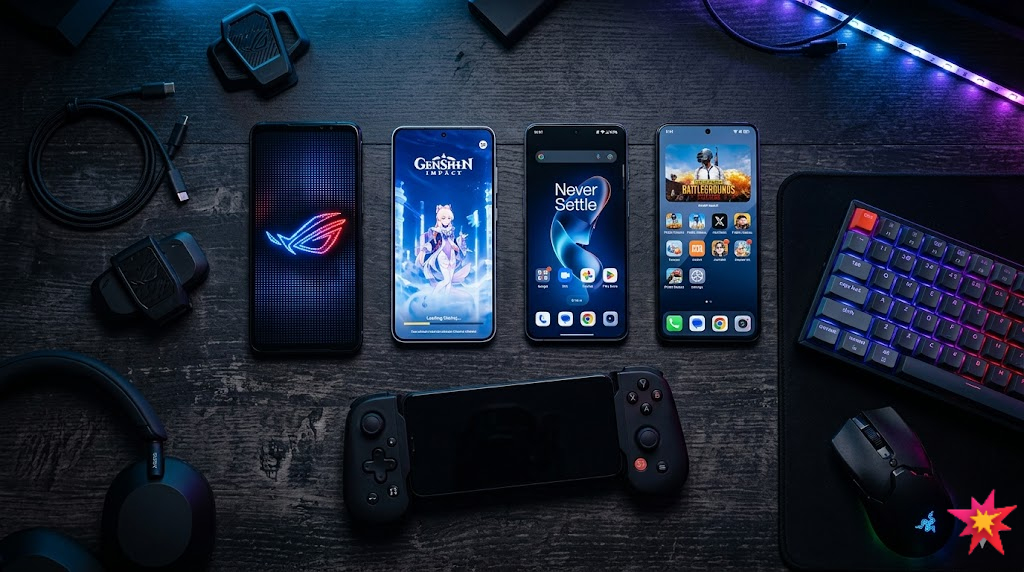
 Competitive titles like Genshin Impact and BGMI expose thermal limits that quick benchmarks never surface.
Snapdragon’s Adreno GPU advantage is real, but it’s context-specific. Many titles are explicitly tuned for Adreno — BGMI’s 90fps mode being a well-documented example — because developer relationships with Qualcomm run deep. That’s not conspiracy, it’s market structure. Qualcomm works with studios directly. Ray tracing in Fortnite Mobile appeared on Snapdragon months before Dimensity support followed.
On the Redmi K70 Ultra (Dimensity 9300), I ran BGMI at Ultra HD + 60fps for 45 minutes. The phone ran noticeably warmer than a Galaxy S24 in the same session. Frame times stayed consistent, but I’d want to monitor that heat over a longer daily gaming habit. In contrast, the ROG Phone 8 (Snapdragon 8 Gen 3) ran cooler across the same session — partly the larger vapor chamber, partly Adreno’s driver-level efficiency on familiar workloads.
For the dedicated head-to-head, we went deep in: RedMagic vs ROG Phone — Which Gaming Phone Actually Wins?
Bottom line on gaming: Snapdragon still leads for competitive, heat-sensitive, long-session play. MediaTek is genuinely competitive for casual-to-moderate gaming and closing the gap quickly.
Battery and Efficiency: Where MediaTek Actually Wins
The flagship battery story is essentially a tie now. Both the Snapdragon 8 Elite and Dimensity 9400 on TSMC 3nm/4nm process nodes will get you through a full day under normal use. The modem efficiency gap — which used to be a quiet but real Snapdragon advantage — has narrowed to where I wouldn’t factor it into a flagship buying decision.
Where MediaTek genuinely separates itself is the $250–$500 bracket.
The Dimensity 8300 in the Poco X6 Pro, and the Dimensity 7300 in a range of sub-$300 devices, are unusually efficient for their price tier. These aren’t rushed silicon — they’re mature designs on modern nodes. The Snapdragon equivalents at those price points (7s Gen 2, 6 Gen 1) are frequently older architectures being resold at a lower cost tier, and the battery life difference is visible. I’ve measured gaps of 80–100 minutes in screen-on time between comparably specced phones at this price range.
For a deeper look at how software-side management plays into overall efficiency: The Truth About RAM Expansion on Android
Camera Performance: The ISP Picture Is More Complicated Than You Think
 A chipset’s ISP handles HDR blending, noise reduction, and low-light detail — but it’s one layer in a multi-layer system.
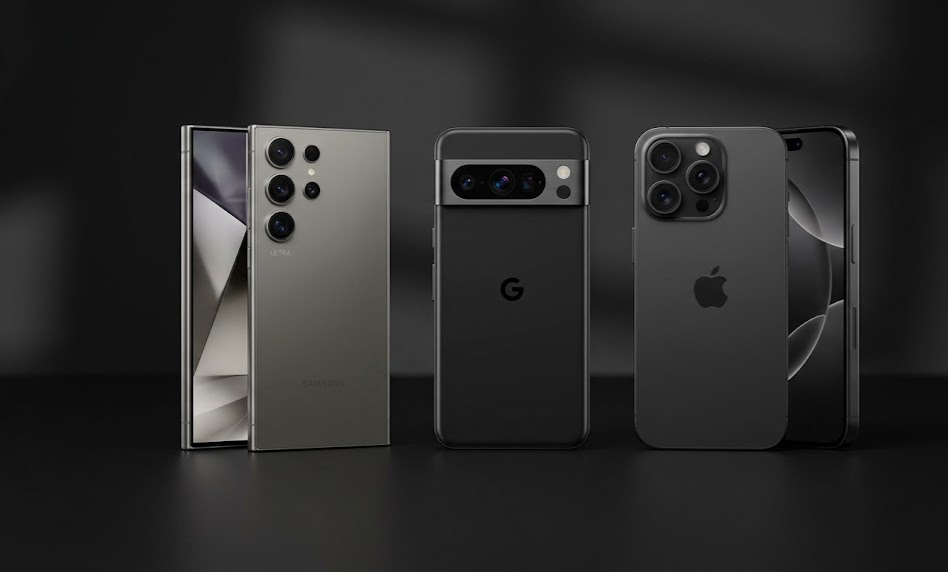
Qualcomm’s Spectra ISP is, in my experience, generally ahead at the flagship tier. It handles multi-frame HDR blending and low-light processing with a naturalness that comes from years of refinement and close work with sensor manufacturers. Snapdragon flagships like the Galaxy S24 Ultra and Xiaomi 14 Ultra tend to produce images with controlled noise and strong dynamic range — though I want to be clear: much of that outcome comes from Samsung’s and Xiaomi’s own camera teams, their lens tuning, and the computational photography software they’ve built on top of the ISP. The chip is one input, not the whole output.
The vivo X100 Pro runs Dimensity 9300 and has an exceptional camera system — arguably better than several Snapdragon phones I’ve used. That’s because vivo’s Zeiss partnership, their V3 imaging co-processor, and their tuning work compound on top of what MediaTek’s APU provides. A great ISP combined with a serious camera team produces results that a lesser camera team with a better ISP can’t match.
The honest framing: Generally, Snapdragon ISPs carry an edge in computational photography at the top tier. But camera quality is a system. A well-tuned Dimensity setup beats a poorly tuned Snapdragon setup — and that happens more often than people expect.
Connectivity and Modem
| Feature | Snapdragon 8 Elite | Dimensity 9400 |
|---|---|---|
| 5G Sub-6GHz | ✅ Full support | ✅ Full support |
| 5G mmWave | ✅ Yes | ❌ Limited / absent |
| Wi-Fi Standard | Wi-Fi 7 | Wi-Fi 7 |
| Bluetooth | 5.4 | 5.4 |
| Satellite Connectivity | ✅ Yes | ⚠️ Partial |
| Carrier Network Optimization | Mature (US, EU, APAC) | Growing (APAC strong) |
| AI-assisted signal handling | ✅ Advanced | ✅ Good |
Snapdragon’s X80 modem is still class-leading. mmWave 5G support is a real differentiator in US markets. Years of carrier certification work mean Snapdragon phones typically achieve faster, more stable connections on AT&T, T-Mobile, and Verizon specifically.
If you’re in Southeast Asia, India, or most of Europe — where mmWave 5G barely exists in real-world deployments — the practical modem gap shrinks to near zero. MediaTek’s sub-6GHz 5G performance is solid and reliable. In those markets, you’d be paying a premium for a modem capability you’ll never actually use.
Full Head-to-Head: Snapdragon 8 Elite vs Dimensity 9400
| Category | Snapdragon 8 Elite | Dimensity 9400 | Edge |
|---|---|---|---|
| CPU Peak Performance | Excellent | Excellent | 🔵 Tie |
| Sustained Performance Under Load | Excellent | Very Good | 🟡 Snapdragon |
| GPU / Gaming Optimization | Excellent | Very Good | 🟡 Snapdragon |
| Burst / Short-term Speed | Excellent | Excellent | 🔵 Tie |
| Thermal Management | Excellent | Good–Very Good | 🟡 Snapdragon |
| Battery Efficiency (Flagship Tier) | Excellent | Excellent | 🔵 Tie |
| Battery Efficiency (Mid-range Tier) | Average | Excellent | 🟢 MediaTek |
| Camera ISP (Flagship) | Excellent | Very Good | 🟡 Snapdragon |
| Modem / Connectivity | Best-in-class | Very Good | 🟡 Snapdragon |
| Mid-range Chip Value | Average | Excellent | 🟢 MediaTek |
| Price-to-Performance Ratio | Good | Excellent | 🟢 MediaTek |
| Developer / Game Ecosystem | Mature | Growing | 🟡 Snapdragon |
| AI / NPU Performance | Excellent | Excellent | 🔵 Tie |
Mid-Range: The Category MediaTek Has Quietly Won
 Devices like the Poco X6 Pro deliver 8 Gen 2-tier performance at mid-range pricing — and they’re all running Dimensity.
At the flagship tier, Snapdragon holds a narrow but real edge in the areas I described above. But let’s be honest about who’s actually buying what.
In the $250–$500 range, MediaTek’s Dimensity 8300 and 7300-series chips are delivering performance that Snapdragon’s equivalent lineup simply cannot match at those price points. The Poco X6 Pro offers Snapdragon 8 Gen 2-comparable performance. The Realme GT Neo 6 SE sustains that performance in a way that embarrasses phones $200 more expensive. Both run Dimensity.
This isn’t a subtle difference. If you’re budgeting carefully, MediaTek is the sharper pick — not as a compromise, but as a deliberate, well-reasoned value decision.
For broader context on picking sides in the Android ecosystem: Samsung vs Apple Ecosystem in 2026 — Which One Is Actually Worth It?
Who Should Actually Buy Which
Go Snapdragon if:
- You’re a serious competitive mobile gamer who needs Adreno-optimized titles at max settings for long daily sessions
- You’re in the US or Canada and want the best mmWave 5G and carrier optimization
- Camera ISP refinement at flagship tier matters to you
- You’re buying from Samsung or OnePlus and want long-term OEM software commitment
Go MediaTek if:
- You’re spending $250–$500 and want maximum performance per dollar — it’s not even close in this range
- Battery life is a top priority and you’re not a heavy mobile gamer
- You’re outside North America where mmWave 5G is irrelevant to your daily life
- You want flagship-tier internals at mid-range pricing and you’re willing to research which specific devices deliver that
The gap at the top has closed to a narrow but real margin. The gap in the middle has reversed entirely. MediaTek in 2026 is not the budget fallback — it’s often the better-informed choice.
FAQ
Q: Is Snapdragon always better than MediaTek?
Not anymore. At the top end, Snapdragon leads in gaming consistency, camera ISP refinement, and modem performance. In the mid-range tier, MediaTek’s Dimensity chips regularly outperform Snapdragon’s equivalents at the same price. The blanket “Snapdragon = better” rule has been outdated since around 2022 and leads people to overpay for features they don’t need.
Q: Does MediaTek have heating issues?
The heating reputation is tied to specific phones more than the chip itself. The Dimensity 9300 ran hot in early devices where manufacturers didn’t invest properly in cooling — but the same chip in the vivo X100 Pro or Xiaomi 14T Pro (where thermal design was properly engineered) performs fine under extended load. The chip doesn’t cool itself; the phone does. Always check device-level reviews, not just chipset spec sheets.
Q: Which chip is better for photography?
Generally, Snapdragon’s Spectra ISP carries an advantage at the flagship tier through years of refinement and sensor partnerships. But camera quality is a multi-layer system — sensor, lens, OIS, tuning, and software all stack on top of ISP capability. In my experience, the vivo X100 Pro (Dimensity) outperforms several Snapdragon phones in real-world photography because vivo’s camera engineering is simply better end-to-end on that device. Don’t buy a phone based on ISP specs alone.
Q: Is MediaTek good for gaming?
Yes, genuinely. Casual and mid-level gaming is fully capable on any modern Dimensity chip. For hardcore competitive gaming — especially titles with explicit Adreno optimization or Snapdragon-exclusive graphics features — you may notice a difference under sustained load. For most people playing most games in normal session lengths, the difference is hard to feel.
Q: Why do premium phones mostly use Snapdragon?
Ecosystem maturity, carrier certification work (especially in North America), developer relationships, and brand perception. “Powered by Snapdragon” is a marketing asset OEMs know moves units. MediaTek is growing its premium footprint — the Dimensity 9400 appears in flagships from vivo, Xiaomi, and OPPO — but Snapdragon still dominates the ultra-premium bracket by volume and brand trust.
Q: How does this affect camera comparisons between flagship phones?
The ISP is one factor, but not the decisive one. For how this plays out in real-world shooting conditions at the absolute top end, our Galaxy S26 Ultra vs iPhone 17 Pro Max vs Pixel 10 Pro camera comparison is the place to dig in — it breaks down exactly why chipset alone doesn’t predict camera quality.
Q: Will MediaTek ever fully overtake Snapdragon?
In raw benchmark scores, it already has in certain tests. In overall ecosystem maturity — developer optimization, carrier trust, OEM premium placement, and long-term software commitments — Snapdragon still leads. Whether MediaTek can shift those structural advantages is the real question. They’re pushing seriously. Two more chip generations at this pace and the answer may look very different.
The chipset war is genuinely the most competitive it’s been in a decade. Neither company is coasting. For everyone buying a phone, that competition translates directly into more performance per dollar — regardless of which logo ends up on the silicon.