Table of Contents
Open Table of Contents
Overview
Specs note: All specs here are drawn from GSMArena’s HOT 70 launch coverage (May 26, 2026) and Technobaboy’s press-release breakdown. Where sources conflicted, I’ve called it out rather than picked the better-looking number.
Infinix officially unveiled the HOT 70 on May 26, 2026 — first in Bangladesh, global rollout following. I haven’t used this phone. What you’re getting here is sourced specs, honest context, and my read on what those specs actually mean for a Nigerian buyer deciding whether to spend their money or wait.
Quick Specs
| Feature | Specification | Source |
|---|---|---|
| Display | 6.78” IPS LCD, 720×1576, 120Hz, 240Hz touch, 700 nits | GSMArena / Infinix |
| Chipset | MediaTek Helio G100 Ultimate (6nm) | GSMArena |
| CPU | Octa-core (2×2.2GHz Cortex-A76 + 6×2.0GHz Cortex-A55) | GSMArena |
| RAM / Storage | 4GB / 6GB / 8GB — 128GB or 256GB, microSDXC up to 1TB | Technobaboy |
| Main Camera | 50MP f/1.85, AF + depth lens, Active Halo LED ring | GSMArena news |
| Front Camera | 8MP f/2.0 | GSMArena |
| Battery | 6,000mAh, 45W wired, 16W reverse wired charging | Technobaboy / Infinix |
| OS | Android 16, XOS 16 — 3 OS updates + 5 years security patches | Infinix official |
| NFC | Yes | GSMArena |
| IR Blaster | Not listed in confirmed launch specs | — |
| AI Button | Yes — Folax AI + FlashMemo hardware shortcut | GSMArena news |
| 3.5mm Jack | Yes | GSMArena |
| Bluetooth | 5.4 | GSMArena |
| IP Rating | IP64 | GSMArena / Technobaboy |
| Dimensions | 167.9 × 79.1 × 7.49mm, 195g | GSMArena |
IR Blaster: Not listed in the official Infinix spec sheet or Technobaboy’s press-release coverage. I won’t call it confirmed until a hands-on review or regional spec page says otherwise.
IP Rating: One source listed IP65; GSMArena and Technobaboy both say IP64. Going with IP64.
Design
At 7.49mm thin for a phone packing a 6,000mAh battery, Infinix has done something worth noting. Most phones with that cell size land closer to 8–9mm. The tradeoff shows up in the 79.1mm width — this is a wide phone, and at 195g, single-handed use over long sessions asks something of you.
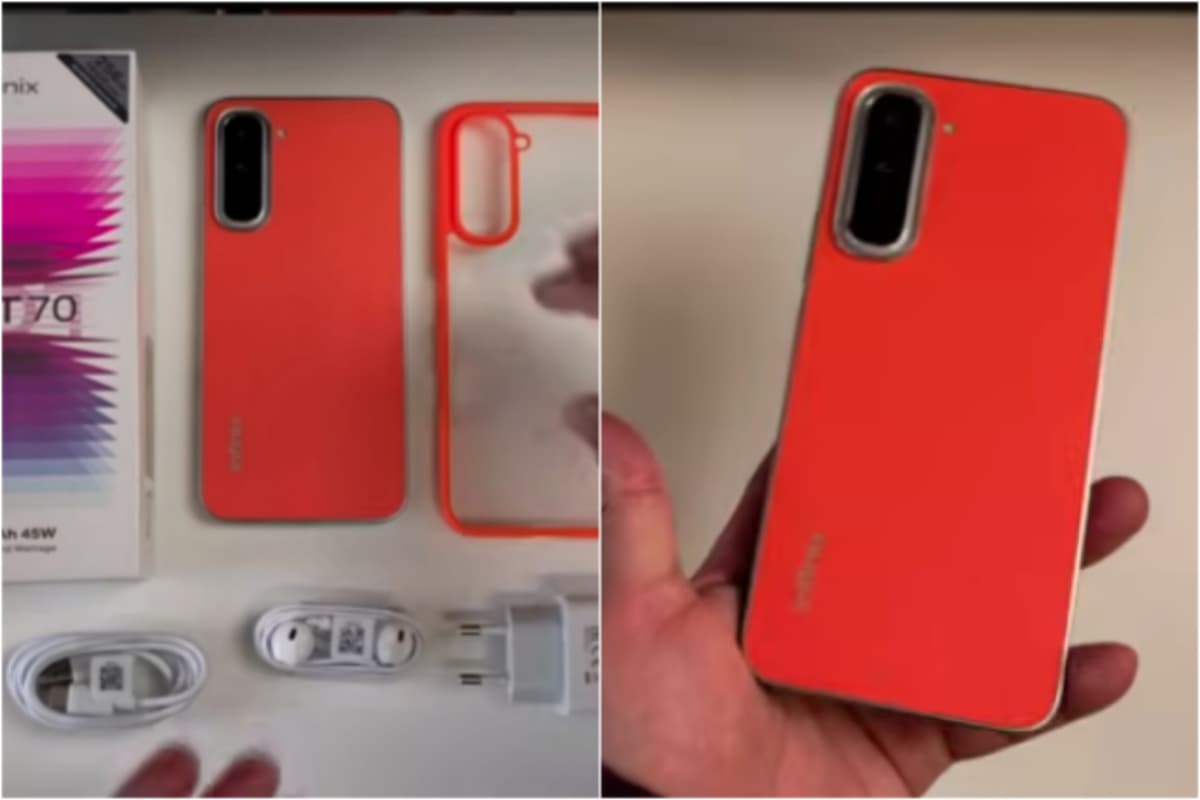
The Thermo Orange colorway is the headline design play. According to GSMArena’s pre-launch design coverage, the thermochromic back shifts between a deeper and lighter orange based on temperature — and you can actually create patterns on it using selective cold or heat. Whether that holds up through daily use is something only reviewers with units will confirm, but as a concept it beats another gradient finish.
Every HOT 70 unit also gets an Active Halo LED ring around the camera island — programmable light effects for notifications, charging, and gaming. It’s not a buying reason, but it’s a design detail no competitor at this price matches.
IP64 is confirmed across both GSMArena and Technobaboy. Dust-tight and splash resistant — enough for a rain commute, not a swimming pool.
Display
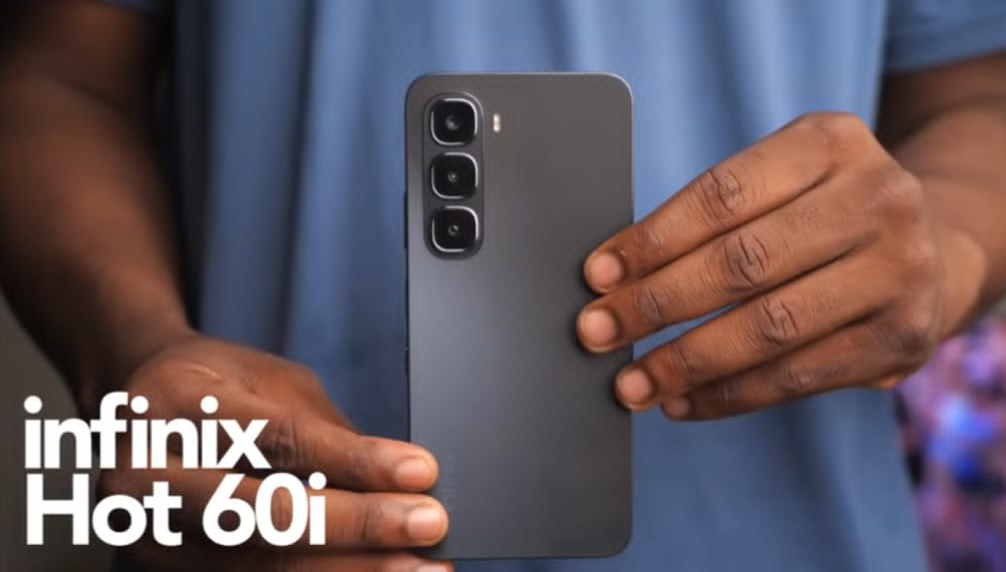
HD+ (720×1576) on a 6.78-inch screen lands at roughly 256 PPI. On the Hot 60i’s smaller 6.7-inch screen, the same resolution was already a visible compromise. On a bigger panel, you’re spreading those same pixels further — fine text, photo detail, and subtitles all show it.
The 120Hz refresh rate is genuinely good and makes the phone feel faster than its CPU benchmark would suggest. The 240Hz touch sampling rate tightens input response, which matters for gaming. 700 nits handles outdoor visibility reasonably well.
My take: if your day is social media, streaming, and messaging, the resolution becomes background noise within a week. If you’re someone who zooms into photos or reads long-form content regularly, the panel will remind you of its limits. Infinix chose battery and cost over sharpness — that’s a deliberate call, not an oversight.
Performance
The G100 Ultimate on 6nm is the clearest upgrade from last year. The 12nm G81 in the Hot 60i ran warmer and throttled earlier under sustained load. The G100’s Cortex-A76 cores at 2.2GHz have more headroom before that happens, which means gaming sessions and heavier multitasking hold up better over time.
For daily use the chip has headroom to spare. For gaming: based on the hardware profile, COD Mobile and eFootball sit comfortably at medium settings; PUBG Mobile will still need dialing down for stable frame rates. The Mali-G52 MC2 GPU is the same class as the G81, so the GPU-side improvement is modest. The chip is better — don’t expect a GPU leap.
The 72-month fluency claim on Infinix’s product page comes with a footnote: it’s a lab certification under specific conditions, not a blanket promise. Worth knowing what the fine print says before counting on it.
Skip the 4GB RAM variant unless the price gap is significant. At 6GB the phone has real multitasking headroom. At 8GB it’s comfortable for two-plus years of use.
Camera
50MP f/1.85 aperture, autofocus, Active Halo LED ring, 2MP depth sensor, 8MP front. Video up to 1440p@30fps.
The depth sensor is not a second focal length — it’s there for portrait mode bokeh. “Dual camera” in the marketing means wide + depth, not wide + ultra-wide. That distinction matters when comparing with phones that advertise actual multi-focal systems.
Based on the hardware, a 50MP sensor with f/1.85 aperture and autofocus should produce solid daylight shots for social content. The f/1.85 is a marginal improvement over the f/1.9 on the Hot 60i — you’re unlikely to see dramatic low-light gains from that difference alone, and there’s no OIS. Night photography is where the hardware ceiling shows; night mode helps at the margins.
The Active Halo LED ring around the camera could serve as supplemental fill light in dark portraits — but that’s something hands-on reviewers will need to confirm.
Battery
6,000mAh with 45W wired charging and 16W reverse wired charging. All three specs confirmed by the official Infinix announcement, GSMArena, and Technobaboy.
The 45W charging should push the large cell to around 60–70% in under an hour, with a full charge in roughly 80–90 minutes — consistent with what 45W delivers on similar battery sizes across other phones. The 16W reverse wired charging turns the HOT 70 into an emergency power bank. At that wattage it won’t fast-charge anything, but it’s genuinely useful for topping up earbuds or a secondary device.
For Nigerian conditions specifically: mixed network environments and background data cycling tend to drain batteries faster than the clean test conditions international reviewers use. The 6,000mAh buffer means you have real margin even accounting for that.
Software
Android 16 out of the box, with a hardware AI button that gives single-press access to FlashMemo and Folax AI. The button is physical — short press captures screen context, hold launches multi-model AI access (ChatGPT, Gemini, others per the press release). That’s a more useful implementation than a buried menu shortcut.
The update commitment — 3 major OS updates and 5 years of security patches — is on record from the official Infinix announcement. That means Android 16 through Android 19 on the promised timeline, and patches through 2031. Infinix’s historical delivery on update promises has been inconsistent, but the public commitment is there and that accountability matters.
Price in Nigeria
As of June 2026, the HOT 70 hasn’t had an official Infinix Nigeria launch. What’s already showing up are grey-market imports on Jiji.ng, listed from ₦187,000 for the 4GB/128GB variant, with higher-RAM units likely landing in the ₦220,000–₦260,000 range based on import margins and the Bangladesh launch price of approximately $150–$210.
Jiji prices checked June 2026. Prices vary by seller and availability — confirm current listings before buying.
What to expect at official launch:
| Variant | Expected Price (Nigeria) | Notes |
|---|---|---|
| 4GB / 128GB | ₦190,000 – ₦215,000 | Grey market already at ₦187,000 |
| 6GB / 128GB | ₦220,000 – ₦245,000 | Best value sweet spot |
| 8GB / 256GB | ₦260,000 – ₦300,000 | Upper end; compare before buying |
Is it worth the price? At ₦190,000–₦220,000, the HOT 70 competes with the Samsung Galaxy A06 and Redmi A7 Pro 5G in the Nigerian market. On battery, chip generation, and software support, it beats both at that range. The Samsung wins on brand comfort and service center access. The Redmi wins if 5G actually matters for your usage.
Should you buy now or wait? The grey-market units are available but carry the usual risks — no official warranty, possible regional spec variations. A local Nigeria launch date has not been confirmed by Infinix. If you need a phone now, ₦187,000 for a sealed unit from a reputable Jiji seller isn’t a bad entry. If you can hold off, checking Infinix Nigeria’s official channels before buying is worth the patience.
Who This Phone Is Actually For
| Phone | Best For | Pass If |
|---|---|---|
| Infinix HOT 70 | Battery life + long software support | Display quality matters to you |
| Infinix Hot 60i | Same features at a lower price today | You want the newer chip |
| Samsung Galaxy A06 | Brand trust, service center access | You want better chip performance |
| Redmi A7 Pro 5G | 5G on the tightest budget | You need fast charging |
| Tecno Pop 20 | The absolute lowest entry price | You want anything more than basics |
The HOT 70 wins clearly on battery and update commitment. The Samsung wins on brand support. The Redmi wins if 5G is a real need. The Tecno is for when ₦ is the only deciding factor.
For the full competitive picture at Nigerian price bands, the best phones under ₦120k–₦200k guide covers the wider field.
What’s Good, What’s Not
Good:
- 6,000mAh battery with 16W reverse wired charging — one of the strongest battery setups in its price range
- 45W charging keeps the large cell practical
- Helio G100 Ultimate (6nm) — real improvement over G81 on efficiency and CPU
- 3 OS updates + 5 years security patches, officially on record
- Android 16 with hardware AI shortcut button
- IP64 dust and splash protection
- Active Halo LED camera ring and genuine design variety (12 colorways)
- NFC, Bluetooth 5.4, 3.5mm jack, microSDXC up to 1TB
Not so good:
- HD+ on a 6.78-inch screen — the most visible daily compromise
- IR blaster not confirmed in any official source
- No OIS — low-light camera and video stabilization are limited
- 79.1mm wide — one-handed use isn’t comfortable for everyone
- GPU (Mali-G52 MC2) same class as Hot 60i — gaming GPU improvement is minimal
- 4GB base RAM ages poorly; budget for at least 6GB
- No 5G on this variant
Verdict
The HOT 70’s strongest argument isn’t the chip or even the battery alone — it’s the combination of a 6,000mAh cell, a 6nm processor that runs efficiently enough to use all of it, and a software commitment that officially extends through Android 19. That’s a package competitors in this price bracket don’t match.
The HD+ display is the honest tradeoff. On a 6.78-inch screen it’s visible, and it won’t stop being visible. If sharpness is something you notice daily, it’ll bother you. If you’re more concerned with how long your phone lasts before needing a charge, or how long it stays supported before going dark — the HOT 70 answers both better than anything at this price.
For Nigerians buying in the ₦190,000–₦220,000 range, it’s a strong option. Wait for the official local launch for the warranty, or pick up a grey-market unit now if the price difference is meaningful.
Compare it against the Hot 60i to see if the upgrade is worth the extra spend, and check the best phones for gaming in 2026 if that’s what’s driving your decision.
Final Score
| Category | Score | Note |
|---|---|---|
| Design | 8/10 | Slim for the battery size; Thermo Orange is genuinely different |
| Display | 6/10 | 120Hz saves it; HD+ on 6.78” is the real cost |
| Performance | 7.5/10 | G100 Ultimate is a step up; GPU unchanged |
| Camera | 6.5/10 | Solid in daylight; no OIS hurts at night |
| Battery | 9/10 | 6,000mAh + 45W + reverse charging — hard to beat at the price |
| Software | 8/10 | Android 16, 3 OS updates officially promised |
| Value (Nigeria) | 7.5/10 | Strong if the official price lands under ₦220,000 |
Overall: 7.5/10 — A battery-first budget phone with better software longevity than most rivals. The display is the only consistent compromise.
FAQ
Is the Infinix Hot 70 available in Nigeria? Not officially yet as of June 2026. Grey-market imports are already listed on Jiji.ng from ₦187,000. A local launch date has not been confirmed by Infinix — check Infinix Nigeria’s official social pages for updates.
Does the Infinix Hot 70 have an IR blaster? Not confirmed. It doesn’t appear in the official Infinix spec sheet or Technobaboy’s press-release breakdown. I won’t list it as a feature until a hands-on review confirms it specifically for the Nigerian/global variant.
Is the IP64 rating actually useful? Yes, practically. Dust-tight means no lint or fine dust getting into ports or speakers. Splash resistant means a rain commute or kitchen counter situation won’t damage the phone. It’s not for submersion, but for everyday Nigerian conditions it’s a real advantage over phones with no IP rating at all.
Should I get the 4GB, 6GB, or 8GB variant? The 6GB/128GB is the value sweet spot. The 4GB base ages quickly — expect it to feel constrained by late 2027. The 8GB/256GB is the best long-term option if the price is in range, especially given the 3-OS-update promise that extends the phone’s useful life.
Is the Infinix Hot 70 Pro coming to Nigeria too? Infinix confirmed the Pro and Pro+ variants are in development but hasn’t announced specs or pricing. If the HOT 70 Pro follows the Hot 60 series pattern, expect AMOLED display and a higher-tier chipset at a higher price. No confirmed Nigeria launch date for either variant yet.
How does this compare to the Hot 60i for someone upgrading? The HOT 70 brings a 6nm chip (vs 12nm), 6,000mAh battery (vs 5,160mAh), 16W reverse charging, a dedicated AI hardware button, and the official 3-OS-update commitment. If you’re on a Hot 60i budget, the 60i is still solid value. If you can reach the HOT 70’s price, the upgrades are meaningful — especially the battery and software support.
Comments 0
Leave a comment