Table of Contents
Open Table of Contents
- Why this isn’t another dated “best phones” list
- What ₦150,000 actually buys you right now
- Around ₦100,000: what can you realistically get?
- Around ₦120,000: where does the extra money improve the phone?
- Around ₦150,000: what changes when you use the full budget?
- Battery: which specs actually matter?
- Gaming: which processors are worth considering?
- Camera: what can you realistically expect?
- Software support: which brands give you longer usable life?
- 5G: is it actually available at this budget now?
- Where to buy, and what to watch for
Why this isn’t another dated “best phones” list
Every few months a new “Best Phones Under ₦150,000” article shows up with a fixed price tag next to each model, and every few months those numbers quietly go stale. The naira doesn’t hold still long enough for that format to stay honest, and neither does the lineup — a phone that was the newest thing in one quarter is often one generation behind by the next, sometimes replaced outright.
So this isn’t a snapshot pretending to be permanent. It’s organized around the actual questions people ask when they’re choosing a phone under ₦150k in Nigeria: what changes as you move up the budget, which specs are worth paying for, and which brands still make sense right now. Model names and price bands are included as examples, not fixed answers — always check the live price on Slot, Jumia, or your nearest dealer before you buy, since a figure that’s accurate this week can be off by ₦10,000–₦20,000 a month later in either direction.
What ₦150,000 actually buys you right now
The floor at this budget has moved up. A few years ago, ₦150k comfortably bought a phone with a mediocre screen, a small battery, and slow charging. Competition between Tecno, Infinix, Samsung, itel, and Xiaomi/POCO in this bracket has pushed a common target to a 6.6-inch-or-larger LCD, 90Hz or higher refresh rate, a 5,000mAh-or-larger battery, and 4GB/128GB storage — with charging speed anywhere from 18W to 45W depending on how much of the budget goes to battery capacity versus charging speed. But that’s a common target, not a floor: cheaper models at the lower end of this range, and even some entry-level phones still sold new, can fall below one or more of those figures — smaller batteries, 64GB storage, or 60Hz screens still show up.
What you still generally won’t get at the very bottom of this range: an AMOLED display, a camera with real optical image stabilisation, or more than a couple of years of guaranteed OS updates. I’m deliberately not saying “you’ll never get 5G here” the way older guides did — that claim keeps getting overtaken by events (more on that below), and stating it as a hard ceiling is exactly the kind of thing that ages badly in this market.
Around ₦100,000: what can you realistically get?
At this level you’re choosing between very small storage/RAM configurations of bigger-name phones (Tecno Pop, Infinix Smart series, entry-level itel) and older entries from the same families that have dropped in price as newer models replaced them. The honest trade-off here is usually RAM and storage — 3GB/64GB configurations are still common at this price, and that is genuinely tight in 2026, when everyday apps and their updates have grown heavier. If a model offers a 4GB/128GB variant for a modest premium, it’s almost always worth stretching for rather than buying the base configuration.
Don’t expect an IP rating, a fast charger, or a great camera here. Do expect a workable daily driver for calls, WhatsApp, and social media, with a battery that needs a full overnight charge rather than a quick top-up. Examples worth checking at this level: entries in the itel A-series and Tecno Pop line — confirm the exact RAM/storage variant before buying, since the same model name is often sold in more than one configuration.
Around ₦120,000: where does the extra money improve the phone?
This is where the jump can actually show up in daily use, not just on a spec sheet — but treat it as what to look for at this level, not what’s guaranteed at this level. The extra ₦20,000 over the ₦100k tier can buy one or more of: a jump from 3GB to 4GB RAM (which matters more than almost anything else for how the phone feels a year in), 128GB of storage as standard rather than an upsell, an IP64 dust/splash rating on some models, and a bigger battery. None of these are automatic at this price — check the spec sheet of the specific variant rather than assuming a ₦120k phone will have all of them.
itel’s City-series and the entry Tecno Pop/Infinix Smart variants tend to live in this band. The processors here (Unisoc T7000-series chips, MediaTek’s older Helio G-series) are adequate for social media and streaming but will show their limits with anything graphically demanding.
Around ₦150,000: what changes when you use the full budget?
At the top of this range, chipset quality becomes one of the more meaningful differences between phones — but the category is messy enough that shopping by processor family alone isn’t reliable. Newer entry-level chips, older Helio-series parts, and Unisoc platforms all overlap heavily at this price depending on the retailer and configuration, so check the exact chipset in the specific variant you’re buying rather than assuming a phone at this price automatically has a “better” chip than one at ₦120k. Charging speed is a more consistent signal of what the extra budget buys — 45W chargers become common here where 18W dominated lower down.
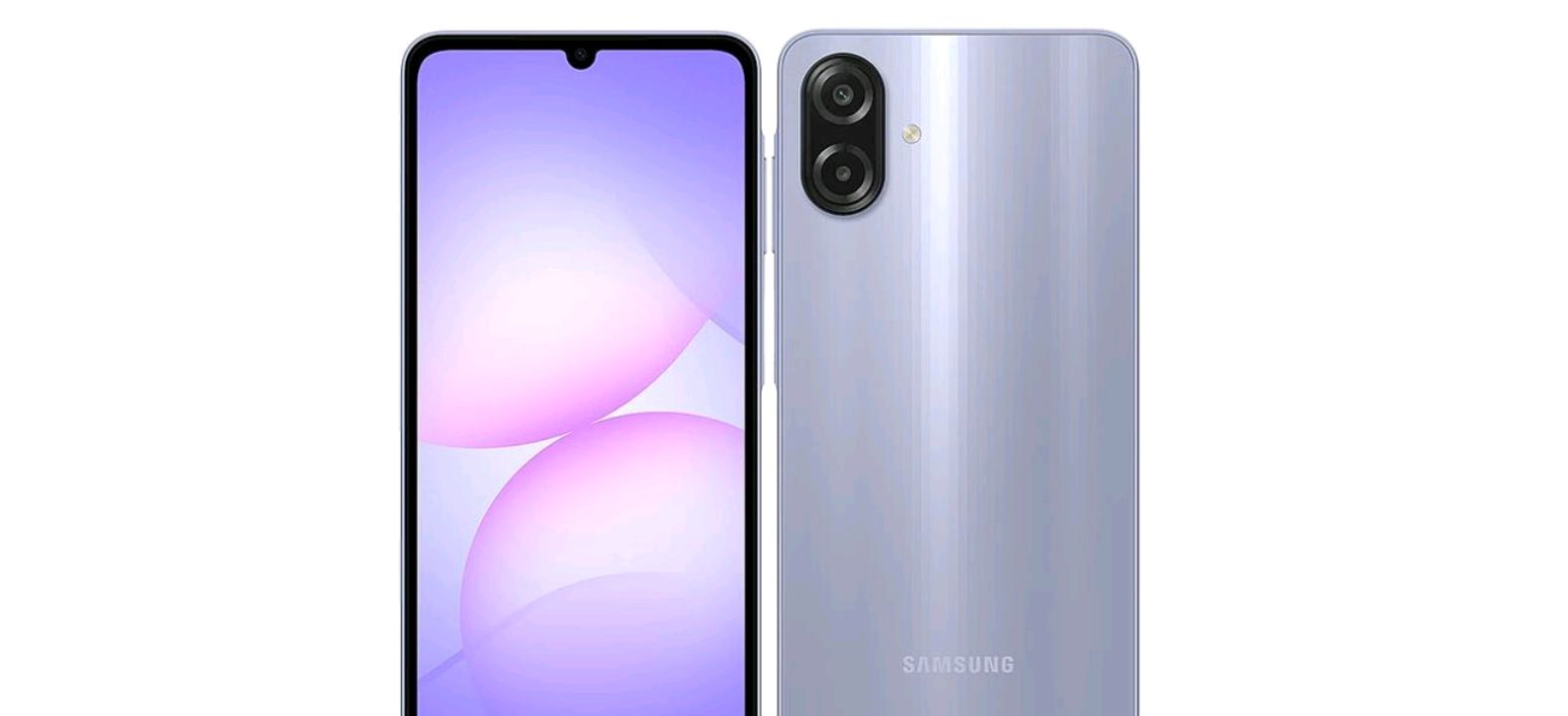
This is also where Samsung becomes interesting — not because it necessarily wins on hardware for the price, but because long software support can matter more than having the most hardware for the money. Other examples worth checking around this ceiling include the Tecno Spark 40/40C and Redmi’s A-series, though prices and exact configurations vary by store.
Battery: which specs actually matter?
Capacity in mAh is the number everyone quotes, but it only tells half the story. A 6,000mAh battery with an 18W charger will generally take considerably longer to refill than a similarly sized battery paired with 33W or 45W charging — the advertised wattage alone doesn’t tell you the exact time from 0–100%, since that also depends on the phone’s charging curve, temperature, and how closely the phone actually sustains its rated wattage. What you can rely on is the general pattern: pairing a big battery with slow charging is fine if you charge overnight, and frustrating if you rely on short top-ups during the day.
So the real question isn’t “which phone has the biggest battery” — it’s “how do you actually charge your phone during the day,” and then matching capacity and wattage to that habit. If you regularly rely on short charging sessions during the day rather than one long overnight charge, I’d put more weight on charging speed than raw capacity.
Gaming: which processors are worth considering?
None of the chipsets in this bracket are built for heavy gaming, and it’s worth being upfront about that rather than overselling a MediaTek Helio G-series chip as a “gaming phone” processor the way some listings do. That said, there’s a real gap between the low end and high end of what’s available under ₦150k. Chips such as the Helio G99 can provide a noticeably better gaming experience than many entry-level platforms, but actual frame rates depend on the specific game, graphics settings, thermals, and the individual phone — not just the chip name on the spec sheet. Some older Helio G-series and entry-level Unisoc platforms sit below the performance of newer midrange-entry chips, so check the exact chipset rather than judging by the processor family name alone.
If gaming is a real priority rather than occasional use, it’s worth checking the exact chipset generation rather than trusting a brand name alone — Tecno, Infinix, and itel all sell multiple phones at very similar prices with meaningfully different chips inside.
Camera: what can you realistically expect?
Set expectations here deliberately low, because this segment gets oversold constantly. A high megapixel count on the box (50MP is now common even on cheap phones) does not mean a good camera — it often comes with a primary wide camera doing most of the work, with secondary cameras that may add relatively little, processed by software that struggles once light gets low. What you can realistically expect at this budget: usable daylight photos for WhatsApp and social media, mediocre low-light performance across the board, and front cameras that are generally more suitable for video calls and casual selfies than demanding selfie photography.
If camera quality is your main reason for upgrading, stretching beyond ₦150k gives you more room to find better sensors, processing, and stabilisation. Within this bracket, prioritise the overall camera system — consistency across lighting conditions, whether there’s a real secondary lens — rather than the megapixel number printed on the box.
Software support: which brands give you longer usable life?
Don’t compare brands only at the logo level — check the published update commitment for the exact model you’re looking at. Samsung, for example, currently advertises up to six generations of OS upgrades and six years of security updates for the Galaxy A07 (4G), which is well ahead of what most brands publish for equivalent models at this price. Tecno’s HiOS and Infinix’s XOS differ considerably by model, so check the actual software experience and update commitment of the specific phone you’re considering rather than assuming a brand-wide policy.
If you keep phones for three-plus years — which describes most buyers in this market — that update commitment is worth factoring in even at the cost of a slightly weaker spec sheet elsewhere.
5G: is it actually available at this budget now?
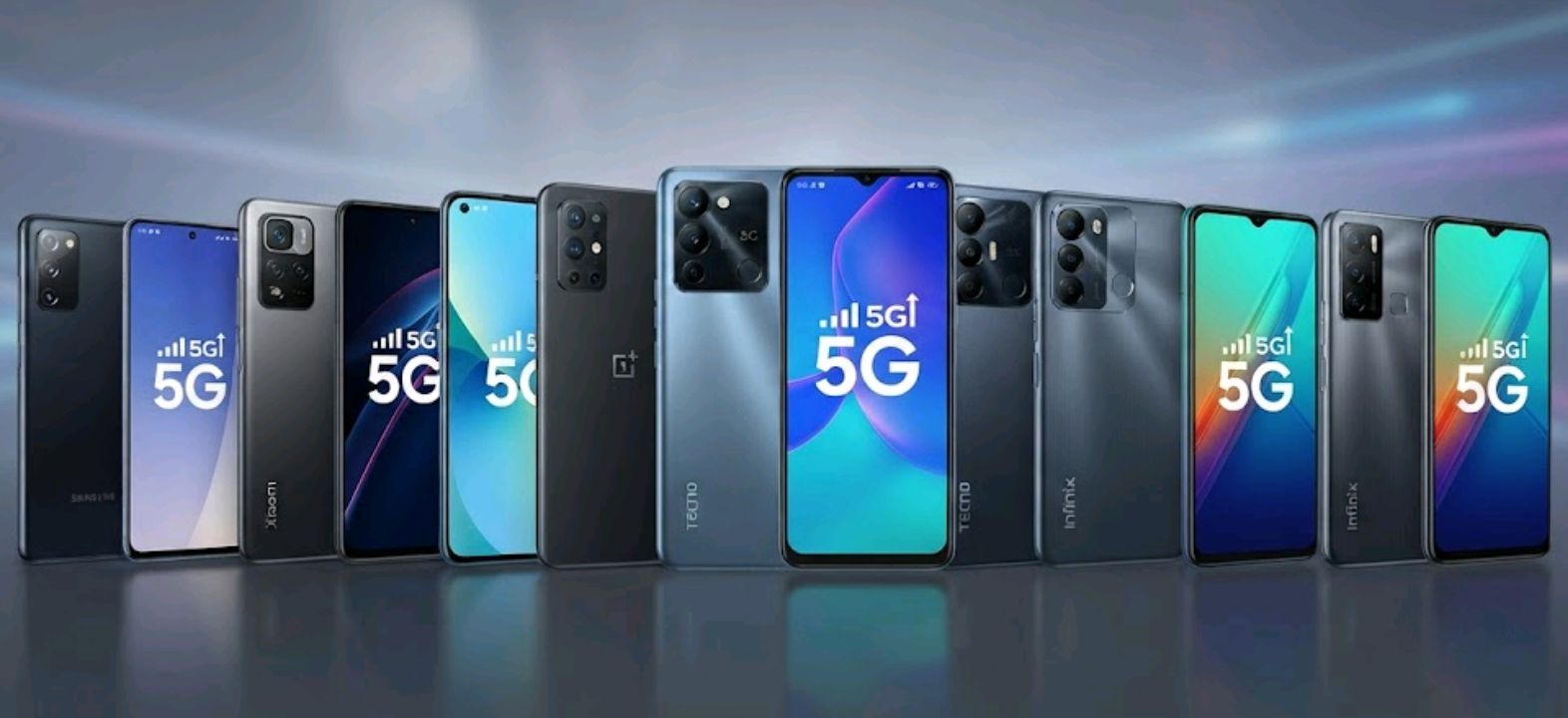
Increasingly, yes — and this is the clearest example of why a fixed “you won’t get 5G under ₦150k” line doesn’t hold up over time. 5G-capable devices are also starting to appear around this ceiling — including network-branded options such as MTN’s SmartPlus 5G — although mainstream Samsung and Xiaomi/Redmi 5G phones generally sit above ₦150k. Whether 5G is worth prioritising at all also depends on where you live: availability varies significantly by network and location, so check your carrier’s coverage where you actually live and work before paying extra for a 5G model.
Where to buy, and what to watch for
The price gap between an organized retailer (Slot, Jumia, a manufacturer’s own store) and the open market (Computer Village, Alaba, Jiji) is real and can run ₦10,000–₦20,000 or more depending on the phone and the moment. That gap can buy you a clearer return path, easier warranty handling, and lower risk of receiving questionable stock — but that depends on the specific seller, not just the channel, so it’s worth checking a store’s own return policy rather than assuming “organized retailer” guarantees smooth handling.
If you’re comfortable inspecting a phone yourself — checking the IMEI against the box, testing the display for dead pixels, running a battery health check, verifying charging speed with a USB power meter — the open market and Jiji can save real money. If you’re buying a first phone, or buying as a gift, the retailer premium is usually worth paying.
One more thing worth saying plainly: because prices in this market move with the exchange rate and not on any fixed schedule, treat every number in this guide as a starting point for your own search, not a quote. Pull up the current listing before you commit.


Comments 2
Leave a comment