Table of Contents
Open Table of Contents
- Quick Picks
- Why 6000mAh Is the New Normal
- How We Chose These Phones
- 1. Tecno Pova 6 Pro — Still the Fast-Charging Benchmark at This Size
- 2. Redmi 15C 4G — The Cheapest Honest 6000mAh You Can Find
- 3. Samsung Galaxy M35 5G — Reliability Has a Price and It’s Worth It
- 4. Infinix Hot 70 — The Newest 6000mAh Budget Entry, and It Shows
- 5. Tecno Pova 7 Pro 5G — The Biggest All-Round Upgrade on This List
- Verified Specs Comparison Table
- Estimated Battery Endurance Comparison
- Related Articles
- What Actually Matters Beyond Raw mAh
- Why Some Phones Aren’t on This List
- FAQ
Quick Picks
If you’re in a hurry, here’s where each phone lands:
| Pick | Phone |
|---|---|
| 🏆 Best overall | Tecno Pova 7 Pro 5G |
| 💰 Best budget | Redmi 15C 4G |
| 📸 Best camera + battery | Samsung Galaxy M35 5G |
| 🆕 Best new release | Infinix Hot 70 |
| ⚡ Best fast charging | Tecno Pova 6 Pro (70W) |
Keep reading for the full breakdown — specs sourced from GSMArena and official manufacturer pages, called out where they differ.
Why 6000mAh Is the New Normal
Not long ago, a 5000mAh battery was considered generous. You’d see it marketed like it was some kind of engineering milestone. Fast forward to 2026 and you can pick up a budget phone under $150 with a 6000mAh cell inside — no fanfare, just the spec sheet.
The shift has been driven by a few things stacking up at once. Displays are brighter and higher-refresh than they were three years ago. 5G radios scan for signal even when you’re sitting still. Always-on AI features now run in the background on phones that previously had nothing more demanding than a notification badge. A 5000mAh battery that felt generous in 2022 barely gets a heavy user through a full day in 2026.
What’s also changed is battery chemistry. Silicon-carbon cells, increasingly common in mid-range phones, pack more energy into a slimmer body without the phone growing thicker. That’s why the 6000mAh devices on this list don’t feel like bricks — some of them are thinner than 5000mAh phones from two years ago.
The result is a market where big-battery phones are no longer a category compromise. Some of the best-value phones right now happen to have the best battery life too. Here are the ones worth buying.
How We Chose These Phones
Every phone on this list was selected against five criteria, in this order:
1. Confirmed 6000mAh battery. All specs in this article are verified against GSMArena’s database and official manufacturer product pages. If a spec couldn’t be cross-referenced, it isn’t stated as fact.
2. Fast charging speed. Raw capacity matters less if it takes three hours to refill. We factored charging wattage into the real-world usefulness of each battery.
3. Chipset generation and efficiency. A newer 4nm chip on a 6000mAh battery will almost always outlast an older 6nm chip on the same cell, because power draw per task is lower. That difference adds up across a full day.
4. Display type and refresh rate. AMOLED draws less power in dark environments and on dark-themed apps. IPS LCD at 720p draws less than AMOLED at full 1080p brightness. Neither is objectively better — the combination with the chipset and software matters.
5. Software support commitment. A phone that gets two years of security patches is a different long-term investment from one that gets five. We note what each manufacturer has committed to.
Phones were removed from consideration if any key spec — especially battery capacity — could not be confirmed from at least two independent sources.
1. Tecno Pova 6 Pro — Still the Fast-Charging Benchmark at This Size
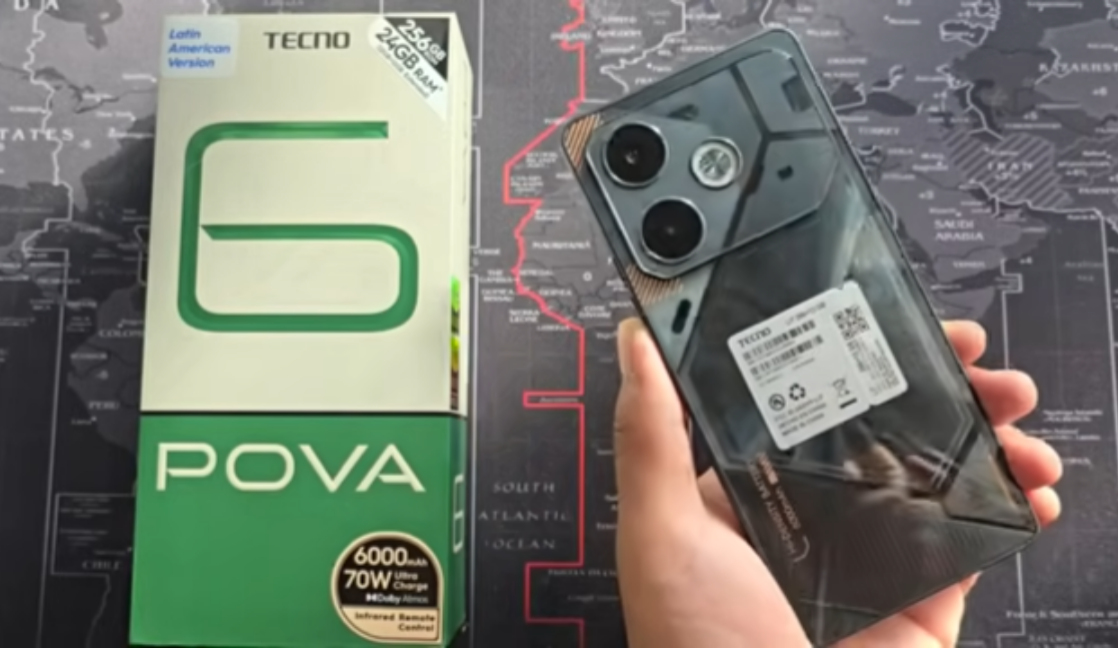
Verified specs (source: GSMArena, Tecno official product page)
- Display: 6.78” FHD+ AMOLED, 120Hz, 1300 nits peak
- Chipset: MediaTek Dimensity 6080 (6nm)
- RAM/Storage: 8GB or 12GB / 256GB
- Battery: 6000mAh
- Charging: 70W wired (0→50% in 20 min, 0→100% in 50 min) + 10W reverse wired
- Rear camera: 108MP main, 2MP depth, auxiliary AI cam
- OS: Android 14 / HiOS 14 (launched April 2024)
- IP rating: IP53
The Pova 6 Pro launched in early 2024 and it still holds a card no competitor at this price tier has beaten: 70W charging on a 6000mAh battery, confirmed by GSMArena’s review which clocked 50% in 20 minutes and a full charge in 50 minutes. That’s faster than what you get on phones with batteries 2000mAh smaller.
The AMOLED display is genuinely good at the price — 120Hz, FHD+, 1300 nits peak brightness. For daily use, video, and gaming, it holds up well against more expensive competition.
The 108MP main shooter is where context is needed. The pixel binning drops output to 12MP effective images in most conditions, and aggressive processing makes night shots look over-sharpened. For daylight and well-lit social media photos, it’s capable. For anything demanding — low light, fast motion — the camera is the Pova 6 Pro’s most honest weakness.
For gaming, the Dimensity 6080 handles popular titles — PUBG Mobile, Call of Duty Mobile, Genshin at medium settings — without significant issues. Thermal throttling under sustained 30+ minute sessions has been reported by community users, which is typical for this chipset class. The phone runs warm rather than hot.
Estimated endurance (mixed daily use): With 4 hours social media + messaging, 1 hour YouTube, 30 minutes gaming at medium graphics, the Pova 6 Pro is expected to close the day with roughly 35–45% remaining, based on the 15h 56m PCMark battery life score documented in community testing.
Price note (Nigeria, June 2026): The Pova 6 Pro launched globally at ~$229 (8GB/256GB). As a 2024 phone, Nigerian street prices have come down from launch — current open market rates range from approximately ₦150,000–₦200,000 depending on seller and condition. Verify current naira pricing before buying, as it moves with exchange rates.
Best for: Anyone who needs the fastest possible charging on a 6000mAh phone without spending flagship money.
2. Redmi 15C 4G — The Cheapest Honest 6000mAh You Can Find
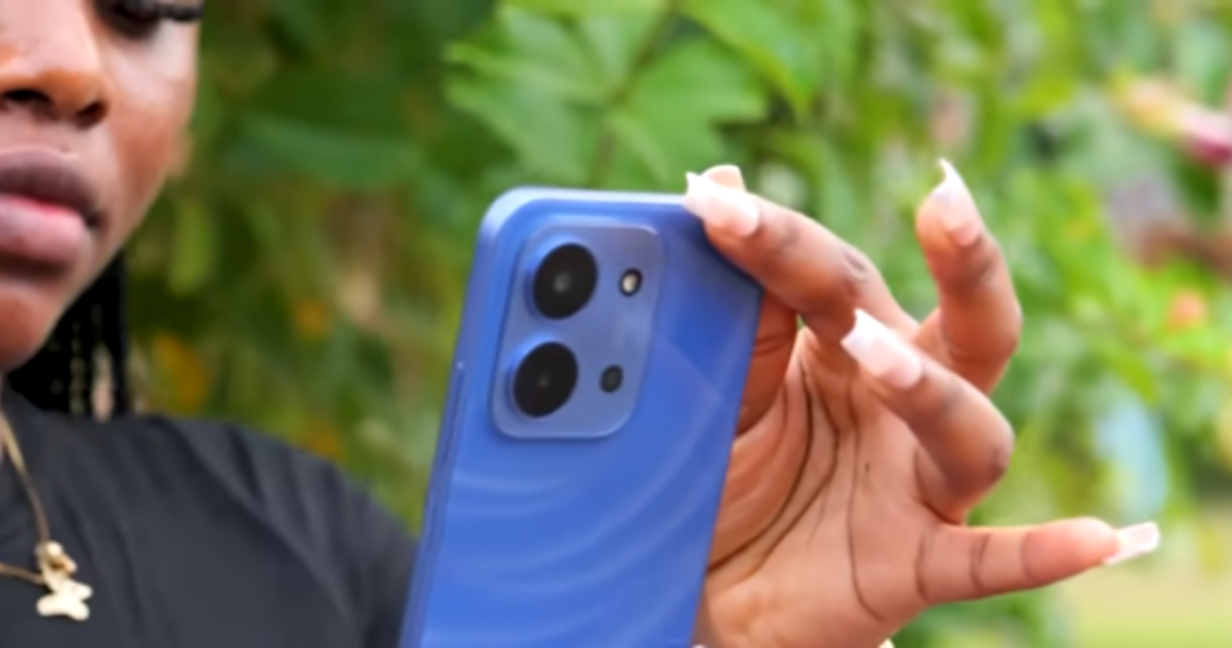
Verified specs (source: GSMArena, Xiaomi Global official specs page)
- Display: 6.9” IPS LCD, 720p (720×1600), 120Hz
- Chipset: MediaTek Helio G81 Ultra (12nm)
- RAM/Storage: 4GB, 6GB, or 8GB / 128GB or 256GB
- Battery: 6000mAh
- Charging: 33W wired (confirmed by Xiaomi’s official page; no charger included in some regions)
- Rear camera: 50MP main + depth sensor
- OS: Android 15 / HyperOS 2 (launched August 2025)
- IP rating: IP64
One quick correction from an earlier version of this post: the Redmi 15C’s charging speed is 33W, not 18W. That’s a meaningful difference — at 33W, a full charge takes roughly 90 minutes, compared to nearly 3 hours at 18W. Xiaomi’s official spec page confirms 33W. The display is also 720p, not 1080p, which is the deliberate trade-off that makes the battery last longer.
And it does last. The 720p screen and Helio G81 Ultra are both efficient enough that the 6000mAh cell here isn’t being asked to do heavy work. In light to moderate use — calls, WhatsApp, email, social media scrolling, some YouTube — two days on a single charge is genuinely achievable. In heavier use patterns, expect a solid day and a comfortable buffer into the next morning.
This is not a phone for media enthusiasts or gamers. The IPS LCD at 720p is a utility display — readable, practical, not impressive. The 50MP camera produces acceptable outdoor shots and struggles indoors. The Helio G81 Ultra handles daily tasks and struggles with anything more demanding than casual gaming.
What the Redmi 15C 4G is genuinely excellent at is being reliable, affordable, and having a battery that outlasts almost everything else at the price. For a first phone, a parent’s device, or anyone whose requirements are “stay alive and do the basics,” this is the most practical pick on the list.
Estimated endurance (light daily use): Based on the chipset class and display efficiency, estimated screen-on time in light use (calls, social, messaging) is 8–10 hours per charge. Two-day use is achievable at moderate intensity.
Price range (Nigeria, June 2026): ~₦140,000–₦190,000 brand new | ~$60–$80 USD (Naira prices shift frequently with the exchange rate — always confirm on the day of purchase. Jiji.ng typically lists lower than authorised retailers like Slot or Jumia.)
Best for: Anyone on the tightest budget who needs reliable battery life above all else.
3. Samsung Galaxy M35 5G — Reliability Has a Price and It’s Worth It
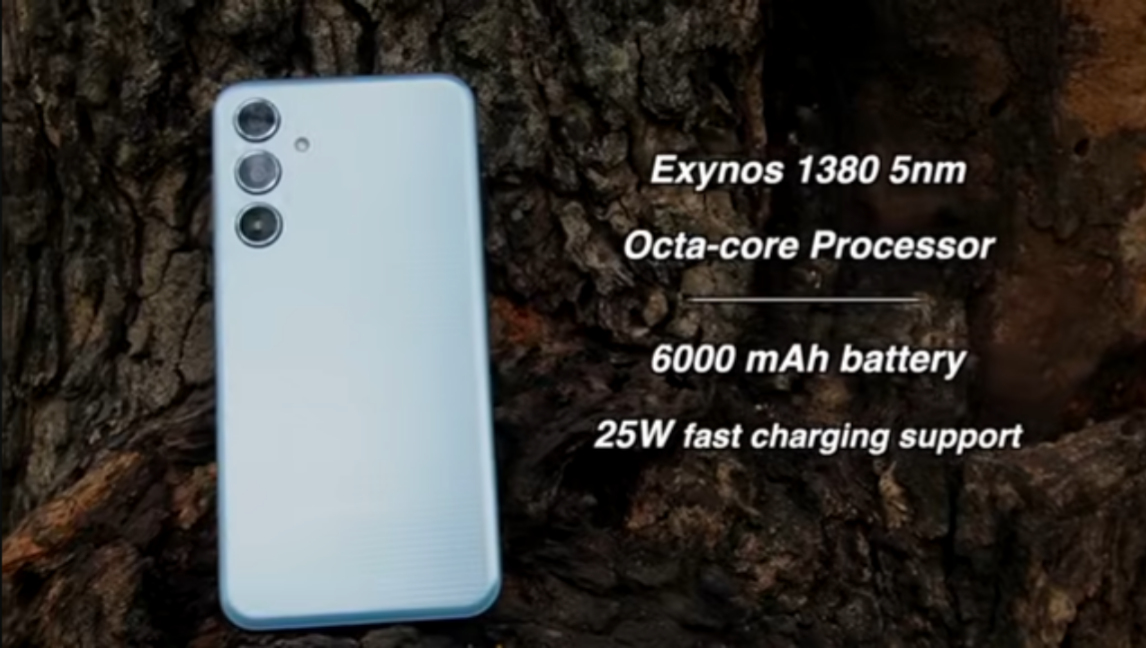
Verified specs (source: GSMArena, Samsung India official page, Samsung official launch announcement)
- Display: 6.6” Super AMOLED, FHD+ (1080×2340), 120Hz, 1000 nits peak
- Chipset: Samsung Exynos 1380 (5nm)
- RAM/Storage: 8GB / 128GB or 256GB
- Battery: 6000mAh (rated minimum 5830mAh per Samsung India)
- Charging: 25W wired (45W compatible — charger sold separately)
- Rear camera: 50MP main (OIS) + 8MP ultrawide + 2MP macro
- OS: Android 14 / One UI 6.1 at launch → 4 OS updates + 5 years security patches committed
- IP rating: IP54
A note on the software update commitment: Samsung has confirmed 4 major Android OS updates and 5 years of security patches for the M35 5G. That is significant — it means a phone bought now stays patched until 2029 minimum. The article previously described this as “six years of OS updates,” which was incorrect. The correct figure is four OS updates.
The 6000mAh battery combined with the Exynos 1380 — a 5nm chip that runs more efficiently than the Helio G100 or Dimensity 6080 — produces strong real-world endurance. The 5G radio does draw more power than a 4G-only device, but the chip’s efficiency compensates enough that a full day of heavy use, including navigation and video, is reliably achievable.
The Super AMOLED display is the best screen on this list. At 120Hz and FHD+ resolution, it’s calibrated better than competitors at this tier — consistent colour accuracy, good sunlight legibility, and smooth scrolling that doesn’t fade when the refresh rate drops under light load.
The 50MP main camera with OIS is the standout hardware advantage. Optical image stabilisation at this price point — confirmed in Samsung’s official spec sheet — makes a real difference for handheld video and low-light stills. Samsung’s image processing tends toward accuracy over dramatic AI enhancement, which produces more natural results in daylight and more usable shots in difficult conditions.
Estimated endurance (heavy daily use): Based on Exynos 1380 efficiency class and comparable M-series device testing, estimated screen-on time under mixed heavy use (social media, 5G browsing, occasional video) is approximately 9–11 hours per charge.
Price range (Nigeria, June 2026): ~₦350,000–₦450,000 | ~$200–$250 USD (Multiple Nigerian retailer listings confirm this range as of mid-2026. Naira prices can move ₦20,000–₦50,000 within weeks depending on exchange rate — verify current pricing before buying.)
Best for: Users who want Samsung software longevity, a premium screen, and a camera that genuinely performs — and are prepared to spend more to get it.
4. Infinix Hot 70 — The Newest 6000mAh Budget Entry, and It Shows
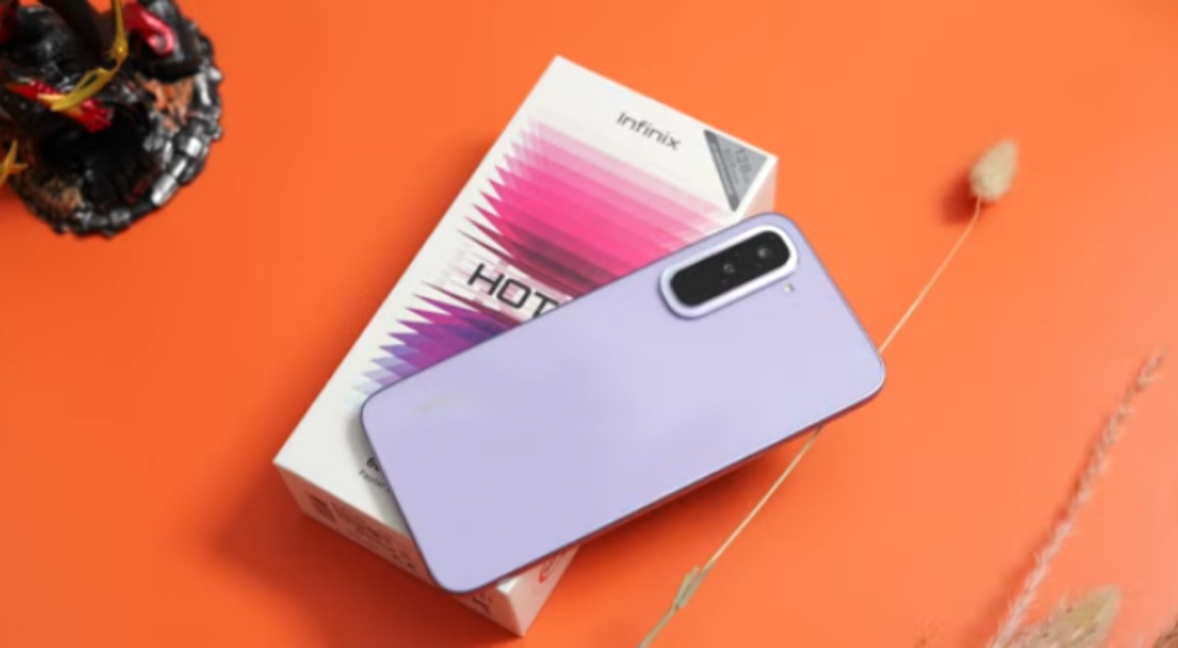
Verified specs (source: GSMArena database — announced May 2026; official Infinix Bangladesh launch listing)
- Display: 6.78” IPS LCD, HD+ (720×1576), 120Hz
- Chipset: MediaTek Helio G100 Ultimate
- RAM/Storage: 6GB or 8GB / 128GB or 256GB
- Battery: 6000mAh
- Charging: 45W wired + 10W reverse wired + bypass charging
- Rear camera: 50MP main (f/1.9) + auxiliary depth sensor
- OS: Android 16 / XOS 16 (one of the few budget phones launching on Android 16)
- IP rating: IP64
Important note: An earlier version of this article listed the Infinix Hot 50 Pro+ in this spot. That was an error — the Hot 50 Pro+ has a 5000mAh battery, confirmed by GSMArena’s full review. It has been removed. The Hot 70, announced in May 2026, is the correct Infinix entry with a genuine 6000mAh cell.
The Hot 70 is the most recently launched phone on this list, and a few things make it genuinely interesting beyond the battery. First, it launches on Android 16 out of the box — that’s ahead of most devices at this tier and means it starts with the most current Android base available. Second, the bypass charging feature routes power directly to the system during gaming, which reduces battery heat during sustained sessions. That’s a thoughtful detail on a budget device.
The 6000mAh cell with a 45W charger is a well-matched combination — full charge is around 60 minutes, and the HD+ display and Helio G100 Ultimate don’t punish the battery during regular use. The IP64 rating (dust-tight, splash-resistant) adds useful durability.
Where the Hot 70 falls short of the other phones on this list is the display. HD+ (720p) on a 6.78-inch screen is a compromise that shows on text, video, and anything with fine detail. If you’re comparing side-by-side with the Pova 6 Pro’s FHD+ AMOLED, the difference is visible and real. For users who won’t notice or don’t care about display sharpness — and many don’t — this is a strong budget value. For anyone who spends significant time reading, gaming, or watching content, the screen is the reason to look elsewhere.
Estimated endurance (mixed daily use): With the Helio G100 Ultimate (a relatively efficient chipset) and a 720p display reducing draw, estimated screen-on time in mixed use is approximately 9–10 hours per charge. The lower resolution means more battery per hour of screen time compared to FHD+ AMOLED devices.
Price range (Nigeria, June 2026): Nigerian pricing is not yet confirmed at time of writing — the Hot 70 launched in Bangladesh in May 2026 at BDT 18,999–25,999 (~$155–$210 USD) and global rollout is ongoing. Check Jumia NG, Jiji.ng, or your local Infinix dealer for current availability and naira pricing.
Best for: Budget-first buyers who want a brand-new device with a large battery, fast charging, and modern software out of the box.
5. Tecno Pova 7 Pro 5G — The Biggest All-Round Upgrade on This List
Verified specs (source: GSMArena full specs listing; Tecno official product page)
- Display: 6.78” AMOLED, 144Hz, 4500 nits peak, FHD+ (1224×2720), Gorilla Glass 7i
- Chipset: MediaTek Dimensity 7300 Ultimate (4nm)
- RAM/Storage: 8GB or 12GB / 128GB or 256GB (no microSD slot)
- Battery: 6000mAh
- Charging: 45W wired (0→50% in 26 min, 0→100% in 61 min) + 30W wireless + 10W reverse wired
- Rear camera: 64MP main (1/1.73”, PDAF) + 8MP ultrawide
- OS: Android 15 / HiOS 15 (launched July 2025)
- IP rating: IP64
Two spec corrections from the previous version of this article: the Pova 7 Pro’s display runs at 144Hz (not 120Hz), and it supports 30W wireless charging — a spec rarely seen at this price tier. Both are confirmed by GSMArena’s full database entry and Tecno’s official spec page.
The Pova 7 Pro is the most complete phone on this list when you step back and look at the whole picture. The Dimensity 7300 Ultimate is a 4nm chipset — a full node generation more efficient than the 6nm Dimensity 6080 in the Pova 6 Pro. In sustained gaming and heavy multitasking, it runs cooler and delivers more consistent frame rates. The GPU is Mali-G615 MC2, which handles games like PUBG and COD Mobile smoothly on high settings.
The 144Hz AMOLED display at 4500 nits peak is the most impressive screen spec on this list by a significant margin. That peak brightness figure means it’s usable in direct sunlight in ways that the Pova 6 Pro’s 1300-nit display is not. The Gorilla Glass 7i protection is also a step up from the Pova 6 Pro’s unspecified glass.
The addition of 30W wireless charging is worth calling out explicitly because it’s unusual at this price range. If you have a wireless pad on your desk, you can charge this phone without ever plugging it in. That’s a convenience feature that costs significantly more on competing devices.
The one trade-off worth knowing: the Pova 7 Pro has no microSD slot. If 128GB or 256GB internal storage isn’t enough, this matters — you can’t expand it. For most users it won’t be an issue, but it’s worth checking before you buy.
Estimated endurance (mixed daily use): Based on the 4nm Dimensity 7300 Ultimate’s efficiency class and AMOLED panel characteristics, estimated screen-on time in mixed use is approximately 10–12 hours per charge. The 5G modem is more efficient than older 5G implementations, which limits the radio’s drain on the cell.
Price range (Nigeria, June 2026): ~₦290,000–₦415,000 | ~$130–$190 USD (Phoneaqua lists ₦413,157–₦510,813; Android Arena reports ~₦290,650; Jiji grey market starts from ~₦130,000 for used/no-box units. Official retail will sit in the ₦290k–₦415k band — always verify on the day of purchase.)
Best for: Anyone who wants the most complete package — fastest chipset, best display, wireless charging, and strong battery life — at a price that beats what most Samsung equivalents cost in Nigeria.
Verified Specs Comparison Table
All specs cross-referenced with GSMArena and official manufacturer pages.
| Phone | Battery | Charging | Display | Chipset (nm) | OS at Launch | Approx. USD |
|---|---|---|---|---|---|---|
| Tecno Pova 6 Pro | 6000mAh | 70W wired | 6.78” FHD+ AMOLED 120Hz | Dimensity 6080 (6nm) | Android 14 | ~$229 launch |
| Redmi 15C 4G | 6000mAh | 33W wired | 6.9” IPS LCD 720p 120Hz | Helio G81 Ultra (12nm) | Android 15 | ~$60–$80 |
| Samsung Galaxy M35 5G | 6000mAh | 25W wired | 6.6” Super AMOLED FHD+ 120Hz | Exynos 1380 (5nm) | Android 14 | ~$200–$250 |
| Infinix Hot 70 | 6000mAh | 45W wired | 6.78” IPS LCD 720p 120Hz | Helio G100 Ultimate | Android 16 | ~$85–$120 |
| Tecno Pova 7 Pro 5G | 6000mAh | 45W wired + 30W wireless | 6.78” AMOLED FHD+ 144Hz | Dimensity 7300 Ultra (4nm) | Android 15 | ~$130–$190 |
Price disclaimer (June 2026): USD figures reflect approximate international launch/street pricing. Nigerian Naira prices are highly volatile — they shift with the naira-dollar exchange rate, which can move ₦20,000–₦50,000 on a single phone within weeks. The ₦ figures listed in each phone section are based on retailer data collected in June 2026. Always confirm current naira pricing with your seller on the day of purchase. Jiji.ng, Jumia NG, and Slot.ng are good starting points for real-time comparison.”*
Estimated Battery Endurance Comparison
These estimates are based on chipset efficiency class, display type and resolution, charging wattage, and community-sourced benchmarks where available (including PCMark scores and screen-on-time reports). They are estimates — your real-world result depends on signal strength, app usage, screen brightness, and whether you use 5G.
| Phone | Est. Screen-On Time | Use Case This Fits |
|---|---|---|
| Tecno Pova 7 Pro 5G | 10–12 hrs | Heavy use — gaming, 5G browsing, streaming |
| Tecno Pova 6 Pro | 10–11 hrs | Mixed heavy use — gaming + social + video |
| Infinix Hot 70 | 9–10 hrs | Moderate use — social, calls, YouTube |
| Samsung Galaxy M35 5G | 9–11 hrs | Mixed use with 5G active |
| Redmi 15C 4G | 8–10 hrs (light), up to 2 days (very light) | Light use — calls, WhatsApp, basic browsing |
The Redmi 15C’s range is wide because the 720p LCD and Helio G81 Ultra combination draws very little power under light loads — users who primarily call and message may see two full days. Heavy users will see the lower end of the estimate.
Here are the related articles block, ready to paste:
Related Articles
- Best Samsung Phones for Students in 2026
- Itel City 200 Review
- Infinix Hot 70 Review — Battery, Performance & More
- Best Low-End Android Games for 2GB & 3GB RAM
What Actually Matters Beyond Raw mAh
The number people fixate on — mAh — is only one variable. Three others matter just as much.
Charging speed. A 6000mAh battery at 18W takes roughly 2.5–3 hours to fully charge. The same capacity at 70W takes under an hour. If your charging habits are irregular or rushed, speed can matter more than capacity. The Pova 6 Pro’s 70W is the fastest on this list by a significant margin.
Chipset generation and process node. The Dimensity 7300 Ultra in the Pova 7 Pro is built on 4nm. The Helio G81 Ultra in the Redmi 15C is 12nm. Older process nodes draw more power per instruction — meaning the same 6000mAh cell empties faster under the same workload. Newer is genuinely more efficient, not just a marketing claim.
Display resolution and type. A 720p IPS LCD draws meaningfully less power than a 1080p AMOLED at 120Hz brightness. The Redmi 15C and Infinix Hot 70 benefit from this — their lower-res displays let the 6000mAh cell last longer per charge than phones with more demanding panels.
Software optimization. This is the hardest to quantify and the most real. Samsung’s One UI aggressively manages background processes. Infinix’s XOS has improved significantly in recent generations. Poorly optimized software can cost 15–20% of your daily battery without any change to hardware. It’s why two phones with identical specs can show meaningfully different endurance in daily use.
Why Some Phones Aren’t on This List
A few phones people commonly search for when looking at big batteries — and why they weren’t included here.
Infinix Hot 50 Pro+ — Confirmed 5000mAh battery, not 6000mAh. GSMArena’s review and Infinix’s official announcement both state 5000mAh. It’s a good phone in its own right, but it doesn’t belong on a 6000mAh list.
Tecno Pova 6 Neo — Only 5000mAh. The “Neo” suffix in the Pova line consistently signals a smaller battery.
Samsung Galaxy A35 5G — Also 5000mAh, despite being a well-rounded device. The Galaxy M35 is the Samsung option with the 6000mAh cell.
Realme Narzo 70 Pro 5G — 5000mAh. Strong phone but doesn’t qualify for this list.
Phones with unverified 6000mAh claims — Several budget phones advertise large batteries on retail listings that don’t match manufacturer spec sheets. If the official product page and GSMArena’s database didn’t confirm 6000mAh, the phone wasn’t included.
There’s also a separate conversation worth having about silicon-carbon battery phones: a 5500mAh silicon-carbon cell in a modern 4nm device can outperform an older 6000mAh lithium-polymer phone in real-world endurance. Battery chemistry and chipset generation together matter more than the raw number alone. That’s a topic for a dedicated post.
FAQ
Q: Is a 6000mAh battery phone heavier than a 5000mAh option?
Marginally, yes — but less than you’d expect in 2026. The Tecno Pova 7 Pro 5G weighs 195g with a 6000mAh cell. The Pova 6 Pro is 198g. These aren’t notably heavier than mid-range 5000mAh phones. Older 6000mAh devices were heavier because battery density was lower. Silicon-carbon chemistry and better engineering have closed that gap significantly.
Q: Will a 6000mAh phone actually last two days?
Depends heavily on how you use it. The Redmi 15C — with its 720p LCD and light chipset — can reach two days for users who primarily call, message, and browse lightly. Phones with FHD+ AMOLED displays and 5G active (like the Samsung M35 or Pova 7 Pro) are more likely to deliver one full heavy day than two moderate ones. If two-day endurance is the goal, the Redmi 15C is the most likely to actually get there consistently.
Q: What’s the fastest-charging 6000mAh phone on this list?
The Tecno Pova 6 Pro at 70W — 0 to 100% in approximately 50 minutes, confirmed by GSMArena’s timed charge test. The Pova 7 Pro and Infinix Hot 70 both sit at 45W (approximately 60–75 minutes to full). The Samsung M35 charges at 25W (approximately 95–110 minutes with a compatible charger). The Redmi 15C comes in at 33W (approximately 85–95 minutes).
Q: Which phone here is best for gaming specifically?
The Tecno Pova 7 Pro 5G — the Dimensity 7300 Ultimate at 4nm handles sustained gaming with better thermal management and more consistent frame rates than the Helio or Dimensity 6080 alternatives. The 144Hz AMOLED display is also meaningfully smoother for fast-paced games. The Pova 6 Pro is the second pick for gaming if budget is the constraint.
Q: Does charging speed damage the battery faster?
High-speed charging does generate more heat, and heat is the main long-term degrader of lithium battery capacity. However, manufacturers building 70W and 45W systems include thermal management specifically to limit peak temperatures during charging. The Pova 6 Pro uses a dual-cell battery design to reduce heat per cell at 70W. Long-term capacity loss is a real factor, but well-engineered fast-charging systems are significantly less damaging than unregulated alternatives.
Q: Samsung Galaxy M35 or Tecno Pova 7 Pro — which should I pick?
It depends what you’re buying for. The Samsung M35 gives you a better camera system, Samsung’s software ecosystem with 4 OS updates and 5 years security patches, and One UI’s refined experience. The Pova 7 Pro gives you a better display (144Hz AMOLED vs 120Hz AMOLED), a faster chipset (4nm vs 5nm), wireless charging, and a lower price. If long-term software support and camera quality are the priority — Samsung. If display and performance per naira are the priority — Pova 7 Pro.

Comments 0
Leave a comment