Table of Contents
Open Table of Contents
Overview
Most phone buyer guides read like a spec sheet that learned to talk. Numbers lined up in a table, a “Best For” badge slapped underneath, and zero help making an actual decision.
That’s not what this is.
This guide covers the four Google Pixel phones worth buying right now in May 2026: the Pixel 10, Pixel 10 Pro, and Pixel 10 Pro XL (all launched August 28, 2025), plus the Pixel 10a (launched March 5, 2026). All confirmed, all in retail. No leaks dressed up as facts, no “expected to ship later this year” filler.
What I want to do is explain what you’re actually choosing between — because the differences between these four phones aren’t always where you’d expect them. The Pixel 10 standard model has a larger battery than the Pixel 10 Pro, for instance. The Pixel 10a doesn’t run the same chip as the rest of the lineup. These things matter when you’re spending real money.
If you’re also comparing Pixels to the best iPhones for cameras right now or trying to see how they stack up against Samsung’s mid-range, this should give you enough grounding to land somewhere you’re confident about.
Why Pixel in 2026?
A few things apply to every Pixel in this guide, regardless of which model you pick.
Seven years of software updates. Confirmed by Google on the product pages for every device listed here. A Pixel 10 bought today gets OS and security updates until 2032. A Pixel 10a purchased in early 2026 runs through 2033. For comparison, most Android manufacturers offer three to four years. This is a meaningful long-term value argument, not just a talking point.
Clean Android. No manufacturer skin. No duplicate apps. No pre-installed software you didn’t choose. If you’ve come from a heavily customised Android experience, Pixel’s software environment feels noticeably lighter and faster to navigate.
First in line for Android updates. Every major Android release, every Pixel Feature Drop, every security patch — Pixels get it before any other Android device.
Tensor G5 (Pixel 10 series only). The Pixel 10, 10 Pro, and 10 Pro XL all run the Tensor G5, built on TSMC’s 3nm process. This is Google’s most capable chip to date. The Pixel 10a runs the older Tensor G4 — confirmed in Google’s official announcement and multiple independent spec databases. Not a disqualifier, but worth knowing before you assume all four phones are on equal footing.
Things that apply to all four: eSIM-only in the US (no physical SIM slot). No expandable storage. Google doesn’t officially sell Pixels in most African markets, including Nigeria — imports work, but warranty and repair support fall on you.
1. Pixel 10 Pro — Best Overall
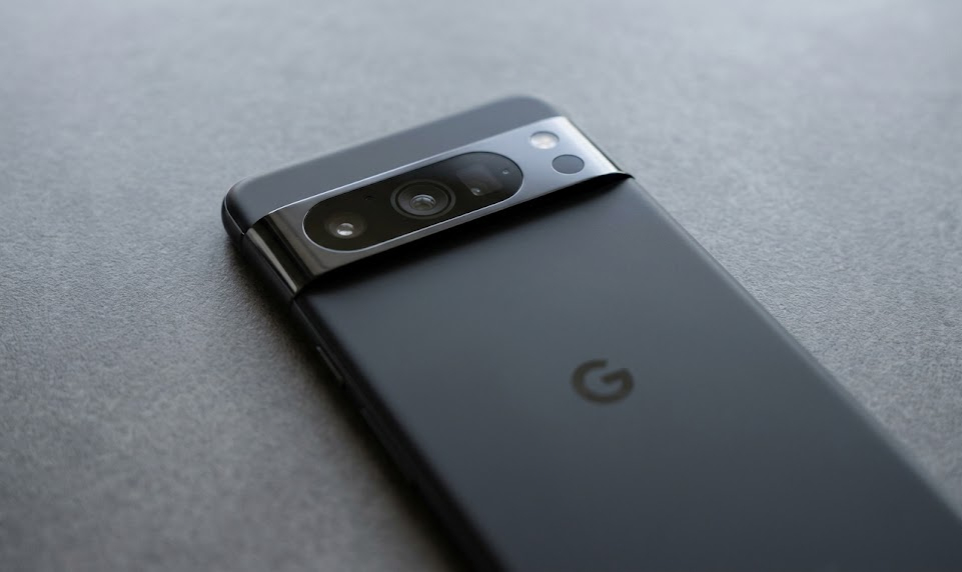
$999 starting | Released August 28, 2025
The Pixel 10 Pro is where most buyers in this lineup should spend their money — and the reason is specific, not vague.
The confirmed specs: 6.3-inch LTPO OLED display, Tensor G5 chip, 16GB RAM, 128GB base storage (configurable to 1TB), 4,870mAh battery, 30W wired charging, Pixelsnap magnetic wireless charging (Qi2-certified), and a triple rear camera: 50MP main, 48MP ultrawide with macro focus, 48MP 5x telephoto. IP68. Wi-Fi 7. All verified via Google Store and GSMArena at launch.
The camera configuration is one of the more honest things Google has done in the Pixel lineup in a while. All three lenses are 48–50MP — meaning the ultrawide and telephoto are real cameras, not cut-down sensors bolted on to pad the spec list. The ultrawide specifically has macro focus, which lets you shoot close-up subjects without switching modes or losing quality. That’s useful in practice, not just on a spec sheet.
The display hits 3,000 nits peak brightness — measurable real-world performance in direct sunlight, not a theoretical number.
Now, what the Pro doesn’t have over the XL below it: the 6.8-inch screen, the 5,200mAh battery, and 45W charging. That’s the full list of differences. Same chip, same RAM, same camera system. If you don’t specifically need a larger display or extended battery endurance, paying $200 more for the XL is hard to justify.
Where it’s not perfect: 30W charging is the slowest among the flagship Pixel 10 models. If you’re coming from a phone with 65W+ fast charging, the gap will feel noticeable on rushed mornings.
The case for it: You get the full Pixel 10 Pro camera and software experience — the same system reviewers have been calling the most refined in the lineup — in a 6.3-inch form factor for $200 less than the XL. That’s a reasonable trade-off for most people.
2. Pixel 10 Pro XL — Best for Heavy Users
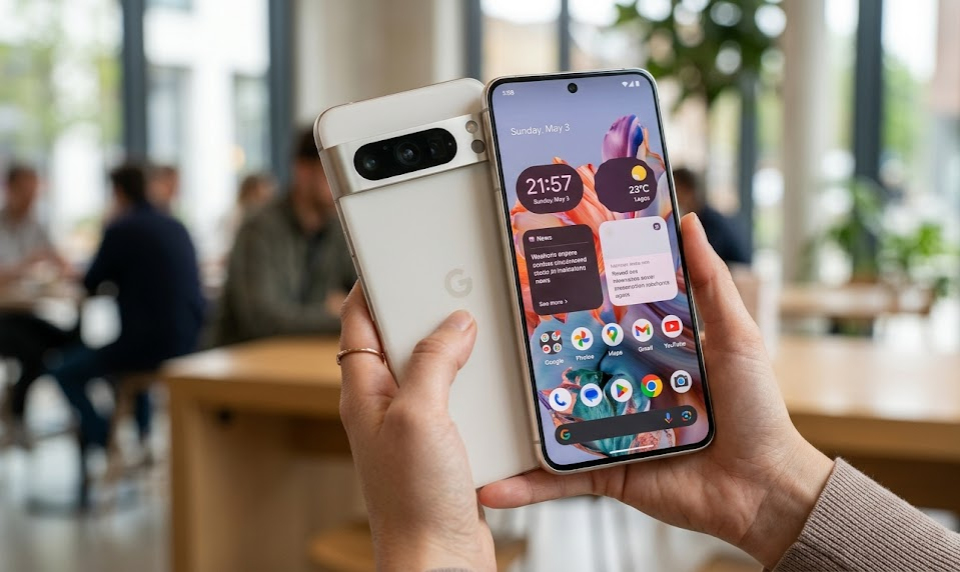
$1,199 starting | Released August 28, 2025
The Pixel 10 Pro XL is the same phone as the Pro in almost every respect. The differences, confirmed via GSMArena and Android Central: a 6.8-inch Super Actua display hitting 3,300 nits peak brightness, a 5,200mAh battery, 45W wired charging, and 256GB as the base storage (instead of the Pro’s 128GB floor).
That’s it. Same Tensor G5. Same 16GB RAM. Same triple camera system.
Whether those differences justify $200 more is entirely a function of how you use your phone.
The battery case is the strongest: the XL’s 5,200mAh cell gives you meaningful headroom on heavy days. Techradar, in their review, noted the Pro XL gets through a full day even with demanding use — the Pro sometimes requires discipline on the same kind of day. If battery anxiety is something you deal with on your current phone, the XL addresses it. If it isn’t, the Pro is the same device for less.
The 3,300 nits display (versus 3,000 on the Pro) shows up most in direct sunlight. For indoor use, most people won’t register the difference.
Where it’s not perfect: 232 grams. That’s the confirmed weight. It’s a big, heavy phone — something you feel over a full day of holding it. And at $1,199, the value argument gets harder when the camera — typically the main reason people buy Pixel — is identical to the $999 model.
The case for it: Heavy users who need maximum battery endurance, people who watch a lot of video and want the larger screen, and anyone who specifically wants 256GB as the base storage option without paying for a higher tier. If none of those are you, the Pro handles everything the XL does for less money.
3. Pixel 10 — Best Balanced Option
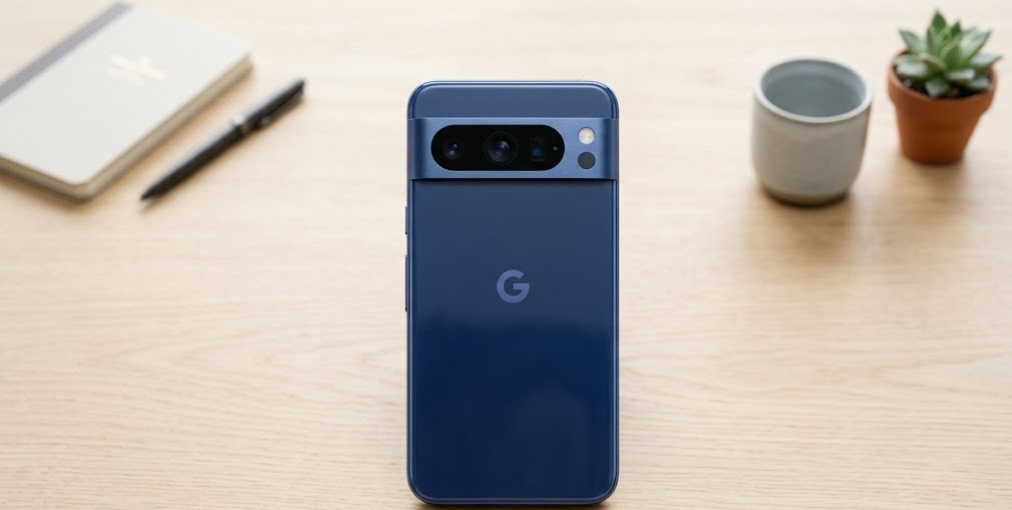
$799 starting | Released August 28, 2025
The standard Pixel 10 changed the equation for this model tier in 2026, and it’s worth being specific about how.
Google gave the Pixel 10 a triple rear camera system for the first time — 50MP main, 48MP ultrawide, 48MP 5x telephoto — matching the Pro models’ camera hardware. Android Central confirmed this across the full lineup at launch. In previous generations, the base Pixel had a dual-camera setup and no optical telephoto. That’s no longer the case.
So what are you actually giving up by choosing the Pixel 10 over the Pro at this price point?
The confirmed differences: 12GB RAM instead of 16GB. Storage caps at 256GB (the Pro goes to 1TB). Wi-Fi 6E instead of Wi-Fi 7. Standard 120Hz display rather than the Pro’s LTPO panel (which adjusts its refresh rate more efficiently for battery savings). No Pixelsnap magnetic charging — just standard wireless charging. The base 128GB model uses UFS 3.1 storage; stepping up to 256GB gets you UFS 4.0. The battery at 4,970mAh is actually slightly larger than the Pro’s 4,870mAh, though charging is slower at 23W.
For most everyday use — social media, browsing, communication, streaming, photography — 12GB of RAM and the storage difference are not going to be the limiting factor. The camera, which is typically the headline reason people buy Pixel, is not meaningfully different at the sensor level.
Where it’s not perfect: 23W charging is the slowest in the lineup, including the 10a (which actually charges at 30W). The lack of Pixelsnap matters if you’ve built a desk or car setup around magnetic mounts. And if you need more than 256GB of local storage, the Pro is the only way to get there.
The case for it: $200 less than the Pro, same camera hardware, same Tensor G5 chip, seven-year update commitment. For buyers who want the Pixel camera experience without flagship pricing, this is the rational pick. It’s also where I’d start if you’re switching from iPhone and evaluating Android for the first time — relevant context in the student phone guide I put together.
4. Pixel 10a — Best Budget Pixel
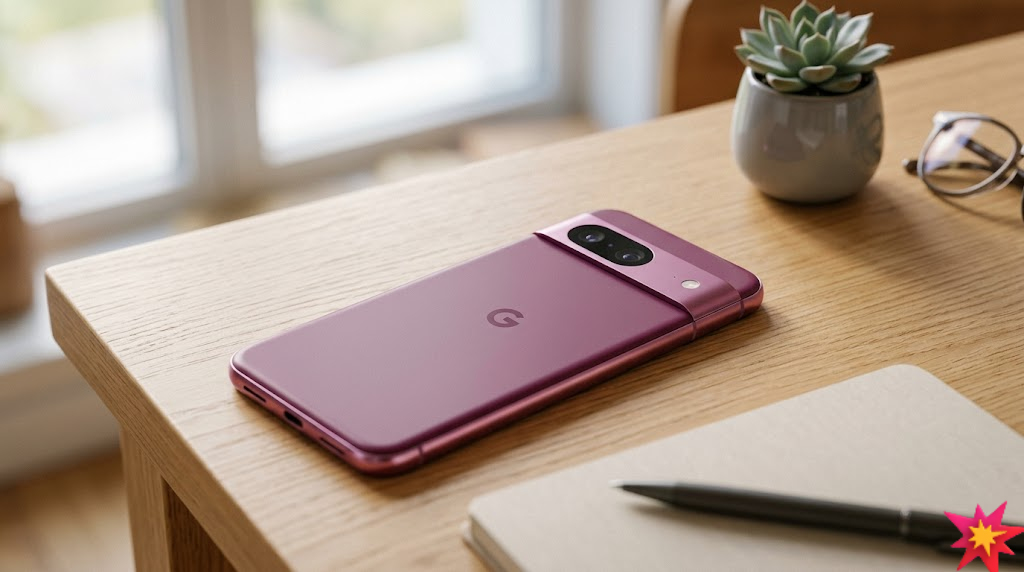
$499 starting | Announced February 18, 2026 | Released March 5, 2026
The Pixel 10a is the most debated phone in this lineup among existing Pixel fans — and the reason is worth understanding before you buy.
Confirmed specs from the Google Store and independent databases: Tensor G4 chip (not G5), 8GB RAM, 6.3-inch OLED at 120Hz with 3,000 nits peak brightness, 5,100mAh battery, 30W wired charging, 10W wireless charging, dual rear cameras (48MP main + 13MP ultrawide — no telephoto), IP68, Gorilla Glass 7i, 128GB/256GB storage. Android 16 out of the box.
The chip point is the one that generated the most noise at announcement. The Pixel 10a uses the Tensor G4 — the same chip as the Pixel 9a. Google made a deliberate choice not to bring the G5 to the 10a, keeping the 9a’s silicon. AndroidHeadlines confirmed this, PhoneArena confirmed this, the Wikipedia spec table confirmed this. It’s not a rumour. If you see a guide telling you the 10a runs the Tensor G5, that guide is wrong.
In practical terms: the G4 handles everyday tasks, browsing, social apps, photography, and moderate gaming without issue. Where G5 efficiency shows up is sustained performance under load and battery optimisation. The 5,100mAh cell on the G4 may behave differently under the same daily workload than the smaller battery on the G5-powered Pixel 10. PhoneArena noted the Pixel 9a — same chip, same battery — showed “dependable battery life” in testing. That’s useful baseline context.
What the 10a does well by confirmed spec: that 5,100mAh battery is the largest in the lineup by number. 3,000 nits peak brightness on a $499 phone is genuinely good. IP68 at this price is not a given from competitors. Seven years of updates applies here too — Google confirmed it.
Google’s own claim: “Pixel 10a has the best camera under $500.” Their A-series phones have made this claim five generations in a row, and independent testing across those generations has generally supported it. The 10a camera is not the same as the Pixel 10 — no telephoto, lower-resolution ultrawide — but Google’s image processing at this price tier has consistently been competitive.
Where it’s not perfect: No telephoto lens. The Tensor G4 gap matters if you play demanding games for extended sessions — sustained GPU performance is where the chip age shows most. And the reception among hardcore Pixel followers was genuinely mixed: AndroidHeadlines’ buyer guide noted the 10a is “so similar to the Pixel 9a” that upgrading from a 9a doesn’t make sense. That’s a fair observation.
The case for it: For a first-time Pixel buyer, a student, or someone who needs a reliable $499 Android with seven years of support and a proven camera tier, the 10a earns its place. If you’re also looking at what Samsung and Apple offer in this price range — which is worth doing — I covered that in the Samsung student phones guide and budget iPhones breakdown.
Full Comparison Table
All specs sourced from Google Store, GSMArena, Android Central, PhoneArena, and Wikipedia at time of writing (May 2026).
| Spec | Pixel 10a | Pixel 10 | Pixel 10 Pro | Pixel 10 Pro XL |
|---|---|---|---|---|
| Price (128GB base) | $499 | $799 | $999 | $1,199 (256GB base) |
| Release Date | March 5, 2026 | Aug 28, 2025 | Aug 28, 2025 | Aug 28, 2025 |
| Chip | Tensor G4 | Tensor G5 | Tensor G5 | Tensor G5 |
| RAM | 8GB | 12GB | 16GB | 16GB |
| Max Storage | 256GB | 256GB | 1TB | 1TB |
| Display Size | 6.3” OLED | 6.3” OLED | 6.3” LTPO OLED | 6.8” LTPO OLED |
| Refresh Rate | 120Hz | 120Hz | 1–120Hz adaptive | 1–120Hz adaptive |
| Peak Brightness | 3,000 nits | High (unconfirmed exact) | 3,000 nits | 3,300 nits |
| Main Camera | 48MP | 50MP | 50MP | 50MP |
| Ultrawide | 13MP | 48MP | 48MP w/macro | 48MP w/macro |
| Telephoto | None | 5x optical | 5x optical | 5x optical |
| Battery | 5,100mAh | 4,970mAh | 4,870mAh | 5,200mAh |
| Wired Charging | 30W | 23W | 30W | 45W |
| Wireless Charging | 10W standard | Pixelsnap (Qi2) | Pixelsnap (Qi2) | Pixelsnap (Qi2) |
| IP Rating | IP68 | IP68 | IP68 | IP68 |
| Wi-Fi | Wi-Fi 6E | Wi-Fi 6E | Wi-Fi 7 | Wi-Fi 7 |
| OS Updates | 7 years (to 2033) | 7 years (to 2032) | 7 years (to 2032) | 7 years (to 2032) |
| Weight | 183g | 204g | 207g | 232g |
Quick Pick by Situation
| Your Situation | Recommended Pick |
|---|---|
| Under $500, first Pixel, student | Pixel 10a |
| Want telephoto without flagship spend | Pixel 10 |
| Best all-round Pixel, reasonable size | Pixel 10 Pro |
| Heavy user, need all-day battery | Pixel 10 Pro XL |
| Switching from iPhone, exploring Android | Pixel 10 |
| Need over 256GB local storage | Pixel 10 Pro or Pro XL |
| Specific need for Wi-Fi 7 | Pixel 10 Pro or Pro XL |
Who Should Skip Pixel?
Being straight about this matters.
If you need a physical SIM slot: All Pixel 10 series phones sold in the US are eSIM-only. Confirmed. If your carrier, region, or travel habits require a physical SIM, this is a dealbreaker — not a workaround.
If you’re deep in Samsung’s ecosystem: Galaxy Watch, SmartThings, Samsung DeX, Samsung Pay in markets where Google Pay isn’t available — none of this carries over. Switching costs are real.
If you need expandable storage: No Pixel phone has had a microSD slot in years. Plan around internal storage or cloud backup from day one.
If you’re in an unsupported market: Google’s official retail presence doesn’t extend to most of Africa. Importing works, many people do it, but you’re self-insured on the warranty. That’s a real risk to price into your decision.
If you prioritise fast charging: Even the best wired charging in this lineup is 45W on the Pro XL. Competitors at similar prices offer 65W, 80W, and above. If you rely on topping up quickly during short windows, Pixel is behind on this specific feature.
FAQ
Is the Pixel 10a a good deal at $499?
For what it is — a clean Android phone with a competitive camera tier, IP68, seven years of updates, and a 5,100mAh battery — yes. The frustration among existing Pixel 9a owners is fair, since the hardware jump is minimal. For new buyers in this price range, it’s one of the stronger Android options. Compare it against the Samsung A-series in this range to see where the trade-offs land.
Does the Pixel 10a have a telephoto camera?
No. Confirmed dual rear setup: 48MP main and 13MP ultrawide. No optical telephoto. If telephoto is a priority, the Pixel 10, 10 Pro, or 10 Pro XL all include a 5x optical telephoto lens.
What’s the actual chip in the Pixel 10a?
Tensor G4 — the same chip as the Pixel 9a from 2025. Not the Tensor G5. This was confirmed in Google’s February 18, 2026 announcement and documented across multiple independent spec sources.
Which Pixel 10 model has the best battery?
By confirmed mAh: Pixel 10 Pro XL (5,200mAh) > Pixel 10a (5,100mAh) > Pixel 10 (4,970mAh) > Pixel 10 Pro (4,870mAh). Real-world battery life depends on chip efficiency and software management alongside raw capacity — the G5 phones may perform differently under equivalent workloads than the G4-powered 10a despite smaller cells. Long-term independent tests will show that more clearly than specs alone. If you want a dedicated breakdown of battery performance in the iPhone space for comparison, this piece on iPhone battery life covers that side.
Do Pixel phones work in Nigeria?
Technically: they support Nigerian LTE bands. Practically: Google doesn’t officially sell or service Pixels in Nigeria. Import buyers are responsible for warranty and repairs. The phone will work on the network; the support infrastructure won’t be there if hardware fails. If you need a local-warranty option in the same price range, the budget phone comparison here is a more relevant starting point.
Should I buy now or wait for the Pixel 11?
The Pixel 11 series is expected in August–September 2026 based on Google’s annual cadence. If you can wait three to four months, doing so gives you the option to either buy the new device or pick up a Pixel 10 at a reduced price after the new lineup lands. If you need a phone now, the current lineup is fully supported and not going anywhere. That’s always the honest answer on “should I wait” questions.
How does Pixel camera quality compare to iPhone at this price tier?
This is a longer conversation than fits in a single FAQ answer — I went deeper on the iPhone camera side in the top iPhones for cameras piece. Short answer: both are competitive at flagship level with different processing philosophies. Pixel leans on computational processing and scene detection; iPhone leans on hardware quality and video pipeline consistency. Which produces better results depends significantly on what you’re shooting and how you evaluate the output.