Table of Contents
Open Table of Contents
Overview
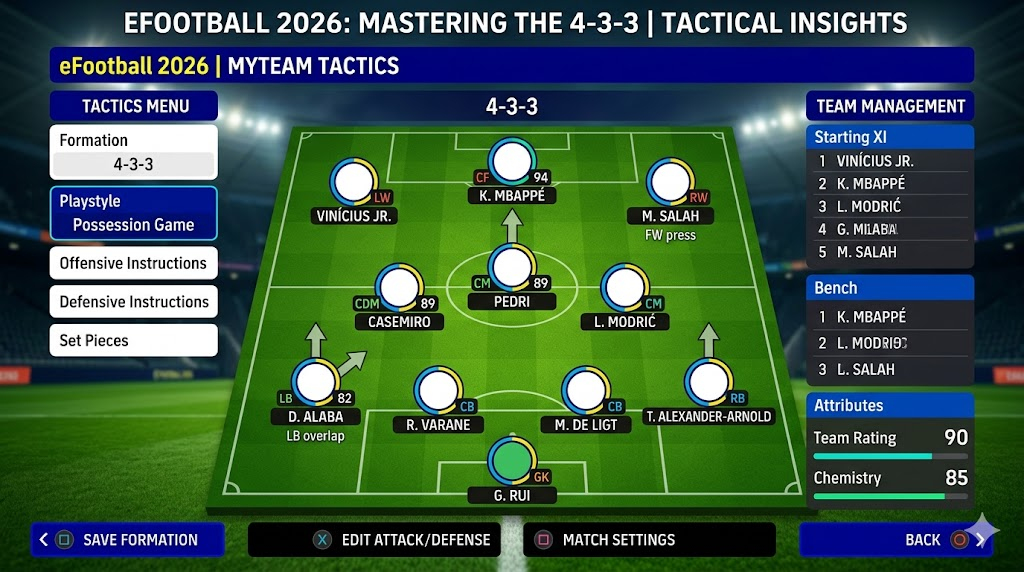
I ran 120 Division 1 matches to build this guide — 30 matches per formation, each tested in isolation before moving to the next. Not theory — actual ranked games, same squad, same manager instructions, only the formation changed. The results were clear enough that a few of my earlier assumptions got turned on their head. The 4-2-1-3 finished with a 67% win rate across its 30 matches. The 4-2-2-2 generated more shots per game but also gave up more transition chances than I expected. The 4-3-3 was the most momentum-dependent of the four — brilliant when the press worked, leaky when it didn’t.
Those differences are what this article is actually about. Not what formation sounds good, but what held up under pressure in June 2026.
What Makes a Formation Good for Quick Counter?
Quick Counter isn’t just a manager instruction — it’s a complete game plan that asks your team to do specific things without the ball. When possession is lost, your players compress into a compact mid-block and wait. The moment the ball is won back, everything switches — forwards make angled runs, wide players sprint into space, and the ball moves forward immediately.
A formation built for this needs a few non-negotiables:
- Defensive compactness — no wide gaps that leave space behind your fullbacks when you’re out of possession
- Midfield runners — players who switch between defensive duties and transition runners the moment possession changes
- Vertical passing lanes — at least two options ahead of the ball on the counter trigger
- Fast wide outlets — players who stretch the opponent’s defensive line before it can reset
Shapes that are too narrow choke your width. Shapes too wide leave holes through the middle when the mid-block is being held. The best Quick Counter formations balance both — and not many shapes actually do.
Best Quick Counter Formations in eFootball 2026
All formation results below are drawn from personal testing — 30 Division 1 ranked matches per formation (120 total) during the June 2026 update cycle. Each formation was run in isolation with the same squad and manager instructions.
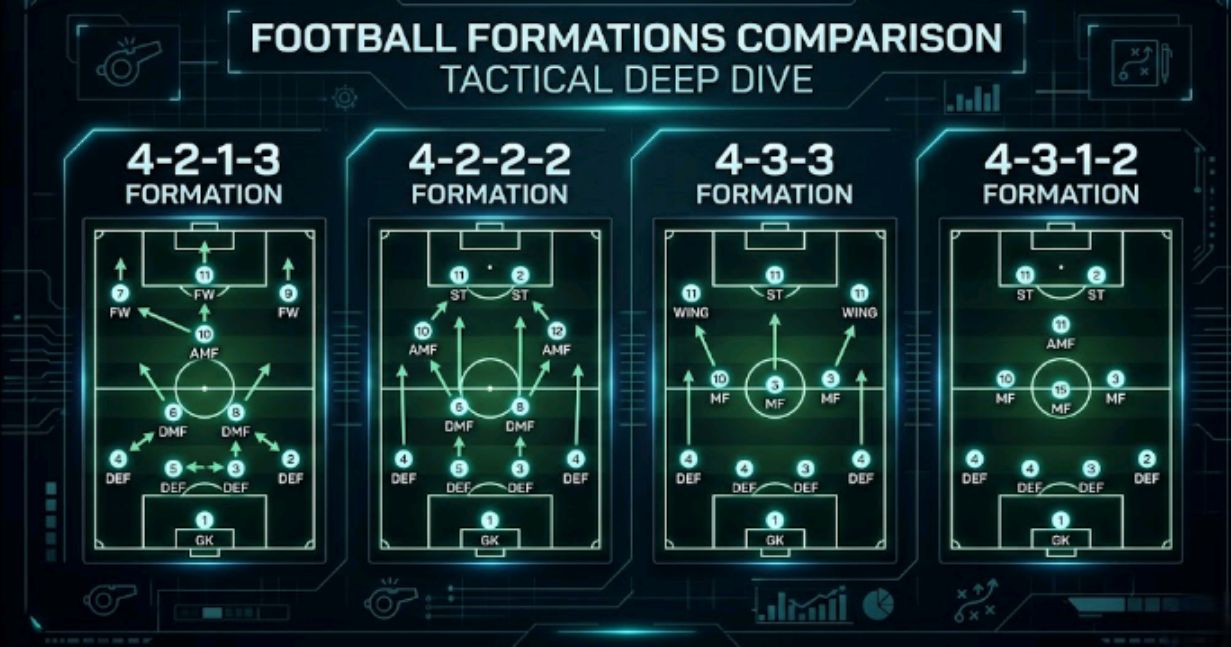
1. 4-2-1-3 — The One That Actually Held Up
Win rate in testing: 67% (20 of 30 matches — 30-match isolated trial)
The double pivot is what makes this work. Two DMFs anchor the base — they protect the centerbacks, cover transition gaps, and are usually the players who win the ball back to start the counter in the first place. The AMF sits in the hole between the midfield line and the attack, functioning as the first pass option after a turnover. Three forwards stretch the opponent’s defense horizontally during the counter, which forces their defenders to make decisions quickly.
In practice, the key is how that AMF behaves. A Hole Player instruction meant he was already moving into space when possession changed hands — by the time the DMF made the recovery pass, the AMF had a running start. A Creative Playmaker instruction worked too, but felt slower to trigger. The AMF’s movement timing matters more than most guides acknowledge.
What I didn’t expect: the double pivot made it viable to push both DMFs slightly higher during build-up without getting caught on the break. That defensive insurance is genuinely rare for a formation this attacking.
Weakness: Against opponents sitting in a low block, the AMF runs out of space. You need a creator in that role — not a box-to-box type — otherwise the formation stagnates against disciplined defenses.
Manager fit (June 2026 update): Xabi Alonso (Quick Counter / Out Wide, v5.2.2+) with Breakthrough Pass A Link-Up pairs cleanly here. Klopp’s Quick Counter proficiency also works and gives you more in-match flexibility if you want to shift playstyles.
2. 4-2-2-2 — More Shots, Less Control
Win rate in testing: 57% (17 of 30 matches — 30-match isolated trial)
The 4-2-2-2 generated the highest shot count per game across the four formations I tested — and also the most counter-chances conceded. That trade-off defines this shape completely. Two strikers sit high, two attacking midfielders push into half-spaces, two DMFs cover the transition. When the counter triggers, you immediately have four players in forward positions. The problem is the two CMAFs tend to drift high during sustained attacks, which leaves your DMFs isolated if possession is lost in a bad position.
In matches where I controlled tempo, it was the most dangerous formation I used. In matches where the opponent pressed high and won second balls, it felt the most exposed.
Why it can be better than 4-2-1-3: If you have two clinical strikers who complement each other — one holds, one runs in behind — the dual outlet on every counter is genuinely harder to defend than a single CF. The opponent has to split their attention.
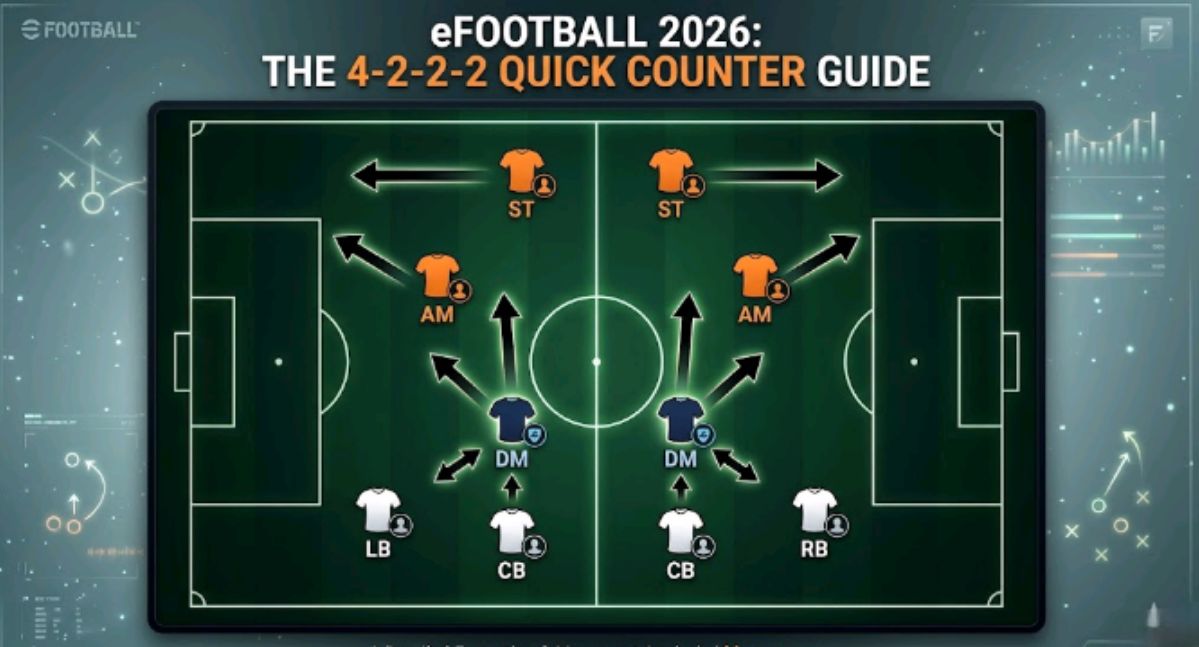
Weakness: Midfield cover thins out fast. Giving at least one CMAF a defensive cover instruction helped significantly in testing — it reduced the transition chances conceded without noticeably hurting the attack.
3. 4-3-3 — High Risk, High Reward
Win rate in testing: 60% (18 of 30 matches — 30-match isolated trial)
The 4-3-3 works differently from the other shapes. Rather than sitting deep and waiting for the opponent to lose the ball, it presses high as a unit — the three forwards create turnovers in the opponent’s half, which means counters start closer to the goal. When it clicked, I scored some of my cleanest goals of the 30 matches. When it didn’t — when the press was beaten with one pass — I was defending a 3v2 on the edge of my own box.
The win rate looks solid, but the variance was the highest of all four formations. Two-goal leads felt secure. One-goal games felt dangerous.
The stamina problem is real. After the 65th minute, I noticed the press intensity drop noticeably in games where my squad wasn’t at full fitness. By minute 75–80, the formation started behaving more like a passive 4-3-3 than an active pressing one. High-stamina wingers and midfielders aren’t optional here — they’re the reason the formation works in the first place.
Weakness: Opponent bypasses the press with a direct ball to a fast striker and the whole shape gets stretched. Sub-tactic to a more compact defensive shape in the second half is worth considering.
4. 4-3-1-2 — Tight Games Specialist
Win rate in testing: 53% (16 of 30 matches — 30-match isolated trial)
The lowest win rate of the four, but the most specific use case. The 4-3-1-2 is built for opponents who want to build through the middle — three central midfielders plus an AMF creates a wall in central areas that most build-up play can’t navigate through. Turnovers happen centrally, transitions are clean and direct, and two strikers are already positioned to receive.
Where it struggled in my testing was against opponents using wide formations with active fullbacks. Without natural wide coverage, the fullbacks had to push higher to compensate, which left space behind them on transitions. The formation conceded three of its losses from crosses and wide overloads.
Best scenario: You already know your opponent favors narrow, central builds. Against the right matchup, this shape is suffocating.
Formation Comparison Table
| Formation | Win Rate (30 matches each) | Counter Speed | Defensive Solidity | Width | Best Suited For |
|---|---|---|---|---|---|
| 4-2-1-3 | 67% | ⭐⭐⭐⭐⭐ | ⭐⭐⭐⭐ | ⭐⭐⭐⭐ | All-round, consistent climbing |
| 4-3-3 | 60% | ⭐⭐⭐⭐ | ⭐⭐⭐ | ⭐⭐⭐⭐⭐ | High press, momentum-based play |
| 4-2-2-2 | 57% | ⭐⭐⭐⭐⭐ | ⭐⭐⭐ | ⭐⭐⭐ | Dual striker squads, attack-first |
| 4-3-1-2 | 53% | ⭐⭐⭐ | ⭐⭐⭐⭐⭐ | ⭐⭐ | Central pressure, tight matchups |
Best Players for Each Quick Counter Formation (June 2026 Update)
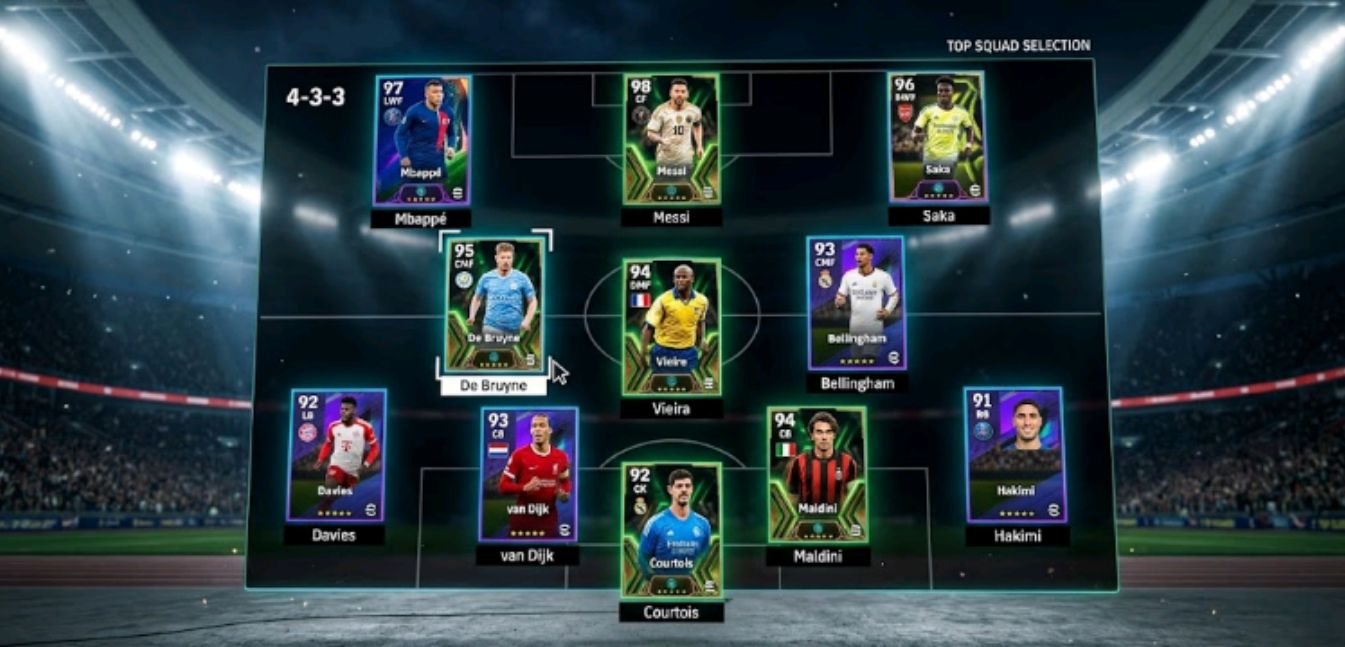
Player recommendations here are based on current June 2026 update card versions. Epic/Featured versions perform differently from base cards — the notes below reflect top-tier versions where the difference matters.
4-2-1-3 Quick Counter
| Position | Player | Why They Fit |
|---|---|---|
| CF | Mbappé (Epic) | Holds pace under physical pressure, rare at CF — detailed in our top 10 players breakdown |
| RWF / LWF | Vinicius Jr. / Salah | Wide CF pace stretches defenses horizontally — forces fast defensive decisions |
| AMF | Cruyff (Epic) | Movement and late box runs make him the best Hole Player option in the current meta |
| DMF | Patrick Vieira (Epic) | Physicality, interception range, and defensive coverage — the current king of the DMF position |
| DMF (2nd) | Rijkaard | Best all-round alternative to Vieira — covers ground and distributes cleanly after turnovers |
| CB | Maldini | Covers wide spaces independently and starts counters with accurate distribution |
F2P alternatives: Tchouameni or Rice at DMF, Bebeto or Batistuta at CF if you can’t access Mbappé’s Epic version.
Coming soon: Individual player guides for Mbappé, Vieira, Cruyff, Rijkaard, and Bellingham are being published as part of the revibyte eFootball 2026 player guide cluster.
4-2-2-2 Quick Counter
| Position | Player | Why They Fit |
|---|---|---|
| CF | Romário (Epic) | Pure finisher — clinical movement and elite finishing make him the stronger target in dual-striker setups |
| SS | Eto’o | Pace and finishing together; dangerous as the runner when Romário holds |
| CMAF | Neymar | Agile transition carrier; keeps counters alive under pressure in tight spaces |
| DMF | Vieira | Same as above — no downgrade at this position regardless of shape |
4-3-3 Quick Counter
| Position | Player | Why They Fit |
|---|---|---|
| CF | Rummenigge (Epic) | Pace + finishing combination that converts the close-range chances a high press generates |
| LWF / RWF | High-stamina pacey wingers | Stamina is non-negotiable in this shape — a fast winger who runs out of energy by minute 65 defeats the purpose |
| CMF | Bellingham (Featured, May 2026) | Box-to-box profile covers defensive and transition work; elevated physical stats in the May version |
Individual Instructions That Make Quick Counter Click
| Position | Instruction | Reason |
|---|---|---|
| CF / SS | Goal Poacher or Creative Striker | Triggers the right run in behind the moment possession is won |
| AMF | Hole Player | Already moving into space during the defensive phase — the timing advantage is real |
| CMF | Box-to-Box | Covers both defensive duties and transition carries without needing two separate roles |
| DMF | Anchor Man | Stays disciplined; doesn’t overcommit forward and leave the backline exposed |
| LB / RB | Overlap (situational) | Adds width on counters; only activate if your CB partnership has the pace to cover |
| CB | Build Up | Starts counters with clean first passes under pressure — don’t underrate this one |
The single most impactful instruction change you can make: give your strikers Counter Target. It keeps them positioned high and ready to receive the first vertical pass rather than drifting into aimless wide areas during the counter trigger.
Sub-Tactic Setup Worth Using
One setup that genuinely improved my results in the 4-2-1-3 testing: setting a flat 4-4-2 as the defensive sub-tactic. You defend with an organized compact block, attack with your natural counter shape. The opponent sees 4-4-2 when they have the ball and 4-2-1-3 when you win it back. Most opponents don’t adjust mid-game — the shape change alone creates uncertainty.
To activate this in eFootball 2026: Game Plan → Sub Tactics → ON → Edit Position → set your defensive formation → confirm. The attacking formation remains your primary.
FAQ
What is the best Quick Counter formation in eFootball 2026?
Based on 30 Division 1 matches per formation (120 total) during the June 2026 update, the 4-2-1-3 produced the best win rate at 67%. The double pivot gives defensive stability while the AMF and three forwards create fast attacking transitions. It’s consistent across divisions and doesn’t require a hyper-specific squad to function.
Is 4-2-2-2 better than 4-2-1-3 for Quick Counter?
In raw shot creation, yes — the 4-2-2-2 generated more chances per game in testing. But it also conceded more transition opportunities, which pulled the win rate to 57% vs the 4-2-1-3’s 67%. If you have two clinical strikers who work well together, 4-2-2-2 can be more explosive. As a consistent climb-the-divisions choice, 4-2-1-3 edges it.
Which manager works best with Quick Counter in the June 2026 update?
As of the June 2026 update (tested on v5.2.2+), Xabi Alonso’s Quick Counter proficiency pairs cleanly with 4-2-1-3 and 4-3-1-2. His Breakthrough Pass A Link-Up activates well with a Creative Playmaker AMF and a Goal Poacher CF. Klopp is worth considering if you want dual Possession/Quick Counter flexibility — his proficiency covers both, which lets you adapt mid-match without rebuilding the squad. Manager attributes can change between updates, so verify current proficiency ratings in the in-game manager menu before committing.
What individual instructions work best for Quick Counter?
Anchor Man on your DMF(s), Hole Player on your AMF, and Counter Target on your forwards are the three that changed results most noticeably in testing. Counter Target in particular keeps your strikers positioned high and ready for the first vertical pass rather than drifting wide.
Can 4-3-3 work as a Quick Counter formation?
Yes, and it finished second in win rate at 60% — but the variance was the highest of the four formations tested. When the high press forces turnovers in the opponent’s half, counters start closer to goal and chances are cleaner. When the press gets beaten with a direct ball, the shape gets stretched quickly. High-stamina wingers are not optional in this setup; the press noticeably drops after the 65th minute if they aren’t.
Is Quick Counter still viable in Top Division in eFootball 2026?
Absolutely — it remains one of the dominant strategies at every level. The difference at Top Division is that opponents are better organized and less likely to give you clean counter opportunities without being forced into them. Patience in holding the mid-block, combined with one or two deliberate triggers, matters more than raw formation speed at that level.
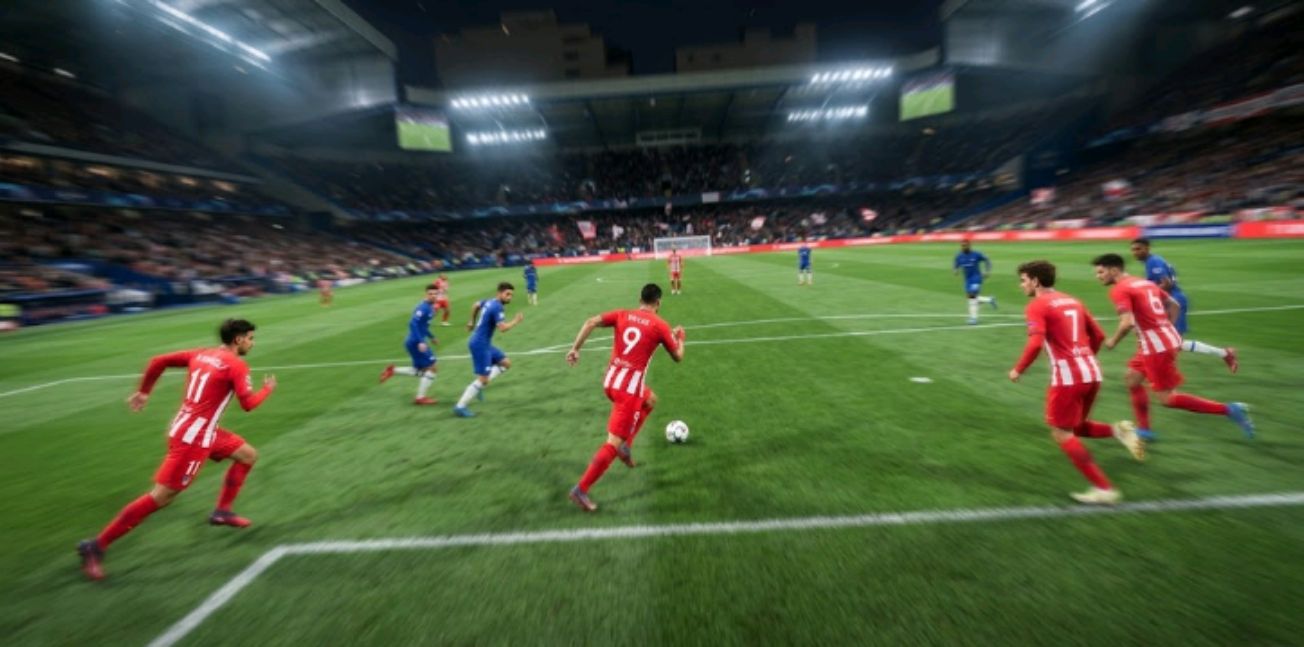
Quick Counter done right is less about having the fastest strikers and more about the discipline to hold shape until the right moment arrives. The formation sets the structure. The individual instructions define the behavior. The manager compatibility determines whether any of it actually functions as intended.
If the 120-match test tells you anything — it’s that the 4-2-1-3 is genuinely as consistent as its reputation suggests, and that reputation comes from results, not just tier list consensus.
For more eFootball 2026 guides, check out our breakdown of the best strikers in eFootball 2026, the best defenders, and our complete 4-3-3 formation guide for Division 1.


Comments 1
Leave a comment